Guides · reviewed by a teacher
Breathing exercises for stress
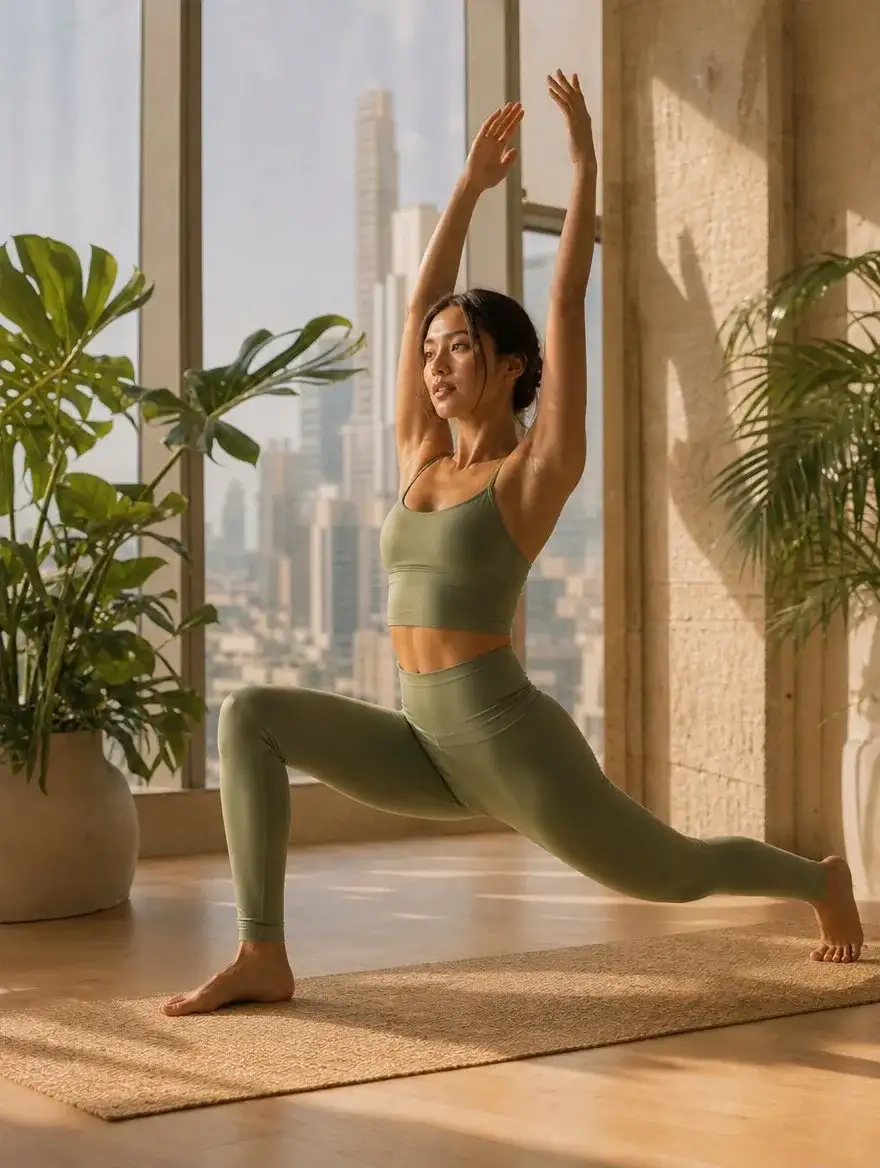
Two of the best-known breathing exercises for stress are box breathing, where you breathe in, hold, breathe out and hold for equal counts, and 4-7-8 breathing, where the out-breath is twice as long as the in-breath. Both are simple to learn, but stop if you feel dizzy, and skip the holds if you are pregnant or have a heart or lung condition until you have asked your doctor.
Teacher's note from Joahnna Lee
“The longer exhale is the version I would suggest starting with if you are new to breathing practice.”
Breathing is the one part of a stress response you can change on purpose, anywhere, without anyone noticing. You do not need a mat or a spare hour. You need a few minutes and a place to sit.
In yoga, working with the breath has a name of its own, pranayama, the practice of working with the breath, and behind it sits an older word, prana, the breath and the life it sustains. The exercises below are simpler, modern techniques, and they are described here as techniques, not as treatments.
Before you start: safety notes
Read these first. They matter more than the counts.
- Stop if you feel dizzy, light-headed, tingly or short of breath. Return to normal breathing and sit until it passes.
- Pregnant? Skip every breath hold, and check with your OB or midwife before starting any breathing practice.
- Heart or lung condition? If you have a heart condition, high blood pressure, asthma, COPD or another lung condition, ask your doctor before trying breath holds or long counts.
- Anxiety or panic? For some people, focusing on the breath raises anxiety instead of lowering it. If that happens, stop, open your eyes and look around the room.
- Never while driving, swimming or in water.
Sit upright in a chair or on the floor, or lie on your back. Breathe through the nose unless a step says otherwise.
Belly breathing: the one to learn first
Belly breathing, also called diaphragmatic breathing, is the plainest technique here and the one the others build on. Under stress, many people breathe high and fast in the upper chest. Belly breathing lets the breath drop lower, so the belly moves instead of the shoulders.
- Lie on your back with your knees bent, or sit upright in a chair.
- Rest one hand on your upper chest and the other on your belly, just above the navel.
- Breathe in slowly through the nose and let the belly rise under your lower hand. The chest hand stays fairly still.
- Breathe out through the nose or softly through pursed lips, and feel the belly fall.
- Keep going for three to five minutes, with no counting and no holds.
Do not push the belly out on purpose; let it move with the breath. If it feels awkward at first, that is normal. Practise lying down for a few days before trying it sitting at your desk.
Once it feels easy, the counted techniques below follow naturally, and the yogic breathing practices such as alternate nostril are the next step. For breath work alongside meditation, see the breath and meditation guides.
What is box breathing, and how do you do it?
Box breathing has four equal sides, like a square.
- Breathe out fully.
- Breathe in through the nose for a count of four.
- Hold the breath in, gently, for a count of four.
- Breathe out through the nose for a count of four.
- Hold the breath out for a count of four.
- Repeat for three to five minutes.
If four feels like a strain, use three. The holds should feel soft, never like you are gripping your throat. Do not hold the breath if you are pregnant, have a heart condition or high blood pressure, or feel dizzy: leave the holds out and simply breathe in for four and out for four.
How do you do 4-7-8 breathing?
This technique makes the out-breath long and slow.
- Rest the tip of the tongue behind the upper front teeth.
- Breathe out fully through the mouth.
- Close the mouth and breathe in quietly through the nose for a count of four.
- Hold the breath for a count of seven.
- Breathe out through the mouth, with a soft whooshing sound, for a count of eight.
- That is one round. Do four rounds to start.
The ratio matters more than the speed. If seven feels too long, count faster, or shorten the whole pattern to 2-3-4. Skip the hold entirely if you are pregnant, have a heart or lung condition or high blood pressure, or feel dizzy, and ask your doctor before you add it back.
A gentler option: the longer exhale
If holds are not for you, this one has none. Breathe in through the nose for a count of four and out through the nose for a count of six. Keep going for a few minutes. When the counting starts to feel like work, drop the numbers and just let each out-breath be a little slower than the in-breath.
If you are new to breathing practice, this is the easiest place to start.
How do you do alternate nostril breathing?
Alternate nostril breathing, nadi shodhana in yoga, is a traditional pranayama that many people find steadying because the hand movement gives the mind something to follow. This version has no breath holds.
- Sit upright in a chair or on a cushion and rest the left hand in the lap.
- Fold the index and middle fingers of the right hand into the palm, so the thumb and ring finger are free.
- Close the right nostril with the thumb and breathe in slowly through the left.
- Close the left nostril with the ring finger, release the thumb and breathe out through the right.
- Breathe in through the right, close it, and breathe out through the left. That is one round.
- Continue for five to ten rounds, keeping every breath quiet and unforced.
Skip it when the nose is blocked; the longer exhale works just as well on a day with a cold.
Which technique suits which moment?
| Moment | Try | Why it fits |
|---|---|---|
| Stuck in traffic or on a crowded train | The longer exhale | No counting to hold in your head, no holds, nobody notices |
| Five minutes before a meeting or presentation | Box breathing | Easy with the eyes open and a steady count to focus on |
| Lying awake on a hot night | 4-7-8 or belly breathing | Slow and done lying down |
| A quiet break at home | Alternate nostril breathing | The hand movement keeps a wandering mind busy |
| After a stressful call | Belly breathing | Simple, and brings attention back to the body |
A three-minute reset for the commute
If your day starts with a long ride on EDSA or a packed train, this fits between stops and needs no space at all.
- Notice your breath for three breaths, without changing it.
- Drop the shoulders on the next out-breath and unclench the jaw.
- Breathe in for four, out for six, ten times. Shorten the counts if they feel like a strain.
- Look at something still, such as a building or a sign, for the last three breaths, then go back to your day.
In a hot vehicle or a humid station, keep every count comfortable and avoid breath holds; if you start to feel light-headed, go back to normal breathing.
When to use them
- Before something stressful: a meeting, a flight, a hard conversation. Box breathing is easy to do with your eyes open.
- At the end of the working day: a few rounds of the longer exhale as you change out of work clothes.
- In bed: 4-7-8 lying on your back, if you find it settling.
A few minutes most days is more useful than a long practice once in a while. To keep the counts steady, follow the animated box breathing timer, which also paces 4-7-8 and slow breathing. The breathwork studio adds a guided alternate nostril visual, coherent breathing and sessions of 1 to 20 minutes. If you would rather not choose, the guided breathwork programs for winding down, focus and sleep string two or three of these patterns into one short session. For a short movement sequence to pair with these, see yoga for stress relief.
When to see a professional
Breathing exercises are not a treatment for anxiety, panic attacks, high blood pressure or any breathing problem. See a doctor if you often feel breathless, have chest pain or a racing heart, or find that stress or anxiety is affecting your sleep, work or relationships.
A doctor, psychologist or psychiatrist can help you work out what is going on. If you ever feel unsafe, contact a local crisis line or emergency services.
Learning breath work with a teacher
Simple breathing is part of most yoga classes, usually taught lying down or sitting, so you can take it back to your desk or your bed. Many teachers who focus on yoga for stress and burnout open and close the practice with exactly these techniques. To find a class near you, browse yoga studios across the Philippines.
This page feeds the breath pacer, the guided breathwork tool and the breath programs in the app.
Browse the guides section.
Sources: Mayo Clinic, Fitness program: 5 steps to get started; NCCIH (US National Institutes of Health), Yoga: Effectiveness and Safety; NHS, Exercise in pregnancy; CDC, Pregnant & Postpartum Activity: An Overview; Canadian Family Physician (Chan et al., 2014), via PubMed Central, Hot yoga and pregnancy: Fitness and hyperthermia; Cleveland Clinic, Hyperventilation Symptoms, Causes & Treatment. Last reviewed 2 October 2026.
Questions
Which is better, box breathing or 4-7-8?
Neither is better for everyone. Box breathing is even and steady, which many people like during the day. 4-7-8 has a long, slow out-breath, which many people prefer in the evening. Try each for a week and keep the one you actually use.
Is it normal to feel dizzy?
Mild light-headedness can happen when you first change how you breathe, and it means stop. Go back to normal breathing and sit still until it passes. Next time use shorter counts. If dizziness keeps coming back, check with a doctor.
Can I do breathing exercises while pregnant?
Gentle, natural breathing with a slightly longer out-breath is usually the approach during pregnancy. Skip breath holds, and check with your OB or midwife before you start any breathing practice.
How do I know if I am breathing into my belly?
Rest one hand on your chest and the other just above your navel. As you breathe in, the lower hand should rise first and the upper hand should barely move. If only the chest hand moves, lie down with your knees bent, which makes the belly movement easier to feel.
How quickly do breathing exercises work for stress?
Many people notice that they feel a little calmer within a few minutes of slow breathing, especially with a longer out-breath. The effect tends to be more reliable when you practise daily, so the technique is familiar when you need it. Breathing exercises can sit alongside other care but are not a replacement for professional help.
How often should you practise breathing exercises?
A few minutes once or twice a day is a good habit, for example after waking and before sleep, plus a minute or two whenever you notice stress building. Short, regular practice makes the technique easier to use in a tense moment than a long session now and then.
Can you do breathing exercises lying in bed?
Yes. Belly breathing and the longer exhale work well lying on your back with a pillow under your knees, and many people use them to settle before sleep. Leave out the breath holds if you feel light-headed, and sit up slowly afterwards.
Keep reading
Your yoga calendar
We track every yoga event, workshop and pop-up class so you don't have to.
Updated