Guides · reviewed by a teacher
Yoga for bad posture
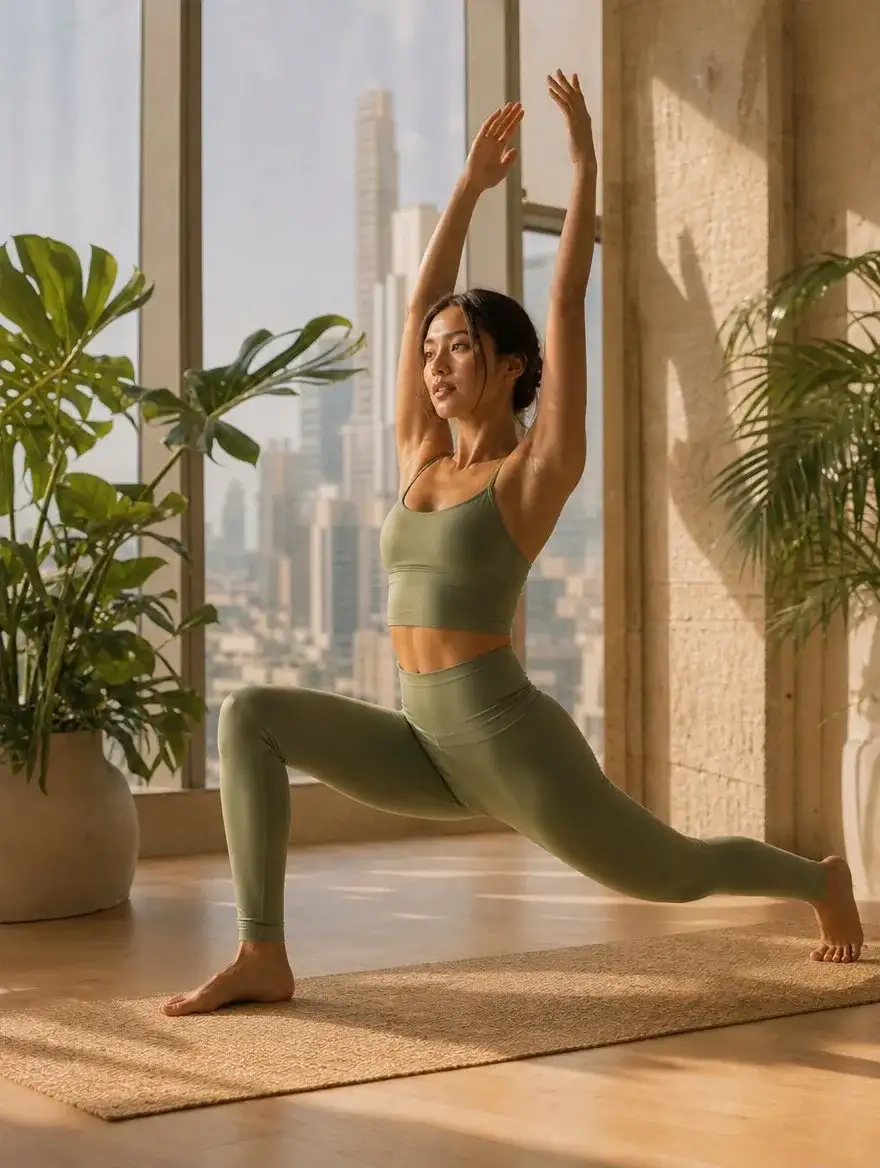
Yoga can support better posture by making you more aware of how you stand and sit, and by gently strengthening the muscles of the back and core while opening the chest and hips. It works best as a regular practice alongside small changes to your day, and any pain is a reason to see a physiotherapist first.
Teacher's note from Joahnna Lee
“In a lesson, I start by looking at how you stand and move, then build a practice around what I see and how you feel, with props to make each shape comfortable.”
Most of us spend long hours sitting at a desk, looking down at a phone, or leaning into a laptop on the sofa. The body adapts to what it does most.
Yoga does not undo that overnight, but it gives you two useful things: a clearer sense of how you are actually holding yourself, and the strength to hold yourself differently. A good beginner class often starts in the same place, with a look at how you stand and sit.
What “bad posture” usually means
There is no single perfect posture, and bodies vary a great deal. When people say bad posture, they usually mean a few familiar patterns: the head drifting forward, the shoulders rounding in, the upper back curving, or the weight sinking into one hip.
These patterns are common and not a cause for alarm on their own. They tend to come from long stretches in one position, not from doing anything wrong.
Awareness comes first
Before any strengthening, yoga teaches you to notice. In Tadasana, the standing mountain shape, you stand still and feel where your weight falls: heels or toes, left or right. You notice whether your chin juts forward and whether your shoulders creep up towards your ears.
That noticing carries off the mat. Many people find they start catching themselves at the desk or on the phone, which is where most of the change happens. Slow somatic exercises on the floor train the same kind of attention lying down.
Poses to practise
Each has a gentler version. Move slowly and stay out of pain.
- Mountain pose, standing still to learn how you stand. Feet grounded, crown of the head lifting, shoulders soft.
- Cat-cow on hands and knees to move the spine through its range in both directions and notice where it feels stuck.
- Cobra pose or the gentler sphinx pose to strengthen the muscles along the back and open the front of the chest. Lift only as far as feels easy.
- Bridge pose to work the back of the body, including the glutes, which help support the pelvis.
- Plank pose, on your knees if you like, to build strength through the middle of the body.
- Eagle arms, seated or standing to stretch the space between the shoulder blades that a laptop keeps tight.
- Cow face arms with a strap to open the fronts of the shoulders. Hold a towel between the hands rather than forcing them to meet; a yoga strap does the same job.
- Child’s pose, knees wide to rest between the stronger shapes.
Which posture exercises can you do at home?
Posture exercises are simple bodyweight moves that wake up the muscles a slump leaves quiet: the deep front of the neck, the muscles between the shoulder blades and the glutes. No exercise corrects posture on its own, but a few of these alongside the poses above build the strength to sit and stand differently. Do 8 to 10 slow reps of each, breathing out on the effort.
- Chin tuck. Sit tall and slide the chin straight back without tipping the head down. Hold for two breaths. The gentle neck exercises with chin tucks have more.
- Wall slides. Stand with the back against a wall, elbows bent at shoulder height, and slide the arms up and down, ribs soft. The wall slides in the mobility routine show the set-up.
- Shoulder blade squeeze. Draw the shoulder blades back and slightly down, hold for a breath, release.
- Baby locust. Lie face down and lift the chest and arms a little, gaze down. The Locust Pose steps explain how high to go.
- Bird dog. From hands and knees, reach the opposite arm and leg long, hips level.
- Glute bridge. Lift and lower the hips slowly, as in Bridge above.
Which poses go with which posture pattern?
| Pattern | What often helps | Poses and exercises above |
|---|---|---|
| Head drifting forward | Strength at the deep front of the neck, awareness of the head over the shoulders | Chin tuck, Mountain pose |
| Rounded shoulders | Opening the chest, strength between the shoulder blades | Cobra or Sphinx, wall slides, shoulder blade squeeze, cow face arms |
| Stiff, curved upper back | Movement in both directions, gentle backbends | Cat-cow, baby locust |
| Weight sinking into one hip | Even standing, glute and core strength | Mountain pose, bridge, bird dog |
A ten-minute posture routine to print
Do this most days, ideally after a long sitting stretch such as a commute or a block of work.
- Mountain pose, one minute, noticing the weight in the feet.
- Chin tucks, 8 slow reps.
- Cat-cow, 8 rounds.
- Sphinx or baby Cobra, 5 breaths, twice.
- Wall slides, 8 reps.
- Bridge, 8 slow lifts.
- Bird dog, 5 each side.
- Eagle arms, 5 breaths each side.
- Child’s pose, one minute.
Common mistakes
- Pulling the shoulders back hard. Squeezing them back and holding them there tires you out fast. Aim for shoulders that are wide and relaxed, not pinned.
- Arching the lower back to stand tall. Lifting the chest by tipping the pelvis forward only moves the strain. Keep the lower ribs soft.
- Only stretching. Opening the chest without building strength in the upper back rarely lasts.
- Going deep in backbends too soon. Small Cobra and Sphinx before bigger shapes.
- Holding the breath to hold the pose. If the breath stops, the pose is too much for today.
For screen-heavy jobs, such as BPO shifts or long days on a laptop, the routine above works well split in two: half before the shift, half after.
How to practise
Little and often. Posture is a habit, and habits change through repetition. Ten minutes most days tends to do more than an hour once a week. The 7-day desk yoga program is one way to start: five to ten minutes a day, most of it in a chair.
Strength and opening together. Stretching the chest without strengthening the upper back leaves half the work undone. A balanced practice includes both.
Take it off the mat. Stand up and move every so often during the day. Raise your screen towards eye level. Notice when you are slumping, without scolding yourself for it.
For the places a desk tightens most, try the gentle neck routine with chin tucks, the eagle arms and cow face arms routine for the shoulders and a low lunge for hips that sit all day.
Keep the breath easy. If you are holding your breath to hold a shape, the shape is too much for today. Ease off.
What to expect over time
Change is slow and quiet. In the first weeks, the most common difference is noticing: you catch the slump sooner, and you sit back up without thinking about it. Strength in the back and the middle of the body builds over months of regular practice, not days.
Mirrors and photos can be discouraging, so pay attention to how standing and sitting feel instead. If a shape still feels awkward after a few weeks, that is normal, and a prop or a smaller version usually helps more than trying harder.
When to see a physiotherapist or doctor
Yoga is a practice of awareness and movement, not a treatment. See a physiotherapist or doctor before you start, rather than relying on yoga, if you have back, neck or shoulder pain; numbness, tingling or weakness in your arms or legs; a curve in the spine you have been told about, such as scoliosis; or a posture change that came on suddenly.
A physiotherapist can assess what is going on and tell you which movements suit you. Yoga can then sit alongside that advice. If your back hurts rather than slumps, read how to practise carefully with back pain first.
Practising with a teacher
A teacher can see what you cannot: the chin drifting forward, one hip taking the weight, shoulders creeping up. A good one looks at how you stand and move before choosing the shapes, and sets each one up with props so it feels comfortable. Small classes give a teacher more time to do this; if you are deciding how to learn, the guide to private yoga or a group class compares the two.
If you would like to start on your own first, yoga for beginners covers the basic shapes, and yoga studios in the Philippines lists places to take a class.
Browse the guides section.
Sources: Mayo Clinic, Fitness program: 5 steps to get started; NCCIH (US National Institutes of Health), Yoga: Effectiveness and Safety; NHS, Exercise in pregnancy; CDC, Pregnant & Postpartum Activity: An Overview; Canadian Family Physician (Chan et al., 2014), via PubMed Central, Hot yoga and pregnancy: Fitness and hyperthermia; NHS, Back pain. Last reviewed 2 October 2026.
Questions
Can yoga help with rounded shoulders?
Many people find that poses which open the chest and strengthen the upper back help them notice rounded shoulders and hold themselves differently. It is a gradual change, and it works best alongside breaks from the desk and phone. If your shoulders or neck hurt, see a physiotherapist.
How often should I do yoga for posture?
A few minutes of the basic shapes most days, with a longer practice once or twice a week, is a good rhythm. Posture is a habit, so frequent short reminders tend to matter more than one long practice.
What is the best yoga pose for posture?
There is no single best pose. Mountain pose is a good place to start because it teaches you how you stand. Pair it with something that strengthens the back, like cobra or bridge, and something that opens the chest.
Can you change years of bad posture with yoga?
Often you can change how you hold yourself, but slowly. Habits built over years take regular practice to shift. In the first weeks most people simply notice the slump sooner, and strength in the back and middle of the body builds over months. If posture comes with pain, numbness or a known spinal curve, see a physiotherapist first.
Can you improve your posture in a week?
Not in a lasting way. Posture is a habit, and habits change through repetition over weeks and months. What a week of short daily practice can do is make you notice how you sit and stand, so you catch the slump sooner. Ten minutes most days, with strength and opening together, does more than one long session.
Keep reading
Your yoga calendar
We track every yoga event, workshop and pop-up class so you don't have to.
Updated