Pose library · Tadasana · reviewed by a teacher
Mountain Pose (Tadasana)
Tada means mountain and asana means posture. You stand still and upright, steady at the base and tall at the top, the way a mountain sits on the land.
Mountain Pose (Tadasana) is the basic standing posture, upright and steady, teaching even weight through the feet. Stand with the feet hip-width, spread the weight across both feet, stack the pelvis, ribs and shoulders and breathe for five to ten breaths. Keep the knees straight but not locked back, and avoid tucking the pelvis hard.
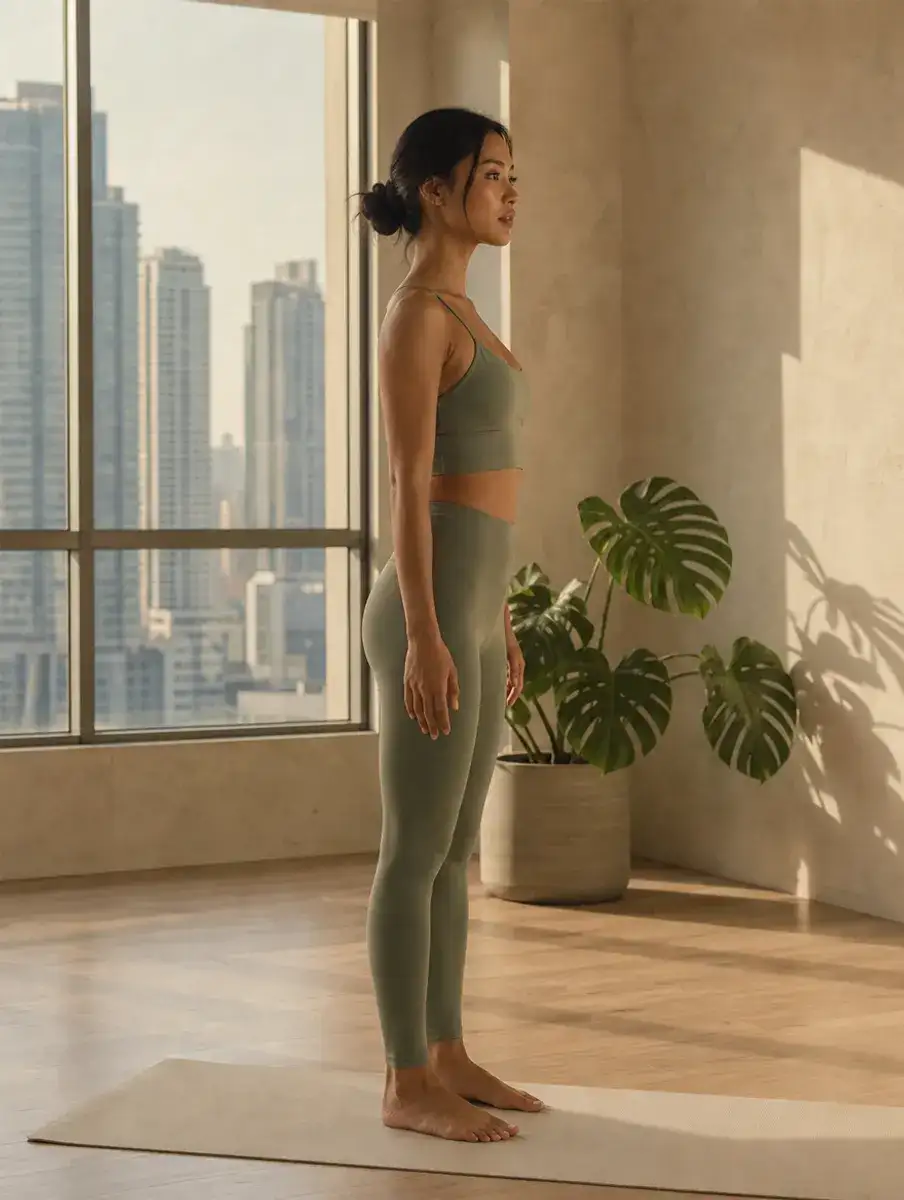
Pronunciation and meaning
Tadasana: tah-DAHS-uh-nuh. Four syllables, with the stress on the second.
Tada means mountain and asana means posture. You stand still and upright, steady at the base and tall at the top, the way a mountain sits on the land.
How to do Mountain Pose
- Stand with your feet hip-width apart, or with the big toes touching if that feels steady, and the outer edges of the feet parallel.
- Lift and spread the toes, then lay them back down. Feel the weight across the base of the big toe, the base of the little toe and the centre of the heel.
- Keep the knees straight but not pushed back, and let the thighs firm gently.
- Stack the pelvis over the ankles, the ribs over the pelvis and the shoulders over the ribs, without tucking the tailbone hard or sticking the bottom out.
- Let the arms hang by your sides with the palms facing in or slightly forward. Lengthen the back of the neck so the chin stays level.
- Stand for five to ten breaths, noticing where the weight wants to drift.
Mountain Pose step by step
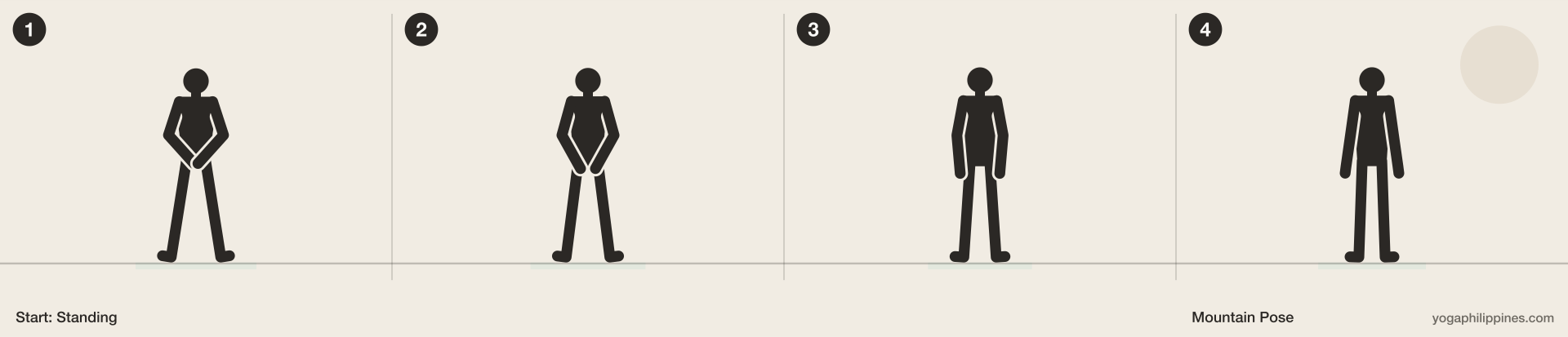
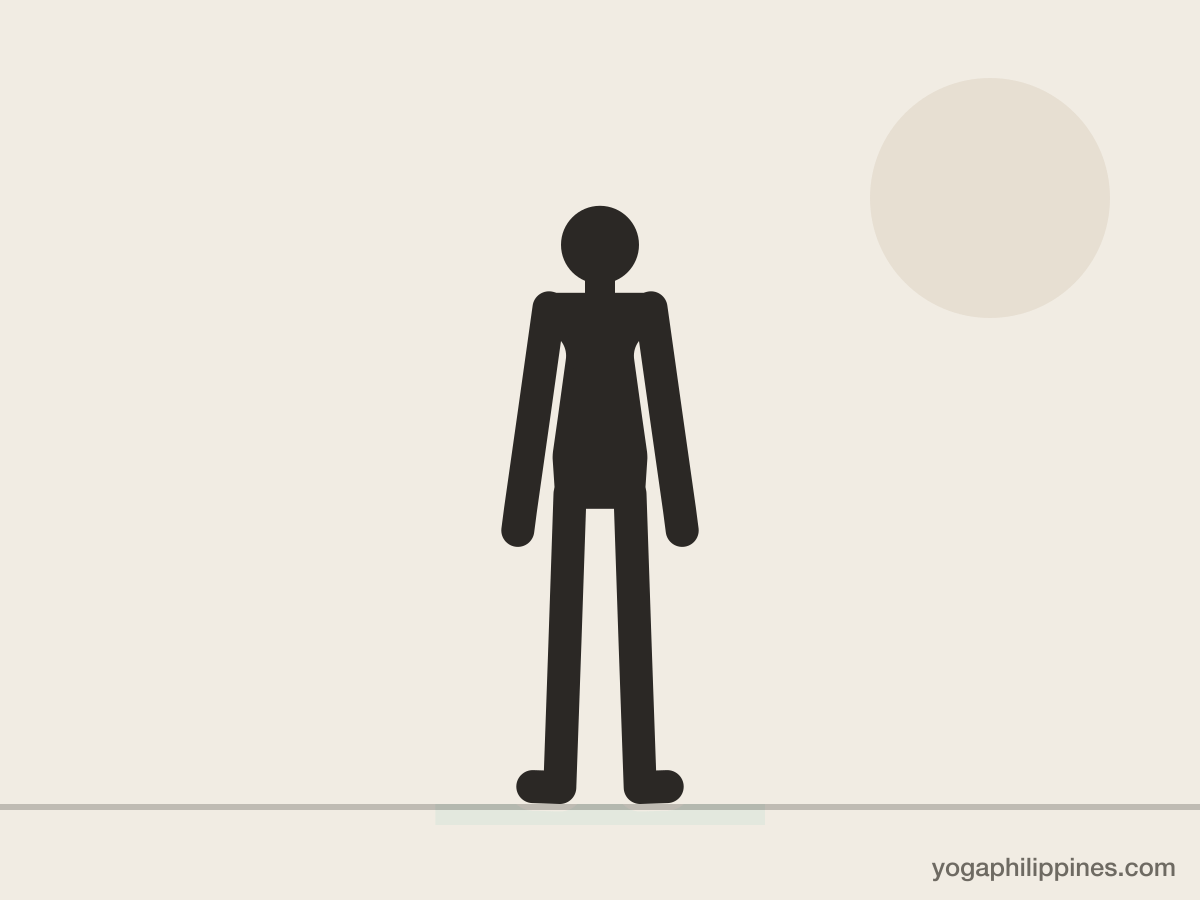
Drawings and video by YogaPhilippines.com, free to reuse under CC BY 4.0 with credit and a link: see the image licence for how to credit.
Mountain Pose appears in the 10-minute Moon salutation and the beginner yoga sequence, both printable with holds and cues. For other poses that work the ankles, open the pose finder set to the ankles.
Teacher's note from Joahnna Lee
“Stand the way you would if nobody was watching, then make one small change at a time. Mountain is about noticing, not posing.”
“Imagine a thread lifting you from the crown of the head while the feet stay heavy. Both at once.”
“Let the shoulder blades slide down the back without pinching them together. I want them soft and wide, not pulled back like a soldier's.”
Make it easier
- Stand with your back near a wall, heels a few centimetres away, to feel whether you lean forward or back.
- Hold a block between the upper thighs and squeeze it gently to feel the legs engage.
- Widen the stance if balance feels uncertain, or rest a hand on the back of a chair.
- Practise it seated on a chair, feet flat and spine tall, if standing for long is tiring.
Pregnancy and after birth
Pregnancy. Adapt. Stand with the feet wider apart to make room for the belly and to steady yourself, and let the tailbone stay natural rather than tucked. Stand near a wall if you feel light-headed. Check with your OB or midwife before you start.
After birth. Adapt. Once your doctor or midwife has cleared you to exercise, Mountain is a quiet way to notice how you are standing again. Carrying a baby often draws the shoulders forward, so use it to check in, not to criticise yourself.
Expecting? Joahnna Lee Yoga has notes on adapting each trimester.
Common mistakes
- Locking the knees back, which tips the weight into the heels and the lower back.
- Tucking the pelvis hard to flatten the lower back.
- Puffing the chest up and squeezing the shoulder blades together.
- Letting the weight live in the heels or on the outer edges of the feet.
- Gripping the floor with the toes, which tightens the feet and makes balance harder, not easier.
Mountain Pose looks like standing still, and it is. It is also one of the first poses beginners are taught, because the standing poses that follow build on the same feet, legs and spine.
It is a good place for beginner-friendly yoga to start, because every standing pose is easier once you know how you stand. If you are new to classes, what to expect in your first yoga class covers the rest.
Mountain is where every shape on the standing poses page, two lines on each begins and ends.
Step the feet wide and reach the arms out, and Mountain becomes Star Pose, the extended mountain. Mountain is also a good check after gentle neck exercises like chin tucks, to feel the head stacked over the shoulders.
What variations of Mountain Pose are there?
Once the basic stance feels familiar, small changes turn it into a different exercise:
| Variation | What changes | What it asks of you |
|---|---|---|
| Arms overhead (Upward Salute) | Arms reach up beside the ears | Length through the sides without flaring the ribs |
| Eyes closed | Same stance, eyes shut | More balance work from the feet and ankles |
| Rise to the toes | Heels lift slowly and lower | Calf and foot strength, steadier ankles |
| Hands in prayer | Palms meet at the chest | A quiet start or finish to a class |
| Chair Mountain | Seated, feet flat, spine tall | The same stacking without standing |
Try eyes closed only near a wall or a chair, and open them as soon as you sway more than feels comfortable.
Who should take extra care?
If you feel dizzy or light-headed when standing still, or have a condition that affects balance, stand near a wall or practise the chair version. Come out and sit down if the vision greys or the room seems to move.
A one-minute check you can do anywhere
Mountain does not need a mat. While waiting for a train, in a queue at the bank or at a standing desk, run this quick check from the ground up:
- Feel the weight even between both feet and between heel and toes.
- Soften the knees a fraction so they are not locked back.
- Let the pelvis sit level, neither tucked nor tipped.
- Let the shoulders drop away from the ears.
- Lengthen the back of the neck and take three slow breaths.
How long until standing in Mountain changes how you stand?
Mountain builds awareness rather than flexibility, so the first change is noticing your habits, often within the first few practices. Turning that awareness into a new way of standing tends to take weeks of checking in, a few times a day, alongside strength work for the legs and back.
Poses that lead into Mountain Pose
In a sequence, Mountain Pose often follows these poses as their counter-pose or rest.
- Dancer Pose (Natarajasana) intermediate
- Eagle Pose (Garudasana) intermediate
Where to go next after Mountain Pose
These poses list Mountain Pose as a preparation, so they are a natural next step once it feels comfortable.
- Star Pose (Utthita Tadasana) beginner
- Tree Pose (Vrksasana) beginner
- Chair Pose (Utkatasana) beginner plus
- Sun Salutation (Surya Namaskar) beginner plus
Props that help in Mountain Pose
- Block: brings the floor closer under the lower hand, so the legs and spine can stay long.
- Wall: gives a steady point to lean on or press into for balance and alignment.
- Chair: brings the floor closer, or gives a seat or a hand rest for a gentler version.
Programs and sessions that use Mountain Pose
- The month-long yoga challenge 3 of its 30 sessions
- The 4-week beginner program 3 of its 12 sessions
- The 7-day desk reset 2 of its 7 sessions
- Sequences: 10-minute yoga, 30-minute flow, slow 45-minute session, first home sequence, Moon sequence, wake-up sequence and standing balance sequence
- Practice app sessions: 10-minute reset, 20-minute flow, 30-minute practice, morning wake-up and balance
This page feeds the flow builder, the timer for Sun Salutation rounds, the pose of the day, the pose name quiz and the app's alignment check.
Sources: Mayo Clinic, Fitness program: 5 steps to get started; NCCIH (US National Institutes of Health), Yoga: Effectiveness and Safety; NHS, Exercise in pregnancy; CDC, Pregnant & Postpartum Activity: An Overview; Canadian Family Physician (Chan et al., 2014), via PubMed Central, Hot yoga and pregnancy: Fitness and hyperthermia. Last reviewed 2 October 2026.
Mountain Pose questions
What is the point of mountain pose?
It is the starting point for most standing poses and a place to learn where your weight sits. Shapes such as Tree Pose and Chair Pose begin and end in it, so the habits you build here carry straight into them.
Should my feet be together or apart in mountain pose?
Both are common. Feet together is the classical version; hip-width apart is steadier and suits most beginners, pregnant students and anyone with tight hips. Choose whichever lets you stand evenly.
How long should you hold Mountain Pose?
Usually five to ten slow breaths, at the start of class or between standing poses. Use the time to check your feet, knees, pelvis and shoulders from the ground up. You can also stand in it for a minute or two on its own as a short posture check during the day.
Where should your arms be in Mountain Pose?
Classically the arms rest by the sides, fingers pointing down, with the palms facing the thighs or turned slightly forward to open the chest. Some classes bring the palms together at the chest or sweep the arms overhead, which turns it into Upward Salute.
What is the difference between Mountain Pose and Samasthiti?
Samasthiti, equal standing, is the name Ashtanga classes use for the standing position at the start and end of each Sun Salutation. It is essentially the same shape as Mountain Pose. Some teachers use the two names interchangeably, while others add small differences in where the feet and hands go.
What are the benefits of Mountain Pose?
Mountain Pose builds awareness of how you stand: where your weight sits in the feet, whether the knees lock and how the pelvis, ribs and shoulders stack. It gently works the legs and feet and gives every standing pose a steady base. Many people notice their standing habits within a few practices, though changing them takes weeks.
Updated