Pose library · Matsyasana · reviewed by a teacher
Fish Pose (Matsyasana)
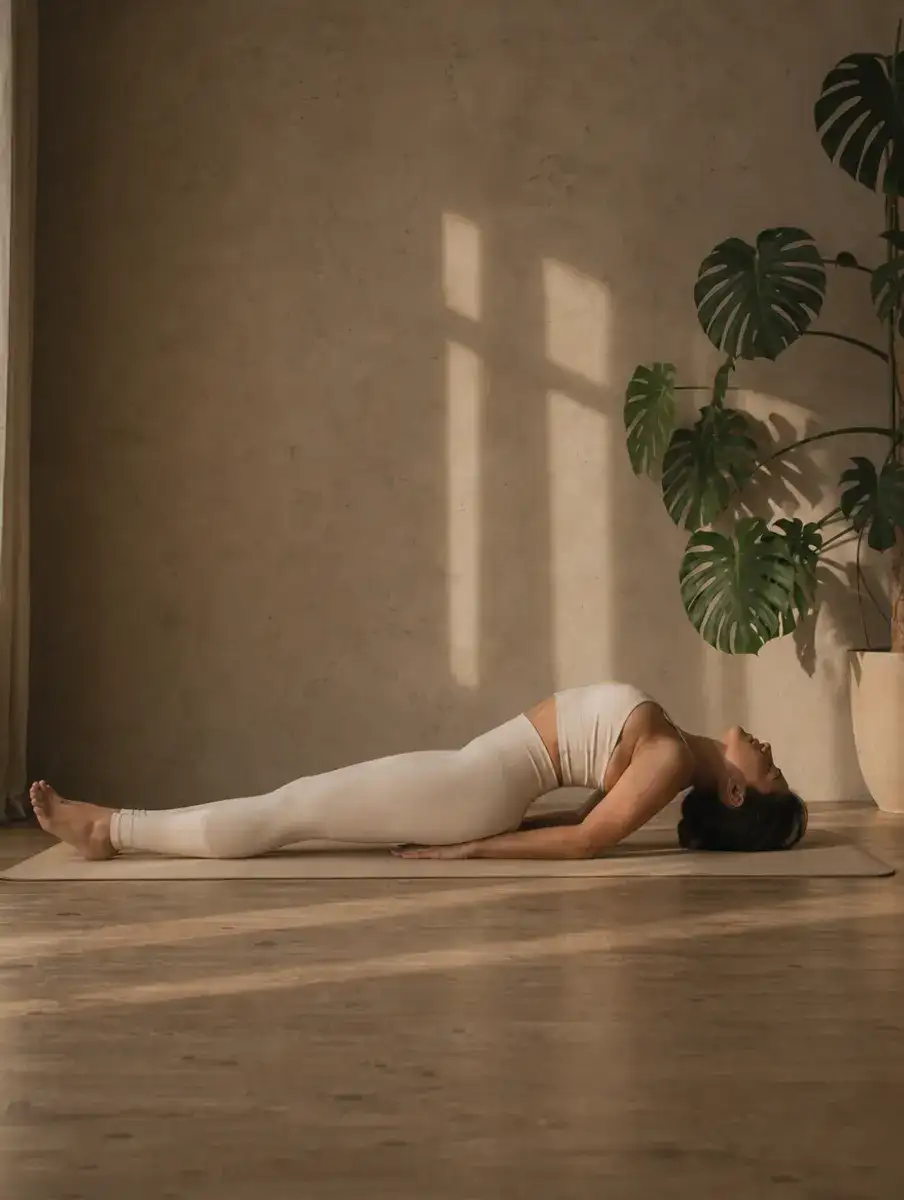
Matsya means fish and asana means posture. Lying on your back with the chest arched up, the body looks a little like a fish curving through water.
Fish Pose (Matsyasana) is a backbend lying on your back that opens the front of the upper body. Slide the hands under the hips, press into the forearms and lift the chest for three to five breaths, legs active. Rest the head lightly only if the neck is comfortable; otherwise keep it lifted, or lie back over a block.
Pronunciation and meaning
Matsyasana: mahts-YAHS-uh-nuh. The ts sounds like the end of cats, and YAHS carries the stress.
Matsya means fish and asana means posture. Lying on your back with the chest arched up, the body looks a little like a fish curving through water.
How to do Fish Pose
- Lie on your back with your legs straight and together, or bend your knees with your feet on the floor if that suits your back.
- Slide your hands, palms down, under your hips, and draw your elbows in toward your sides.
- Press into your forearms and elbows and lift your chest toward the ceiling, arching through the upper back.
- Only if your neck is comfortable, let the crown of your head rest lightly on the mat with almost no weight on it. Otherwise keep the head lifted and the chin slightly tucked.
- Keep your legs active, pressing the thighs down and reaching through the heels.
- Stay for three to five breaths, then lift the head slightly, lower the chest and lie flat. Hug your knees to your chest to finish.
Fish Pose step by step

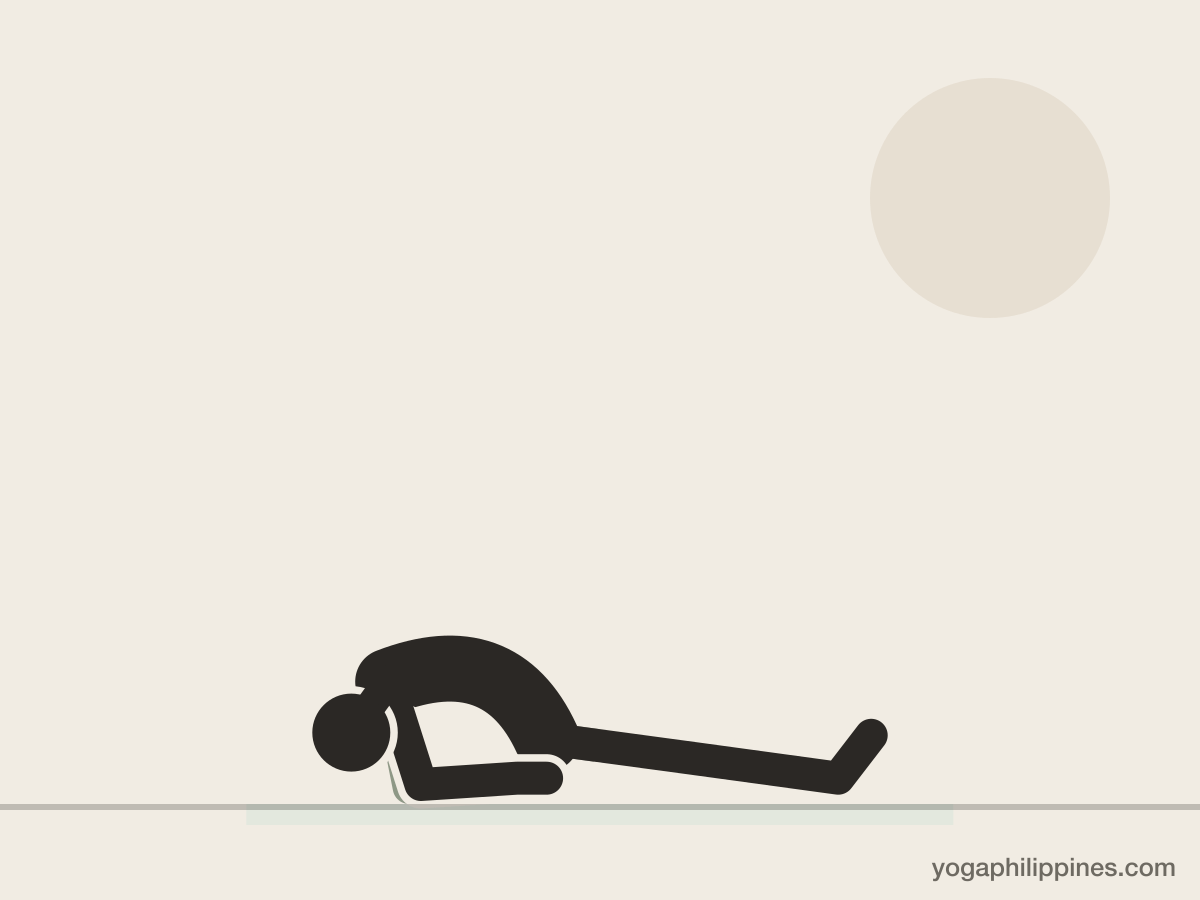
Drawings and video by YogaPhilippines.com, free to reuse under CC BY 4.0 with credit and a link: see the image licence for how to credit.
Fish Pose appears in the 34-pose Ashtanga primary series, which is printable with holds and cues. For other poses that work the chest, open the pose finder set to the chest.
Teacher's note from Joahnna Lee
“The forearms carry you, not the head. I should be able to slide a sheet of paper under your crown.”
“Lift the breastbone toward the ceiling rather than dropping the head back to get there.”
“Keep the breath slow and wide in the front ribs. If swallowing feels awkward, you have gone too far into the neck.”
Make it easier
- Lie back over a block placed lengthwise under your upper back, with a second block under your head, and rest your arms out to the sides.
- Bend your knees and keep your feet on the floor to ease the lower back.
- Keep your head off the floor and your chin gently tucked, so the neck stays long.
- Put a folded blanket under your elbows if the forearms are on a hard floor.
Pregnancy and after birth
Pregnancy. Avoid. The full pose asks you to lie on your back and arch hard through the spine, which does not suit pregnancy, especially after the first trimester. Ask your OB or midwife about safe positions, and open the chest sitting up instead.
After birth. Adapt. Once your OB or midwife has cleared you, use the gentle version over blocks with the knees bent, and leave out any lifted-leg or deep-arching variations until your abdomen feels strong again. Stop if you feel pulling along the midline or at a scar.
Pregnancy and postpartum notes are kept by Joahnna Lee, who is certified in prenatal and postnatal yoga.
Common mistakes
- Putting weight on the top of the head and compressing the neck.
- Pushing the lower back into a hard arch instead of lifting from the upper back.
- Letting the elbows splay wide so the chest sinks.
- Coming out by lifting the head straight up in a hurry. Take the weight into the forearms first.
Fish Pose is a reclining backbend. The full version asks a lot of the neck, so the supported version on blocks is the place to start, and many people never need to leave it.
In Vinyasa at your own pace there is time to set the blocks up properly before you lie back, and that setup is most of the pose.
Fish is the traditional counterpose after Plow Pose, the inverted fold. It also follows Shoulder Stand, practised on folded blankets, lengthening the front of the neck.
Prep poses for Fish Pose
Poses that warm up the same body areas at a lower intensity, so Fish Pose feels steadier when you get there.
- Bridge Pose (Setu Bandha Sarvangasana) a direct preparation, beginner plus
- Cobra Pose (Bhujangasana) gentler work for the same area, beginner
- Reclined Butterfly (Supta Baddha Konasana) gentler work for the same area, beginner
- Supine Twist (Supta Matsyendrasana) gentler work for the same area, beginner
Counter-poses for Fish Pose
Shapes that move the body the other way or let it rest straight after Fish Pose.
- Knees to Chest beginner
Poses that lead into Fish Pose
In a sequence, Fish Pose often follows these poses as their counter-pose or rest.
- Plow Pose (Halasana) advanced
- Shoulder Stand (Salamba Sarvangasana) advanced
Easier and harder variations of Fish Pose
Related poses from the same family that start from the same position and do a similar kind of work; Fish Pose itself is beginner plus.
- Harder: Wheel Pose (Urdhva Dhanurasana) advanced
Props that help in Fish Pose
- Block: goes under the sacrum, the head or a knee for support.
- Blanket: supports the head or the back so the neck stays relaxed.
Programs and sessions that use Fish Pose
- Sequences: primary series sequence and wrist-free flow
Sources: Mayo Clinic, Fitness program: 5 steps to get started; NCCIH (US National Institutes of Health), Yoga: Effectiveness and Safety; NHS, Exercise in pregnancy; CDC, Pregnant & Postpartum Activity: An Overview; Canadian Family Physician (Chan et al., 2014), via PubMed Central, Hot yoga and pregnancy: Fitness and hyperthermia. Last reviewed 2 October 2026.
Fish Pose questions
Is Fish Pose safe for the neck?
It can be, as long as the forearms take the weight and the head rests lightly or stays lifted. If you have a neck injury, use the supported version on blocks, and ask a doctor or physiotherapist before trying the full pose.
Why is Fish Pose done after Shoulder Stand?
In many classical sequences Fish follows Shoulder Stand because it arches the neck and upper back the opposite way. You do not need Shoulder Stand to practise Fish; it is also a gentle chest opener on its own.
What is Fish Pose good for?
Fish Pose is a reclining backbend that stretches the front of the upper body: the chest, the front of the shoulders and the front of the neck. It works the upper back as you lift the chest on your forearms. It often follows Shoulder Stand or Plow Pose as a counterpose, and the block version is a gentle chest opener.
Who should avoid Fish Pose?
If you have a neck injury, skip the full pose or use the supported version over blocks with the head resting down. If your lower back complains, bend the knees and keep the arch small. Stop if swallowing feels awkward or anything pinches, and check with your doctor or physio first if you are unsure.
Updated