Pose library · Ustrasana · reviewed by a teacher
Camel Pose (Ustrasana)
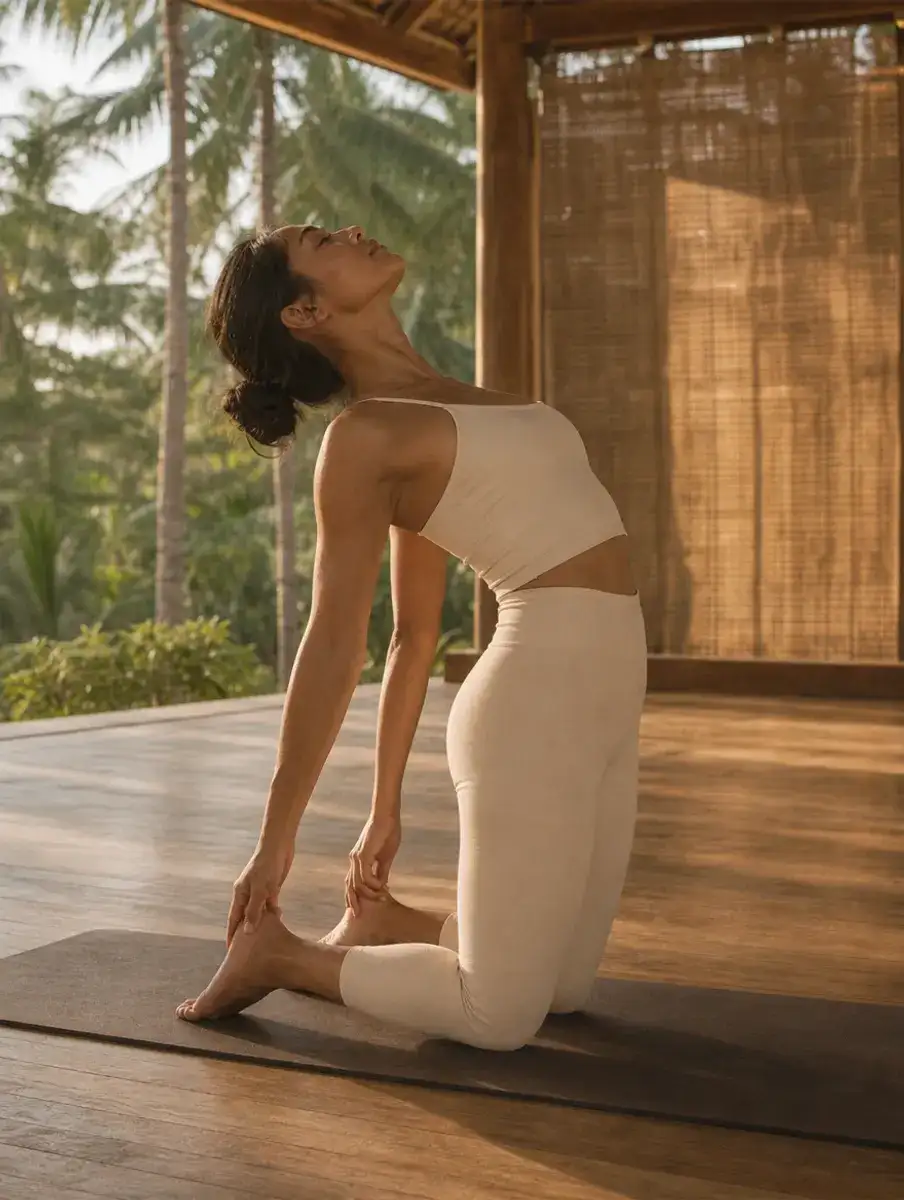
Ustra means camel and asana means posture, so the name is camel posture. In the full shape the front of the body arches up and back from the knees, and the hands rest on the heels.
Camel Pose (Ustrasana) is a kneeling backbend that arches the front of the body up and back. Kneel with the hips over the knees, lift the breastbone first, then lean back only as far as feels controlled for three to five breaths. Keeping the hands on the lower back is a complete version, not a lesser one.
Pronunciation and meaning
Ustrasana: oosh-TRAHS-uh-nuh. The first sound is a soft oo, and the stress sits on TRAHS.
Ustra means camel and asana means posture, so the name is camel posture. In the full shape the front of the body arches up and back from the knees, and the hands rest on the heels.
How to do Camel Pose
- Kneel with your knees hip-width apart and your thighs upright, hips stacked over your knees. Tuck your toes under or keep the tops of the feet flat.
- Place your hands on the back of your pelvis, fingers pointing down, and draw your tailbone gently toward the floor.
- Breathing in, lift your breastbone toward the ceiling, so the chest rises before anything bends back.
- Keeping the hips over the knees, lean back only as far as feels controlled. If there is room, reach one hand and then the other to your heels.
- Keep the neck long: look forward or up, and let the head drop back only if the neck feels comfortable and supported.
- Stay for three to five breaths. To come up, bring your hands back to your hips, press the shins down and lead with the chest, then rest in Child's Pose.
Camel Pose step by step

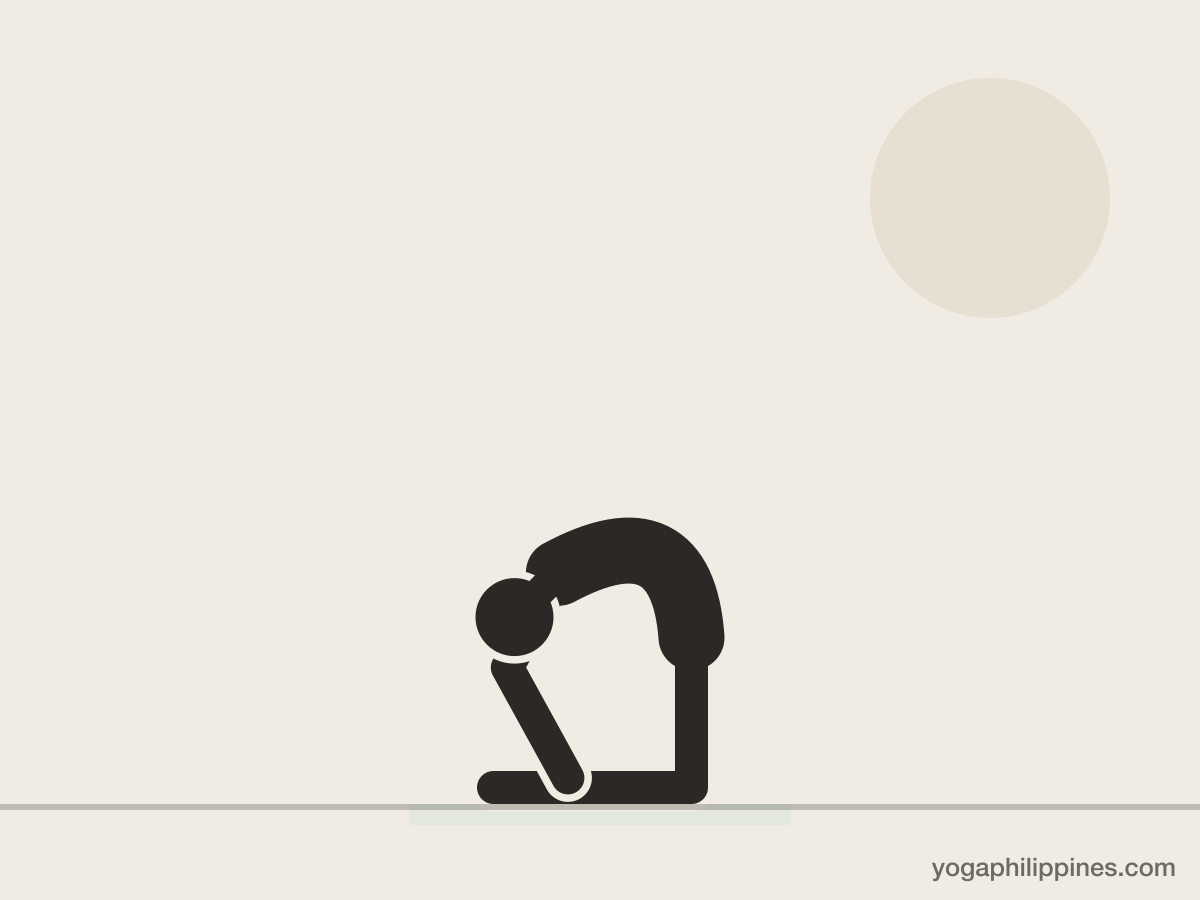
Drawings and video by YogaPhilippines.com, free to reuse under CC BY 4.0 with credit and a link: see the image licence for how to credit.
Camel Pose appears in the Bikram 26 poses, which is printable with holds and cues. For other poses that work the chest, open the pose finder set to the chest.
Teacher's note from Joahnna Lee
“I ask you to go up before you go back. Lift the heart first, then let the backbend follow from the upper back.”
“Press your shins into the mat as if you wanted to stand on them. That keeps the hips forward over the knees.”
“Come out as slowly as you went in. The way out is where I watch the neck most closely.”
Make it easier
- Keep your hands on your lower back the whole time. This is a complete pose, not a lesser one.
- Tuck your toes under to bring the heels higher, or stand a yoga block on its tall end outside each ankle for the hands.
- Fold a blanket under your knees if kneeling is uncomfortable.
- Practise facing a wall with the fronts of the thighs touching it, to feel the hips staying forward.
Pregnancy and after birth
Pregnancy. Avoid. A deep backbend stretches the front of the abdomen and can be hard on balance and the lower back during pregnancy. Ask your OB or midwife about gentler chest openers you can do seated or standing.
After birth. Avoid. Leave deep backbends like Camel out in the early months after birth, because they stretch across an abdominal wall that is still recovering. When your OB or midwife has cleared you, start with the hands on the lower back and only a small lift of the chest.
Wondering about yoga safety in pregnancy? Joahnna Lee covers it trimester by trimester.
Common mistakes
- Letting the hips drift back behind the knees, which turns the pose into a squeeze in the lower back.
- Dropping the head back first and hanging from the neck.
- Throwing the hands back to the heels before the chest has lifted.
- Coming up by pulling the head forward rather than leading with the chest.
- Knees set too wide, so the thighs splay and the lower back pinches.
Camel Pose is a kneeling backbend that asks for patience. Most of the work happens in the thighs and the upper back, not in the lower back. It belongs later in a practice, once the body is warm.
In a Vinyasa yoga class the thighs and the upper back are usually warmed first, so the backbend has somewhere steady to come from.
If Camel becomes comfortable over many months, its bigger relative is Wheel, a backbend pressed up from lying down, but there is no need to go there at all. The full list of backbend yoga poses, in order of effort shows where Camel sits among them.
The belly-down version of this deep front-body stretch is Bow Pose, holding the ankles from the floor. From the same kneeling base, one leg can step out to the side for Gate Pose, a kneeling side bend.
Prep poses for Camel Pose
Poses that warm up the same body areas at a lower intensity, so Camel Pose feels steadier when you get there.
- Cobra Pose (Bhujangasana) a direct preparation, beginner
- Bridge Pose (Setu Bandha Sarvangasana) a direct preparation, beginner plus
- Dancer Pose (Natarajasana) gentler work for the same area, intermediate
- Upward-Facing Dog (Urdhva Mukha Svanasana) gentler work for the same area, intermediate
Counter-poses for Camel Pose
Shapes that move the body the other way or let it rest straight after Camel Pose.
- Balasana (Child's Pose) beginner
Where to go next after Camel Pose
These poses list Camel Pose as a preparation, so they are a natural next step once it feels comfortable.
- Wheel Pose (Urdhva Dhanurasana) advanced
- King Pigeon Pose (Eka Pada Rajakapotasana) advanced plus
Props that help in Camel Pose
- Block: brings the floor closer under the hands or sits under the hips.
- Blanket: pads the knees and the tops of the feet.
- Wall: gives a steady point to lean on or press into for balance and alignment.
Programs and sessions that use Camel Pose
- Sequences: Bikram 26 poses
This page is one of the sources behind the pose quiz.
Sources: Mayo Clinic, Fitness program: 5 steps to get started; NCCIH (US National Institutes of Health), Yoga: Effectiveness and Safety; NHS, Exercise in pregnancy; CDC, Pregnant & Postpartum Activity: An Overview; Canadian Family Physician (Chan et al., 2014), via PubMed Central, Hot yoga and pregnancy: Fitness and hyperthermia. Last reviewed 2 October 2026.
Camel Pose questions
Why do I feel dizzy in Camel Pose?
Some people feel light-headed when they drop the head back or come up quickly. Keep your gaze forward, rise slowly with the chest leading, and rest in Child's Pose afterwards. If the dizziness keeps happening, stop doing the pose and mention it to a doctor.
What if I cannot reach my heels in Camel Pose?
Keep your hands on your lower back, tuck your toes to lift the heels, or use blocks beside your ankles. Reaching the heels is not the point; a lifted chest and hips over the knees are.
What is Camel Pose good for?
Camel Pose stretches the front of the body, from the thighs and hip fronts through the belly and chest, while the upper back works to lift and arch. Many people find it a strong chest opener after desk days. It belongs later in a practice, once the body is warm, and is usually followed by Child's Pose.
Is Camel Pose safe for beginners?
Yes, if you start with the gentlest version. Keep your hands on your lower back, lift the chest before leaning back, and keep the hips over the knees. Look forward rather than dropping the head. Reaching the heels can wait for months, or never come, and the hands-on-hips version is a complete pose.
Who should not do Camel Pose?
Leave Camel out, or keep only a small lift with the hands on the lower back, if you have a lower back, neck or knee injury, recent surgery, or feel dizzy in backbends. Kneel on a folded blanket if the knees are sensitive. If you have a health condition, check with your doctor or physio first.
Updated