Pose library · Natarajasana · reviewed by a teacher
Dancer Pose (Natarajasana)
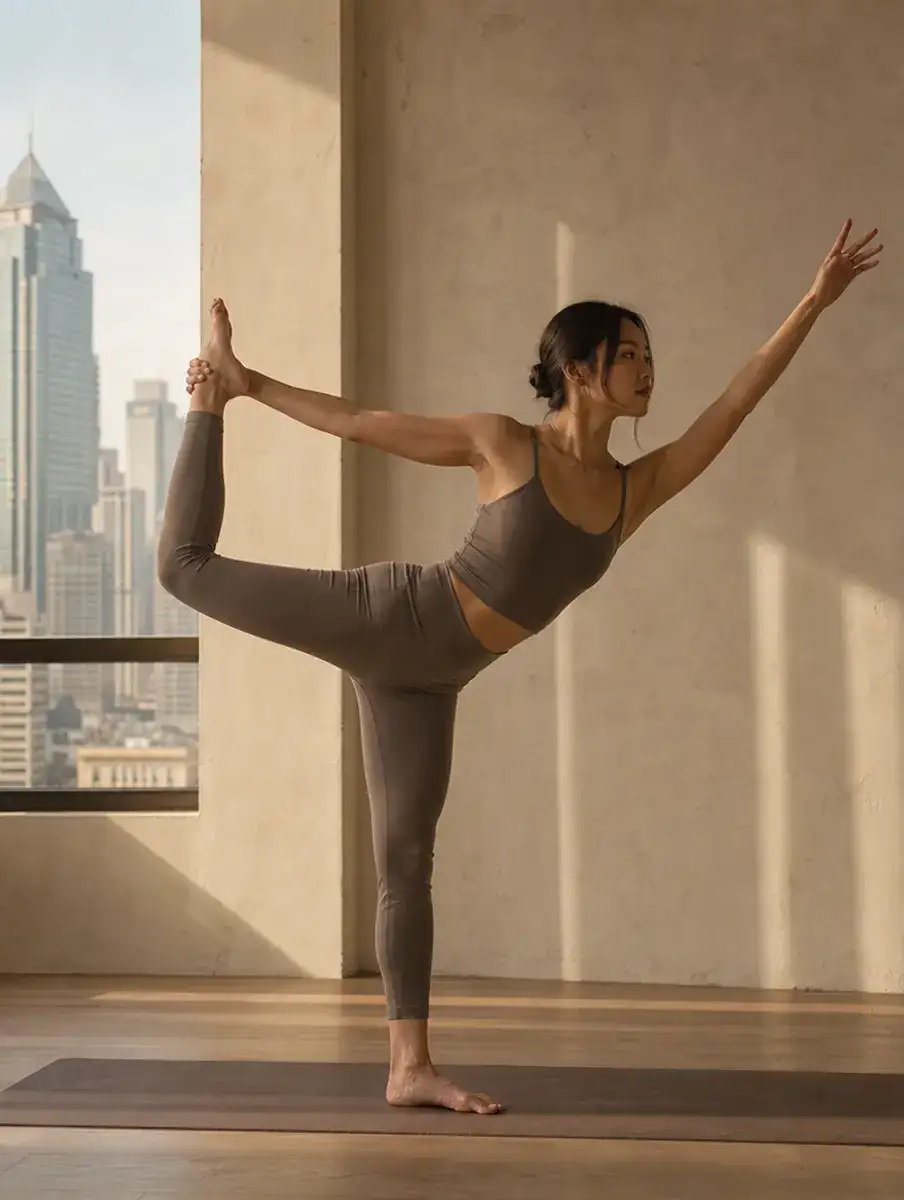
Dancer Pose is a standing balance and backbend: you stand on one leg, hold the other foot behind you and kick it back into your hand as the chest tips forward. Nataraja means lord of the dance, a name for Shiva in Indian stories, and asana means posture. It asks for balance, open hips and patience.
Dancer Pose (Natarajasana) is a standing balance and backbend that asks for balance and open hips. Stand near a wall, hold the inside of the back foot, press it into your hand and let the chest tip forward for three to five breaths. Use a strap if you cannot reach the foot, and keep the standing knee soft.
Pronunciation and meaning
Natarajasana: nut-uh-raj-AHS-uh-nuh. The j is soft, as in raja, and the stress falls on AHS.
Dancer Pose is a standing balance and backbend: you stand on one leg, hold the other foot behind you and kick it back into your hand as the chest tips forward. Nataraja means lord of the dance, a name for Shiva in Indian stories, and asana means posture. It asks for balance, open hips and patience.
How to do Dancer Pose
- Stand tall near a wall, close enough to touch it with your left hand.
- Shift your weight onto the left foot. Bend the right knee and hold the inside of the right foot or ankle with the right hand, knees side by side.
- Reach the left arm forward and up, or rest the left hand on the wall.
- Press the right foot back into your hand. As the foot moves back and up, let the chest tip forward a little to balance it.
- Keep the hips level and the standing knee soft. Stay for three to five breaths with your gaze on one still point.
- Lower the foot slowly, stand on both feet for a breath and repeat on the other side.
Dancer Pose step by step

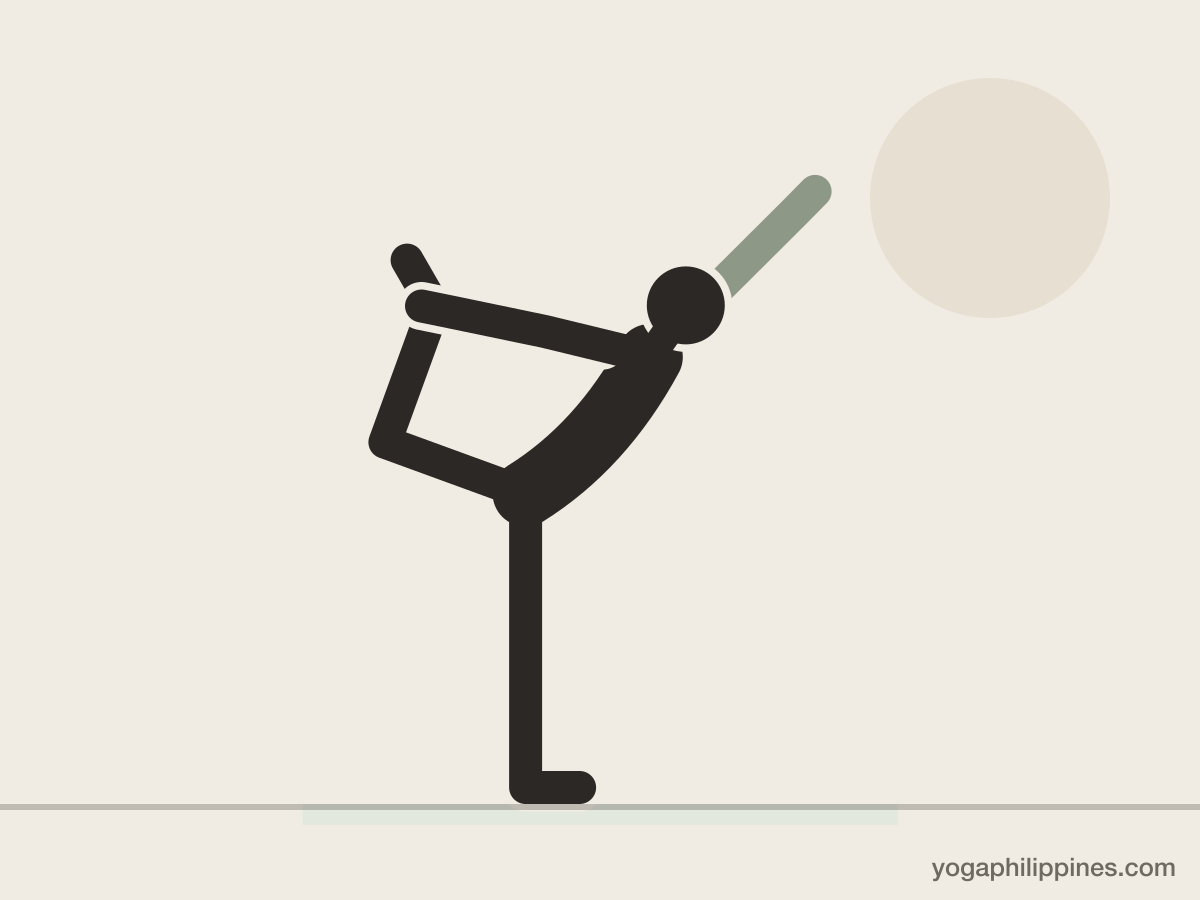
Drawings and video by YogaPhilippines.com, free to reuse under CC BY 4.0 with credit and a link: see the image licence for how to credit.
Dancer Pose appears in the 90-minute Bikram 26 poses and the 6-pose standing balance sequence, both printable with holds and cues. For other poses that work the quads, open the pose finder set to the quads.
Teacher's note from Joahnna Lee
“The lift comes from kicking the foot into the hand, not from pulling the foot with the arm.”
“Keep the lifted knee pointing down and back rather than out to the side, so the hips stay square.”
“Tip forward only as far as the leg rises behind you. They move together, like a seesaw.”
Make it easier
- Loop a strap around the lifted foot if you cannot reach it, and hold the strap.
- Stay upright as a standing thigh stretch, with a hand on the wall, before adding the forward tip.
Pregnancy and after birth
Pregnancy. Avoid. A backbend balanced on one leg adds a fall risk as your centre of gravity shifts. If you want the stretch, hold a wall and take a gentle upright thigh stretch instead, and check with your OB or midwife before you start.
After birth. Adapt. After your doctor or midwife clears you, begin with the upright version and a hand on the wall. Add the forward tip once your balance and core feel familiar again.
See prenatal yoga notes by trimester before you adapt a pose.
Common mistakes
- Letting the lifted knee swing out to the side, which twists the lower back.
- Pinching the lower back to lift the leg higher. Lengthen the tailbone down and lift through the chest instead.
- Locking the standing knee.
Dancer Pose is a balance with a backbend inside it. It is one of the prettiest shapes to watch and one of the easiest to fall out of, which is why a wall nearby is a friend, not a crutch.
It usually comes near the peak of a flowing Vinyasa practice, once the legs are warm and the simpler one-legged Tree has woken up the standing foot.
Of all the balances on the page of standing poses, this is usually the one to leave until last.
Reaching back for the foot is also the key action in King Pigeon Pose, a kneeling backbend from Pigeon. If the full balance is too much today, Flamingo Pose, with the knee lifted in front trains the same standing leg.
Prep poses for Dancer Pose
Poses that warm up the same body areas at a lower intensity, so Dancer Pose feels steadier when you get there.
- Tree Pose (Vrksasana) a direct preparation, beginner
- Standing Quad Stretch a direct preparation, beginner
Counter-poses for Dancer Pose
Shapes that move the body the other way or let it rest straight after Dancer Pose.
- Standing Forward Bend (Uttanasana) beginner
- Mountain Pose (Tadasana) beginner
Where to go next after Dancer Pose
These poses list Dancer Pose as a preparation, so they are a natural next step once it feels comfortable.
- King Pigeon Pose (Eka Pada Rajakapotasana) advanced plus
Props that help in Dancer Pose
- Strap: extends the arms when the hands do not reach the feet or each other yet.
- Wall: gives a steady point to lean on or press into for balance and alignment.
Programs and sessions that use Dancer Pose
- The month-long yoga challenge 1 of its 30 sessions
- Sequences: Bikram sequence and standing balance sequence
- Practice app sessions: balance
Sources: Mayo Clinic, Fitness program: 5 steps to get started; NCCIH (US National Institutes of Health), Yoga: Effectiveness and Safety; NHS, Exercise in pregnancy; CDC, Pregnant & Postpartum Activity: An Overview; Canadian Family Physician (Chan et al., 2014), via PubMed Central, Hot yoga and pregnancy: Fitness and hyperthermia. Last reviewed 2 October 2026.
Dancer Pose questions
Why can't I balance in Dancer Pose?
It asks for balance and a backbend at the same time, so most people wobble. Practise beside a wall, keep the gaze on one point and the standing knee soft, and stay upright until the thigh stretch feels easy.
How do I get my leg higher in Dancer Pose?
Press the foot back into the hand rather than pulling it up, and give it time. The height comes from the front of the hip and thigh opening over weeks of practice, not from forcing it on the day.
What is Dancer Pose good for?
Dancer Pose builds balance and strength in the standing leg and foot, stretches the front of the lifted thigh and hip, and opens the chest and shoulders as the foot kicks back into the hand. It also asks for focus and patience. Many people practise it near the peak of a Vinyasa class, once the legs are warm.
Is Dancer Pose a heart opener?
Yes. Dancer Pose is a backbend as well as a balance, so it opens the chest and the fronts of the shoulders as the lifted foot presses back into your hand. Lift through the chest and lengthen the tailbone down rather than pinching the lower back, and tip forward only as far as the leg rises behind you.
What is the difference between Standing Bow and Dancer Pose?
They are close cousins. Standing Bow is the name used in Bikram and Hot 26 classes for a very similar balance: hold the back foot, kick it into the hand and tip forward. That version usually tips the chest lower, with the free arm straight ahead, while Dancer often stays more upright.
Updated