Pose library · Vajrasana · reviewed by a teacher
Thunderbolt Pose (Vajrasana)
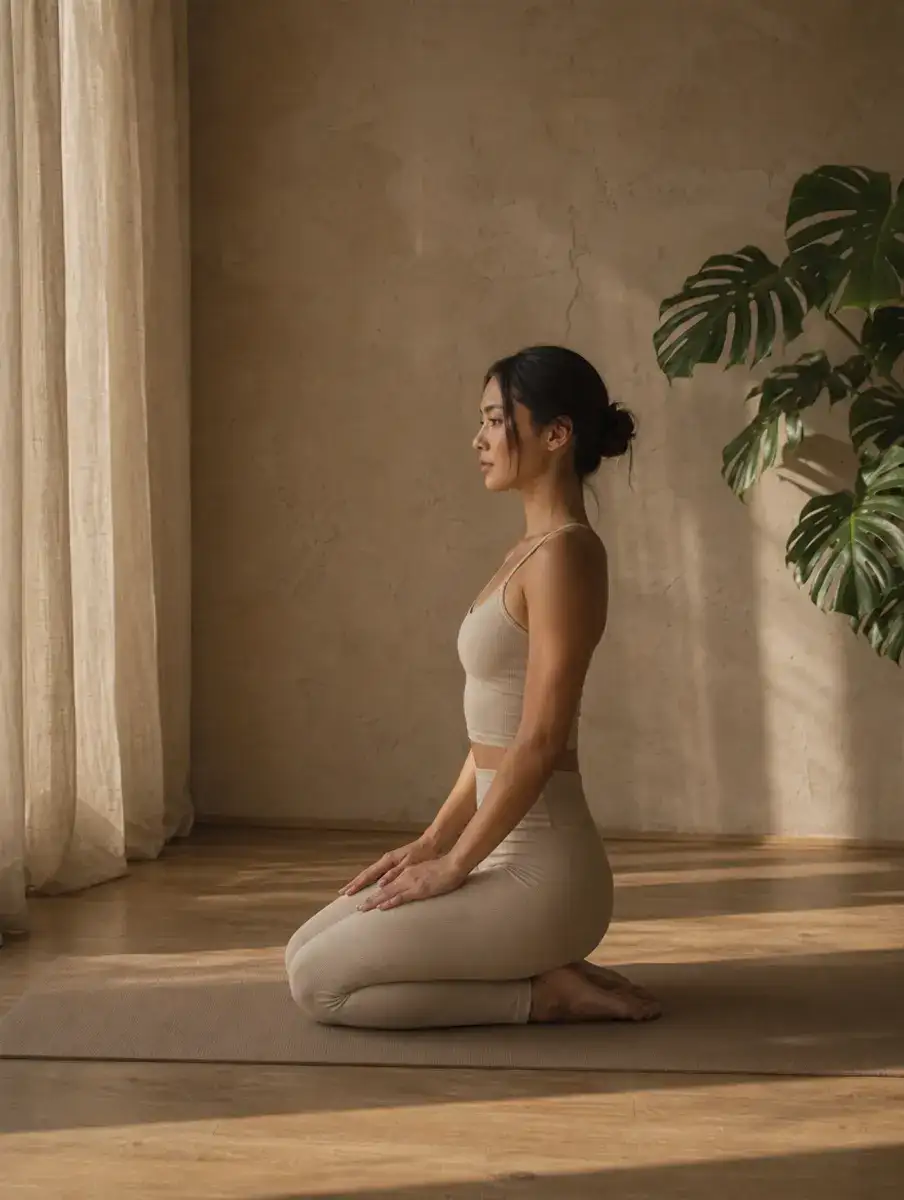
Vajra means thunderbolt, and is also translated as diamond, while asana means posture. It is the kneeling seat: you sit back on your heels with the spine upright.
Thunderbolt Pose (Vajrasana) is the kneeling seat: you sit back on your heels with the spine upright. Kneel with the big toes touching, let the heels open slightly, sit back slowly and rest the hands on the thighs for one to three minutes. Sit on a block to ease the knees, and come out if the feet go numb.
Pronunciation and meaning
Vajrasana: vahj-RAHS-uh-nuh. The j is soft, as in jar, and RAHS takes the stress.
Vajra means thunderbolt, and is also translated as diamond, while asana means posture. It is the kneeling seat: you sit back on your heels with the spine upright.
How to do Thunderbolt Pose
- Kneel on your mat with your knees together or slightly apart and the tops of your feet flat on the floor.
- Bring your big toes to touch and let your heels open slightly, making a small cradle for your hips.
- Sit back slowly onto your heels, or onto whatever support you have placed there.
- Rest your hands on your thighs and stack your shoulders over your hips.
- Lengthen through the spine and relax your shoulders and face.
- Stay for one to three minutes to start, then lean forward onto your hands and uncurl your legs one at a time.
Thunderbolt Pose step by step

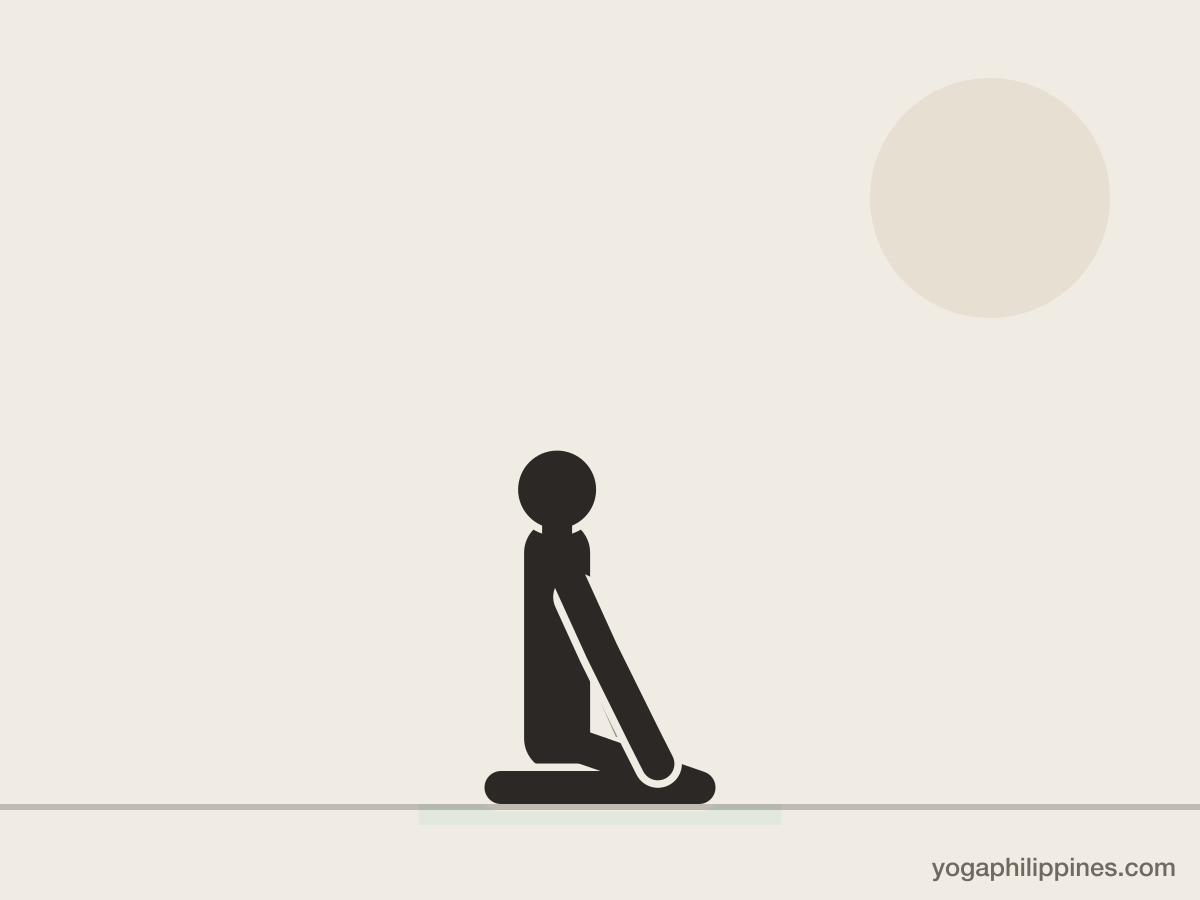
Drawings and video by YogaPhilippines.com, free to reuse under CC BY 4.0 with credit and a link: see the image licence for how to credit.
For other poses that work the ankles, open the pose finder set to the ankles.
Teacher's note from Joahnna Lee
“Let the weight drop evenly through both sit bones. Check that you are not leaning into one heel.”
“Tingling in the feet is common here. When it starts, I want you to come out, shake the legs and try again with a block, rather than sit through numbness.”
“Feel the tops of the feet and the shins spread on the mat, like a wide base under a tall column.”
Make it easier
- Place a block between your feet and sit on it to reduce the bend in the knees.
- Put a folded blanket between your thighs and calves.
- Roll a small towel under the fronts of your ankles if the tops of the feet ache.
- Kneel on a folded blanket if the mat feels hard on your knees.
Pregnancy and after birth
Pregnancy. Adapt. Take the knees a little apart so the belly has room, and sit on a block to ease the bend in your knees and ankles. Come out whenever your legs feel tingly, and check with your OB or midwife before starting yoga in pregnancy.
After birth. Adapt. After your OB or midwife has cleared you to exercise, sit on a block or cushion and keep the hold short at first. If the perineum or a scar is still tender, choose a chair or a raised seat instead.
Prenatal and postpartum guides live on joahnnalee.com.
Common mistakes
- Sitting through numb feet. Come out and add height under the hips.
- Letting the feet splay out wide to the sides, which twists the knees.
- Slumping the lower back. Lift the chest a little and sit higher if you need to.
- Standing up quickly after a long hold, before the legs have woken up.
Thunderbolt Pose is a steady kneeling seat. It is also the starting point for several other poses, including Camel and Child’s Pose. It asks a lot of the knees and ankles, so props make a real difference here.
For beginner yoga, a block between the feet or a folded blanket under the knees is a good place to begin.
When sitting on the heels is easy, Hero Pose, with the feet beside the hips takes the same kneel a step further, on a block, and Reclined Hero Pose, leaning back onto a bolster is the step after that, only for knees that are fully comfortable. How the two seats differ, row by row, is on the page comparing Vajrasana and Virasana.
This kneel is the traditional seat for Lion Pose, a strong breath out through the mouth.
Where to go next after Thunderbolt Pose
These poses list Thunderbolt Pose as a preparation, so they are a natural next step once it feels comfortable.
- Hero Pose (Virasana) beginner plus
- Saddle Pose (Supta Vajrasana) advanced
Props that help in Thunderbolt Pose
- Block: brings the floor closer under the hands or sits under the hips.
- Blanket: pads the knees and the tops of the feet.
Programs and sessions that use Thunderbolt Pose
- Generated example flows: 20-minute hip flow and 30-minute back-friendly session, no weight on the wrists
Sources: Mayo Clinic, Fitness program: 5 steps to get started; NCCIH (US National Institutes of Health), Yoga: Effectiveness and Safety; NHS, Exercise in pregnancy; CDC, Pregnant & Postpartum Activity: An Overview; Canadian Family Physician (Chan et al., 2014), via PubMed Central, Hot yoga and pregnancy: Fitness and hyperthermia; NHS, Knee pain. Last reviewed 2 October 2026.
Thunderbolt Pose questions
Does Vajrasana help digestion?
You will often read that sitting in Vajrasana after meals helps digestion. That is a traditional recommendation, not a proven effect. If you have a digestive complaint, speak to a doctor; if you simply enjoy sitting this way after a meal, it is a comfortable seat.
Can I sit in Vajrasana if my knees hurt?
Try it with a block under your hips or a blanket behind your knees. If it still hurts, sit cross-legged or on a chair instead, and ask a doctor or physiotherapist about your knees.
How long should you sit in Vajrasana?
Start with one to three minutes. Stay longer only if the knees, ankles and feet stay comfortable. Tingling or numb feet are the sign to come out: lean forward onto your hands, uncurl the legs one at a time, shake them out, and try again with a block under the hips.
Why is Vajrasana painful?
It asks for a deep bend in the knees and a long stretch across the tops of the feet and ankles, which many bodies are not used to. Sit on a block between the feet, roll a towel under the ankles and kneel on a blanket. If the knees still hurt, sit cross-legged and check with your doctor or physio.
Pairs well with
Updated