Pose library · Halasana
Plow Pose (Halasana)
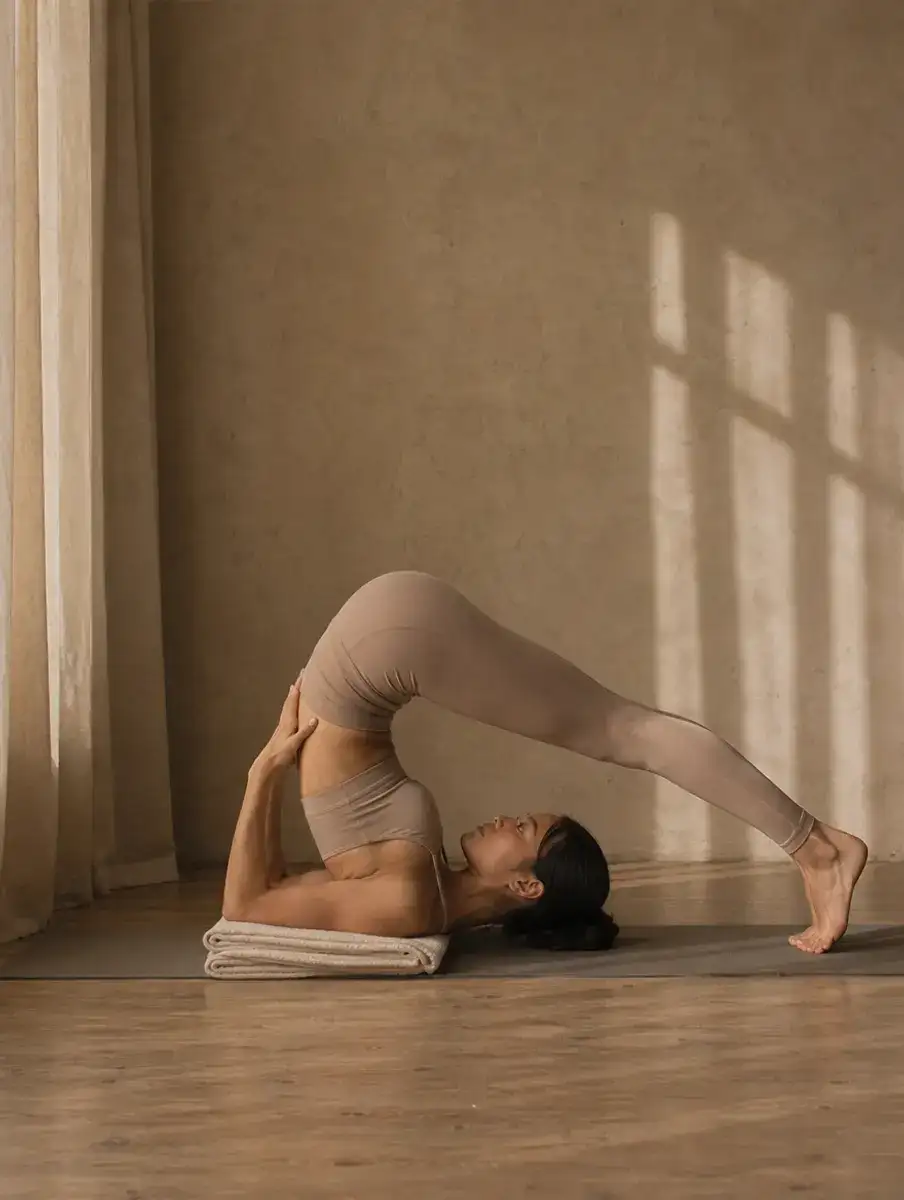
Hala means plough and asana means posture. Lying on your back, you lift the hips over the shoulders and lower the feet behind your head, so the body takes the shape of a traditional plough.
Plow Pose (Halasana) is an inversion lying on your back with the hips over the shoulders and the feet lowered behind the head. Lie with the shoulders on a firm blanket stack and the head on the floor, lift the hips and lower the feet toward a chair. Never turn the head, and come out if the neck complains.
Pronunciation and meaning
Halasana: hah-LAHS-uh-nuh. Hala rhymes with the start of holiday, and the stress falls on LAHS.
Hala means plough and asana means posture. Lying on your back, you lift the hips over the shoulders and lower the feet behind your head, so the body takes the shape of a traditional plough.
How to do Plow Pose
- Fold two or three blankets into a firm stack and lie with your shoulders on the stack and your head on the floor, so the neck is off the edge and free.
- Bend your knees, feet flat, and press your arms into the floor beside you.
- On an exhale, roll the knees toward the chest and lift the hips, supporting your back with your hands if that helps.
- Lower your feet toward a chair or the floor behind your head only as far as the neck feels free. Keep the gaze straight up and never turn the head.
- Stay for five to ten slow breaths. If the breath feels squeezed, bring the knees closer to the forehead or use a higher support.
- To come out, bend the knees and roll down slowly, one part of the spine at a time, with the hands or arms braking the movement.
Plow Pose step by step

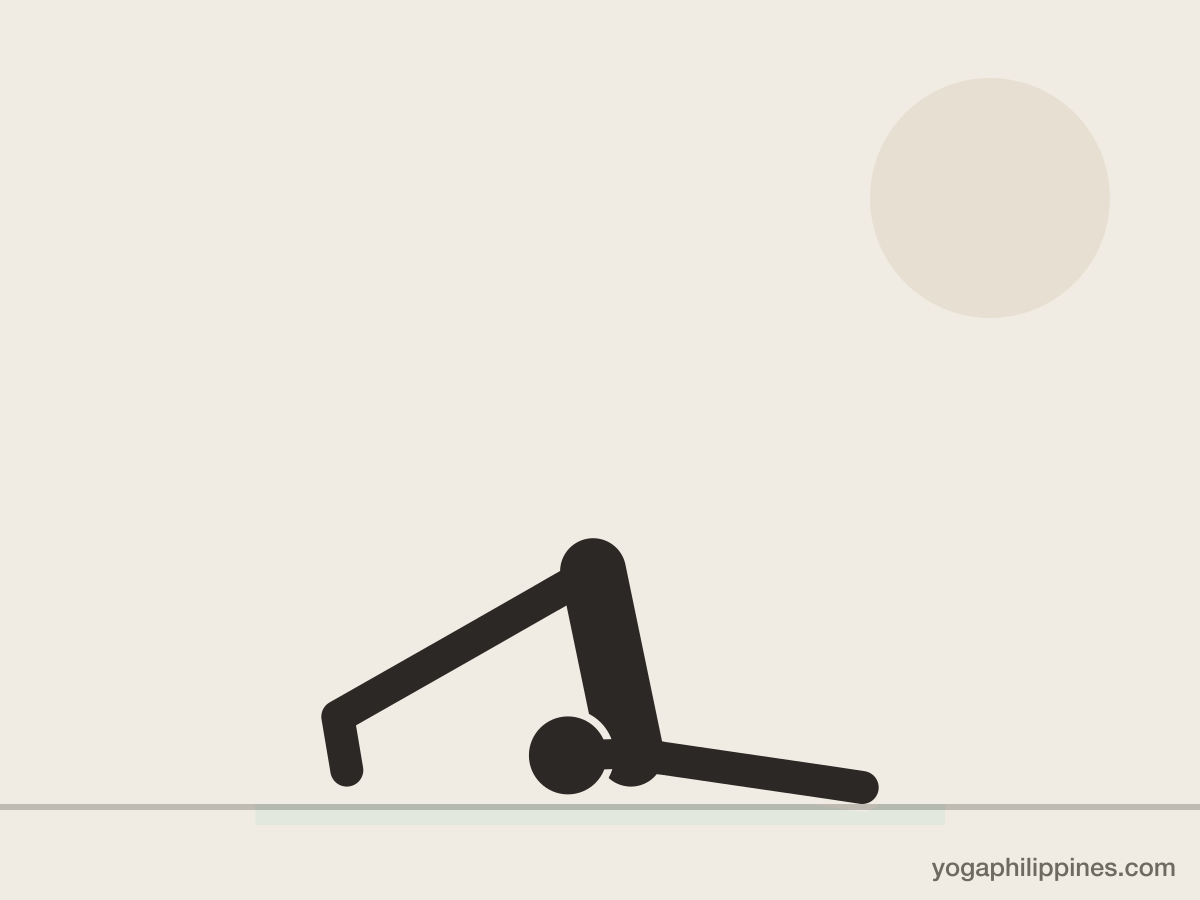
Drawings and video by YogaPhilippines.com, free to reuse under CC BY 4.0 with credit and a link: see the image licence for how to credit.
Plow Pose appears in the 34-pose Ashtanga primary series, which is printable with holds and cues. For other poses that work the hamstrings, open the pose finder set to the hamstrings.
Make it easier
- Rest the feet on the seat of a chair or on blocks behind you instead of the floor.
- Keep the knees bent and let them rest near the forehead for a gentler shape.
- Skip the pose and take Legs Up the Wall, which gives some of the calm of an inversion without weight on the neck.
Pregnancy and after birth
Pregnancy. Avoid. Plow folds the belly and loads the neck. Legs Up the Wall with support, or a side-lying rest, are kinder choices. Check with your OB or midwife.
After birth. Avoid at first. Wait until your doctor or midwife has cleared you and the core feels steady again, then return slowly with blankets and a chair, ideally with a teacher watching.
Before adapting a pose, read is yoga safe during pregnancy on joahnnalee.com.
Common mistakes
- Practising on a flat floor with no blankets, so the weight falls onto the neck.
- Turning the head to look around once the hips are up. Keep the head still.
- Pushing the feet to the floor when the neck or lower back is complaining.
Plow Pose is a deep forward fold done upside down. In many Hatha classes it comes near the end, often after a shoulder stand, and it is usually followed by a gentle backbend such as Fish.
It is an advanced pose because the weight sits near the neck. Learn it with a teacher, set up the blankets every time, and count the version with feet on a chair as the main pose rather than a step on the way.
What makes plow pose safer?
A firm blanket stack under the shoulders so the neck keeps its natural curve, a chair or blocks for the feet, and a head that stays still. Afterwards, a short Fish Pose, the counterpose with the chest lifted, and a few minutes in Legs Up the Wall let the body settle.
Who should skip it?
Anyone with a neck or back injury, high blood pressure, glaucoma or a heavy cold, and anyone who is pregnant. Bridge Pose, a gentle back-lying lift, is a calmer choice for most days. The neck stretches routine is a better plan if the neck already feels tight.
Prep poses for Plow Pose
Poses that warm up the same body areas at a lower intensity, so Plow Pose feels steadier when you get there.
- Bridge Pose (Setu Bandha Sarvangasana) a direct preparation, beginner plus
- Legs Up the Wall (Viparita Karani) a direct preparation, beginner
- Downward-Facing Dog (Adho Mukha Svanasana) gentler work for the same area, beginner plus
- Sun Salutation (Surya Namaskar) gentler work for the same area, beginner plus
Counter-poses for Plow Pose
Shapes that move the body the other way or let it rest straight after Plow Pose.
- Fish Pose (Matsyasana) beginner plus
Where to go next after Plow Pose
These poses list Plow Pose as a preparation, so they are a natural next step once it feels comfortable.
Easier and harder variations of Plow Pose
Related poses from the same family that start from the same position and do a similar kind of work; Plow Pose itself is advanced.
- Harder: Scorpion Pose (Vrschikasana) advanced plus
Props that help in Plow Pose
- Blanket: pads the floor under the forearms, head or shoulders.
- Chair: brings the floor closer, or gives a seat or a hand rest for a gentler version.
- Block: gives the hands or forearms a fixed point to press into.
Programs and sessions that use Plow Pose
- Sequences: primary series sequence
Sources: Mayo Clinic, Fitness program: 5 steps to get started; NCCIH (US National Institutes of Health), Yoga: Effectiveness and Safety; PLoS One (Cramer et al., 2013), via PubMed Central, Adverse Events Associated with Yoga: A Systematic Review of Published Case Reports and Case Series; PLoS One (Jasien et al., 2015), via PubMed Central, Intraocular Pressure Rise in Subjects with and without Glaucoma during Four Common Yoga Positions; NHS, Neck pain. Last reviewed 2 October 2026.
Plow Pose questions
Is plow pose bad for your neck?
It can load the neck heavily, which is why careful set up matters. Blankets under the shoulders, a chair for the feet and a still head make it gentler. If you have any neck injury, or feel pain or tingling, skip it and see a doctor or physio.
Why does the breath feel tight in plow pose?
The folded shape presses the belly toward the chest, so the breath naturally feels smaller. Bring the feet onto a chair or bend the knees to make more room. If you feel panicky or dizzy, come out slowly.
Should beginners try plow pose?
It is best learned with a teacher who can set up the blankets and watch your neck. Many beginners are better served by Bridge Pose and Legs Up the Wall until the back and shoulders are used to inversions.
What is Plow Pose good for?
Plow Pose is a deep forward fold done upside down, so it stretches the whole back of the body, from the backs of the legs along the spine to the shoulders. Many people find it a quiet, inward shape near the end of a class, often after a shoulder stand and before Fish. It suits people already comfortable with inversions.
Is Plow Pose difficult?
Yes, it counts as an advanced pose, mainly because the weight sits near the neck. It also asks for a flexible back and hamstrings, and the folded shape makes the breath feel smaller. Learn it with a teacher, set up blankets under the shoulders every time, and count the version with the feet on a chair as the main pose.
Pairs well with
Updated