Pose library · Salamba Sarvangasana
Shoulder Stand (Salamba Sarvangasana)
Salamba means supported, sarva means all, anga means limb and asana means posture. The name is often given as the all-limbs posture: lying on the back, you lift the legs and hips over the shoulders, supported by the hands and upper arms.
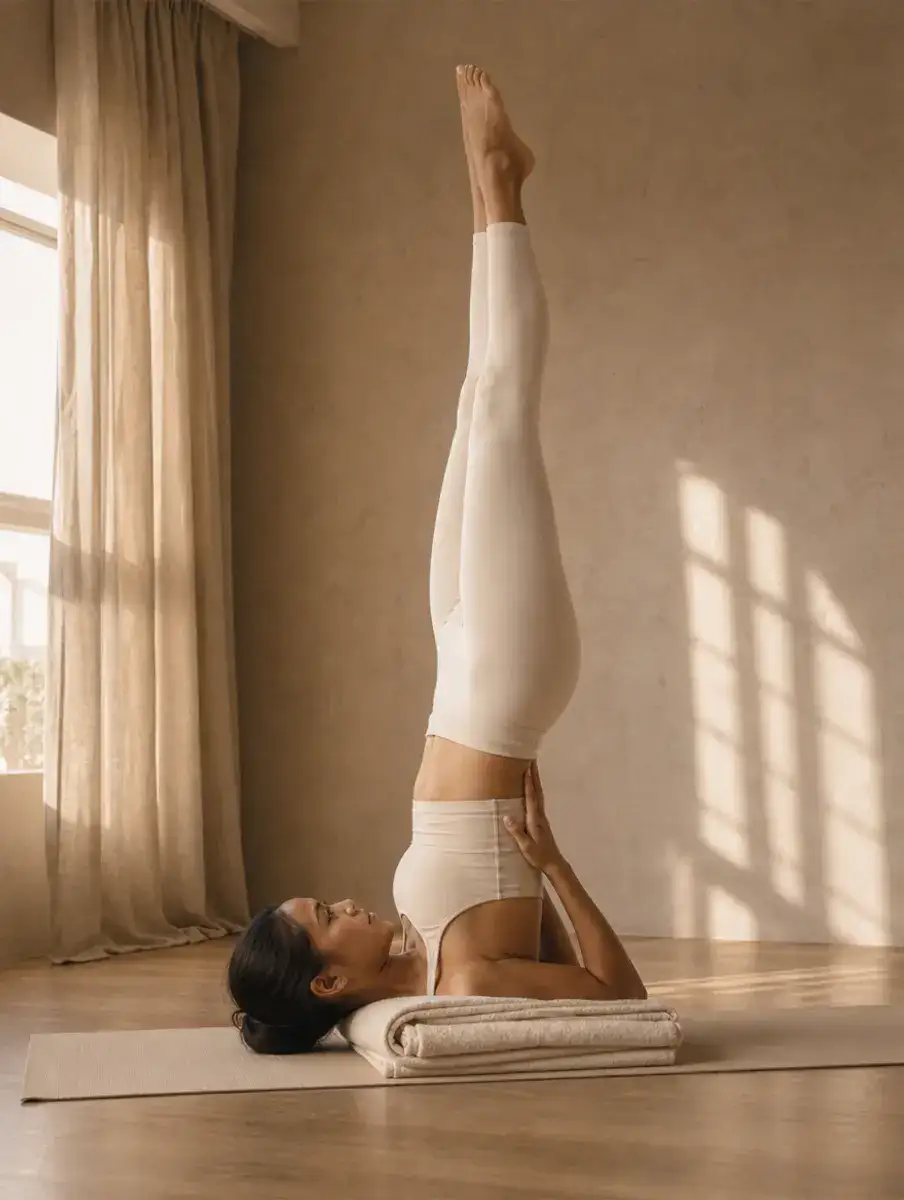
Shoulder Stand (Salamba Sarvangasana) is an inversion that lifts the legs and hips over the shoulders, hands supporting the back. Learn it with a teacher, with the shoulders on a firm blanket stack and the head on the floor, staying five to ten breaths. Never turn the head; Legs Up the Wall is a gentler alternative.
Pronunciation and meaning
Salamba Sarvangasana: sah-LUM-buh sar-vahn-GAHS-uh-nuh. Salamba stresses the second syllable, and Sarvangasana stresses GAHS.
Salamba means supported, sarva means all, anga means limb and asana means posture. The name is often given as the all-limbs posture: lying on the back, you lift the legs and hips over the shoulders, supported by the hands and upper arms.
How to do Shoulder Stand
- Learn this pose with a teacher. Fold two or three blankets into a firm stack and lie with your shoulders on the stack and your head on the floor, so the neck is free.
- Bend your knees with the feet flat and the arms by your sides. On an exhale, roll the knees toward the chest and lift the hips.
- Bend your elbows and place your hands on your back, fingers toward the ceiling, with the elbows about shoulder-width apart on the blankets.
- Lift the legs up one at a time, straight or bent, keeping the weight on the shoulders and upper arms, not the neck. Keep the head still and the gaze up.
- Stay for five to ten slow breaths to start. Come down sooner if the neck, face or breath feels strained.
- To come out, bend the knees toward the forehead, release the hands, and roll down slowly one part of the spine at a time.
Shoulder Stand step by step

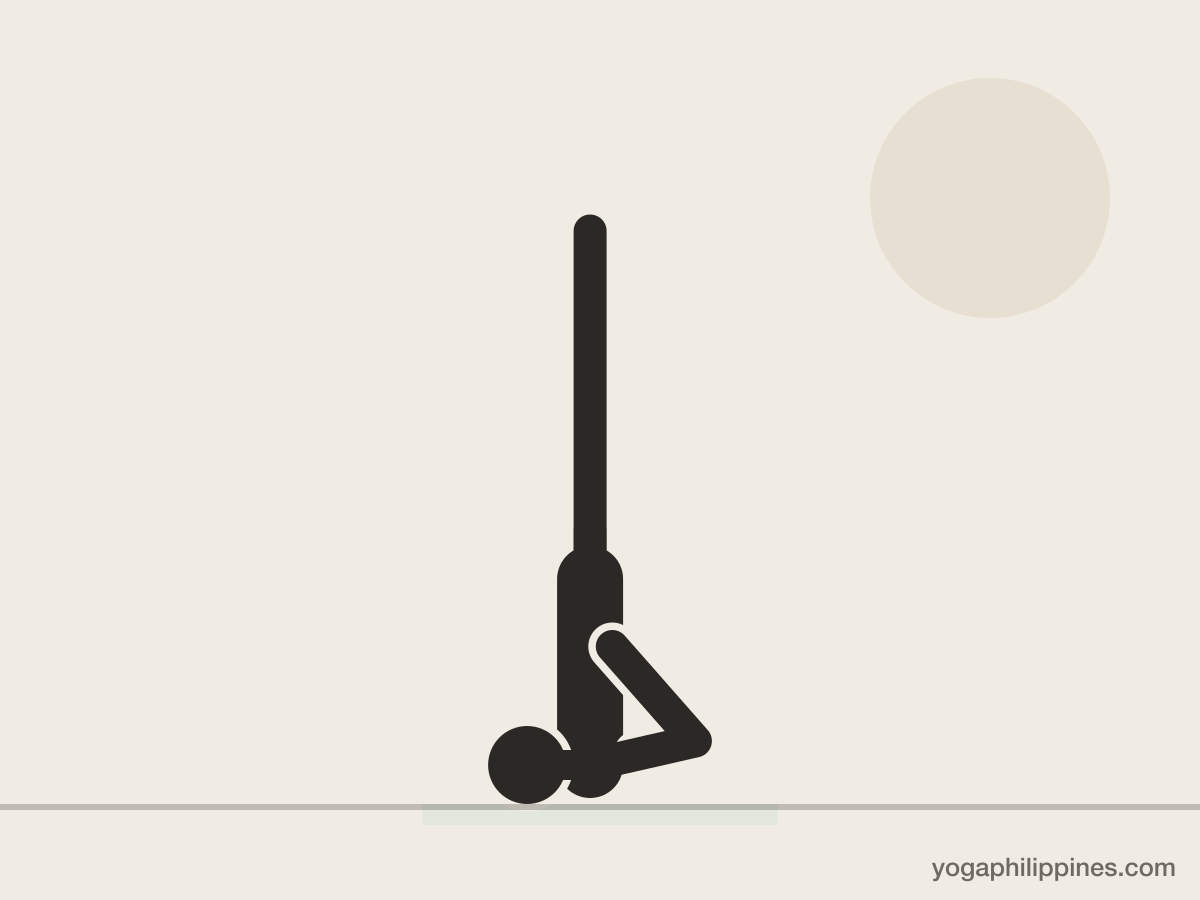
Drawings and video by YogaPhilippines.com, free to reuse under CC BY 4.0 with credit and a link: see the image licence for how to credit.
Shoulder Stand appears in the 90-minute Ashtanga primary series, which is printable with holds and cues. For other poses that work the shoulders, open the pose finder set to the shoulders.
Make it easier
- Practise with the feet on a wall: lie with the hips near the wall, walk the feet up, and lift the hips only partway.
- Take Legs Up the Wall instead, which gives a calm, restful inversion with no weight on the neck.
- Keep the knees bent above the face in a half shoulder stand, with the hips lower.
Pregnancy and after birth
Pregnancy. Avoid. Inversions with weight on the neck are not advised in pregnancy for most people. A supported side-lying rest or Legs Up the Wall with bolsters is kinder. Check with your OB or midwife.
After birth. Avoid at first. Wait until your doctor or midwife has cleared you and your core feels steady, and avoid inversions while bleeding after the birth. Return slowly with a teacher and a wall.
For more on practising through pregnancy, see Joahnna Lee Yoga.
Common mistakes
- Practising without blankets, so the neck flattens into the floor and takes the weight.
- Turning the head while up, which twists the neck under load.
- Letting the elbows splay wide so the body sinks onto the neck.
Shoulder Stand is one of the classic inversions of Hatha yoga, often taught near the end of a class and usually followed by Plow and then a counterpose such as Fish. It is advanced because the weight sits so close to the neck.
Set up matters more than how long you stay. Learn it with a teacher, use the blankets every time, and count the wall version as a full practice.
Is there a gentler version of shoulder stand?
Yes. Legs Up the Wall, the restful inversion, keeps the hips on the floor and the neck free, and many people find it calming at the end of a day. A half version with the feet on a wall, or Bridge Pose with a block under the sacrum, also gives the feeling of lifting the hips without the load.
What comes after shoulder stand?
Fish Pose, or Matsyasana, is the traditional counterpose, lifting the chest and lengthening the front of the neck. A few minutes from the neck stretches routine and a quiet rest in Savasana are a calm way to finish.
Prep poses for Shoulder Stand
Poses that warm up the same body areas at a lower intensity, so Shoulder Stand feels steadier when you get there.
- Bridge Pose (Setu Bandha Sarvangasana) a direct preparation, beginner plus
- Legs Up the Wall (Viparita Karani) a direct preparation, beginner
- Plow Pose (Halasana) a direct preparation, advanced
- Dolphin Pose (Ardha Pincha Mayurasana) gentler work for the same area, intermediate
Counter-poses for Shoulder Stand
Shapes that move the body the other way or let it rest straight after Shoulder Stand.
- Fish Pose (Matsyasana) beginner plus
Easier and harder variations of Shoulder Stand
Related poses from the same family that start from the same position and do a similar kind of work; Shoulder Stand itself is advanced.
- Harder: Handstand (Adho Mukha Vrksasana) advanced plus
- Harder: Headstand (Sirsasana) advanced plus
- Harder: Scorpion Pose (Vrschikasana) advanced plus
Props that help in Shoulder Stand
- Blanket: pads the floor under the forearms, head or shoulders.
- Wall: gives a steady point to lean on or press into for balance and alignment.
Programs and sessions that use Shoulder Stand
- Sequences: Ashtanga primary sequence
Sources: Mayo Clinic, Fitness program: 5 steps to get started; NCCIH (US National Institutes of Health), Yoga: Effectiveness and Safety; PLoS One (Cramer et al., 2013), via PubMed Central, Adverse Events Associated with Yoga: A Systematic Review of Published Case Reports and Case Series; PLoS One (Jasien et al., 2015), via PubMed Central, Intraocular Pressure Rise in Subjects with and without Glaucoma during Four Common Yoga Positions; NHS, Neck pain. Last reviewed 2 October 2026.
Shoulder Stand questions
Do you need blankets for shoulder stand?
Most teachers recommend them. A firm stack under the shoulders, with the head on the floor, keeps the neck in its natural curve so the weight goes onto the shoulders and upper arms instead.
How long do you stay in shoulder stand?
Start with five to ten slow breaths. Some experienced students stay longer, but only if the neck, face and breath stay comfortable. Leave before it feels like effort.
Who should not do shoulder stand?
Skip it with any neck injury, high blood pressure, glaucoma or other eye conditions, a heavy cold, during pregnancy, or if your doctor has told you to avoid inversions. Legs Up the Wall is a gentle choice instead.
What is Shoulder Stand good for?
Shoulder Stand works the back, legs and core as they hold the body upright over the shoulders, and the arms support the back. It is a classic inversion, often near the end of a class before Fish Pose. Many people find the wall version or Legs Up the Wall gives a similar calm feeling with no load on the neck.
Is Shoulder Stand difficult?
Yes, it is an advanced pose, mainly because the weight sits so close to the neck. The setup takes practice: a firm blanket stack under the shoulders, elbows in, head still. Learn it with a teacher, start with the feet on a wall or a half shoulder stand, and count those versions as a full practice.
Pairs well with
Updated