Pose library · Ardha Pincha Mayurasana
Dolphin Pose (Ardha Pincha Mayurasana)
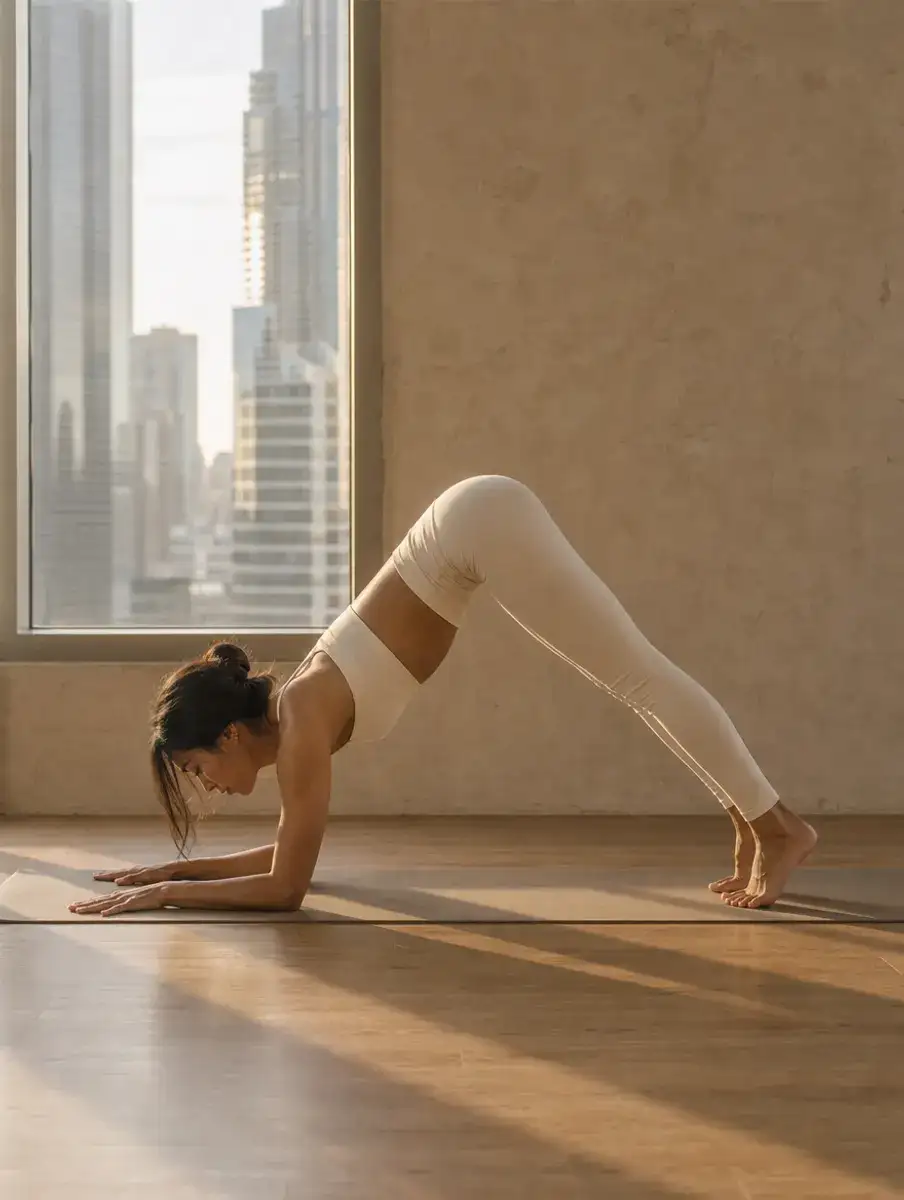
Ardha means half, pincha means feather, mayura means peacock and asana means posture, so the name is half feathered peacock, a step toward the forearm balance. In English it is Dolphin: a Downward-Facing Dog on the forearms, with the hips high and the head hanging.
Dolphin Pose (Ardha Pincha Mayurasana) is a Downward-Facing Dog on the forearms that works the shoulders and arms. From hands and knees, lower to the forearms, tuck the toes and lift the hips with the knees bent, staying five to eight breaths. Keep the elbows under the shoulders and the head off the floor.
Pronunciation and meaning
Ardha Pincha Mayurasana: AR-duh PIN-chuh mah-yoo-RAHS-uh-nuh. Each word stresses its first syllable except Mayurasana, which stresses RAHS.
Ardha means half, pincha means feather, mayura means peacock and asana means posture, so the name is half feathered peacock, a step toward the forearm balance. In English it is Dolphin: a Downward-Facing Dog on the forearms, with the hips high and the head hanging.
How to do Dolphin Pose
- Come onto hands and knees, then lower onto your forearms with the elbows under the shoulders and the forearms parallel, palms flat.
- Tuck your toes, and on an exhale lift your hips up and back, keeping the knees bent at first.
- Press firmly down through the forearms and the base of the index fingers, and lift the shoulders away from the floor so the neck stays free.
- Let the head hang between the upper arms without resting it on the floor. Lengthen the spine by lifting the sitting bones.
- Straighten the legs only as far as the back stays long. Stay for five to eight breaths.
- Lower the knees to the floor on an exhale and rest in Child's Pose.
Dolphin Pose step by step

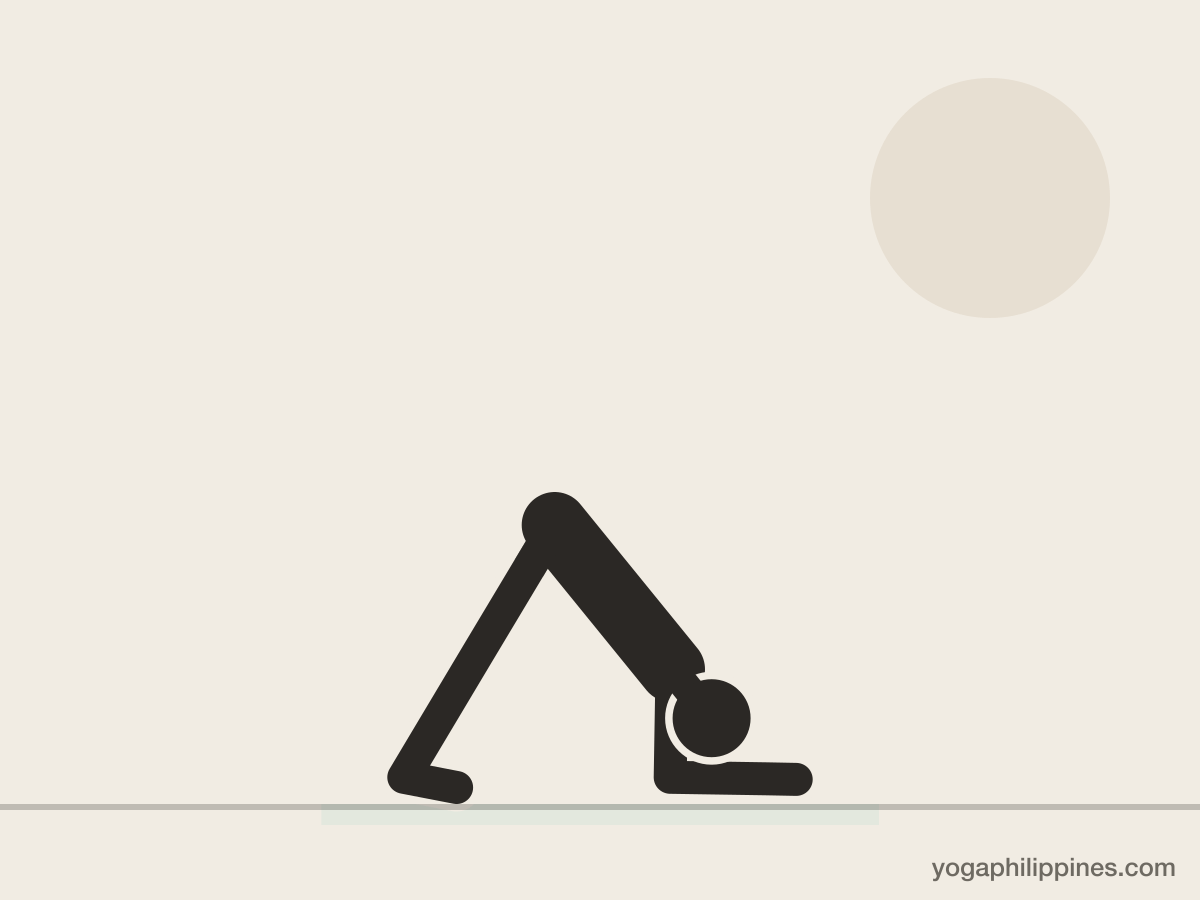
Drawings and video by YogaPhilippines.com, free to reuse under CC BY 4.0 with credit and a link: see the image licence for how to credit.
For other poses that work the shoulders, open the pose finder set to the shoulders.
Make it easier
- Keep the knees bent the whole time so the back can stay long.
- Clasp the hands together instead of keeping the forearms parallel, which many people find easier on the shoulders.
- Place a block between the hands, held by the thumbs and index fingers, to stop the elbows sliding apart.
Pregnancy and after birth
Pregnancy. Adapt. Short holds may feel fine early on if you already practise it, but the head is below the heart, so many people switch to Puppy Pose or Downward-Facing Dog with hands on a chair. Check with your OB or midwife.
After birth. Adapt. After your doctor or midwife has cleared you, start with short holds and bent knees, and come down if you feel pressure in the head or the pelvic floor.
Prenatal and postpartum guides live on joahnnalee.com.
Common mistakes
- Letting the elbows slide out wider than the shoulders.
- Sinking the chest toward the floor so the shoulders collapse.
- Forcing the legs straight while the back rounds.
Dolphin Pose is a mild inversion that looks like Downward-Facing Dog on the forearms. It is often taught as preparation for forearm balances and headstand, because it builds strength in the shoulders and upper back.
It is also a good pose in its own right, especially for anyone who wants strong shoulders without going upside down. Bent knees are fine for the whole hold.
How does dolphin pose prepare you for inversions?
It trains the shoulders to lift away from the floor while the forearms press down, which is the same action you need in Headstand and forearm stand. Walking the feet in toward the elbows is a classic drill on the way up.
How is it different from downward dog?
In Downward-Facing Dog the hands carry the weight and the arms are straight. Dolphin moves the weight onto the forearms, which is easier on the wrists but harder on the shoulders. Puppy Pose, the kneeling chest stretch, is a gentle partner, and the shoulder stretches routine helps between sessions.
Dolphin asks a lot of the shoulders; simple shoulder-strengthening exercises build that strength first.
Dolphin Pose or Downward-Facing Dog?
Dolphin moves Downward Dog's weight from the hands to the forearms. It spares the wrists but asks more of the shoulders.
| Compare | Dolphin Pose | Downward-Facing Dog |
|---|---|---|
| Position | Hands and knees or hands and feet | Hands and knees or hands and feet |
| What it works | shoulders, upper back and hamstrings | hamstrings, calves and shoulders |
| Level | Intermediate | Beginner plus |
| Key difference | Weight on the forearms, pressing them down so the shoulders lift away from the floor. | Weight on the hands with straight arms, hips up and back, knees soft. |
Prep poses for Dolphin Pose
Poses that warm up the same body areas at a lower intensity, so Dolphin Pose feels steadier when you get there.
- Downward-Facing Dog (Adho Mukha Svanasana) a direct preparation, beginner plus
- Table Top Pose (Bharmanasana) gentler work for the same area, beginner
- Puppy Pose (Uttana Shishosana) gentler work for the same area, beginner
Counter-poses for Dolphin Pose
Shapes that move the body the other way or let it rest straight after Dolphin Pose.
- Balasana (Child's Pose) beginner
Where to go next after Dolphin Pose
These poses list Dolphin Pose as a preparation, so they are a natural next step once it feels comfortable.
- Handstand (Adho Mukha Vrksasana) advanced plus
- Headstand (Sirsasana) advanced plus
- Scorpion Pose (Vrschikasana) advanced plus
Props that help in Dolphin Pose
- Block: brings the floor closer under the hands.
Sources: Mayo Clinic, Fitness program: 5 steps to get started; NCCIH (US National Institutes of Health), Yoga: Effectiveness and Safety; PLoS One (Cramer et al., 2013), via PubMed Central, Adverse Events Associated with Yoga: A Systematic Review of Published Case Reports and Case Series; PLoS One (Jasien et al., 2015), via PubMed Central, Intraocular Pressure Rise in Subjects with and without Glaucoma during Four Common Yoga Positions. Last reviewed 2 October 2026.
Dolphin Pose questions
Why do the elbows slide apart in dolphin pose?
The shoulders are working hard, and when they tire the elbows tend to drift. A strap looped around the upper arms just above the elbows, or a block held between the hands, keeps them in place.
Is dolphin pose harder than downward dog?
For most people, yes. Being on the forearms puts more weight on the shoulders and asks for more openness in the upper back, so it can feel much stronger than the same shape on the hands.
Can dolphin pose help me get into headstand?
It builds the shoulder strength and the forearm base that headstand and forearm stand rely on. Many teachers use it for weeks as preparation before trying either.
What does Dolphin Pose work?
Dolphin builds strength in the shoulders, arms and upper back while it stretches the backs of the legs and opens the shoulders. Because the weight sits on the forearms, it is kinder to the wrists than Downward-Facing Dog. Many teachers use it to prepare for Headstand and forearm balances, and it counts as a mild inversion.
Why is Pincha Mayurasana harder than Dolphin Pose?
Pincha Mayurasana, forearm stand, takes the Dolphin base and lifts both legs over the head, so you balance upside down on the forearms. That asks for strong shoulders, an open upper back and control of the whole body at once. Dolphin, the half version, builds that strength first, often for weeks before any attempt.
Updated