Pose library · Vrschikasana
Scorpion Pose (Vrschikasana)
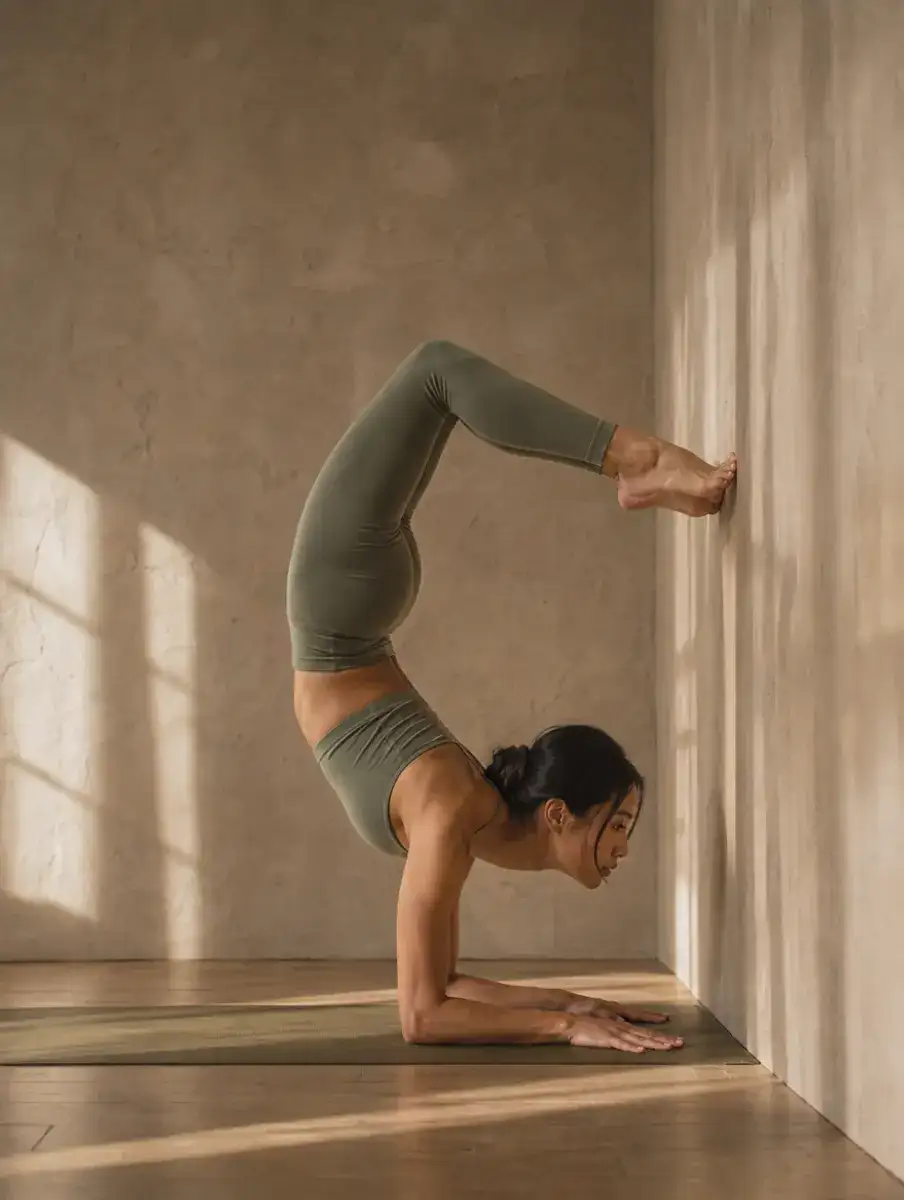
Vrschika means scorpion and asana means posture. From a forearm balance, the back arches and the knees bend so the feet curl toward the head, like the raised tail of a scorpion.
Scorpion Pose (Vrschikasana) is an advanced forearm balance with an arched back that asks for strong shoulders and a flexible spine. Learn it with a teacher at a wall: come into Forearm Stand, lift the chest forward and bend the knees, sliding the feet a short way down the wall. Stop if the lower back or neck complains.
Pronunciation and meaning
Vrschikasana: vrish-chee-KAHS-uh-nuh. The opening vr is a quick rolled sound, and the stress falls on KAHS.
Vrschika means scorpion and asana means posture. From a forearm balance, the back arches and the knees bend so the feet curl toward the head, like the raised tail of a scorpion.
How to do Scorpion Pose
- Learn this pose with a teacher. Before you start, be steady in Forearm Stand at a wall for several breaths and comfortable in deep backbends such as Wheel.
- Set up at a wall: forearms on the mat shoulder-width apart and parallel, palms down, fingertips about a hand's length from the wall.
- Walk your feet in toward your elbows, then kick or float up into Forearm Stand with your heels resting on the wall. Press firmly through the forearms and keep the shoulders over the elbows.
- Lift your chest forward and gaze slightly ahead of your hands. Bend one knee and then the other, sliding the soles of the feet down the wall a short way only.
- Stay for two or three steady breaths, keeping the breath slow. Stop the moment the lower back or neck complains.
- Straighten the legs back up the wall, then lower one leg at a time and rest in Child's Pose.
Scorpion Pose step by step

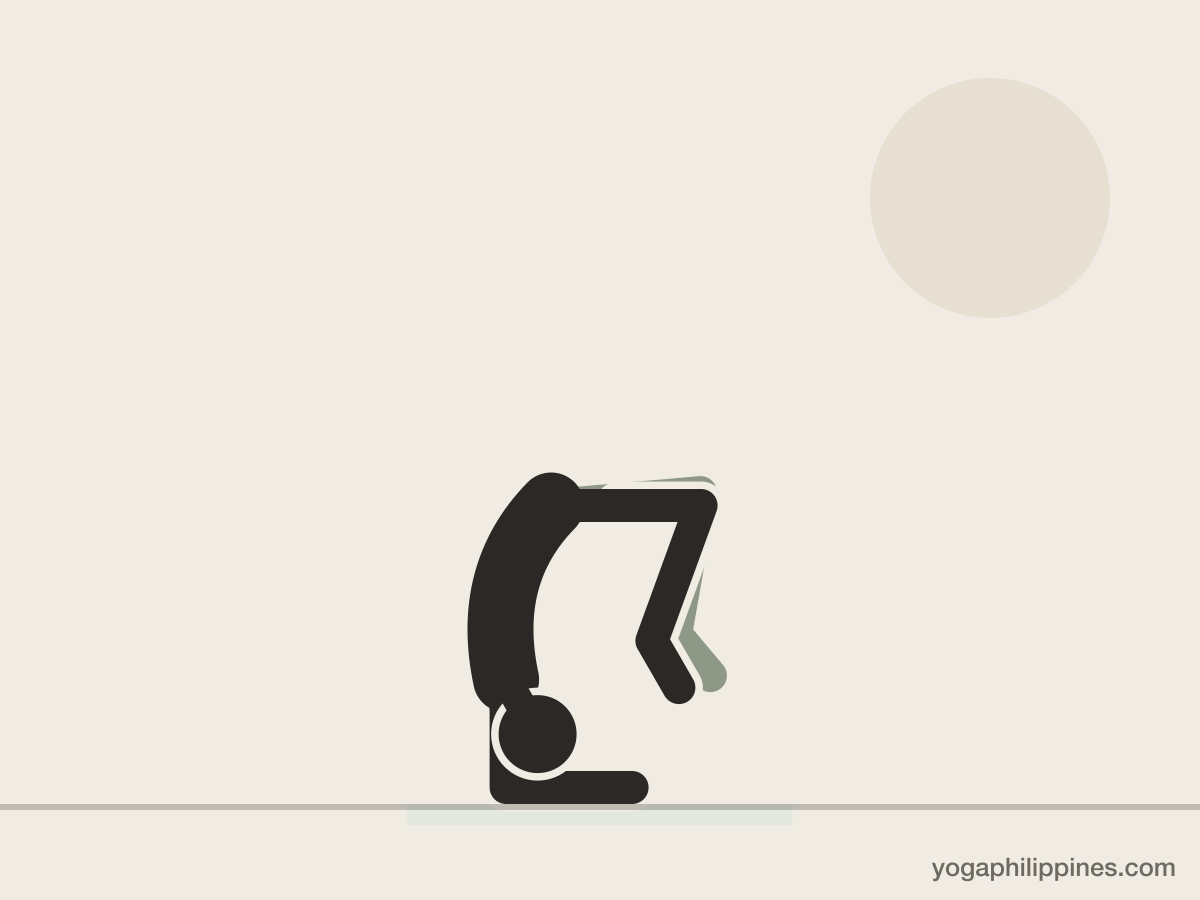
Drawings and video by YogaPhilippines.com, free to reuse under CC BY 4.0 with credit and a link: see the image licence for how to credit.
For other poses that work the shoulders, open the pose finder set to the shoulders.
Make it easier
- Practise Dolphin Pose and Forearm Stand at the wall for weeks before adding any backbend.
- Keep the feet on the wall and bend the knees only slightly, so the backbend stays small.
- Work on the backbend separately in Camel or Wheel and the balance separately in Forearm Stand.
Pregnancy and after birth
Pregnancy. Avoid. A forearm balance with a deep backbend is not suited to pregnancy. Check with your OB or midwife about the practice that suits you.
After birth. Avoid for now. Return to inversions only after your doctor or midwife has cleared you and your core and shoulders feel strong, then rebuild with Dolphin and a teacher's help.
Prenatal and postpartum guides live on joahnnalee.com.
Common mistakes
- Letting the elbows slide out wider than the shoulders, which drops the head toward the floor.
- Collapsing all the bend into the lower back instead of lifting the chest forward.
- Trying the pose cold, without warming the shoulders and spine first.
Scorpion Pose is one of the most advanced shapes you will see in a yoga class. It combines an inversion on the forearms with a deep backbend, so it asks for strong shoulders, a steady balance and an open spine all at once.
It is a pose to learn with a teacher, in stages, and close to a wall. Most of the useful work happens long before the feet ever curl overhead.
What do you need before scorpion pose?
A calm, controlled Headstand (Sirsasana) or Forearm Stand, comfort in backbends like Wheel Pose, the full upward bow, and shoulders that stay steady when you bear weight. Hand balances such as Handstand at the wall build the same strength. The shoulder stretches routine helps the shoulders open in a safe way.
Who should skip scorpion pose?
Anyone with a neck, shoulder or back injury, high blood pressure, or eye conditions such as glaucoma. Choose a gentler inversion or a supported backbend instead.
Prep poses for Scorpion Pose
Poses that warm up the same body areas at a lower intensity, so Scorpion Pose feels steadier when you get there.
- Dolphin Pose (Ardha Pincha Mayurasana) a direct preparation, intermediate
- Handstand (Adho Mukha Vrksasana) a direct preparation, advanced plus
- Wheel Pose (Urdhva Dhanurasana) a direct preparation, advanced
- Sun Salutation (Surya Namaskar) gentler work for the same area, beginner plus
Counter-poses for Scorpion Pose
Shapes that move the body the other way or let it rest straight after Scorpion Pose.
- Balasana (Child's Pose) beginner
Easier and harder variations of Scorpion Pose
Related poses from the same family that start from the same position and do a similar kind of work; Scorpion Pose itself is advanced plus.
- Easier: Plow Pose (Halasana) advanced
- Easier: Shoulder Stand (Salamba Sarvangasana) advanced
Props that help in Scorpion Pose
- Wall: gives a steady point to lean on or press into for balance and alignment.
Sources: Mayo Clinic, Fitness program: 5 steps to get started; NCCIH (US National Institutes of Health), Yoga: Effectiveness and Safety; PLoS One (Cramer et al., 2013), via PubMed Central, Adverse Events Associated with Yoga: A Systematic Review of Published Case Reports and Case Series; PLoS One (Jasien et al., 2015), via PubMed Central, Intraocular Pressure Rise in Subjects with and without Glaucoma during Four Common Yoga Positions. Last reviewed 2 October 2026.
Scorpion Pose questions
How long does it take to learn scorpion pose?
There is no set timeline. It depends on how steady your forearm balance is and how open your shoulders and spine are. Many people practise the parts for a long time first, and some choose never to go into the full shape.
Is scorpion pose safe for the lower back?
It asks for a deep backbend while the body is upside down, so it carries real risk. Lift the chest, keep the bend spread through the upper back, and stop at any pinching. If you have a back or neck injury, skip it and talk to a doctor or physio.
Do you need forearm stand before scorpion pose?
Yes. Scorpion is built on a stable Forearm Stand. Without it, the backbend has no steady base and falls are more likely.
Updated