Pose collection · 10 poses
Arm balance yoga poses, in the order you learn them
Arm balance yoga poses hold the body up on the hands, such as Crow, Side Plank, Firefly, Eight Angle and Handstand. Build them in order: Plank, Chaturanga and Dolphin for strength, Garland for the shape, then Crow. Warm the wrists first, pad the floor in front of you, and learn the inverted ones with a teacher.
Beginner
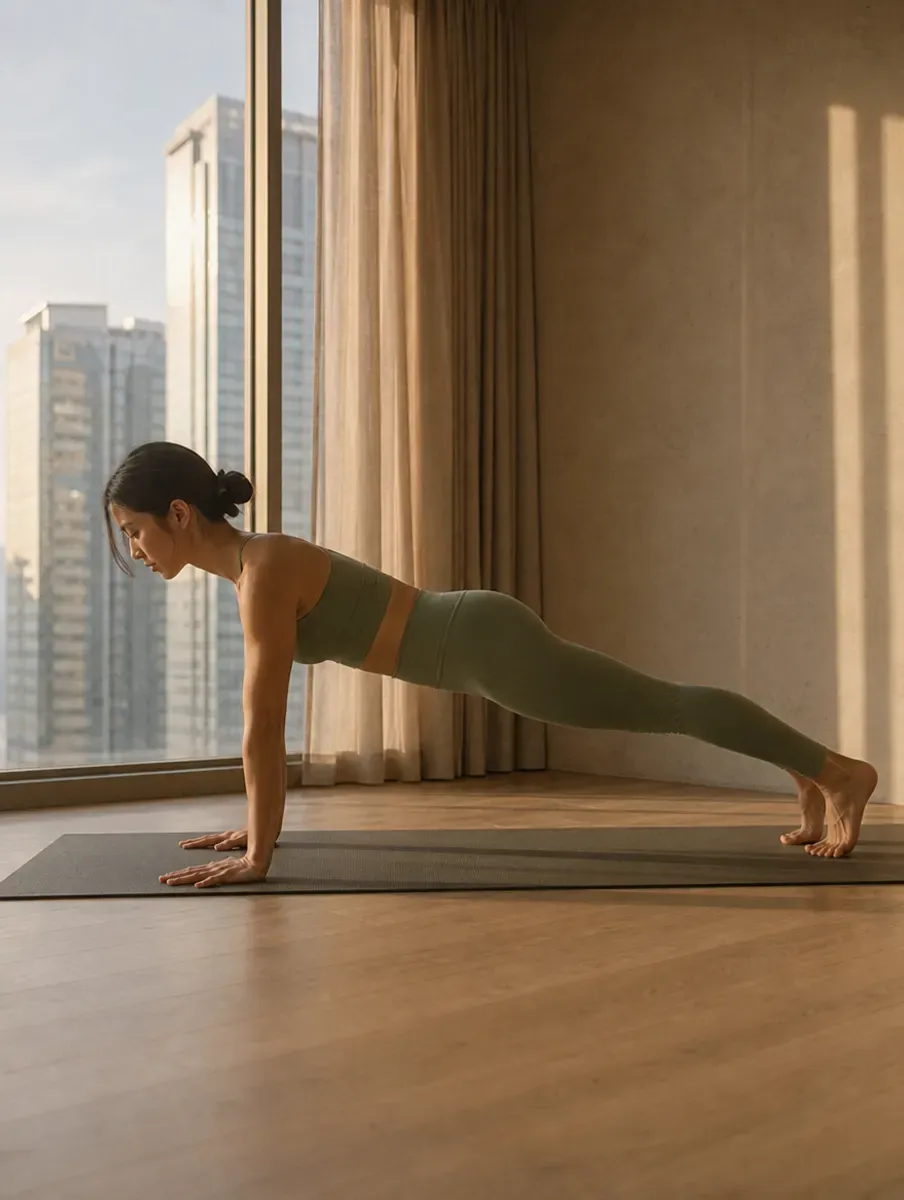
Plank Pose
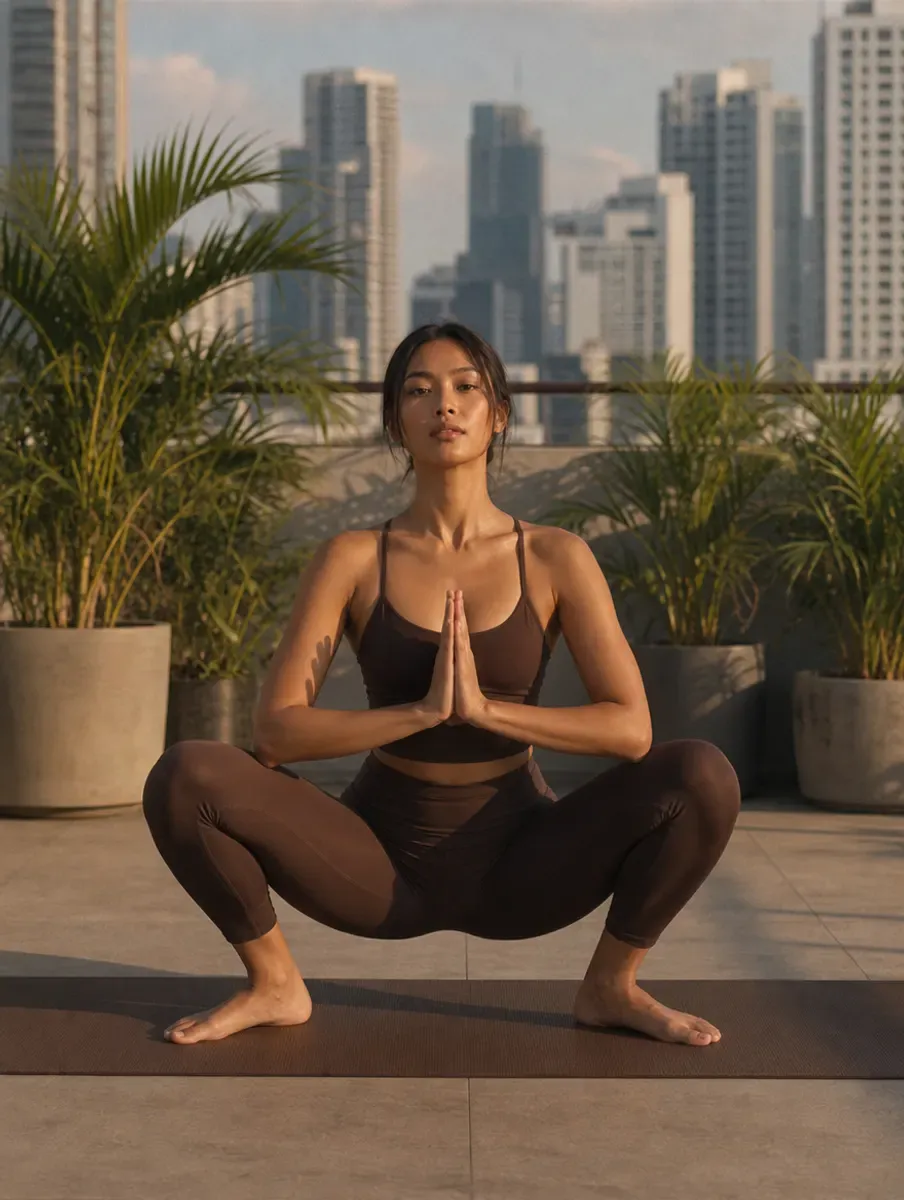
Garland Pose
Intermediate
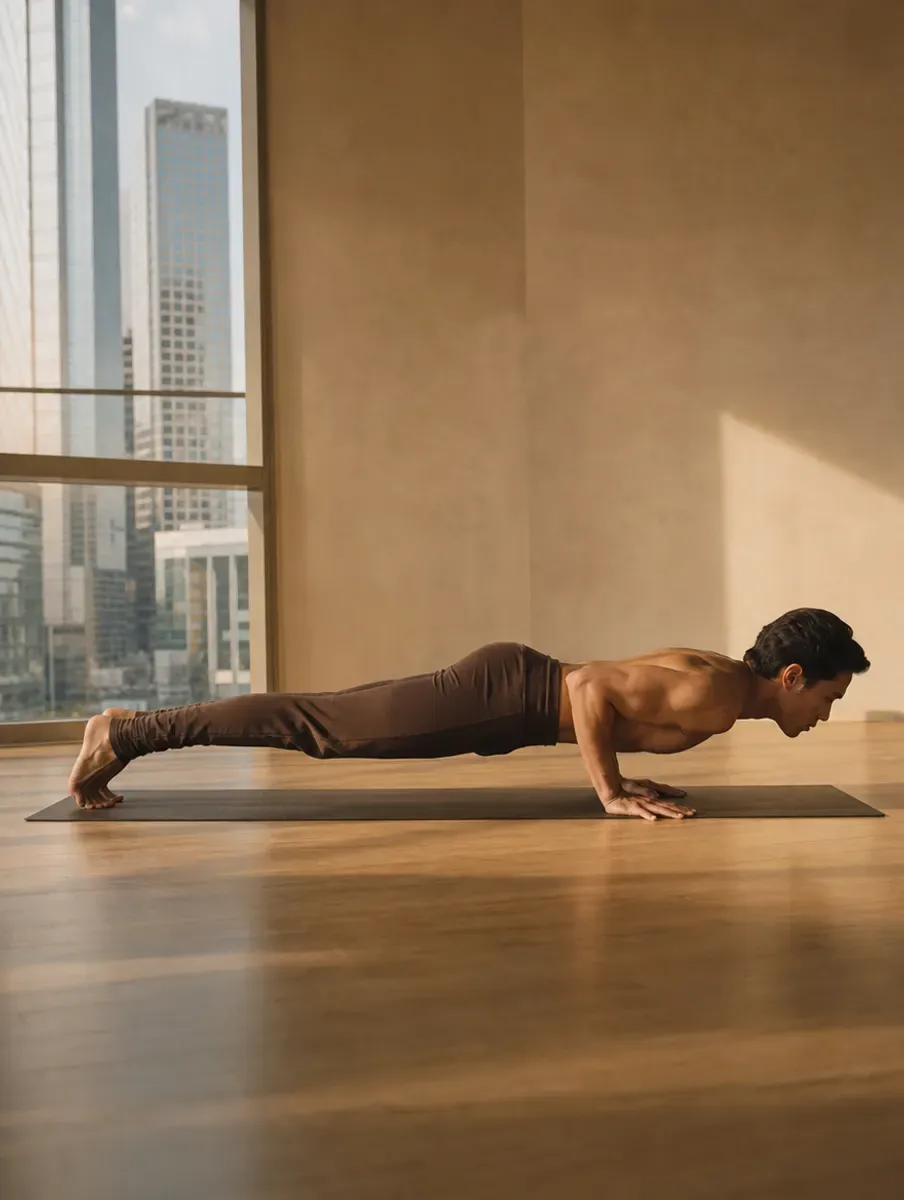
Four-Limbed Staff Pose
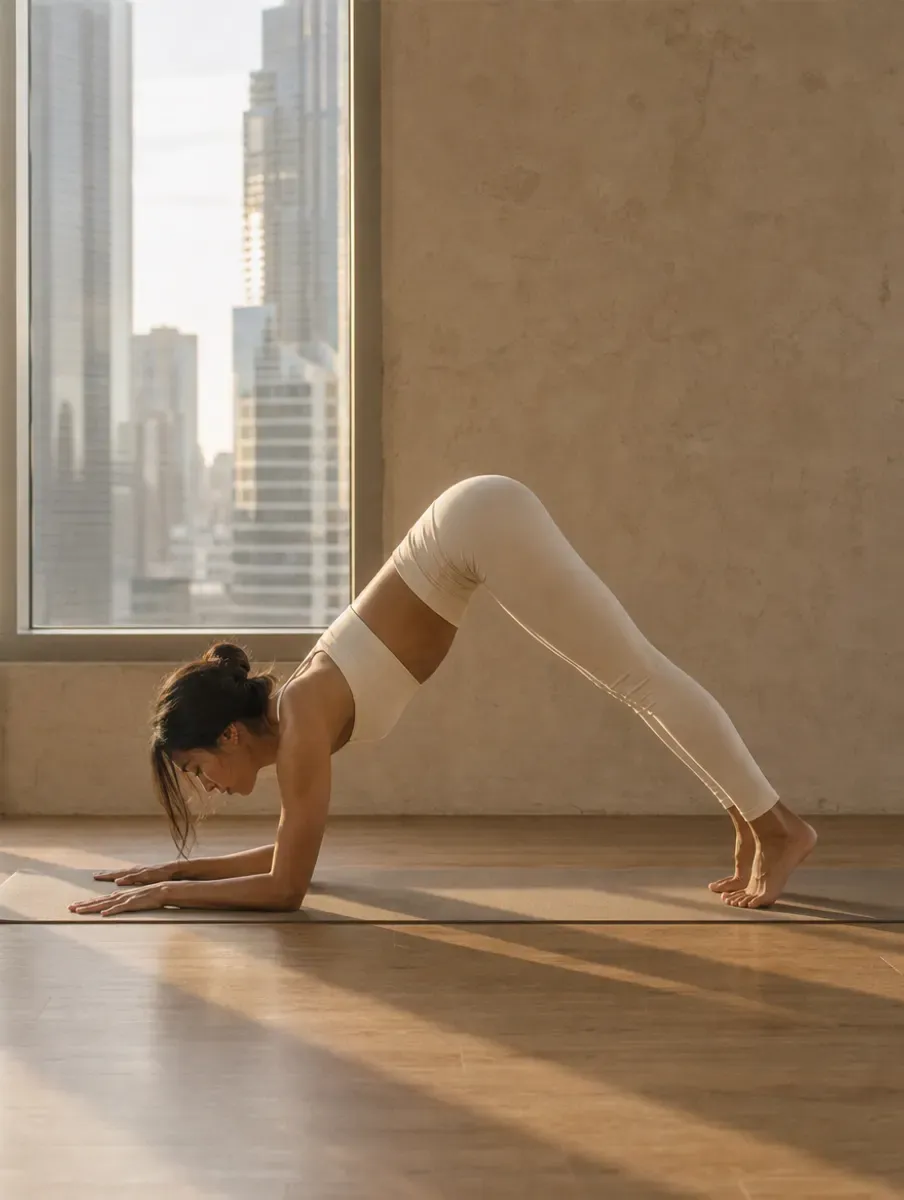
Dolphin Pose
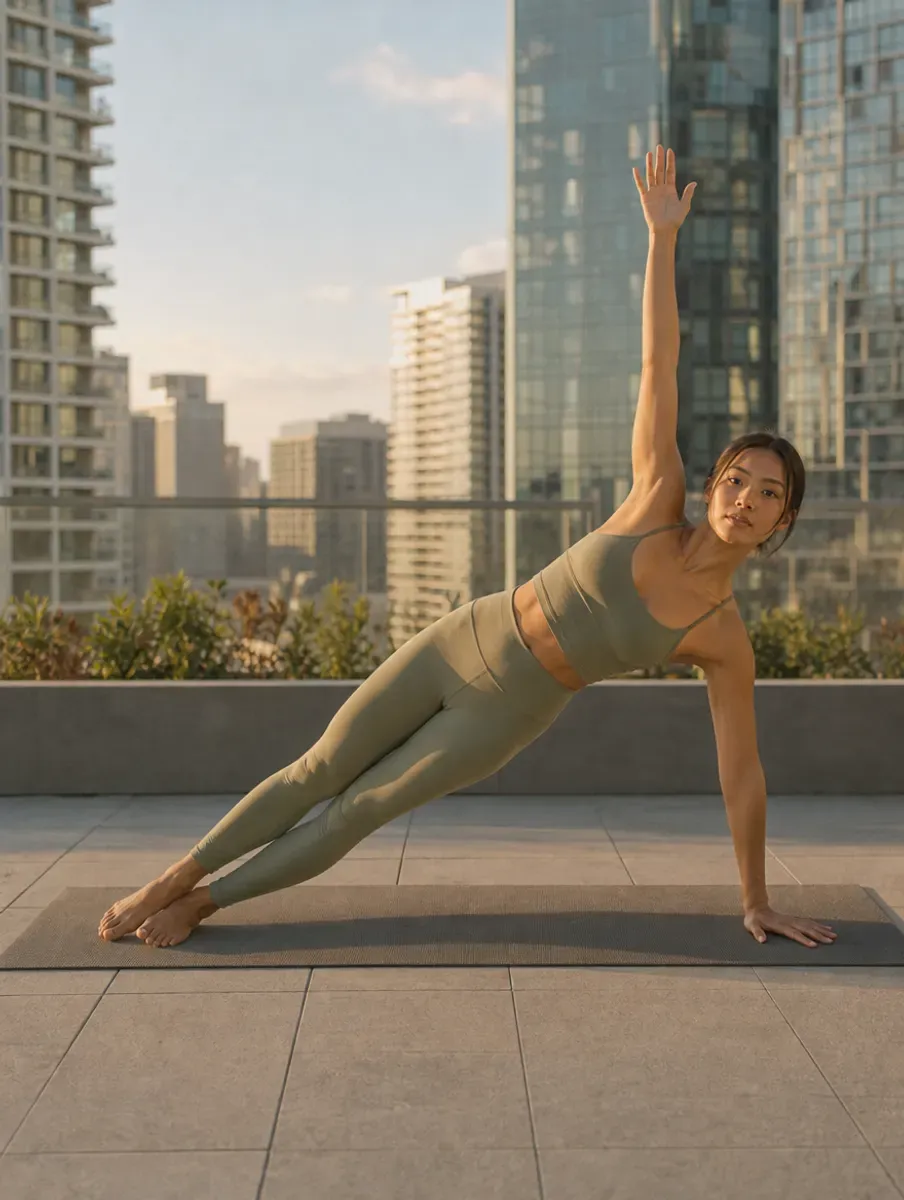
Side Plank
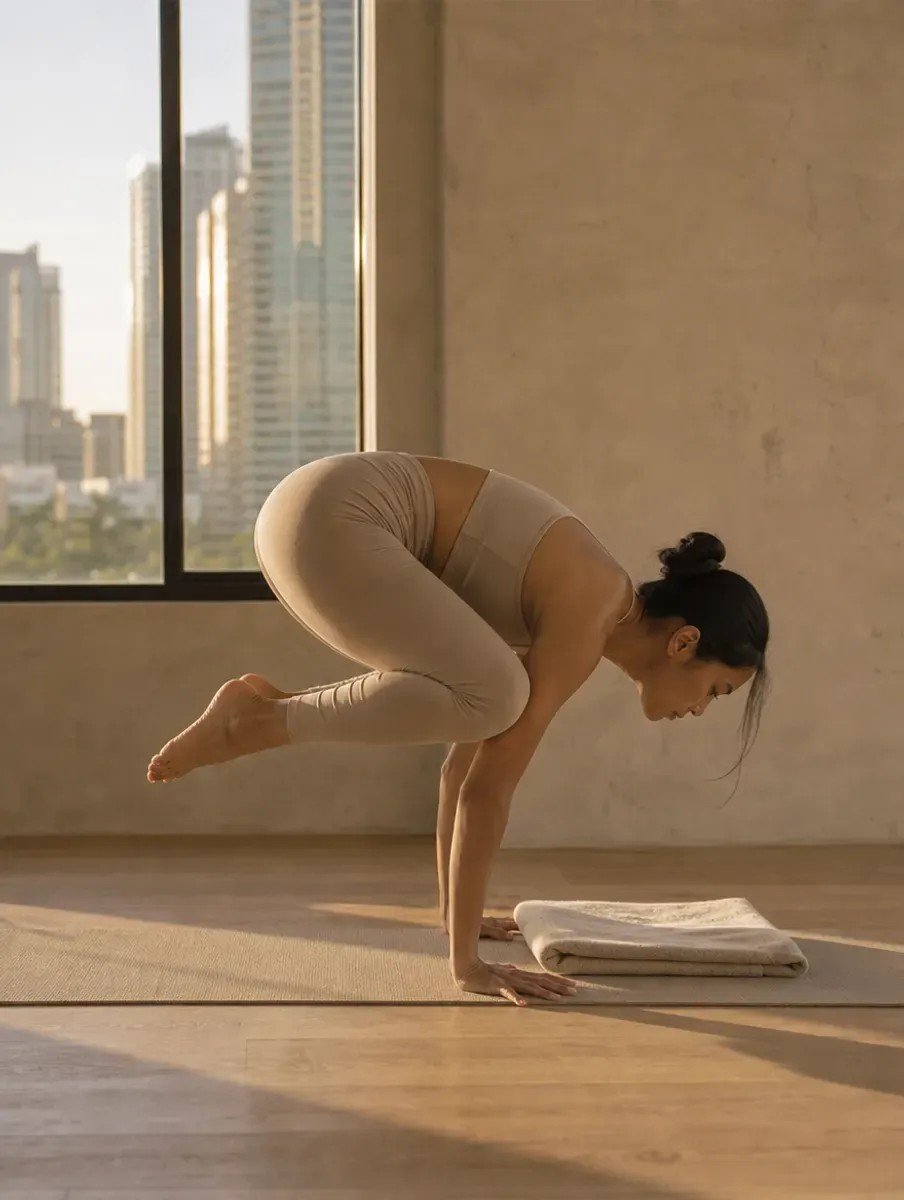
Crow Pose
Advanced
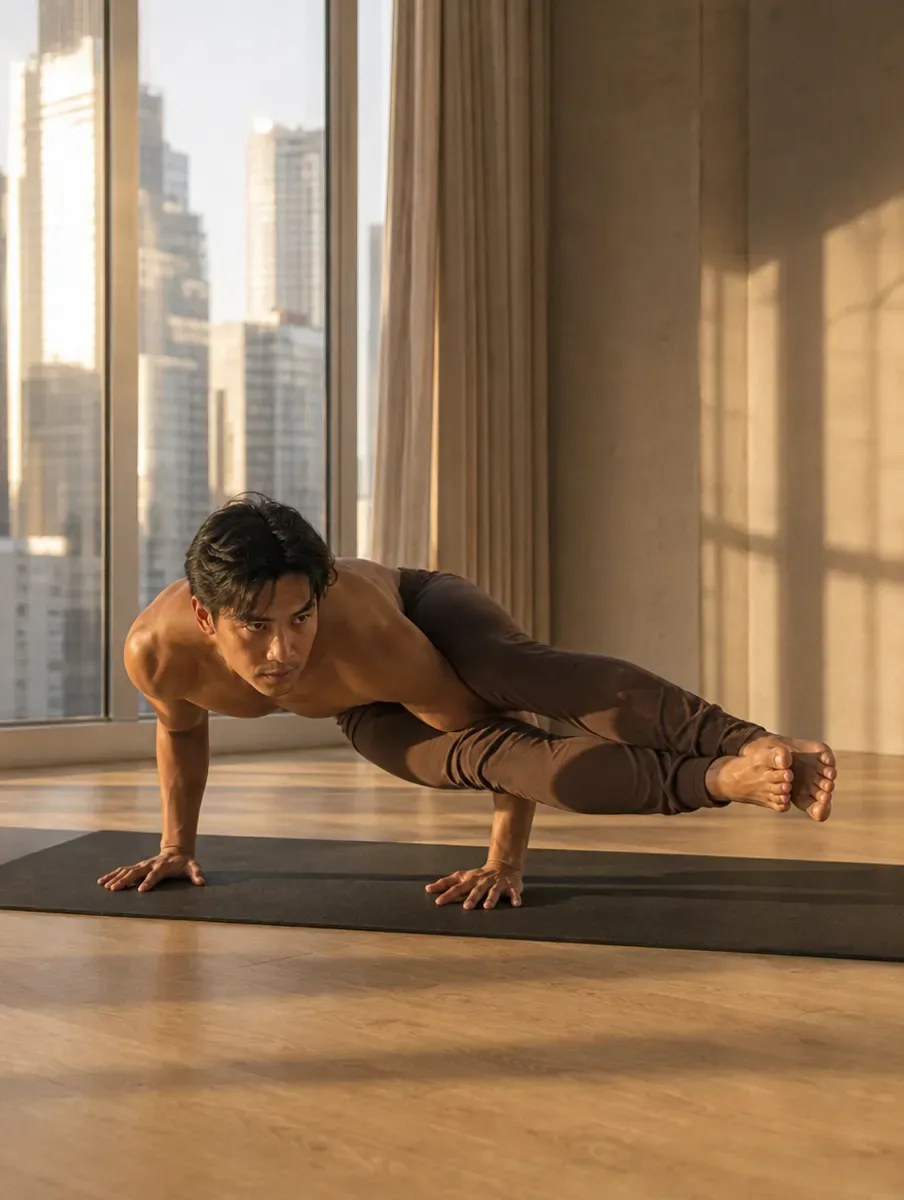
Eight Angle Pose
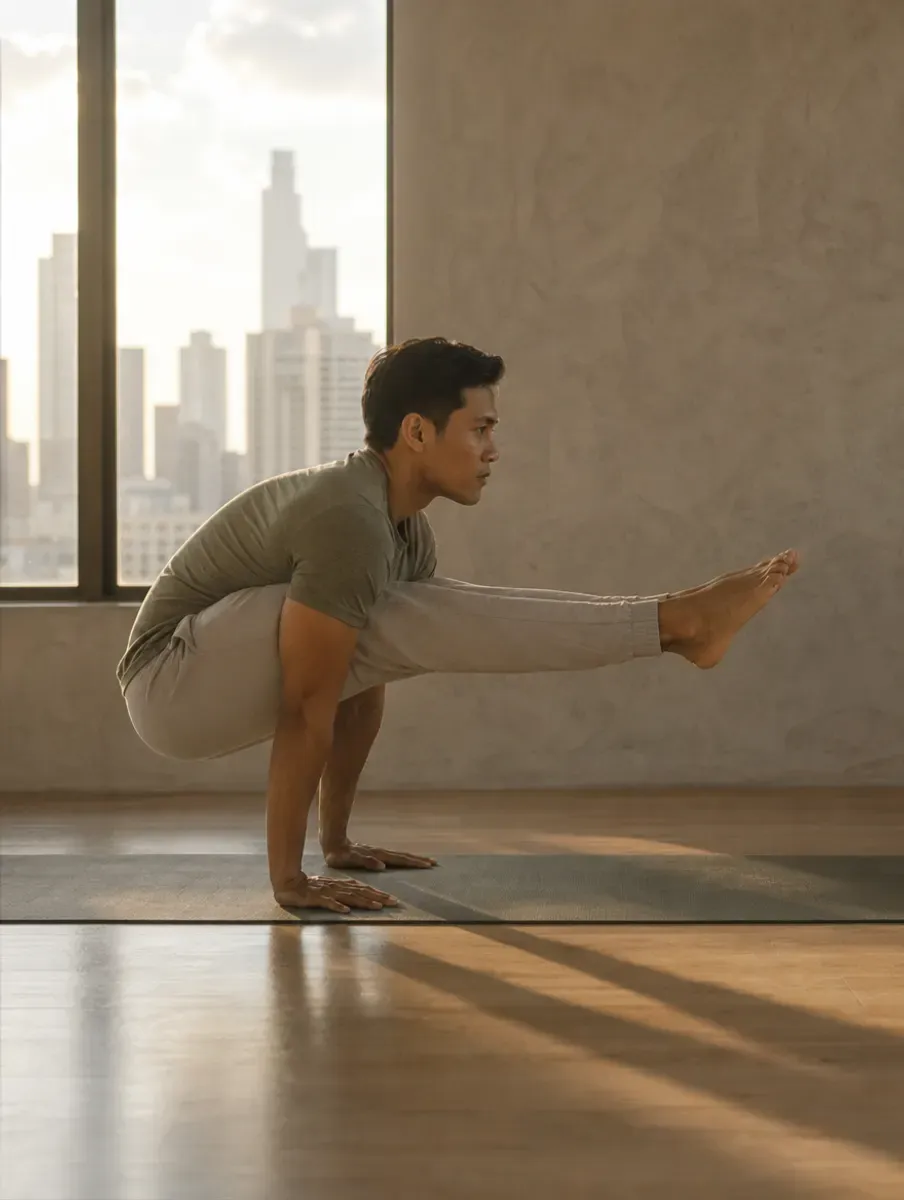
Firefly Pose
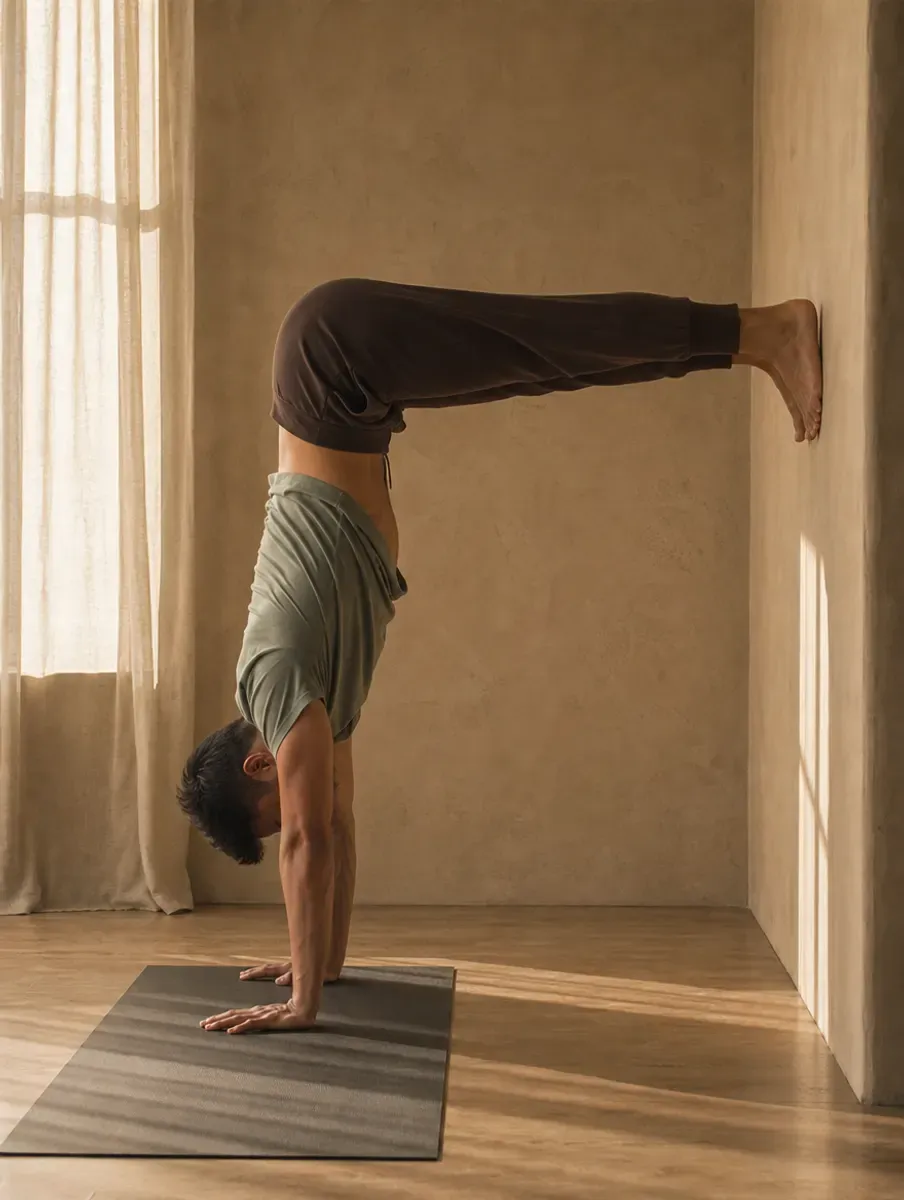
Handstand
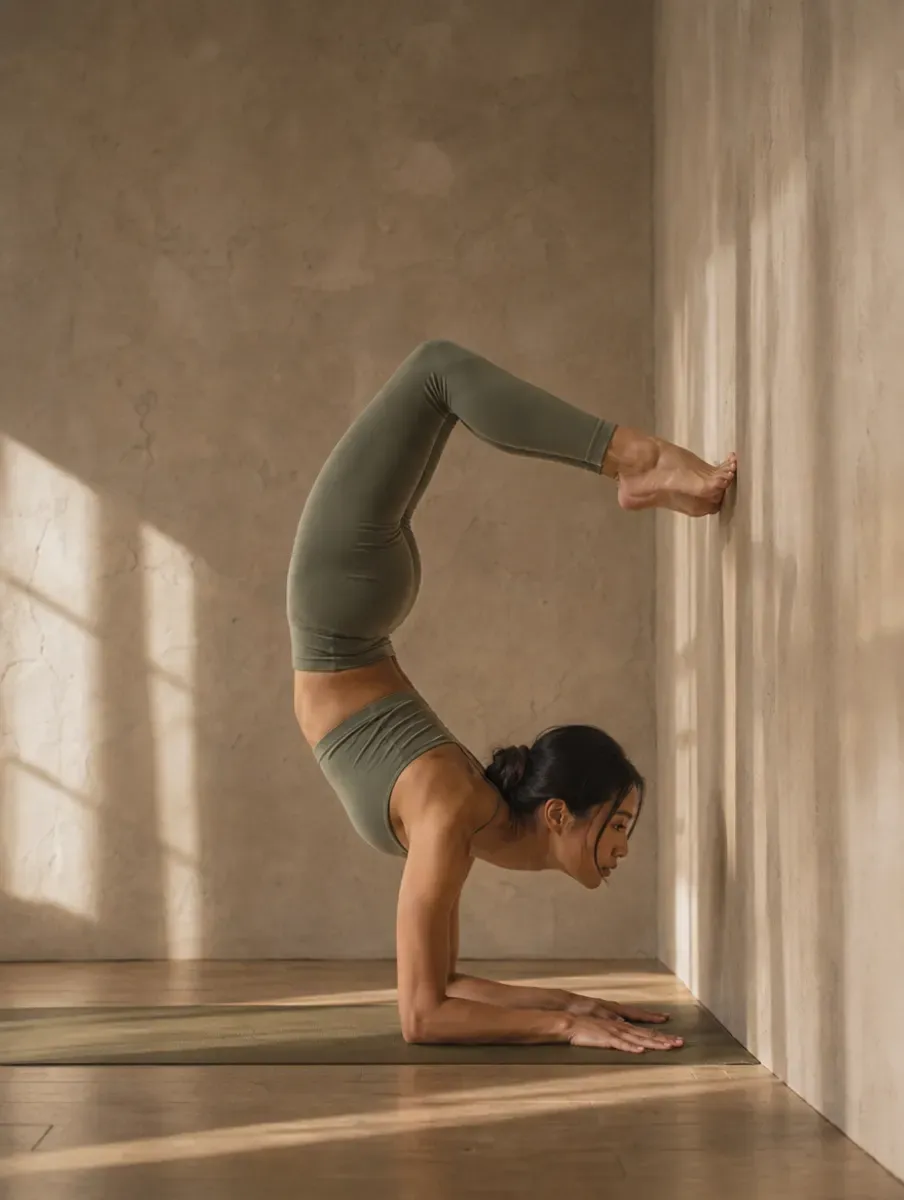
Scorpion Pose
Arm balance yoga poses ask your hands and arms to hold up the whole body. They look like pure strength, but most of the work is in the core, the shoulders and the willingness to lean forward over your hands. That last part is the one that takes time.
These ten are in the order most people learn them. The first four are preparation; the rest are the balances themselves. Arm balances sit inside the wider group of advanced and intermediate yoga poses, which also covers the backbends and inversions.
How do you prepare for arm balances?
Start with the wrists. Circle them, then press the palms together and apart, and kneel with the fingers turned back for a few breaths; the routine of wrist stretches takes about five minutes. Then build strength with Plank, slow Chaturanga lowerings with the knees down, and Dolphin. Garland teaches the compact, rounded shape your body takes in Crow.
Place a cushion or folded blanket in front of your hands every time. The fear of falling on your face is reasonable, and padding is what lets you lean far enough to lift.
Which arm balance should you learn first?
Crow Pose, Bakasana, for most people. Practise lifting one foot, then the other, then both for a breath. Once Crow and Side Plank feel steady, the twisted and straight-legged balances open up: Eight Angle first, then Firefly Pose, Tittibhasana, which needs open hamstrings as well as strength.
Handstand and Scorpion are inversions as well as arm balances. Learn them with a teacher, at a wall, and skip them if you have high blood pressure, glaucoma, a shoulder or neck injury, or are pregnant, unless your doctor agrees.
How often should you practise arm balances?
Two or three short sessions a week, early in a practice while you are fresh, work well for many people. A few attempts of one or two breaths each is plenty. Stop before the wrists or shoulders tire, because tired arms are when most falls happen. If you want a Crow for a photo, the guide to yoga photoshoot poses explains how to lift for a breath at a time between takes.
Sources: Mayo Clinic, Fitness program: 5 steps to get started; NCCIH (US National Institutes of Health), Yoga: Effectiveness and Safety; PLoS One (Cramer et al., 2013), via PubMed Central, Adverse Events Associated with Yoga: A Systematic Review of Published Case Reports and Case Series; PLoS One (Jasien et al., 2015), via PubMed Central, Intraocular Pressure Rise in Subjects with and without Glaucoma during Four Common Yoga Positions. Last reviewed 2 October 2026.
Questions
Do you need strong arms for arm balances?
Some arm strength, yes, but technique and core strength matter as much. In Crow, the knees rest on the upper arms and the weight tips forward over the hands; leaning far enough is often the missing piece rather than more muscle.
How do you protect your wrists in arm balances?
Warm them up first, spread the fingers wide and press through the knuckles and fingertips so the weight does not sink into the heel of the hand. Keep holds short at first. Stop if the wrist hurts, and see a doctor or physio if pain lasts.
What is the easiest arm balance to learn?
Crow Pose is the usual first one, because the knees rest on the arms and the feet are close to the floor. Side Plank with the lower knee down is an easier balance on one hand that many people learn alongside it.
What is the hardest arm balance on this list?
Scorpion Pose comes last here, because it adds a deep backbend to a balance on the forearms or hands, and it suits long-term practitioners only. Handstand is close behind. Both are inversions as well as arm balances, so learn them in stages at a wall with a teacher, and only after Crow and Side Plank feel steady.
Updated