Pose library · Malasana · reviewed by a teacher
Garland Pose (Malasana)
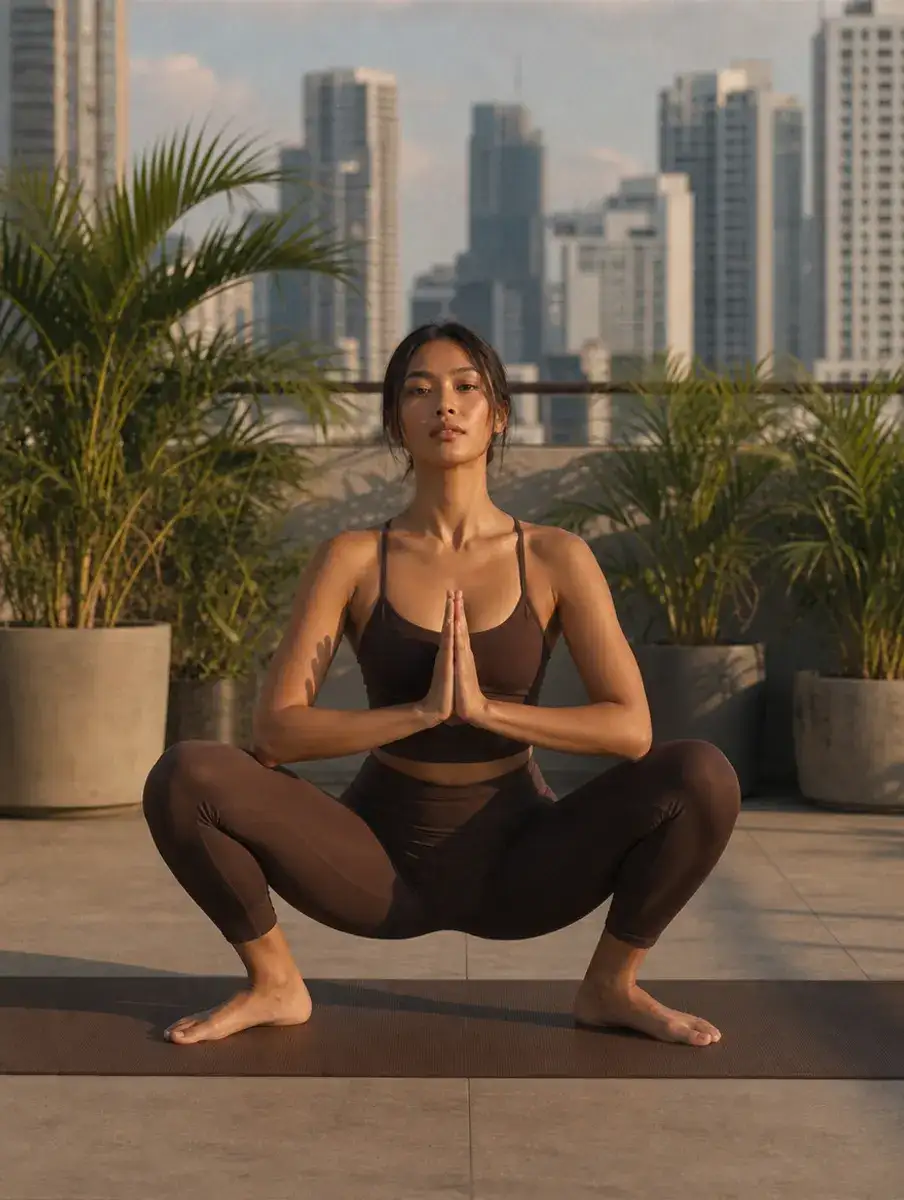
Mala means garland, like a string of beads, and asana means posture. It is the yoga name for a deep, heels-down squat with the palms pressed together at the chest.
Garland Pose (Malasana) is a deep, heels-down squat that asks for open hips and ankles. Stand with the feet a little wider than the hips, lower the hips between the heels, press the elbows into the inner knees and lift the chest for five to eight breaths. Sit on a block, or roll a blanket under lifted heels.
Pronunciation and meaning
Malasana: mah-LAHS-uh-nuh. Three open a sounds, with the stress on LAHS.
Mala means garland, like a string of beads, and asana means posture. It is the yoga name for a deep, heels-down squat with the palms pressed together at the chest.
How to do Garland Pose
- Stand with your feet a little wider than your hips, toes turned out slightly.
- Bend your knees and lower your hips toward the floor between your heels, keeping your heels down if you can.
- Bring your palms together at your chest and press your elbows lightly against the insides of your knees.
- Lengthen your spine upward, letting the chest lift away from the thighs rather than rounding forward.
- Keep your knees pointing the same way as your toes and your weight spread across both feet.
- Stay for five to eight breaths, then place your hands on the floor, lift your hips and roll up slowly to stand.
Garland Pose step by step

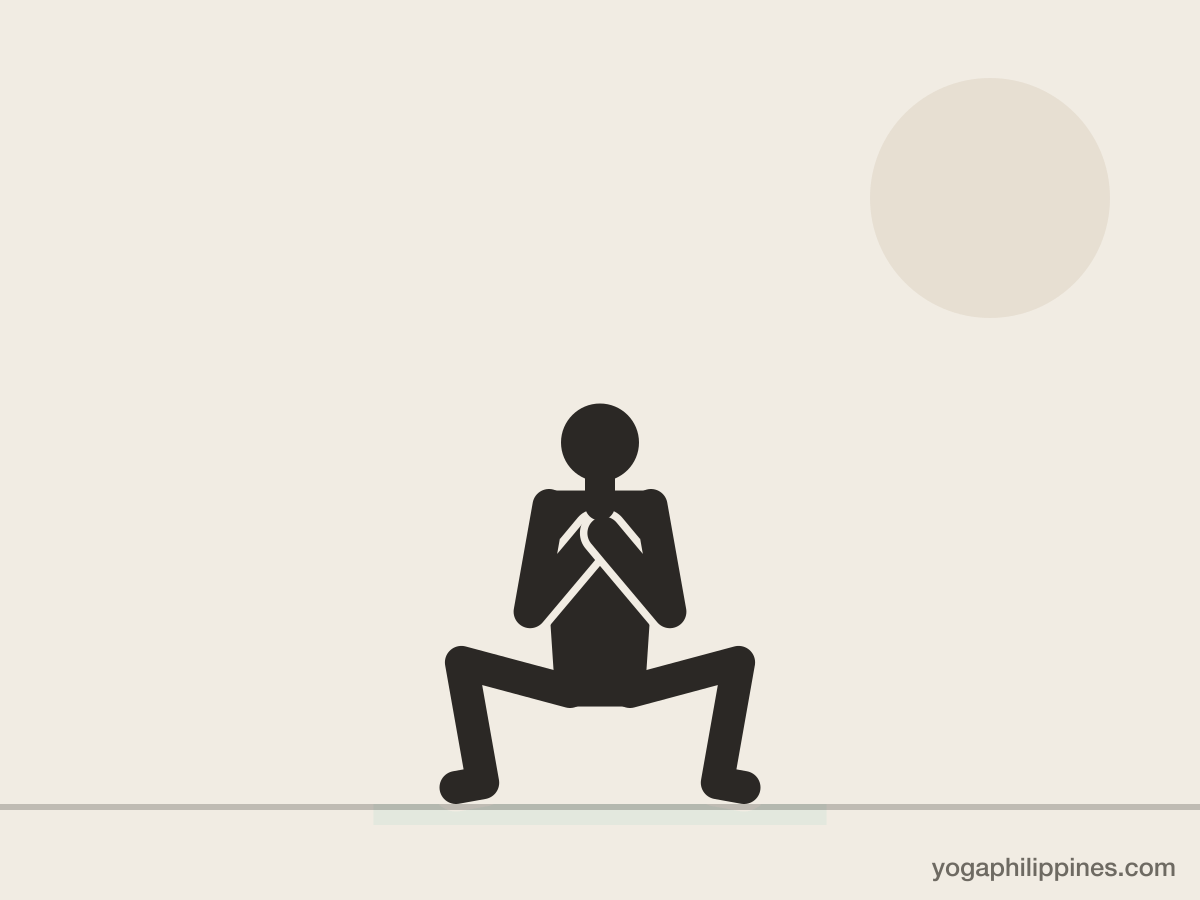
Drawings and video by YogaPhilippines.com, free to reuse under CC BY 4.0 with credit and a link: see the image licence for how to credit.
Garland Pose appears in the 20-minute hip-opening sequence and the Moon salutation card, both printable with holds and cues. For other poses that work the hips, open the pose finder set to the hips.
Teacher's note from Joahnna Lee
“Let the elbows and knees push into each other, gently. That small press is what lifts the chest.”
“I would like you to feel heavy through the heels and light through the crown. If the heels lift, we add a blanket under them.”
“Stay only as low as your knees are happy. The depth of the squat matters much less than feeling settled in it.”
Make it easier
- Slide a rolled blanket or folded mat under your heels if they lift.
- Sit on a yoga block, or two stacked, under your hips to take weight off the knees and ankles.
- Hold on to a door frame, a sturdy table leg or the seat of a heavy chair in front of you.
- Take the feet wider apart and turn them out more if the hips feel blocked.
Pregnancy and after birth
Pregnancy. Adapt. Sit on a block or two so the squat is supported, keep the feet wide, and come up slowly with a hand on something steady. Some people are advised to avoid deep squats in later pregnancy, so check with your OB or midwife about what suits you.
After birth. Adapt. After your OB or midwife has cleared you to exercise, start with a high, supported squat on blocks and a relaxed breath. If you feel heaviness or pressure in the pelvic floor, come out of it, and mention it to your doctor, midwife or a pelvic floor physiotherapist.
For more on practising through pregnancy, see Joahnna Lee Yoga.
Common mistakes
- Letting the knees collapse inward past the big toes.
- Rounding the back and dropping the head toward the floor.
- Forcing the heels down before the ankles are ready, which usually tips you backwards. Use a blanket.
- Bouncing at the bottom of the squat instead of settling.
Garland Pose is a resting squat as much as a stretch. Many people find it awkward at first, especially with the heels down. With a blanket or a block it becomes an easy place to pause between standing poses.
In yoga for beginners, a rolled blanket under the heels is often all it takes to make the squat comfortable enough to stay in.
On a slower day, the same wide knees can rest on the floor in Frog Pose, the wide-kneed Yin hold.
Standing taller with the feet wider and the thighs level gives you the wide squat pose, Utkata Konasana. This squat with the arms inside the legs is also the starting point for Firefly Pose, an advanced arm balance.
Why is garland pose also called a yogi squat?
Outside the Sanskrit name, the same shape goes by plainer ones. Squat pose and yogi squat both describe Malasana: a deep squat with the heels down or supported, the knees wide and the chest lifted between them. Most studios use the names interchangeably, so if a teacher calls for a yogi squat, this is the pose they mean.
What sets the yoga version apart from a gym squat is the stillness. You lower once, settle, and breathe there for several breaths rather than moving up and down. The palms meet at the chest, and the elbows press lightly into the inner knees to help the spine lengthen.
If the heels lift, a rolled blanket under them keeps the squat restful. If the knees complain, sitting on a block turns it into a supported seat. Either way, the aim is a comfortable low squat you can stay in, not the deepest one you can reach. For a slower stretch of the same inner thighs, the wide knees can rest on the floor in Frog Pose.
Prep poses for Garland Pose
Poses that warm up the same body areas at a lower intensity, so Garland Pose feels steadier when you get there.
- Reclined Butterfly (Supta Baddha Konasana) gentler work for the same area, beginner
Counter-poses for Garland Pose
Shapes that move the body the other way or let it rest straight after Garland Pose.
- Standing Forward Bend (Uttanasana) beginner
Where to go next after Garland Pose
These poses list Garland Pose as a preparation, so they are a natural next step once it feels comfortable.
- Crow Pose (Bakasana) advanced
- Firefly Pose (Tittibhasana) advanced plus
Props that help in Garland Pose
- Block: brings the floor closer under the lower hand, so the legs and spine can stay long.
- Blanket: pads the back knee or the hands if they come to the floor.
- Chair: brings the floor closer, or gives a seat or a hand rest for a gentler version.
Programs and sessions that use Garland Pose
- The 14-day flexibility plan 1 of its 14 sessions
- The 30-day yoga challenge 1 of its 30 sessions
- Sequences: 30-minute home flow, 45-minute slow yoga, sequence for the hips, Chandra Namaskar and flow that spares the wrists
- Practice app sessions: 20-minute flow, 30-minute practice and hip opener
- Generated example flows: 20-minute hip flow
Sources: Mayo Clinic, Fitness program: 5 steps to get started; NCCIH (US National Institutes of Health), Yoga: Effectiveness and Safety; NHS, Exercise in pregnancy; CDC, Pregnant & Postpartum Activity: An Overview; Canadian Family Physician (Chan et al., 2014), via PubMed Central, Hot yoga and pregnancy: Fitness and hyperthermia; NHS, Knee pain. Last reviewed 2 October 2026.
Garland Pose questions
Is Malasana the same as a squat?
It is a deep squat with the heels down, the feet a little wider than the hips and the hands at the chest. Gym squats usually keep the thighs higher and the arms free. The shape is also familiar from daily life in many places, where people squat to wait, cook or rest.
Why can't I keep my heels down in Garland Pose?
Tight calves and ankles, and the proportions of your legs, both play a part. Put a folded blanket under the heels and let the support do the work. You still get the shape of the pose this way.
What is Garland Pose good for?
Garland Pose asks for open hips and ankles and stretches the inner thighs, groins and calves while the back muscles work to lift the chest. Many people use it as a resting squat between standing poses, and it is the starting shape for arm balances such as Firefly Pose. Props make it comfortable to stay in.
How long should you stay in Garland Pose?
Five to eight breaths is a good hold for most people, settling rather than bouncing at the bottom. If your heels or knees complain sooner, come out earlier, or add a rolled blanket under the heels or a block under the hips so you can stay comfortably. Place your hands down and roll up slowly to finish.
Updated