Pose library · Simhasana
Lion Pose (Simhasana)
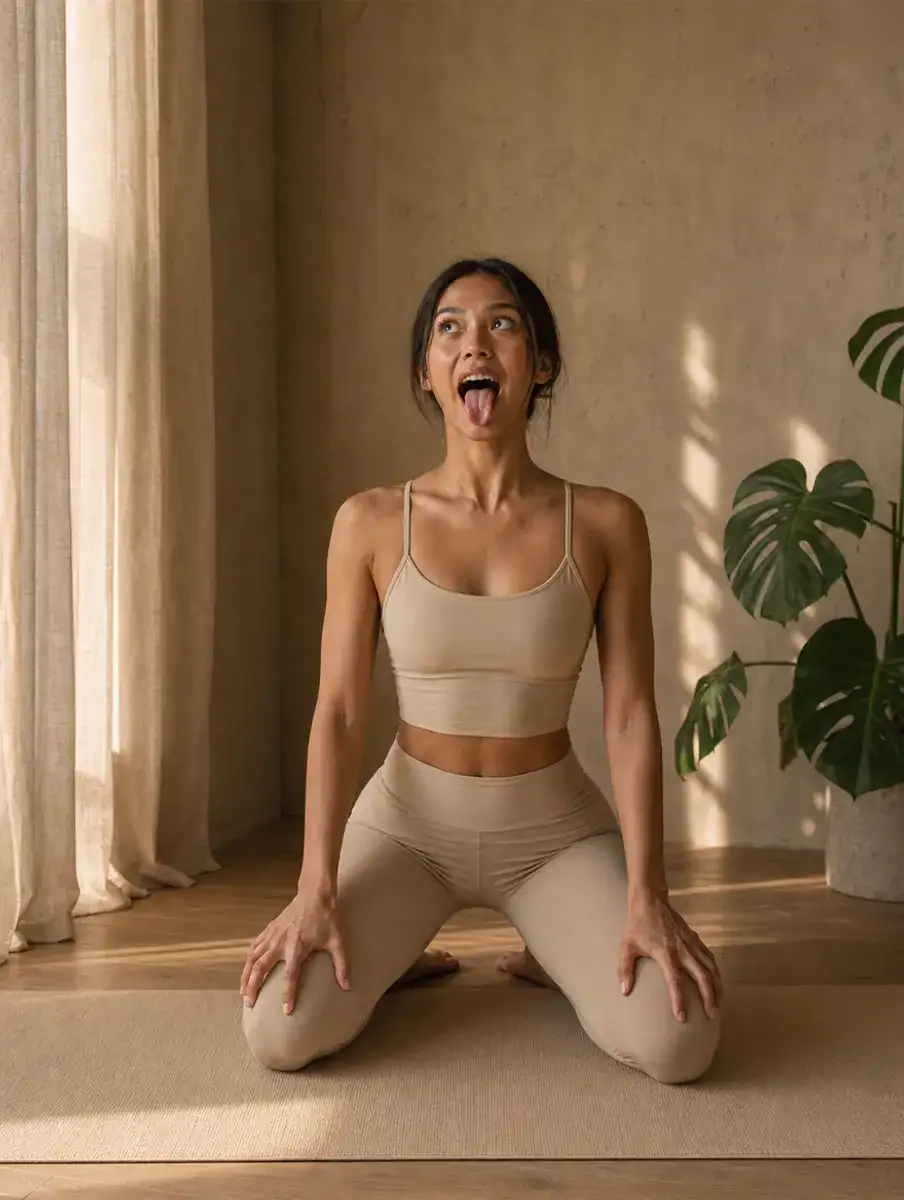
Simha means lion and asana means posture. You kneel or sit, spread the fingers wide on the knees, and breathe out strongly through an open mouth with the tongue out, like a lion's roar.
Lion Pose (Simhasana) is a kneeling or seated pose built around a strong exhale through an open mouth, tongue out and fingers spread like claws. Sit on the heels, hands on the knees, inhale through the nose, then breathe out with a long ha sound, two or three times. Keep the exhale relaxed rather than forced.
Pronunciation and meaning
Simhasana: sim-HAHS-uh-nuh. The h is light, and the stress falls on HAHS.
Simha means lion and asana means posture. You kneel or sit, spread the fingers wide on the knees, and breathe out strongly through an open mouth with the tongue out, like a lion's roar.
How to do Lion Pose
- Kneel and sit back on your heels, or cross the ankles under you and sit on the heels, with the knees apart. A cushion between the heels and buttocks can help.
- Place your hands on your knees or the floor in front, fingers spread wide like claws, arms straight.
- Inhale through the nose, lengthening the spine and lifting the chest.
- Exhale strongly through the mouth with a long ha sound, opening the mouth wide, stretching the tongue down toward the chin and widening the eyes.
- Many teachers add a gaze toward the point between the eyebrows or the tip of the nose. Keep the neck long and the face relaxed between rounds.
- Close the mouth, breathe normally, and repeat two or three times.
For other poses that work the neck, open the pose finder set to the neck.
Make it easier
- Sit on a chair or in a simple cross-legged seat if kneeling is uncomfortable for the knees.
- Keep the exhale quiet, a long breath out through the mouth, if you are practising near others.
- Skip the eye gaze if it strains the eyes.
Pregnancy and after birth
Pregnancy. Adapt. Lion Pose is usually comfortable in pregnancy. Sit on a cushion or a chair, widen the knees for the belly, and keep the breath relaxed rather than forceful. Check with your OB or midwife.
After birth. Adapt. Once your doctor or midwife has cleared you, sit on a chair or cushion and keep the exhale gentle. It can be a light, playful moment in a quiet day.
Before adapting a pose, read is yoga safe during pregnancy on joahnnalee.com.
Common mistakes
- Forcing the exhale so hard that the throat feels scratchy.
- Hunching the shoulders up toward the ears.
- Kneeling on sore knees without padding.
Lion Pose is a kneeling posture with a strong out breath. It is one of the few times in a yoga class when you are invited to make a noise, open the mouth wide and pull a face, so it often brings a smile.
It suits everyone, including children, and is easy to adapt on a chair. It shows up as a warm up, a short break in a long hold, or a way to let go of tension.
Why does lion pose use the face?
Much of the effort is in the jaw, tongue, eyes and throat, places that hold tension without us noticing. A long exhale through an open mouth softens them. It pairs well with other breathing exercises for stress and the gentle work in the neck stretches routine.
How do you sit for lion pose?
The traditional seat is kneeling, close to Thunderbolt Pose (Vajrasana), with the ankles crossed underneath. Hero Pose or a cushion seat works just as well.
Props that help in Lion Pose
- Blanket: pads the knees and the tops of the feet.
- Chair: brings the floor closer, or gives a seat or a hand rest for a gentler version.
Sources: Mayo Clinic, Fitness program: 5 steps to get started; NCCIH (US National Institutes of Health), Yoga: Effectiveness and Safety. Last reviewed 2 October 2026.
Lion Pose questions
Why do yoga classes do lion pose?
Teachers use it to release tension in the face, jaw and throat, and to add some lightness to a class. Many people find a few lion breaths make them laugh and relax.
Do you have to stick the tongue out in lion pose?
The tongue is part of the traditional shape, but nobody will mind if you keep the mouth open and simply breathe out. Practise in whatever way feels comfortable.
Is lion pose a breathing exercise or a pose?
Both. It is a seated posture and a strong exhale done together, so it often appears in the breathing or warm up part of a class.
Is Lion Pose good for beginners?
Yes. Lion Pose suits everyone, including children and complete beginners, because there is no balance or flexibility to master. You kneel or sit, spread the fingers on the knees and breathe out through an open mouth. If kneeling hurts the knees, sit on a cushion, in a cross-legged seat or on a chair instead.
Who should take care with Lion Pose?
Lion Pose is gentle, but adapt it if your knees are sore: sit on a chair or cushion rather than kneeling. Skip the upward or crossed eye gaze if it strains the eyes, and keep the exhale soft if your throat feels scratchy. With a knee, jaw or eye problem, check with your doctor or physio first.
Is Singhasana the same as Lion Pose?
Yes. Singhasana is another spelling of Simhasana, Lion Pose. Simha, also written singh or singha, means lion, and asana means posture. Whatever the spelling, the pose is the same: kneel or sit, spread the fingers wide on the knees and breathe out strongly through an open mouth with the tongue stretched down toward the chin.
Pairs well with
Updated