Pose library · Salabhasana
Locust Pose (Salabhasana)
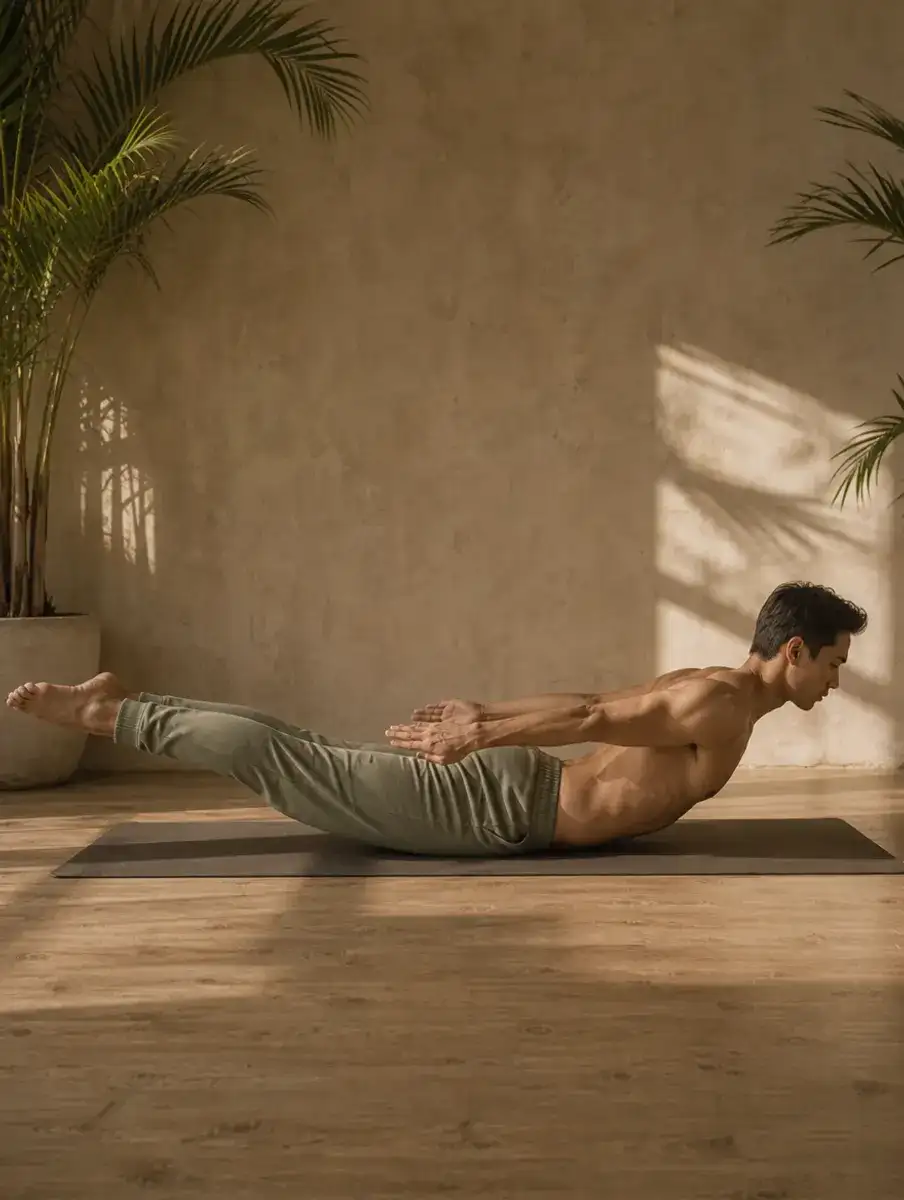
Salabha means locust and asana means posture. Lying on the belly, you lift the chest, arms and legs off the floor together, so the body looks like an insect resting with its wings back.
Locust Pose (Salabhasana) is a backbend lying on the belly that works the back of the body. Lie face down with the arms alongside you, press the feet down, then lift the head, chest and arms, and the legs if it feels good, for three to five breaths. Keep the lift moderate and the neck long.
Pronunciation and meaning
Salabhasana: shah-lah-BAHS-uh-nuh. It is often written Shalabhasana, and the stress falls on BAHS.
Salabha means locust and asana means posture. Lying on the belly, you lift the chest, arms and legs off the floor together, so the body looks like an insect resting with its wings back.
How to do Locust Pose
- Lie on your belly with your forehead on the mat, legs hip-width apart, tops of the feet down, and arms alongside you with the palms facing down.
- Press the tops of the feet and the pubic bone gently into the floor, and lengthen the legs back.
- Inhale and lift your head, chest and arms off the floor, keeping the back of the neck long and the gaze on the floor just ahead.
- If that feels good, lift the legs as well, keeping the knees straight and the legs no wider than the hips.
- Stay for three to five breaths, breathing into the back of the ribs. Keep the lift moderate rather than straining for height.
- Exhale and lower slowly. Turn one cheek to the mat and rest for a few breaths, then repeat once or twice.
Locust Pose step by step
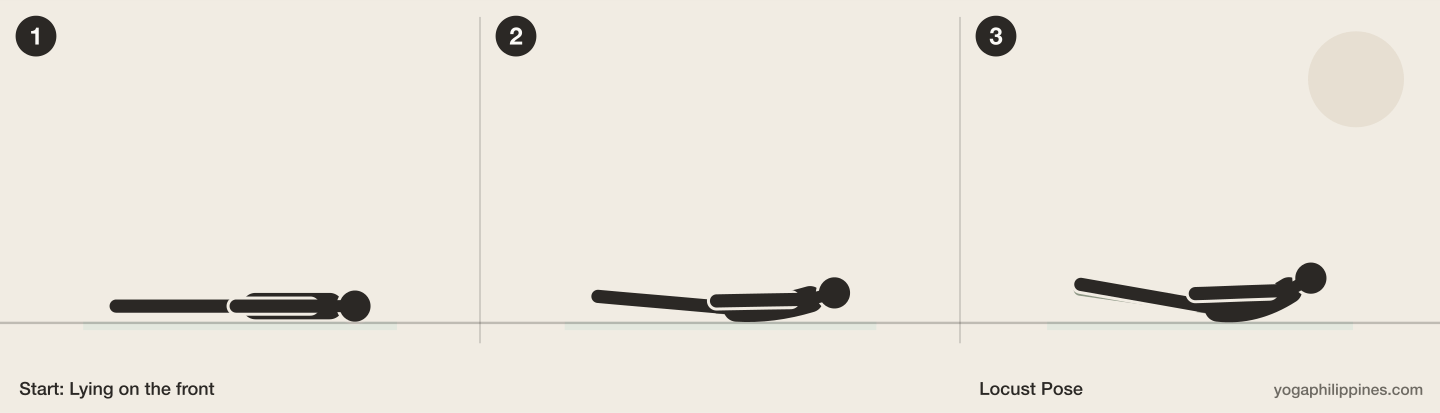
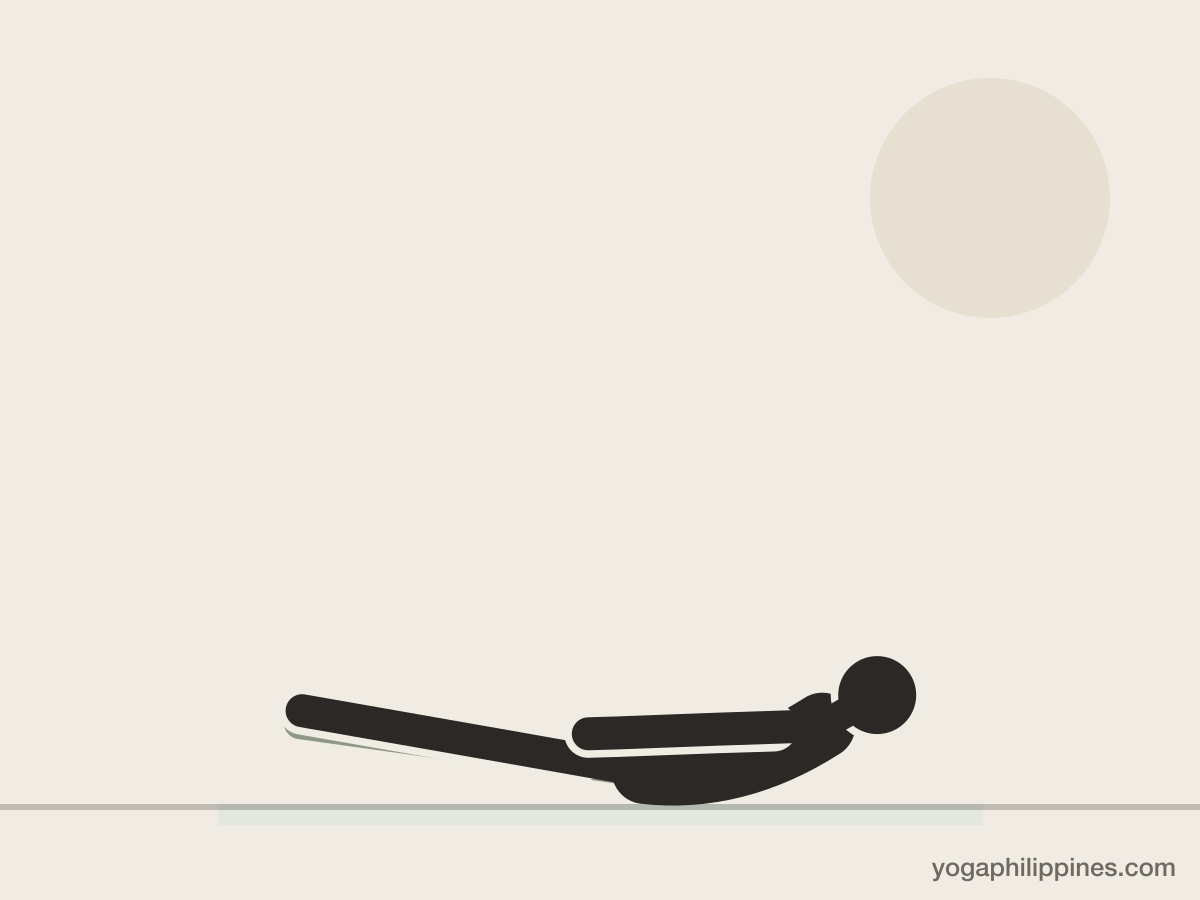
Drawings and video by YogaPhilippines.com, free to reuse under CC BY 4.0 with credit and a link: see the image licence for how to credit.
Locust Pose appears in the Bikram 26 poses sequence and the core strength sequence card, both printable with holds and cues. For other poses that work the upper back, open the pose finder set to the upper back.
Make it easier
- Lift only the chest and keep the legs on the floor, or lift one leg at a time.
- Keep the hands under the shoulders lightly on the floor to guide the lift.
- Place a folded blanket under the hips if lying on the belly is uncomfortable.
Pregnancy and after birth
Pregnancy. Avoid. Locust puts your weight on the belly. A gentle back strengthener on hands and knees, such as lifting one arm and the opposite leg, is a better choice. Check with your OB or midwife.
After birth. Adapt. Once your doctor or midwife has cleared you and lying on the belly is comfortable, begin with the chest lift only. After a caesarean birth, wait until the scar is comfortable under pressure.
For more on practising through pregnancy, see Joahnna Lee Yoga.
Common mistakes
- Throwing the head back and shortening the back of the neck.
- Squeezing the bottom hard and pinching the lower back to lift higher.
- Holding the breath as you lift.
Locust Pose is a quiet, belly-down backbend that builds strength along the back of the body. It usually comes after Cobra and before Bow in a class, and it is one of the simplest ways to work the back without any flexibility.
Many people with desk jobs find it a useful counter to long hours of rounding forward. Keep it low and steady. Small locust lifts also appear among the yoga based core exercises with reps.
Where does locust pose fit in a practice?
It sits naturally between Sphinx Pose, the forearm backbend, and Cobra Pose, and it prepares the back for deeper shapes. Swimming locust and a bent arm version are part of the gentle back exercises for a stronger spine. Finish with Child’s Pose for a gentle rest.
Who might enjoy it?
Anyone working on posture. It appears in yoga for bad posture and pairs well with the upper body work in the shoulder stretches routine, while locust arm circles feature in the shoulder exercises from yoga. If you have back pain, keep the lift small and see a doctor or physio if it gets worse.
Prep poses for Locust Pose
Poses that warm up the same body areas at a lower intensity, so Locust Pose feels steadier when you get there.
- Cobra Pose (Bhujangasana) a direct preparation, beginner
Counter-poses for Locust Pose
Shapes that move the body the other way or let it rest straight after Locust Pose.
- Balasana (Child's Pose) beginner
Where to go next after Locust Pose
These poses list Locust Pose as a preparation, so they are a natural next step once it feels comfortable.
- Bow Pose (Dhanurasana) intermediate
Props that help in Locust Pose
- Blanket: pads the hips and the front of the pelvis on a hard floor.
Programs and sessions that use Locust Pose
- The one-month challenge 2 of its 30 sessions
- The 4-week beginner program 1 of its 12 sessions
- Sequences: 30-minute yoga flow, 45-minute slow practice, 26-posture sequence and core-strength session
- Practice app sessions: 30-minute practice
- Generated example flows: 20-minute hip flow
Sources: Mayo Clinic, Fitness program: 5 steps to get started; NCCIH (US National Institutes of Health), Yoga: Effectiveness and Safety. Last reviewed 2 October 2026.
Locust Pose questions
What muscles does locust pose work?
Mainly the muscles along the back of the body: the back, the buttocks and the backs of the legs, with the shoulders helping to lift the arms.
How high should you lift in locust pose?
Only as high as you can lift with an easy breath and a long neck. A low, even lift through the whole back is more useful than a high one that pinches the lower back.
Is locust pose good for beginners?
Yes, in its simple form with the legs down or one leg at a time. It asks for no flexibility, only a little strength, and the range is up to you.
What is Locust Pose good for?
Locust Pose builds strength along the back of the body: the back, the buttocks and the backs of the legs, with the shoulders helping to lift the arms. It asks for no flexibility, only a little strength. Many people with desk jobs find it a useful counter to hours of rounding forward, and it prepares the back for deeper backbends.
Is Locust Pose okay if you have sciatica?
It depends on you, so check with your doctor or physio first. Locust works the back muscles while you lie on the belly, and some people find a small, low lift comfortable while others do not. If you try it, lift only the chest, keep the legs down and stop if pain travels down a leg or gets worse.
Updated