Pose library · Salamba Bhujangasana · reviewed by a teacher
Sphinx Pose (Salamba Bhujangasana)
Salamba means supported and bhujanga means serpent, so the name is supported cobra. You lie on your belly and prop yourself up on your forearms, a lower and gentler cousin of Cobra Pose.
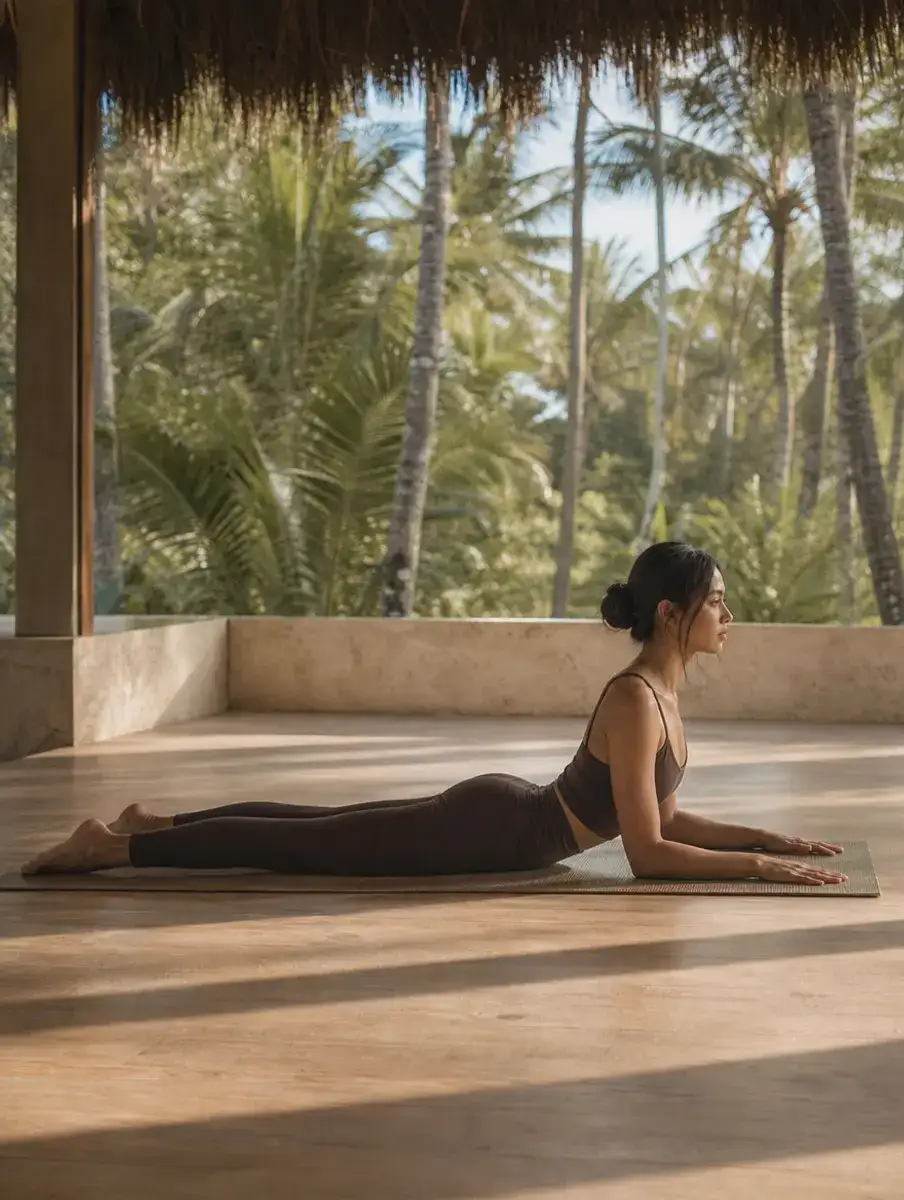
Sphinx Pose (Salamba Bhujangasana) is a gentle backbend on the belly, propped on the forearms, a lower cousin of Cobra. Bring the elbows under the shoulders, press the forearms down to lift the chest and let the belly and legs rest, for two to five minutes in Yin. Keep the gaze low so the neck stays long.
Pronunciation and meaning
Salamba Bhujangasana: suh-LUM-buh boo-jung-GAHS-uh-nuh. In Salamba the stress falls on LUM, and in Bhujangasana on GAHS.
Salamba means supported and bhujanga means serpent, so the name is supported cobra. You lie on your belly and prop yourself up on your forearms, a lower and gentler cousin of Cobra Pose.
How to do Sphinx Pose
- Lie on your belly with your legs about hip-width apart and the tops of your feet resting on the mat.
- Bring your elbows under your shoulders, or a little in front of them, with your forearms parallel and palms down.
- Press your forearms lightly into the floor to lift your chest, and let your shoulders slide away from your ears.
- Let your belly and legs rest on the mat, and allow the lower back to take a gentle curve without squeezing the buttocks.
- Look forward and slightly down so the back of the neck stays long. In a Yin practice, stay for two to five minutes.
- To come out, slide your forearms forward, lower your chest and rest your forehead on your stacked hands for a few breaths.
Sphinx Pose step by step

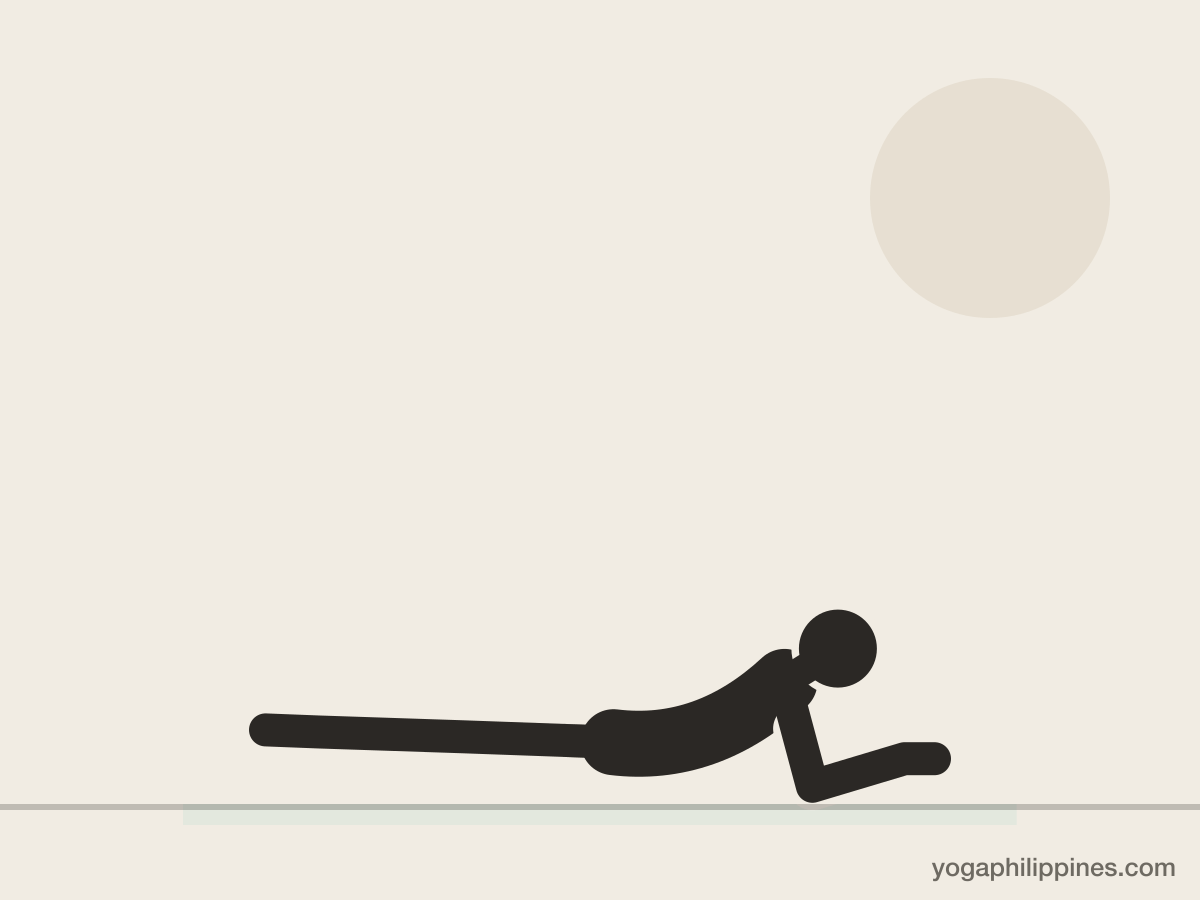
Drawings and video by YogaPhilippines.com, free to reuse under CC BY 4.0 with credit and a link: see the image licence for how to credit.
For other poses that work the lower back, open the pose finder set to the lower back.
Teacher's note from Joahnna Lee
“If your lower back starts to pinch, walk your elbows forward. A lower Sphinx is still Sphinx.”
“Let the buttocks and legs go soft. I want the curve to come from resting, not from squeezing.”
“Draw the chest forward between the upper arms, as though someone were gently leading you through a doorway.”
Make it easier
- Place a folded blanket under the hip bones if they press uncomfortably into the floor.
- For a smaller curve in the lower back, walk the elbows forward until the forearms reach out ahead of you.
- For a long hold, lay a bolster crossways under the armpits and rest the chest on it, so the arms can relax completely.
- Seal, with straight arms, is a stronger variation. Leave it for later, and only if Sphinx feels easy on the lower back.
Pregnancy and after birth
Pregnancy. Avoid. Lying face down puts pressure on the abdomen, so leave Sphinx out once you know you are pregnant unless your OB or midwife tells you otherwise. For a gentle lift through the chest instead, try Cat-Cow on hands and knees, or sit tall and draw the shoulders back.
After birth. Adapt. Wait for your OB or midwife to clear you, and after a caesarean birth wait until lying on the belly feels comfortable. Tender breasts may like a folded blanket under the chest. If you have a gap between the abdominal muscles, ask your OB, midwife or a women's health physiotherapist before you add backbends.
Read Joahnna Lee's notes on yoga in pregnancy and after birth.
Common mistakes
- Placing the elbows behind the shoulders, which drops the chest and crowds the lower back.
- Hunching the shoulders up by the ears. Press the floor away slightly to make room for the neck.
- Tipping the head back to look at the ceiling. Keep the gaze low so the neck is not the part doing the backbend.
- Squeezing the buttocks and thighs hard, which makes the lower back feel tighter over a long hold.
Sphinx is a low, supported backbend, and in Yin yoga it is often the first backbend of a practice because the forearms carry so much of the weight. It is also a comfortable way to meet Cobra Pose for the first time.
In a Yin practice it is held for a few minutes, with a folded blanket under the hip bones if the floor feels hard.
Its Yin neighbour for the upper back is Melting Heart, also known as Puppy Pose, where the chest sinks toward the floor instead of lifting.
Lifting the chest and the legs with the arms off the floor is Locust Pose, which builds back strength.
Counter-poses for Sphinx Pose
Shapes that move the body the other way or let it rest straight after Sphinx Pose.
- Balasana (Child's Pose) beginner
Poses that lead into Sphinx Pose
In a sequence, Sphinx Pose often follows these poses as their counter-pose or rest.
- Caterpillar Pose (Yin) beginner
Props that help in Sphinx Pose
- Blanket: pads the hips and the front of the pelvis on a hard floor.
- Bolster: supports the body so you can stay longer with less effort.
Programs and sessions that use Sphinx Pose
- The one-month challenge 3 of its 30 sessions
- The 14-day flexibility plan 2 of its 14 sessions
- The 4-week beginner program 1 of its 12 sessions
- Sequences: 45-minute slow practice and back-friendly session
- Practice app sessions: back-friendly
Sources: Mayo Clinic, Fitness program: 5 steps to get started; NCCIH (US National Institutes of Health), Yoga: Effectiveness and Safety; NHS, Exercise in pregnancy; CDC, Pregnant & Postpartum Activity: An Overview; Canadian Family Physician (Chan et al., 2014), via PubMed Central, Hot yoga and pregnancy: Fitness and hyperthermia. Last reviewed 2 October 2026.
Sphinx Pose questions
What is the difference between Sphinx Pose and Cobra Pose?
In Sphinx you rest on your forearms, so the arms carry the weight and the backbend is low and gentle. In Cobra the hands are under the shoulders and the back muscles lift the chest, so it is more active and usually held for a few breaths.
How long should I hold Sphinx Pose?
In a Yin practice, two to five minutes. As part of a more active practice, five to ten breaths is enough. Come out whenever the lower back pinches.
What is Sphinx Pose good for?
Sphinx Pose is a gentle backbend that lifts the chest, stretches the front of the body and lets the lower back take a soft curve, while the forearms carry most of the weight. Many people find it a comfortable first backbend in a Yin practice and an easy way to meet Cobra Pose.
Who should avoid Sphinx Pose?
Skip or change Sphinx Pose if your lower back pinches in it: walk the elbows forward for a smaller curve, or rest instead. With a recent back injury, recent abdominal surgery or a gap between the abdominal muscles, check with your doctor or physio first. Placing a folded blanket under the hip bones helps if the floor presses uncomfortably.
Updated