Pose library · Uttana Shishosana · reviewed by a teacher
Puppy Pose (Uttana Shishosana)
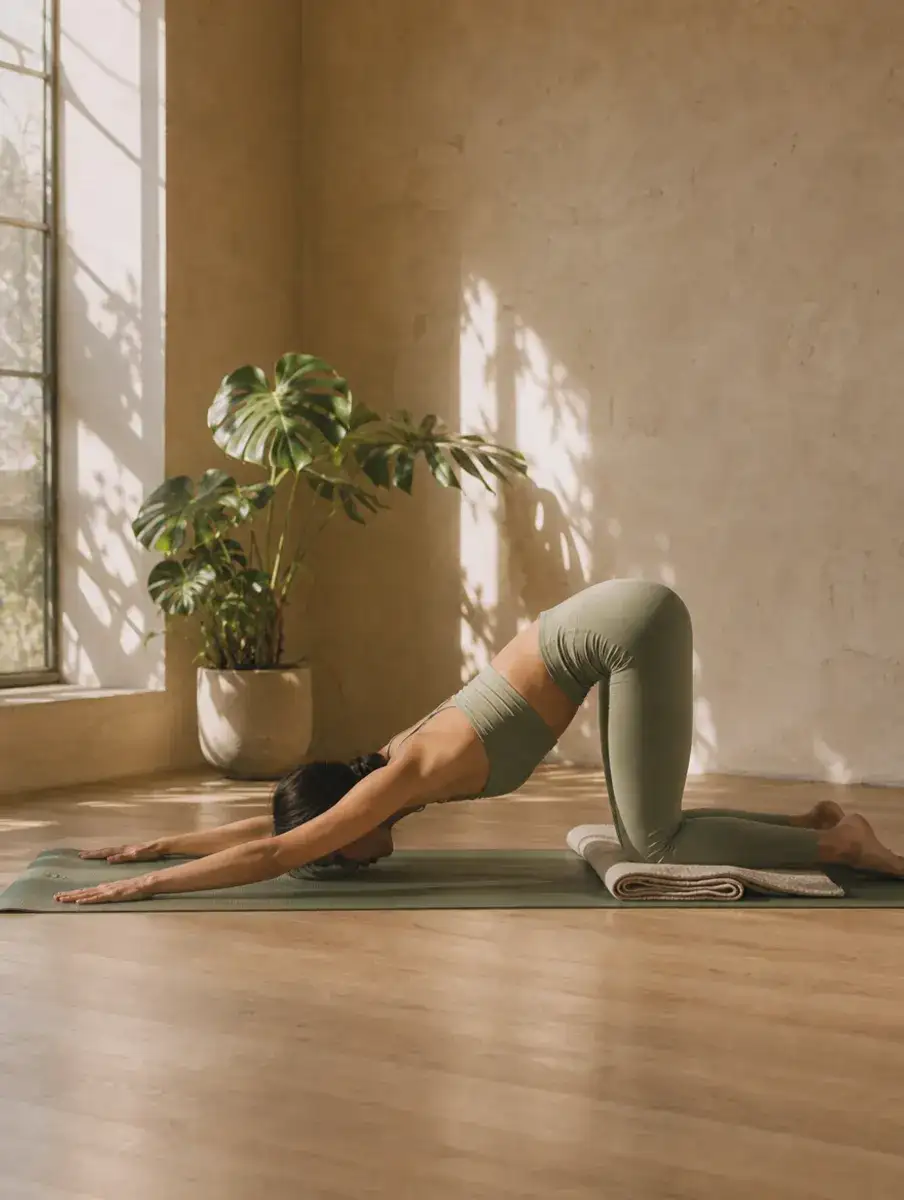
Puppy Pose sits halfway between Child's Pose and Downward-Facing Dog: the hips stay high over the knees while the arms reach forward and the chest melts toward the floor. Uttana means extended and shishu means puppy or young one. It opens the shoulders and the upper back, and in Yin it is often called Melting Heart.
Puppy Pose (Uttana Shishosana) sits halfway between Child's Pose and Downward-Facing Dog, stretching the shoulders and upper back. From hands and knees, walk the hands forward, keep the hips over the knees, rest the forehead down and let the chest soften for five breaths. Use a bolster under the chest if the shoulders are tight.
Pronunciation and meaning
Uttana Shishosana: oo-TAH-nuh shee-SHOH-suh-nuh. Both words stress their second syllable.
Puppy Pose sits halfway between Child's Pose and Downward-Facing Dog: the hips stay high over the knees while the arms reach forward and the chest melts toward the floor. Uttana means extended and shishu means puppy or young one. It opens the shoulders and the upper back, and in Yin it is often called Melting Heart.
How to do Puppy Pose
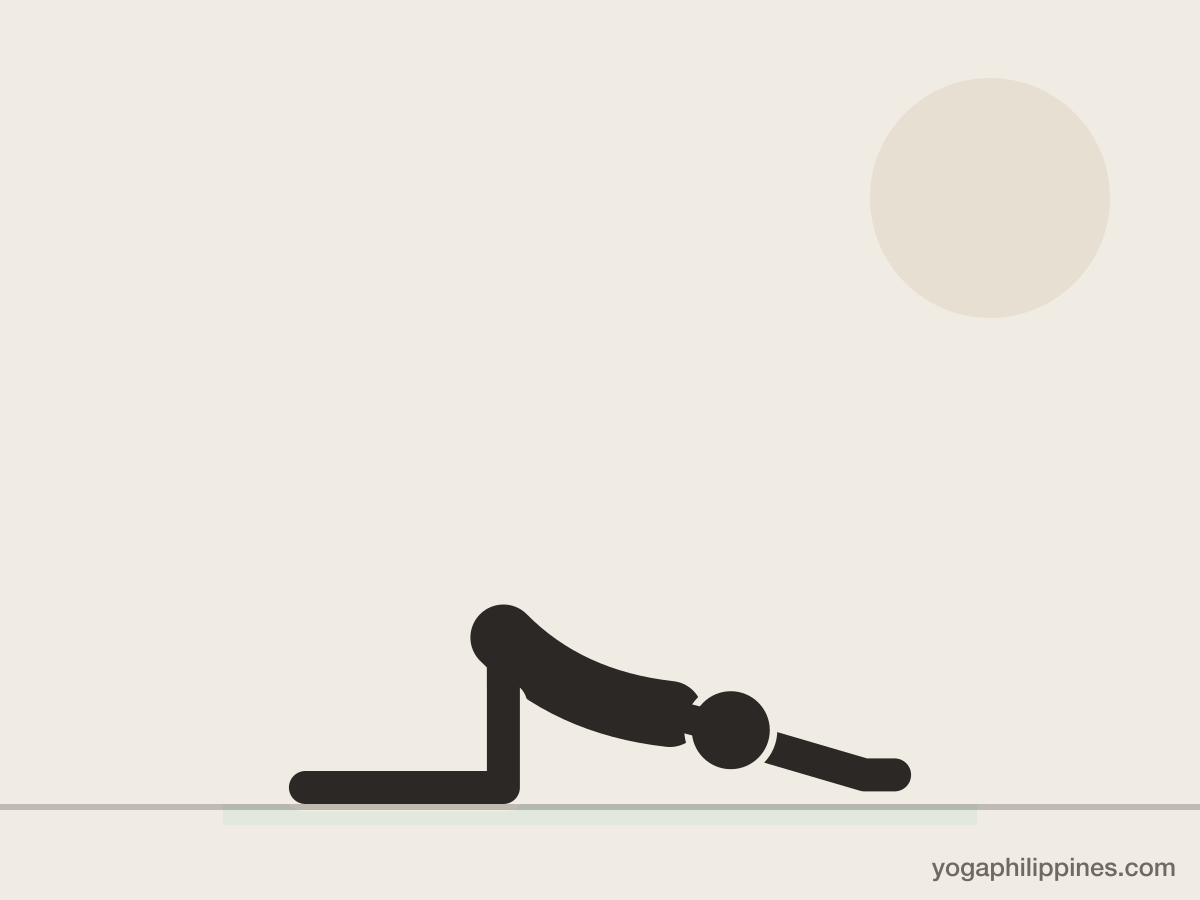
- Come to hands and knees with your hips over your knees and a blanket under the knees.
- Walk your hands forward a few hand-lengths, keeping the hips stacked over the knees.
- Rest your forehead on the mat, a block or a cushion, with the arms shoulder-width apart.
- Let the chest soften down toward the floor while the hips stay lifted. Keep the elbows off the floor if you can.
- Breathe into the back of the ribs for five breaths, or stay two to three minutes in a Yin practice.
- Walk the hands back and sit into Child's Pose to rest.
Puppy Pose step by step

Drawings and video by YogaPhilippines.com, free to reuse under CC BY 4.0 with credit and a link: see the image licence for how to credit.
For other poses that work the shoulders, open the pose finder set to the shoulders.
Teacher's note from Joahnna Lee
“Imagine the hips and the hands pulling gently away from each other, so the whole spine gets longer.”
“Let the chest drop by itself. Pushing it down usually pinches the lower back.”
“If the shoulders complain, take the hands wider and turn the palms to face each other.”
Make it easier
- Rest the chest on a bolster or a stack of pillows so the stretch stays mild.
- Put the forearms on two blocks with the palms together, for a deeper shoulder stretch with less weight.
- Do it standing at a wall or a kitchen counter, hands on the surface and hips over the feet.
Pregnancy and after birth
Pregnancy. Adapt. Take the knees wide so the belly has room, rest the chest on a bolster and keep the hold short. Come up slowly if you feel light-headed with the head down. Check with your OB or midwife before you start.
After birth. Adapt. Once your doctor or midwife has cleared you, it is a gentle way back into shoulder and upper back work after hours of feeding and carrying. Use a bolster under the chest at first.
Expecting? Joahnna Lee Yoga has notes on adapting each trimester.
Common mistakes
- Letting the hips drift back toward the heels, which turns it into Child's Pose.
- Sagging into the lower back. Draw the belly in a little and let the stretch sit in the upper back.
- Forcing the chest to the floor when the shoulders are tight.
Puppy Pose suits shoulders that have spent the week hunched over a screen. It is quiet, it needs no strength, and it reaches the upper back in a way few floor shapes do.
In Yin yoga with bolsters and long holds the chest is often supported, so you can stay a few minutes and let the stretch arrive slowly.
When the arms tire, sit back into the resting fold of Balasana. The two belong together, and moving between them a few times is a lesson in itself.
Lowering onto the forearms with the hips high and the knees lifted is Dolphin Pose, a mild inversion.
Puppy Pose or Child's Pose?
Puppy Pose is Child's Pose with the hips raised. If the hips drift back toward the heels, you are in Child's Pose instead.
| Compare | Puppy Pose | Child's Pose |
|---|---|---|
| Position | Hands and knees or hands and feet | Kneeling |
| What it works | shoulders, upper back and chest | lower back, hips and spine |
| Level | Beginner | Beginner |
| Key difference | Hips stay high over the knees while the arms reach forward and the chest softens toward the mat. | Hips sink back toward the heels and the forehead rests down; it is a resting shape. |
Prep poses for Puppy Pose
Poses that warm up the same body areas at a lower intensity, so Puppy Pose feels steadier when you get there.
- Table Top Pose (Bharmanasana) gentler work for the same area, beginner
Counter-poses for Puppy Pose
Shapes that move the body the other way or let it rest straight after Puppy Pose.
- Balasana (Child's Pose) beginner
Props that help in Puppy Pose
- Blanket: pads the knees on a hard floor.
- Block: brings the floor closer under the hands.
- Bolster: supports the body so you can stay longer with less effort.
Programs and sessions that use Puppy Pose
- The 30-day challenge 2 of its 30 sessions
- The 14-day flexibility plan 1 of its 14 sessions
- The 4-week beginner program 1 of its 12 sessions
- Sequences: longer slow session
- Practice app sessions: evening wind-down
- Generated example flows: 20-minute hip flow
Sources: Mayo Clinic, Fitness program: 5 steps to get started; NCCIH (US National Institutes of Health), Yoga: Effectiveness and Safety; NHS, Exercise in pregnancy; CDC, Pregnant & Postpartum Activity: An Overview; Canadian Family Physician (Chan et al., 2014), via PubMed Central, Hot yoga and pregnancy: Fitness and hyperthermia. Last reviewed 2 October 2026.
Puppy Pose questions
What is the difference between Puppy Pose and Child's Pose?
In Child's Pose the hips rest back on or toward the heels and the body folds. In Puppy the hips stay high over the knees and the chest sinks toward the floor, so the stretch moves into the shoulders and upper back.
Why do I feel Puppy Pose in my shoulders?
That is where most of the stretch lands, especially if your days are spent at a laptop. Keep it mild. If you feel pinching or tingling in the arms, take the hands wider or come out.
What is Puppy Pose good for?
Puppy Pose stretches the shoulders and the upper back, a place few floor shapes reach. It needs no strength, so it suits shoulders that have spent long days hunched over a screen. In a Yin class it is often held for two to three minutes with a bolster under the chest, and it pairs well with Child's Pose.
Is Puppy Pose hard for beginners?
Not usually. It needs no strength, and you can make it as mild as you need. If your shoulders are tight, rest the chest on a bolster or pillows, take the hands wider, or do it standing with your hands on a wall or counter. The stretch should stay gentle, never pinching in the lower back.
Pairs well with
Updated