Pose library · Eka Pada Rajakapotasana
King Pigeon Pose (Eka Pada Rajakapotasana)
Eka means one, pada means foot or leg, raja means king, kapota means pigeon and asana means posture. From the pigeon shape, you bend the back knee and reach back for the foot, lifting the chest so the body curves like a proud pigeon puffing out its chest.
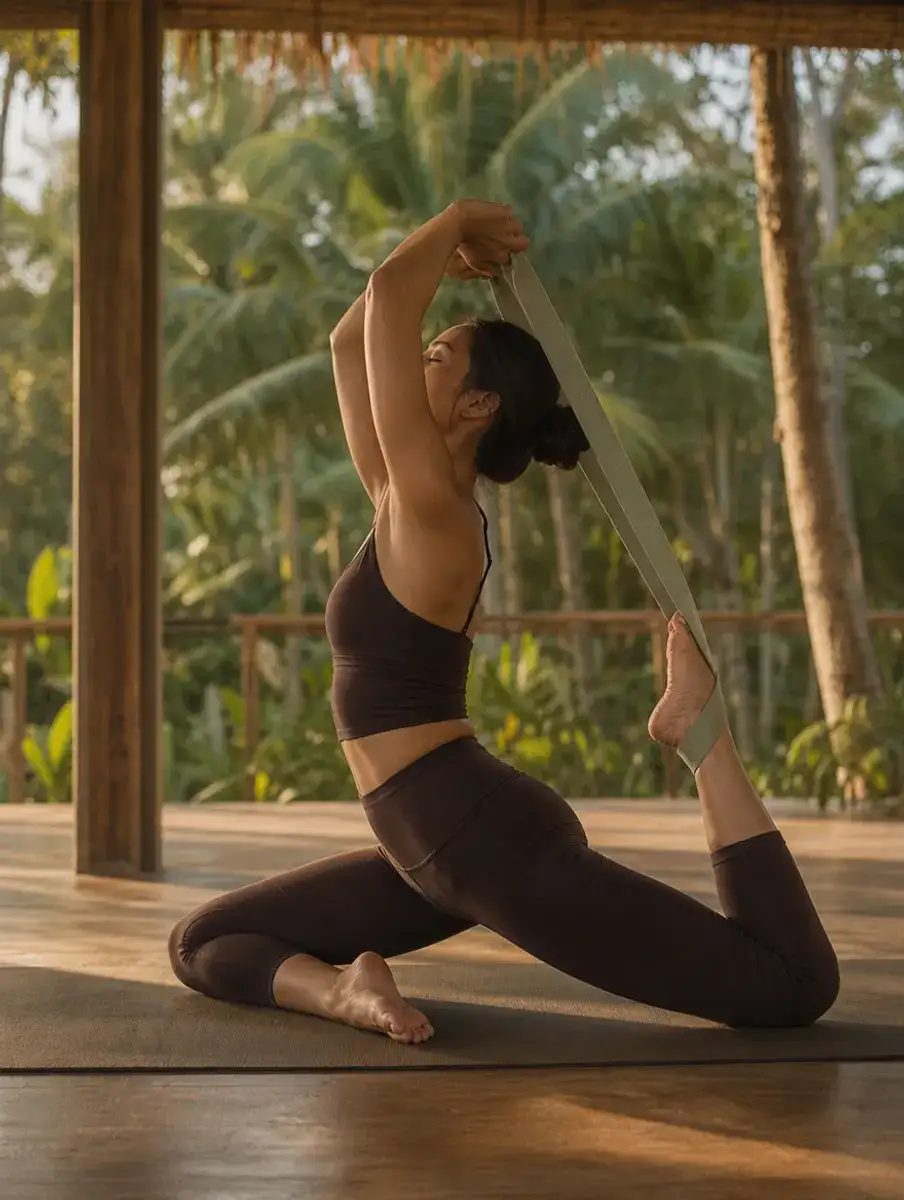
King Pigeon Pose (Eka Pada Rajakapotasana) is an advanced backbend that stretches the hips and the front of the body. After a full warm-up, come into Pigeon, bend the back knee, loop a strap around the back foot and lift the chest for three to five breaths. Never force the foot toward the head.
Pronunciation and meaning
Eka Pada Rajakapotasana: AY-kuh PAH-duh rah-juh-kah-poh-TAHS-uh-nuh. Rajakapotasana is long, with the stress on TAHS.
Eka means one, pada means foot or leg, raja means king, kapota means pigeon and asana means posture. From the pigeon shape, you bend the back knee and reach back for the foot, lifting the chest so the body curves like a proud pigeon puffing out its chest.
How to do King Pigeon Pose
- Warm up well with lunges, Pigeon Pose and gentle backbends first. Then come into Pigeon with the right shin forward and the left leg long behind you.
- Square the hips as much as you can and lift the chest, hands on the floor or blocks beside the hips.
- Bend the left knee and bring the left foot toward your back. Loop a strap around the foot or reach back with the left hand to hold it.
- Lift the chest and broaden across the collarbones. If the shoulders allow, take the strap or foot overhead with both hands, elbows pointing up.
- Draw the foot and the head toward each other only as far as the back and front knee feel comfortable. Stay for three to five breaths.
- Release the foot slowly, lower the back leg and rest in Pigeon or Child's Pose before trying the other side.
For other poses that work the hips, open the pose finder set to the hips.
Make it easier
- Hold a strap around the back foot instead of reaching the foot with the hands.
- Keep the back foot in the crook of the elbow, a mermaid version, rather than taking it overhead.
- Put a block or blanket under the hip of the front leg so the pelvis stays level.
Pregnancy and after birth
Pregnancy. Avoid. The deep backbend and pressure through the belly and hips are not suited to pregnancy. A supported Pigeon with blocks, kept mild, is a gentler choice. Check with your OB or midwife.
After birth. Avoid for now. Wait until your doctor or midwife has cleared you and the core and hips feel steady. Rebuild with Pigeon and Low Lunge first.
Expecting? Joahnna Lee Yoga has notes on adapting each trimester.
Common mistakes
- Forcing the foot to the head, which crunches the lower back.
- Letting the front knee twist when the hips are not open enough. Raise the hip on a block.
- Lifting the shoulders up toward the ears as the arms reach back.
King Pigeon Pose is the full, advanced version of Pigeon. It keeps the hip opening of the familiar resting shape and adds a deep backbend, with the back foot drawn toward the head.
It shows up near the peak of some strong Vinyasa classes and in backbending workshops. Most people work on it in stages for a long time, and the stages are worth doing for their own sake.
How do you build toward king pigeon pose?
Start with Pigeon Pose, the resting hip opener, until the hips are comfortable. Add backbends such as Camel Pose, and practise reaching for the back foot in Dancer Pose. The hip flexor stretches routine helps with the front of the back hip.
What should it feel like?
A strong stretch at the front of the back thigh and hip, an open chest and active shoulders. A pinch in the lower back or the front knee means you have gone too far. Back off, use the strap, and stay in the earlier stages for a while.
Prep poses for King Pigeon Pose
Poses that warm up the same body areas at a lower intensity, so King Pigeon Pose feels steadier when you get there.
- Pigeon Pose (Eka Pada Rajakapotasana) a direct preparation, intermediate
- Dancer Pose (Natarajasana) a direct preparation, intermediate
- Camel Pose (Ustrasana) a direct preparation, intermediate
- Bridge Pose (Setu Bandha Sarvangasana) gentler work for the same area, beginner plus
Counter-poses for King Pigeon Pose
Shapes that move the body the other way or let it rest straight after King Pigeon Pose.
- Balasana (Child's Pose) beginner
Props that help in King Pigeon Pose
- Strap: extends the arms when the hands do not reach the feet or each other yet.
- Block: sits under the hips or supports a hand or knee that does not reach the floor.
- Blanket: lifts the hips a little so the spine can stay tall.
Sources: Mayo Clinic, Fitness program: 5 steps to get started; NCCIH (US National Institutes of Health), Yoga: Effectiveness and Safety; NHS, Knee pain. Last reviewed 2 October 2026.
King Pigeon Pose questions
What is the difference between pigeon pose and king pigeon pose?
Pigeon is a hip opener with the back leg long on the floor. King Pigeon adds a deep backbend: the back knee bends and the hands reach back for the foot, so it also asks for open shoulders and a flexible spine.
Do you need a strap for king pigeon pose?
Most people do at first. A strap around the back foot lets you work on the backbend and shoulders without forcing the reach, and many teachers keep using it.
Is king pigeon pose safe for the knees?
The front knee can take strain if the hips are not open. Raise the front hip on a block, keep the front foot flexed, and stop if you feel pain in the knee. See a doctor or physio if the pain lasts.
What are the benefits of King Pigeon Pose?
King Pigeon Pose stretches the hips and the whole front of the body, especially the front of the back thigh and hip. It also asks for open shoulders and a flexible spine as the chest lifts and the hands reach back for the foot. It is an advanced backbend, so the stages that build toward it are worth doing too.
Why is King Pigeon Pose so hard?
It asks for three things at once: open hips for the Pigeon base, a flexible spine for the deep backbend and open shoulders to reach the back foot overhead. Few bodies have all three. Most people build it in stages, with a strap around the back foot and a block under the front hip.
Updated