Pose library · Bhujangasana · reviewed by a teacher
Cobra Pose (Bhujangasana)
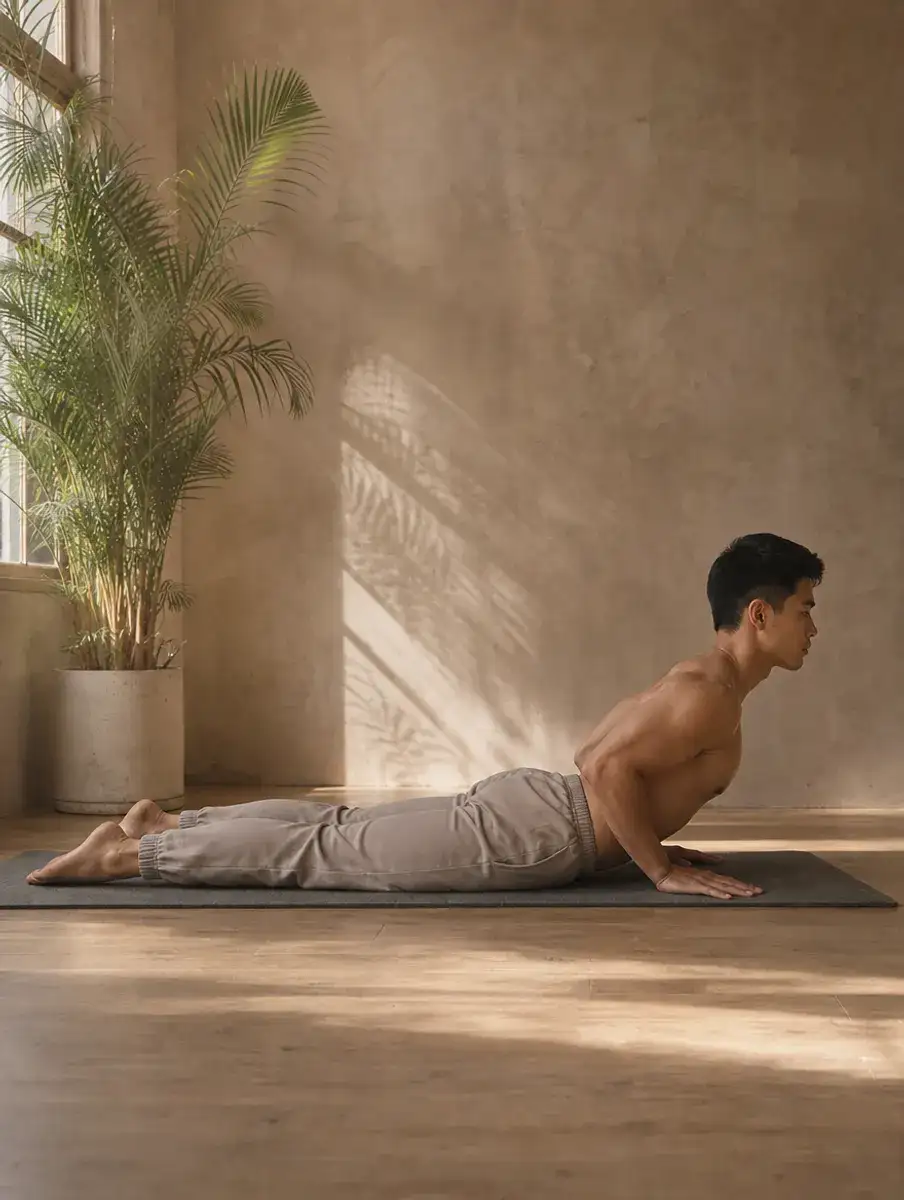
Bhujanga means serpent and asana means posture. The chest rises from the floor the way a cobra lifts its hood, while the legs stay long behind like its tail.
Cobra Pose (Bhujangasana) is a gentle backbend from the belly that works the muscles of the back. Place the hands under the shoulders, press the tops of the feet down and lift the chest mainly with the back for three to five breaths. Keep the elbows bent and hugging in; straight arms can crunch the lower back.
Pronunciation and meaning
Bhujangasana: boo-jung-GAHS-uh-nuh. The stress falls on the third syllable, GAHS.
Bhujanga means serpent and asana means posture. The chest rises from the floor the way a cobra lifts its hood, while the legs stay long behind like its tail.
How to do Cobra Pose
- Lie on your belly with your legs straight back, hip-width apart, and the tops of the feet pressing into the mat.
- Place your hands flat under your shoulders, fingers pointing forward, and hug the elbows in against your ribs.
- Press the pubic bone and the tops of the feet down, and reach the tailbone toward your heels to lengthen the lower back.
- On an inhale, lift the forehead and then the chest, using the muscles of your back first and your hands only lightly.
- Keep the elbows bent, the shoulders drawing down and back, and the neck long with the gaze forward or slightly down.
- Hold for three to five breaths, then lower down slowly on an exhale and rest one cheek on the mat.
Cobra Pose step by step
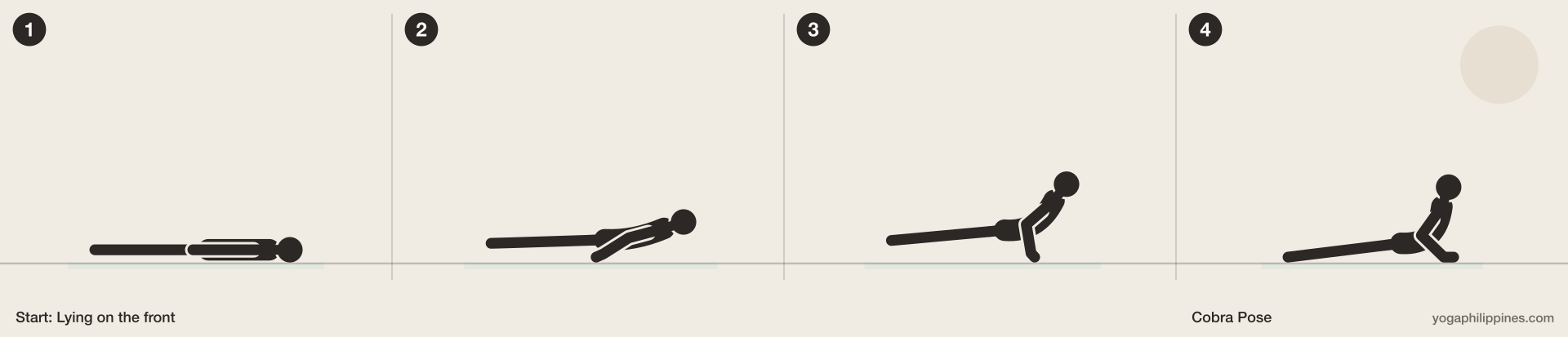
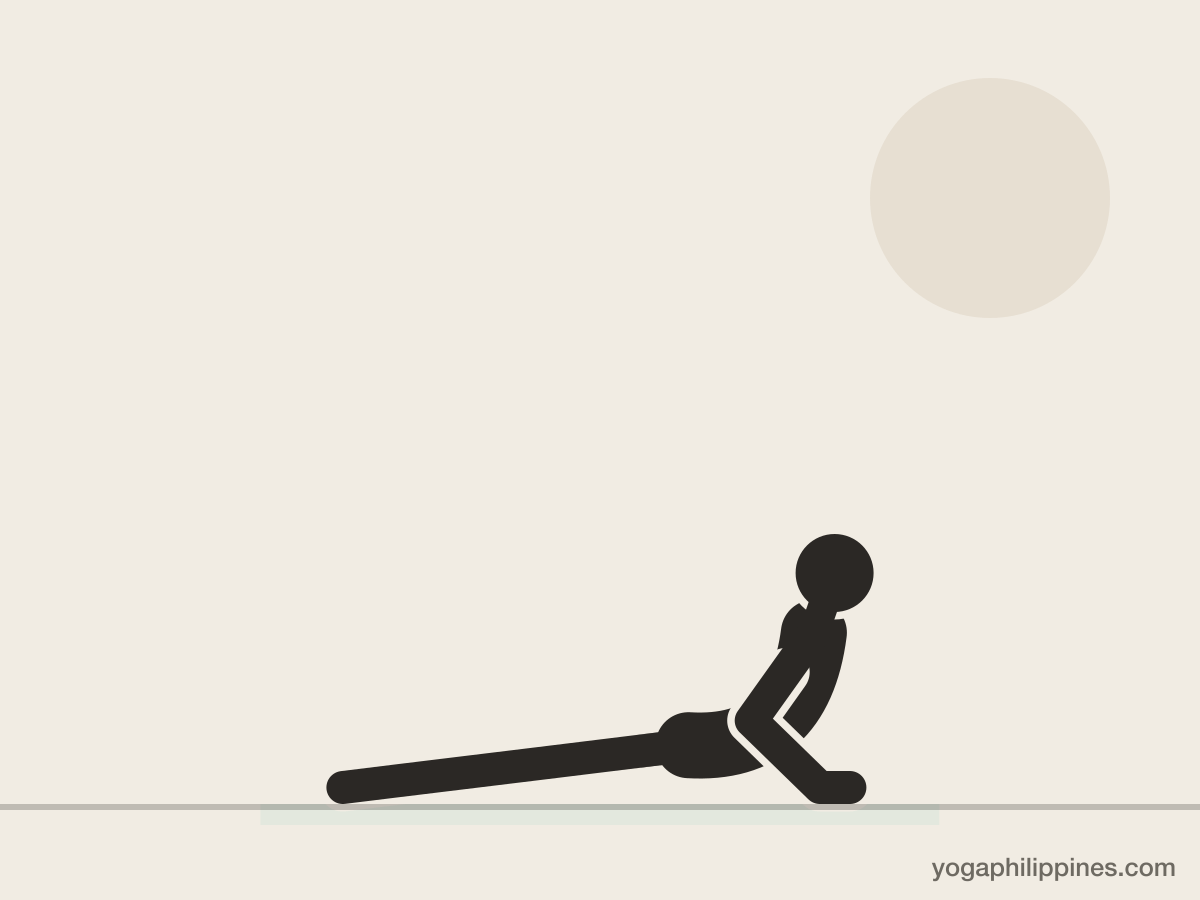
Drawings and video by YogaPhilippines.com, free to reuse under CC BY 4.0 with credit and a link: see the image licence for how to credit.
Cobra Pose appears in the 90-minute Bikram 26 poses, which is printable with holds and cues. For other poses that work the lower back, open the pose finder set to the lower back.
Teacher's note from Joahnna Lee
“Try lifting your hands an inch off the floor for a moment. Whatever height you can keep is the real height of your cobra.”
“Drag the palms back toward your hips without letting them slide. It draws the chest forward and the shoulders away from the ears.”
“Spread the backbend through the whole spine. If the lower back is doing all of it, come down a little.”
Make it easier
- Baby Cobra: stay low, with only the upper chest lifted and the lower ribs on the floor.
- Sphinx Pose: rest on your forearms with the elbows under the shoulders for a gentler, supported version.
- Place a folded blanket under the hips if the hip bones press uncomfortably into the floor.
- Widen the legs a little if the lower back pinches.
Pregnancy and after birth
Pregnancy. Avoid. Lying on the belly and pressing into it is not suitable during pregnancy. A gentle backbend on hands and knees, such as the Cow half of Cat-Cow, is a kinder substitute. Check with your OB or midwife before you start.
After birth. Adapt. Wait for your doctor or midwife to clear you, and longer after a caesarean birth. Begin with Sphinx or Baby Cobra, keep the lift small, and come down if you feel strain across the belly or the scar.
See prenatal yoga notes by trimester before you adapt a pose.
Common mistakes
- Straightening the arms and hanging in the lower back, which crunches the lumbar spine.
- Shrugging the shoulders up toward the ears.
- Cranking the head back to look at the ceiling.
- Letting the elbows flare out wide to the sides.
- Clenching the buttocks hard, which can pinch the lower back.
Cobra is often the first backbend people learn, and in a Vinyasa class it turns up inside the Sun Salutation. Done low and slow, it teaches the upper back to share a movement the lower back would happily take over on its own.
In Vinyasa yoga it helps to keep Cobra low at first, so the upper back learns its share before the chest rises any higher. To practise it inside the flow at a steady pace, try the timer that paces each Sun Salutation round.
When Cobra feels easy and the shoulders stay down, Upward-Facing Dog, the straight-arm version is the next step in a flow. Cobra opens the list of backbend yoga poses, from gentle to deep.
Holding the ankles and lifting the thighs too turns a belly-down backbend into Bow Pose, Dhanurasana. With the hands off the floor, the same back muscles do all the work in Locust Pose, the belly-down strengthener.
Which version of Cobra suits you today?
| Version | How it looks | Choose it when |
|---|---|---|
| Sphinx | Forearms down, elbows under the shoulders | The lower back is sensitive, or you want a longer, quieter hold |
| Baby Cobra | Only the upper chest lifts, lower ribs stay down | You are new to backbends, or warming up |
| Hands-free Cobra | Hands hover off the floor | You want the back muscles to do all the work |
| Cobra | Elbows bent, chest higher, hips down | The lower versions feel easy and the shoulders stay down |
| Upward-Facing Dog | Arms straight, thighs lifted off the floor | Cobra feels steady and the wrists are happy |
Where does Cobra come from?
Bhujangasana is described in the Gheranda Samhita, a hatha yoga manual usually dated to the seventeenth century, and it later became part of the Sun Salutation as that sequence spread in the twentieth century. Older forms of the pose tended to lift higher on straighter arms; many teachers today prefer the lower, bent-elbow version on this page because it spreads the backbend through the upper spine.
A short sequence that builds to Cobra
- Cat-Cow, eight slow rounds, to warm the spine.
- Sphinx, five breaths, forearms down.
- Baby Cobra, three rounds of three breaths, lowering between rounds.
- Locust with the arms by the sides, three breaths, for the back muscles.
- Cobra, three to five breaths, at the height you can keep with the hands light.
- Child’s Pose, one minute, knees wide.
Practise three or four times a week. Many people find the upper back starts to share the lift within a few weeks, and the pose feels less like a push from the hands.
Practising Cobra on a hard floor
On tile or a thin mat, the hip bones can press uncomfortably into the floor. A folded towel across the front of the hips helps. In humid weather, sweaty palms can slide back towards the hips mid-pose; keep a dry towel at the front of the mat and wipe the hands before you lift.
Cobra Pose or Upward-Facing Dog?
Cobra and Upward-Facing Dog look alike from the side. In Cobra the legs stay down and the bend stays small, which makes it the usual first choice.
| Compare | Cobra Pose | Upward-Facing Dog |
|---|---|---|
| Position | Lying on your front | Lying on your front |
| What it works | spine, lower back and chest | chest, spine and arms |
| Level | Beginner | Intermediate |
| Key difference | Hips and thighs stay on the floor, elbows stay bent, and the lift comes from the back muscles. | Arms straighten and the thighs lift, so only the hands and the tops of the feet touch the mat. |
Prep poses for Cobra Pose
Poses that warm up the same body areas at a lower intensity, so Cobra Pose feels steadier when you get there.
- Sphinx Pose (Salamba Bhujangasana) gentler work for the same area, beginner
Counter-poses for Cobra Pose
Shapes that move the body the other way or let it rest straight after Cobra Pose.
- Balasana (Child's Pose) beginner
Where to go next after Cobra Pose
These poses list Cobra Pose as a preparation, so they are a natural next step once it feels comfortable.
- Locust Pose (Salabhasana) beginner plus
- Upward-Facing Dog (Urdhva Mukha Svanasana) intermediate
- Bow Pose (Dhanurasana) intermediate
- Camel Pose (Ustrasana) intermediate
Props that help in Cobra Pose
- Blanket: pads the hips and the front of the pelvis on a hard floor.
Programs and sessions that use Cobra Pose
- The month-long yoga challenge 2 of its 30 sessions
- The 4-week beginner program 2 of its 12 sessions
- Sequences: 30-minute flow, slow 45-minute session and Bikram sequence
- Practice app sessions: 30-minute practice
Put it into practice with the Surya Namaskar timer, the daily pose picker, the pose name quiz and the random yoga flow, built on pages like this one.
Sources: Mayo Clinic, Fitness program: 5 steps to get started; NCCIH (US National Institutes of Health), Yoga: Effectiveness and Safety; NHS, Exercise in pregnancy; CDC, Pregnant & Postpartum Activity: An Overview; Canadian Family Physician (Chan et al., 2014), via PubMed Central, Hot yoga and pregnancy: Fitness and hyperthermia. Last reviewed 2 October 2026.
Cobra Pose questions
What is the difference between Cobra and Upward-Facing Dog?
In Cobra the hips and thighs stay on the floor and the elbows usually stay bent. In Upward-Facing Dog the arms straighten and the thighs and knees lift off the mat, so only the hands and the tops of the feet touch the floor.
Why does cobra pose hurt my lower back?
Usually the lift is too high and the arms are doing the work, so the bend collects in the lower back. Come down lower, lengthen the tailbone toward the heels and let the upper back lift. If it still hurts, stop and ask your doctor about it.
How high should you lift in Cobra Pose?
Only as high as your back muscles can lift you with very little weight in the hands. Test by hovering the palms off the floor for a breath; if you drop, you were pushing with the arms. Baby Cobra, with the lower ribs still on the mat, is a full pose in its own right, not a lesser one.
Should your elbows be bent in Cobra Pose?
Yes, keep them softly bent and drawing back towards the ribs, with the shoulders moving away from the ears. Straightening the arms fully turns the shape into a deeper backbend closer to Upward-Facing Dog, which tends to crowd the lower back if the upper back is not ready.
Is Cobra Pose good for beginners?
Yes, in its low form. Baby Cobra and Sphinx, resting on the forearms, are gentle ways to learn a backbend. Keep the legs long and the tops of the feet pressing down, lift slowly, and come down if you feel pinching in the lower back.
What is Cobra Pose good for?
Cobra, or Bhujangasana, is a gentle belly-down backbend that builds strength in the muscles of the back and stretches the chest and the front of the shoulders. Kept low, it teaches the upper back to share a movement the lower back would take over. It also prepares you for Upward-Facing Dog in a Sun Salutation.
Pairs well with
Updated