Pose library · Prasarita Padottanasana
Wide Legged Forward Bend (Prasarita Padottanasana)
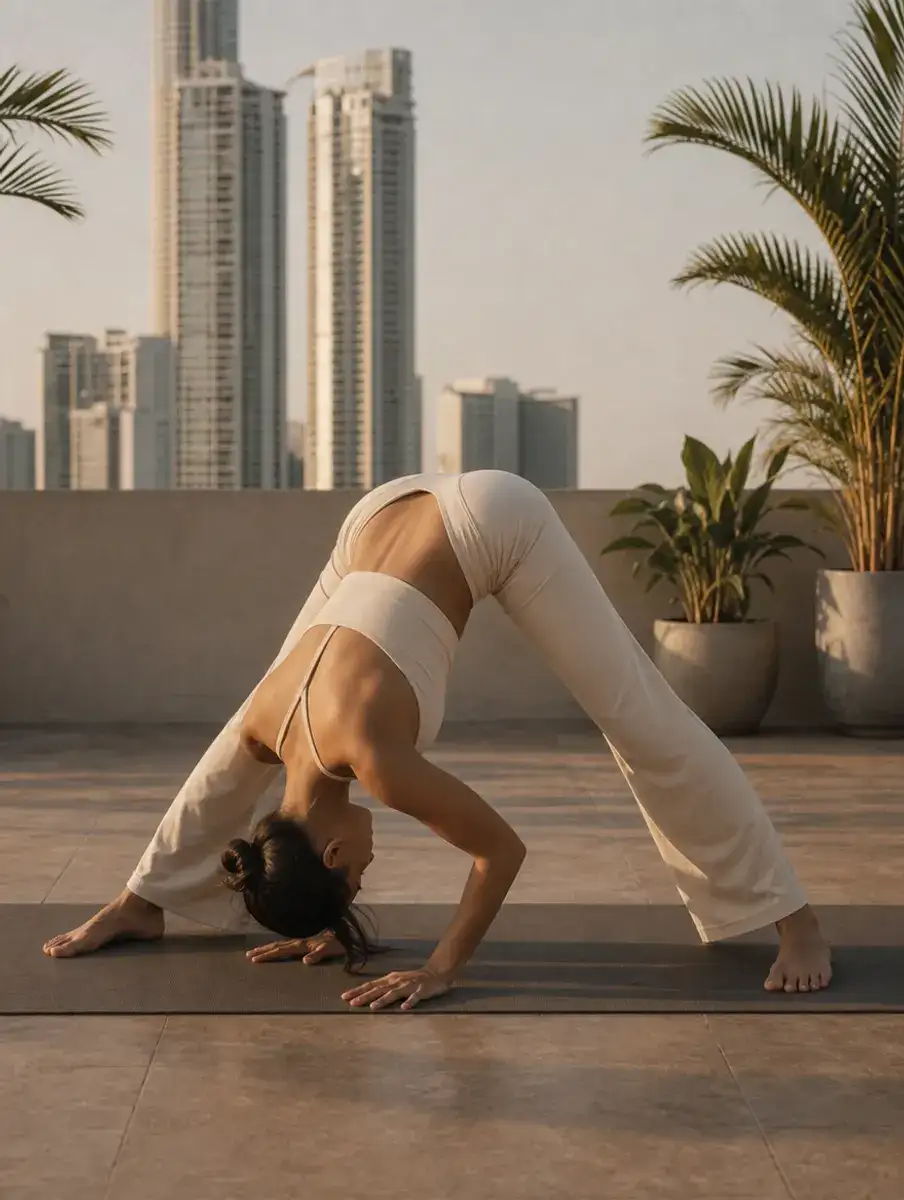
Prasarita means spread out, pada means foot, uttana means intense stretch and asana means posture. With the feet set wide apart, you fold forward from the hips and let the head hang between the legs.
Wide Legged Forward Bend (Prasarita Padottanasana) is a fold with the feet set wide and the head hanging between the legs, stretching the backs of the legs. Step the feet a leg's length apart, hinge with a long back and bring the hands to the floor or blocks for five to eight breaths. Rise slowly, head last.
Pronunciation and meaning
Prasarita Padottanasana: pruh-SAH-ri-tuh pah-doh-tahn-AHS-uh-nuh. Prasarita stresses SAH, and Padottanasana stresses AHS.
Prasarita means spread out, pada means foot, uttana means intense stretch and asana means posture. With the feet set wide apart, you fold forward from the hips and let the head hang between the legs.
How to do Wide Legged Forward Bend
- Face the long edge of the mat and step your feet wide apart, about a leg's length, with the outer edges of the feet parallel.
- Bring your hands to your hips. Inhale and lift the chest, lengthening the spine.
- Exhale and hinge forward from the hips with a long back, bringing your hands to the floor or blocks under your shoulders.
- Bend the elbows back and let the crown of the head move toward the floor only as far as the back stays easy. Keep a soft bend in the knees if needed.
- Stay for five to eight breaths, weight slightly forward in the feet rather than back in the heels.
- To come up, bring the hands to the hips, press into the feet and rise with a long back, slowly. Pause standing before stepping the feet together.
Wide Legged Forward Bend step by step
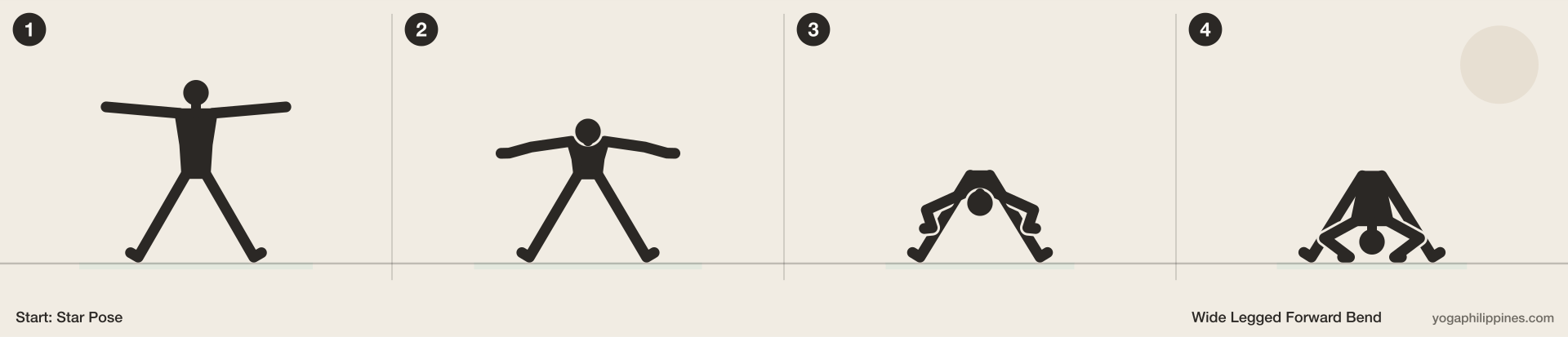
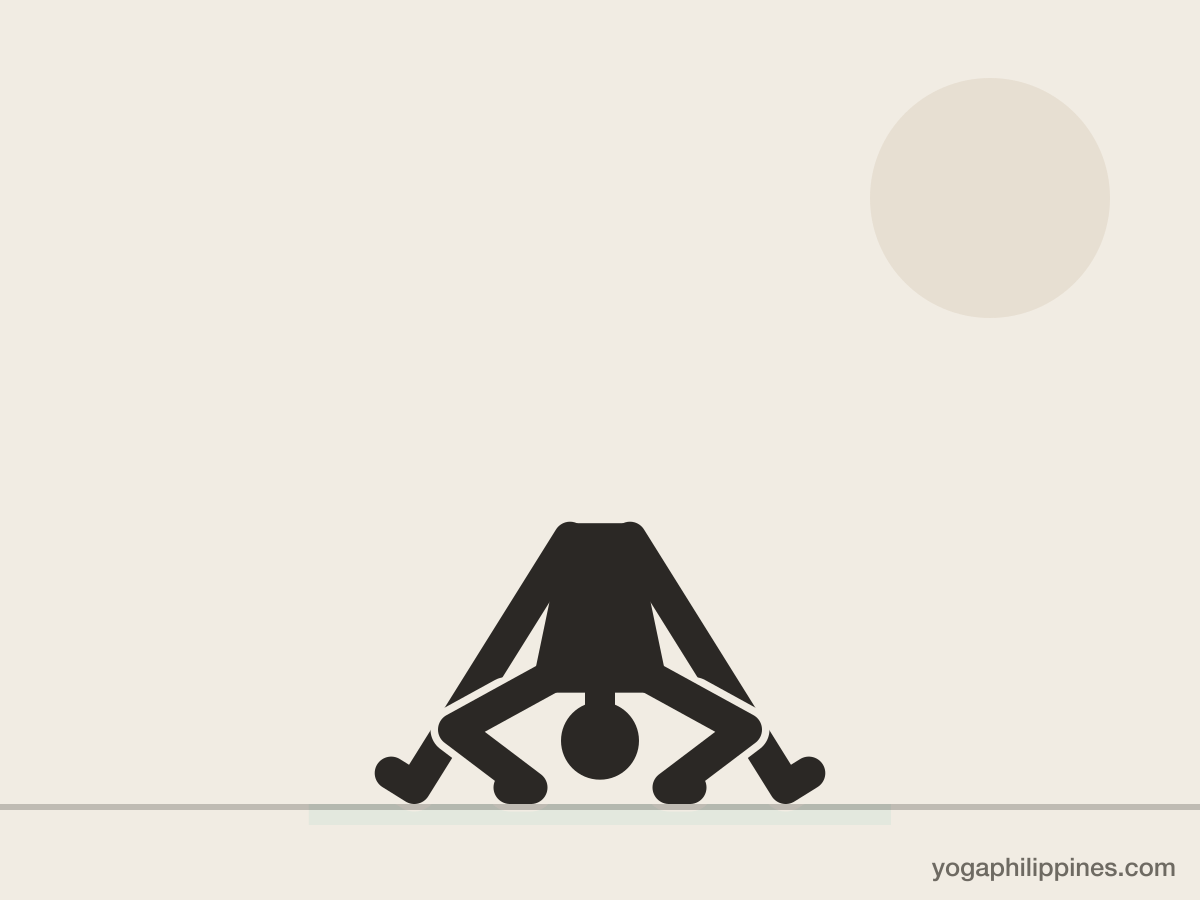
Drawings and video by YogaPhilippines.com, free to reuse under CC BY 4.0 with credit and a link: see the image licence for how to credit.
Wide Legged Forward Bend appears in the 34-pose Ashtanga primary series and the Bikram 26 poses sequence, both printable with holds and cues. For other poses that work the hamstrings, open the pose finder set to the hamstrings.
Make it easier
- Rest the hands on blocks, a chair seat or the edge of a bed.
- Take a shorter stance if the inner thighs or lower back feel strained.
- Keep the knees well bent and let the belly rest toward the thighs.
Pregnancy and after birth
Pregnancy. Adapt. The wide stance makes room for the belly, but the head below the heart can bring dizziness. Keep the hands on high blocks or a chair, fold only partway, and rise very slowly. Check with your OB or midwife.
After birth. Adapt. After your doctor or midwife has cleared you, keep the hands on blocks and the fold shallow, and come up slowly.
Read Joahnna Lee's notes on yoga in pregnancy and after birth.
Common mistakes
- Stepping so wide that the feet slide out and the inner knees strain.
- Rounding hard through the back to get the head to the floor.
- Coming up quickly with the head first.
The wide legged forward bend is a calm, steady fold that appears in many Hatha and Vinyasa classes, often after Triangle or Warrior II, when the stance is already wide. The wide base makes it feel more stable than a fold with the feet together.
Many people find it a gentle stretch for the backs and insides of the legs, and a restful moment with the head hanging.
How is it different from a standing forward bend?
In a Standing Forward Bend the feet are together and the stretch sits mainly in the backs of the legs. Here the wide stance adds the inner thighs and gives the hips more room, so many people can fold further with less effort. It follows Triangle Pose naturally, and it is a good set up for Half Moon Pose.
Who is it for?
Most beginners can do it with blocks. It appears in the hamstring stretches routine and in yoga for flexibility. Skip the head-down part if you have high blood pressure or feel dizzy.
Prep poses for Wide Legged Forward Bend
Poses that warm up the same body areas at a lower intensity, so Wide Legged Forward Bend feels steadier when you get there.
- Legs Up the Wall (Viparita Karani) gentler work for the same area, beginner
Counter-poses for Wide Legged Forward Bend
Shapes that move the body the other way or let it rest straight after Wide Legged Forward Bend.
- Balasana (Child's Pose) beginner
Easier and harder variations of Wide Legged Forward Bend
Related poses from the same family that start from the same position and do a similar kind of work; Wide Legged Forward Bend itself is beginner plus.
- Easier: Standing Forward Bend (Uttanasana) beginner
Props that help in Wide Legged Forward Bend
- Block: brings the floor closer under the lower hand, so the legs and spine can stay long.
- Chair: brings the floor closer, or gives a seat or a hand rest for a gentler version.
Programs and sessions that use Wide Legged Forward Bend
- The 14-day flexibility plan 1 of its 14 sessions
- Sequences: 30-minute yoga flow, 45-minute slow practice, primary series sequence and 26-posture sequence
- Practice app sessions: 20-minute flow and 30-minute practice
Sources: Mayo Clinic, Fitness program: 5 steps to get started; NCCIH (US National Institutes of Health), Yoga: Effectiveness and Safety. Last reviewed 2 October 2026.
Wide Legged Forward Bend questions
How wide should the feet be in a wide legged forward bend?
About a leg's length is a common guide. Your wrists should be able to sit roughly under the shoulders when your hands reach the floor or blocks. If you feel strain on the inner knees, step closer.
Does the head need to touch the floor in a wide legged forward bend?
No. The head reaching the floor depends on your proportions and your hamstrings. A long back with the hands on blocks is a full version of the pose.
Is a wide legged forward bend an inversion?
It is often treated as a gentle one, because the head hangs below the heart. That is why rising slowly matters, and why people with high blood pressure or eye conditions keep the head higher.
What are the benefits of a wide legged forward bend?
A wide legged forward bend stretches the backs and insides of the legs, while the wide stance gives the hips room so many people fold further with less effort. The wide base feels steady, and hanging the head can make it a restful moment in a standing sequence. It follows Triangle naturally and prepares you for Half Moon Pose.
Pairs well with
Updated