Pose library · Utkata Konasana
Wide Squat Pose (Utkata Konasana)
Utkata means fierce or powerful, kona means angle and asana means posture, so the name is fierce angle posture. You stand with the feet wide and turned out and bend the knees deeply, holding a strong, steady squat with the chest lifted.
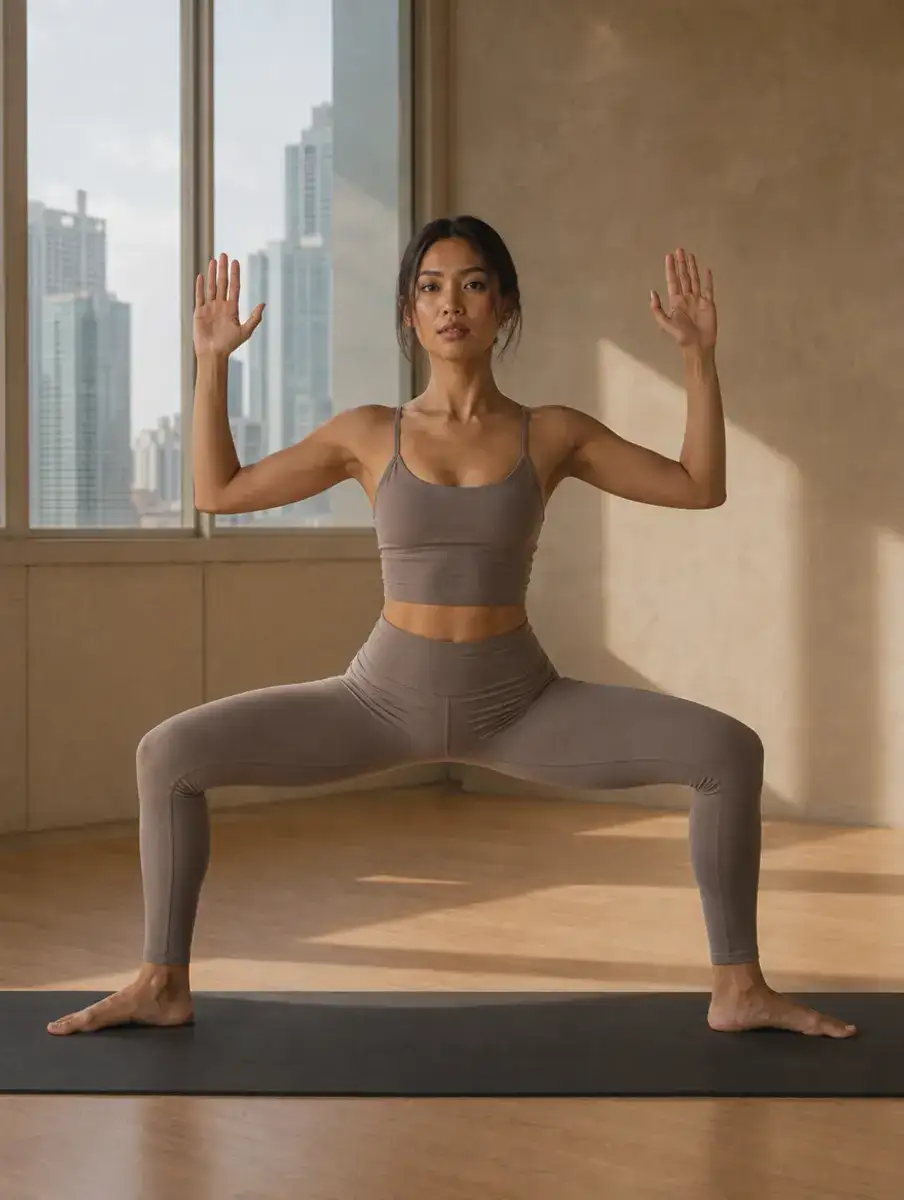
Wide Squat Pose (Utkata Konasana) is a strong standing squat with the feet wide and turned out, working the legs. Step the feet a leg's length apart, toes turned out, bend the knees with each knee tracking its second toe, lift the chest and stay five to eight breaths. Keep the bend small if the knees complain.
Pronunciation and meaning
Utkata Konasana: OOT-kuh-tuh koh-NAHS-uh-nuh. Utkata stresses the first syllable, and Konasana stresses NAHS.
Utkata means fierce or powerful, kona means angle and asana means posture, so the name is fierce angle posture. You stand with the feet wide and turned out and bend the knees deeply, holding a strong, steady squat with the chest lifted.
How to do Wide Squat Pose
- Stand facing the long edge of your mat and step your feet wide, about a leg's length apart, with the toes turned out about 45 degrees.
- Bring your hands to your hips. Inhale and lengthen the spine.
- Exhale and bend your knees, lowering the hips toward the height of the knees. Keep each knee moving in the same direction as its second toe.
- Stack the shoulders over the hips and let the tailbone point down, so the lower back stays long rather than arching.
- Bring the arms out to the sides with the elbows bent at right angles and palms forward, or keep the hands at the chest. Stay for five to eight breaths.
- Inhale, press evenly through both feet and straighten the legs to come up. Step the feet back together.
Wide Squat Pose step by step

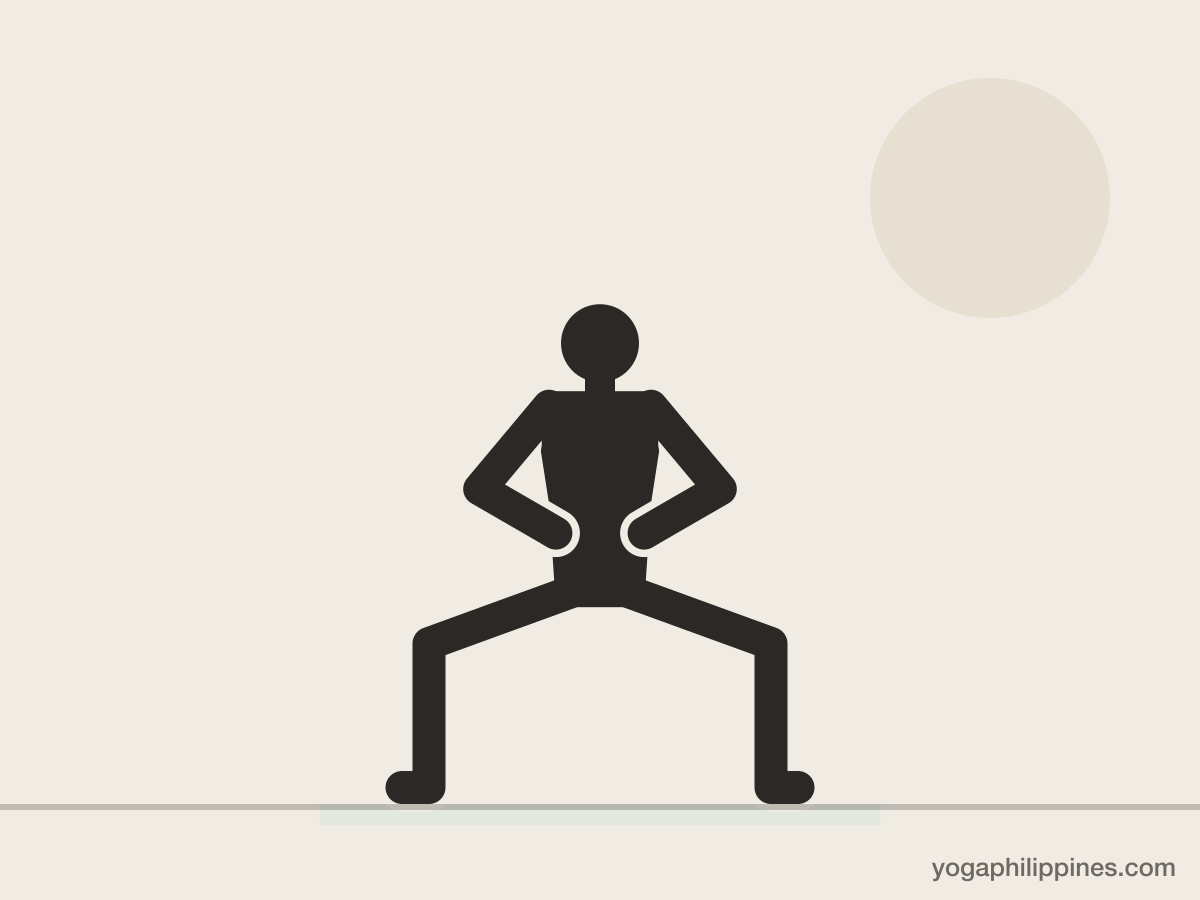
Drawings and video by YogaPhilippines.com, free to reuse under CC BY 4.0 with credit and a link: see the image licence for how to credit.
Wide Squat Pose appears in the Moon salutation, which is printable with holds and cues. For other poses that work the quads, open the pose finder set to the quads.
Make it easier
- Keep the bend in the knees small and the hands on the hips if the knees or inner thighs complain.
- Sit on the front edge of a sturdy chair placed between your legs, so the pose is supported.
- Lift the heels for a few breaths to make it a stronger balance, or keep them heavy for a steadier one.
Pregnancy and after birth
Pregnancy. Adapt. Many people find a wide, supported squat comfortable in pregnancy. Keep the bend moderate, use a chair or wall, and come out if you feel pain at the front of the pelvis. Check with your OB or midwife.
After birth. Adapt. After your doctor or midwife has cleared you, start with a shallow bend and short holds. If you feel heaviness or pressure in the pelvic floor, come out and mention it to a pelvic floor physiotherapist.
Wondering about yoga safety in pregnancy? Joahnna Lee covers it trimester by trimester.
Common mistakes
- Letting the knees drop inward past the big toes, which strains the inside of the knee.
- Tipping the chest forward and sticking the bottom out, which arches the lower back.
- Turning the toes out further than the knees can follow.
The wide squat pose is a strong standing shape that often appears in Vinyasa classes between Warrior II and the side angle poses. It works the legs and hips while asking the upper body to stay calm and upright.
Because the feet are wide and turned out, it is a useful place to learn knee tracking: each knee follows its second toe. If you know Chair Pose, the narrow standing squat, this is its wide-legged cousin.
How does it differ from other squats?
It stays higher than Garland Pose, the deep heels-down squat, and the spine stays vertical rather than leaning forward. Many teachers move between the two to build strength and then rest it. The same wide stance is used in Warrior II.
What does it feel like?
Most people feel the fronts of the thighs working hard, a stretch along the inner thighs and a steady effort in the hips. The hip flexor stretches routine is a good way to unwind the hips afterwards.
Prep poses for Wide Squat Pose
Poses that warm up the same body areas at a lower intensity, so Wide Squat Pose feels steadier when you get there.
- Low Lunge (Anjaneyasana) gentler work for the same area, beginner
Counter-poses for Wide Squat Pose
Shapes that move the body the other way or let it rest straight after Wide Squat Pose.
- Windscreen Wipers beginner
Props that help in Wide Squat Pose
- Chair: brings the floor closer, or gives a seat or a hand rest for a gentler version.
Programs and sessions that use Wide Squat Pose
- Sequences: longer slow session, Moon salutation and wrist-free yoga flow
- Practice app sessions: hip opener
- Generated example flows: 20-minute hip flow
Sources: Mayo Clinic, Fitness program: 5 steps to get started; NCCIH (US National Institutes of Health), Yoga: Effectiveness and Safety; NHS, Knee pain. Last reviewed 2 October 2026.
Wide Squat Pose questions
How wide should the feet be in utkata konasana?
About a leg's length is a good start. If your knees fall inward when you bend, bring the feet a little closer. If the knees go past your toes, step a little wider. The shin should be close to vertical.
What is the difference between a wide squat pose and Garland Pose?
In the wide squat you stand tall with the thighs about level with the knees and the body upright. Garland Pose drops the hips almost to the floor with the feet closer together.
Why do the thighs shake in the wide squat?
The thighs and hips are holding the body up, and shaking is a normal sign of hard work. Rise a little, breathe slowly, and come out before the shaking turns into strain.
What are the benefits of Utkata Konasana?
Utkata Konasana builds strength in the fronts of the thighs and the hips, and gives the inner thighs a stretch, while the upper body stays calm and upright. It is also a useful place to learn knee tracking, with each knee following its second toe. Many teachers pair it with Garland Pose to work and then rest the legs.
Updated