Stretches
Inner thigh stretches, from seated to lying down
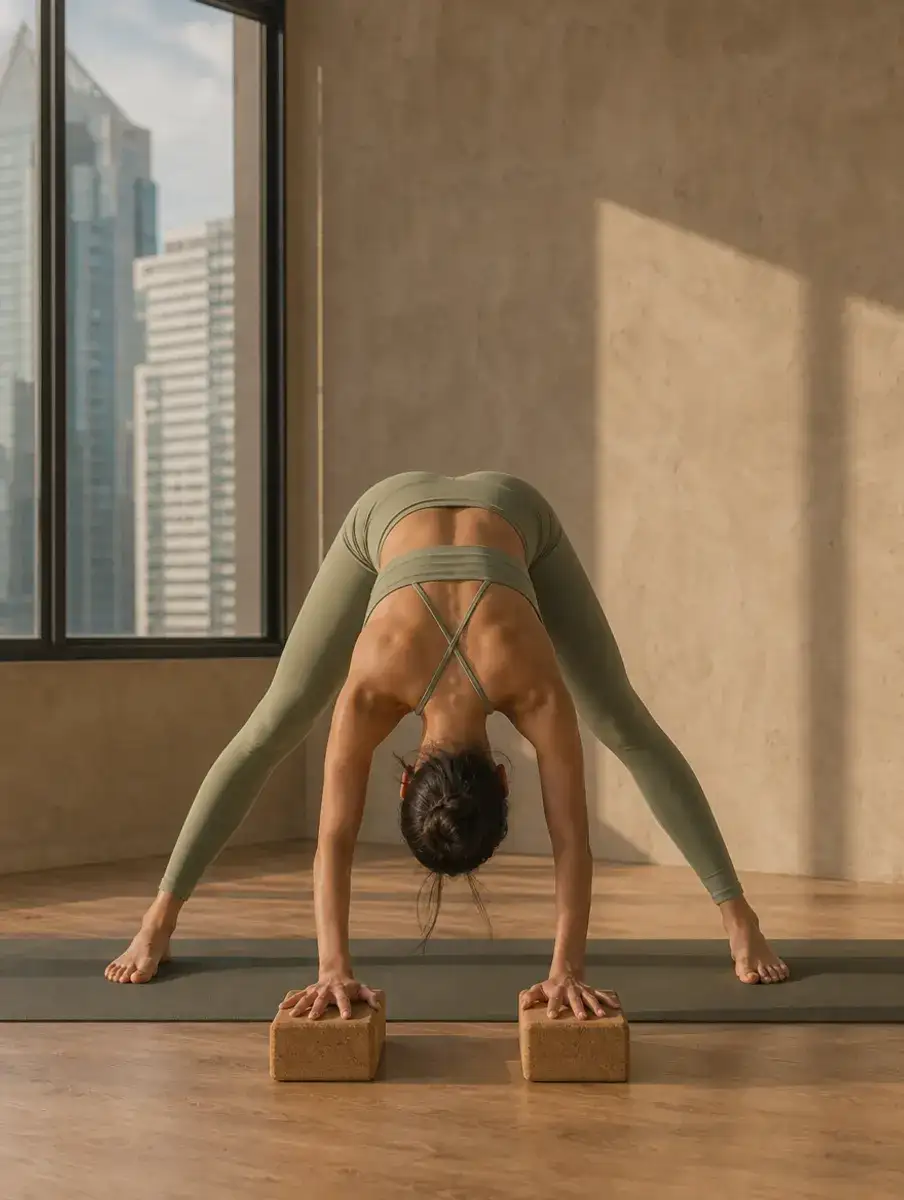
A good inner thigh stretch widens the legs only as far as the knees stay comfortable, keeps the spine long and is held for five to eight slow breaths, about 30 seconds. The seven below, from Butterfly to a wide-legged squat, also work as a gentle groin stretch. Props under the knees make every one easier.
The inner thighs are easy to forget until they complain. The adductor muscles run from the pelvis down the inside of each thigh and draw the legs together. Long hours sitting with the knees close, a lot of walking or running, and sports with quick side steps can all leave them feeling tight. A gentle inner thigh stretch, which most people also call a groin stretch, gives them some slow attention.
The seven stretches below run from seated to lying down. Pick three or four and do them when you are warm, after a walk or at the end of a class.
When should you see a doctor or physio first?
Stretch gently, or not at all, and see a doctor or physiotherapist if:
- you felt a sudden sharp pain in the groin during sport, with bruising or swelling (a possible strain);
- you have pain deep in the hip joint or the front of the groin that catches or clicks;
- you notice a lump or bulge in the groin, or pain when you cough;
- you have had recent hip, knee or pelvic surgery.
The right sensation is a broad, mild pull along the inside of the thigh. Pain at the knee or inside the hip joint means come out.
How long should you hold an inner thigh stretch?
Five to eight slow breaths, about 30 seconds, then rest and repeat once or twice. On a rest day, the propped floor versions can be held for two or three minutes with the muscles relaxed. Never bounce the knees.
The routine: seven inner thigh stretches
- Butterfly. Sit on a folded blanket, bring the soles of the feet together and let the knees fall out. Hold the ankles, sit tall and breathe. Blocks under the knees let the legs rest. The full set-up is on the Butterfly Pose page with props under the knees. Eight breaths.
- Side lunge. Stand with the feet wide, toes forward. Bend the right knee and shift the hips to the right, keeping the left leg straight and the left foot flat. Hands on the right thigh or a chair. Five breaths each side.
- Wide-legged forward fold. Feet wide, toes turned slightly in. Hands on the hips, lengthen the spine and fold forward from the hips, hands on blocks or a chair seat. Knees soft. Six breaths.
- Garland squat. Feet wider than the hips, toes turned out, lower into a squat with the heels on a folded towel if they lift. Press the elbows gently into the inner knees. Garland Pose on a block is easier for most knees. Five breaths.
- Frog on the forearms. On hands and knees, slide the knees wide with cushions under them, ankles in line with the knees. Lower onto the forearms and ease the hips back only a little. Frog Pose with padding under the knees shows how far is enough. Five to eight breaths.
- Reclined butterfly. Lie on your back with the soles of the feet together and the knees wide, a cushion under each thigh. Hands on the belly. One to three minutes.
- Legs up the wall, wide. Lie with the legs up a wall and let them slide apart into a wide V until you feel the inner thighs. Bend the knees if the stretch gets strong. One to two minutes.
Should inner thigh stretches be moving or held?
Both have a place. Before a run, a game of basketball or a strong class, moving versions wake the inner thighs up. The held stretches above suit the end of a session or a quiet evening.
| Moving (dynamic) | Held (static) | |
|---|---|---|
| When | Before activity, as part of a warm-up | After activity, or on a rest day |
| How long | 8 to 10 slow reps a side | 5 to 8 breaths, about 30 seconds |
| Examples | Side lunge shifts, slow leg swings across the body holding a wall | Butterfly, Frog, reclined butterfly |
| Feel | Warm and loose | A broad, mild pull |
For a moving version of stretch 2, shift slowly from the right side lunge to the left and back, pausing for one breath on each side, eight times. The dynamic stretches for before exercise give more ideas.
Can you stretch the inner thighs lying down with a strap?
Yes, and it is the gentlest way to control how far the leg goes. Lie on your back with the left knee bent and the foot flat. Loop a strap around the right foot and straighten the leg toward the ceiling, knee soft. Hold the strap in the right hand, put the left hand on the left hip to keep it down, and breathing out, let the right leg open slowly out to the side. Stop as soon as you feel the inner thigh. Hold for five breaths, bring the leg back to centre, then switch sides.
How long before the inner thighs feel looser?
It varies a great deal from person to person. Regular, gentle practice, a few minutes on most days, tends to change how the hips feel over a period of weeks, while one long, hard session mostly leaves you sore. Notice small signs, such as the knees settling lower in Butterfly without effort.
On tiled floors, which are common in Philippine homes, do the side lunge and wide-legged fold on a mat so the feet cannot slide apart.
Common mistakes
- Pushing the knees down with the hands. In Butterfly, let gravity work. Pressing on the knees moves the strain into the knee joint.
- Rounding the back to go deeper. In seated and folding stretches, a long spine matters more than how low you go.
- Twisted knees in the squat. Keep the knees pointing the same way as the toes.
- Going straight to Frog. It is the deepest shape here. Start with Butterfly and the side lunge.
Make it easier or harder
Easier: sit higher, on two blankets, in every seated stretch. Use the lying-down versions (6 and 7) if the knees or lower back complain. A chair under the hands helps in the side lunge.
Harder: in the side lunge, lower the hands to the floor. In Butterfly, fold forward from the hips with a long spine. In Frog, stay longer rather than wider. If the side splits are a goal, the patient progression towards the splits builds on stretches 3 and 5.
Which stretches pair with the inner thighs?
The front of the hip often feels tight at the same time, and the low lunge stretches for the hip flexors balance this routine well. For the back of the legs, add a strapped hamstring stretch lying down. When these feel easy, the middle splits routine with a supported straddle slide takes the same muscles further.
Best time to do it
5 of the 7 moves are slow holds meant for the end of a session, so this routine suits the time after a walk, a workout or a class, when the body is already warm, or a quiet few minutes in the evening. Most of the moves are calm, unhurried shapes, which many people like before bed.
How long to hold each move
Holds below are for a medium pace; at a slower pace, stay up to the longer time. Moves marked each side are done on both sides.
| Move | Hold | Slower pace |
|---|---|---|
| Butterfly Pose | 45 s | 1 min 10 s |
| Side Lunge | 25 s each side | 40 s |
| Wide Legged Forward Bend | 40 s | 1 min |
| Garland Pose | 30 s | 45 s |
| Frog Pose | 1 min 30 s | 2 min 15 s |
| Reclined Butterfly | 5 min | 7 min 30 s |
| Wide Legs Up the Wall | 1 min 30 s | 2 min 15 s |
Pair it with
Other stretching routines that work the same areas, for a longer session or the next day:
- Hip stretches for the front, back, sides and inner thighs also works the hips and lower back
- Static vs dynamic stretching: what is the difference? also works the hips and lower back
- Stretching before running: a six minute warm-up also works the hips and hamstrings
Browse the stretching library.
Sources: Mayo Clinic, Fitness program: 5 steps to get started; NCCIH (US National Institutes of Health), Yoga: Effectiveness and Safety. Last reviewed 2 October 2026.
Questions
What is the difference between an inner thigh stretch and a groin stretch?
In everyday use they mean almost the same thing. Both stretch the adductors, the group of muscles along the inside of the thigh that draw the legs together. A groin stretch tends to feel higher up, near where the leg meets the pelvis, while some inner thigh stretches land closer to the knee.
Why do the knees ache in a Butterfly stretch?
Usually because the hips are not yet open enough for the knees to drop, so the strain moves into the knee joint. Sit higher on a folded blanket, move the feet further away from you and rest each knee on a block or cushion. If the knee still aches, choose a lying-down inner thigh stretch instead.
How often should you stretch your inner thighs?
A few minutes on most days is plenty for most people, ideally when the body is warm. Steady, gentle practice tends to suit the inner thighs better than one long, deep session once a week.
Should you stretch your inner thighs before or after a run?
Before a run, use moving versions such as slow side lunge shifts or leg swings holding a wall. Save the held stretches, like Butterfly and Frog, for after the run or later in the day, when the muscles are warm.
Why do the inner thighs get tight?
The adductors, the muscles along the inside of each thigh, can feel tight after long hours sitting with the knees close together, a lot of walking or running, or sports with quick side steps. They rarely get stretched in daily life. A few minutes of gentle stretching on most days tends to help them feel looser.
Should an inner thigh stretch hurt?
No. The right feeling is a broad, mild pull along the inside of the thigh. Pain at the knee or deep in the hip joint means come out, sit higher or choose a lying-down version. See a doctor or physio if you felt a sudden sharp pain during sport, notice a lump in the groin, or the hip clicks.
Pairs well with
Your yoga calendar
We track every yoga event, workshop and pop-up class so you don't have to.
Updated