Stretches
Piriformis stretches for the deep buttock, done gently
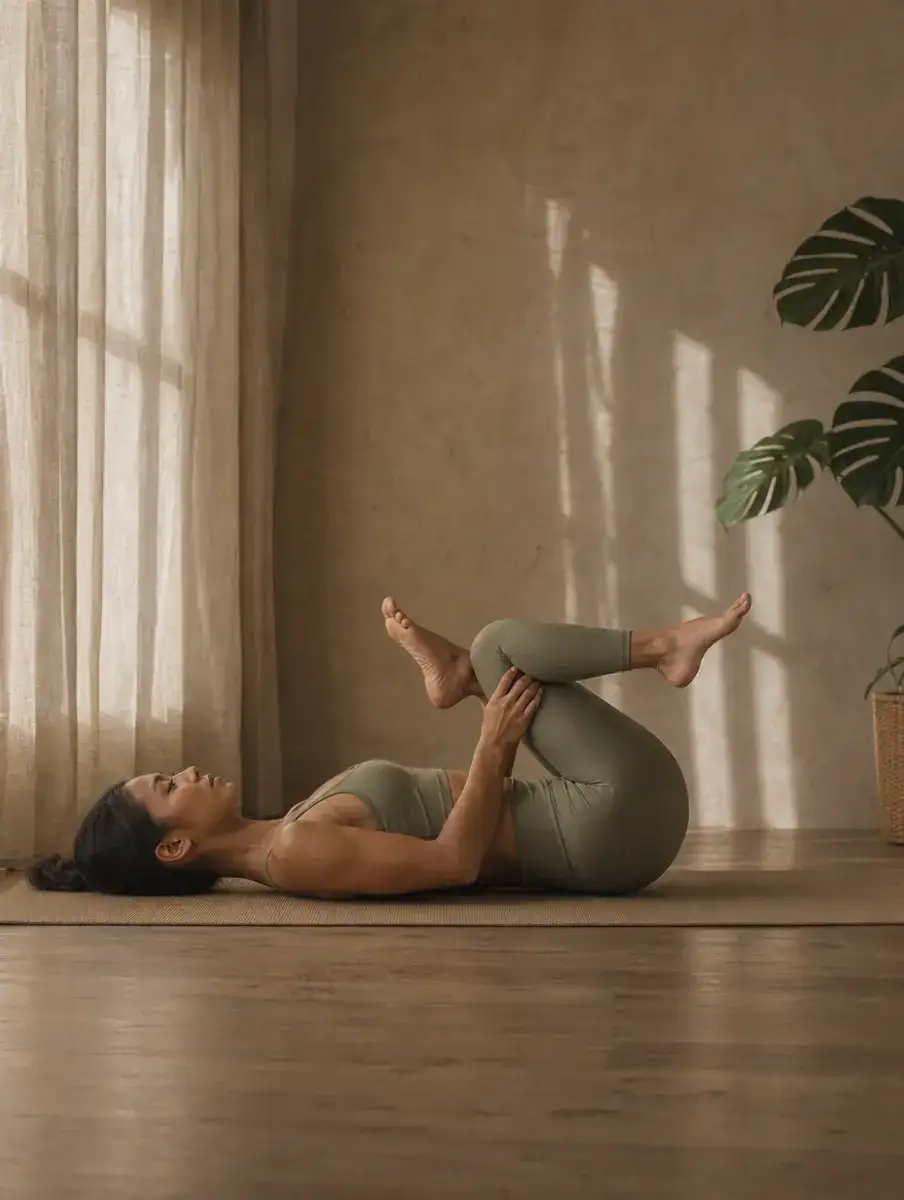
The gentlest piriformis stretch is the figure four lying on your back: cross the right ankle over the left knee, then draw the left thigh towards you until you feel a stretch deep in the right buttock. Hold for five to eight slow breaths, about 30 seconds, switch sides, and stop if pain travels down the leg.
The piriformis is a small, pear-shaped muscle deep in the buttock. It runs from the sacrum at the base of the spine to the top of the thigh bone, and it helps turn the thigh outwards and steady the hip as you walk. The large sciatic nerve passes right next to it, which is why the piriformis comes up so often in conversations about buttock and leg pain.
A piriformis stretch takes the thigh across the body and turns it outwards, the shape of a figure four. The five versions below are gentle and mostly lying down. A deeper form appears in Pigeon Pose with a blanket under the front hip.
Safety first: when should you see a doctor?
Please read this before trying the stretches. See a doctor or physiotherapist first if:
- pain, tingling, numbness or burning travels down the back of the leg, or the leg or foot feels weak;
- the pain started after a fall or an accident;
- the lower back hurts as well as the buttock;
- you notice numbness around the groin or buttocks, or changes in bladder or bowel control (get urgent help);
- you have had hip surgery or a hip replacement, since some crossed-leg positions may not be allowed.
If you are pregnant, ask your OB or midwife which hip stretches suit you; Joahnna Lee’s pregnancy and postpartum guides cover the topic in more depth.
A good piriformis stretch feels like a deep, dull pull in the middle of the buttock. If it turns sharp, electric or starts travelling down the leg, come out straight away.
How do you do a piriformis stretch?
Hold each for five to eight slow breaths, about 30 seconds, two or three times on each side. Breathe out as you settle and keep the face and jaw soft.
- Figure four lying down. Lie on your back with both knees bent and the feet on the floor. Cross the right ankle over the left thigh, just above the knee, with the right foot flexed. Leave the left foot down, or lift it and hold behind the left thigh, drawing it gently towards you.
- Knee to opposite shoulder. On your back, hug the right knee and draw it gently towards the left shoulder, one hand on the knee and one on the ankle. Keep the range small.
- Seated figure four on a chair. Sit tall on the front edge of a chair and cross the right ankle over the left knee, foot flexed. Lean forward from the hips with a long back.
- Seated twist with the leg crossed. Sit on a cushion with both legs out. Bend the right knee and place the right foot outside the left knee. Hug the right knee with the left arm and turn gently to the right.
- Supported pigeon. From hands and knees, bring the right knee behind the right wrist and the right foot towards the left hip, then slide the left leg back. Put a folded blanket under the right hip so the hips stay level, and rest on the forearms. Skip this one if the front knee complains.
Should you strengthen as well as stretch?
Often, yes. The muscles around the side and back of the hip share the job of steadying the pelvis, and a stretch alone does not build that support. Many physios pair piriformis stretches with simple strength work. Three to start with, two or three times a week:
- Clamshells, 10 to 12 each side. Lie on your side with the knees bent and the heels together. Keeping the feet touching, lift the top knee a little and lower it slowly. Breathe out as you lift.
- Bridge, 8 to 10 lifts. Lie on your back, feet flat, and lift the hips on an out-breath, lowering slowly. The bridge exercise page has the full set-up.
- Side-lying leg lifts, 8 to 10 each side. Lie on your side with the bottom knee bent and the top leg straight, in line with the body, and lift it a hand’s width with the toes pointing forward.
Stretch or strengthen: which for which day?
| Situation | Focus | Example |
|---|---|---|
| Buttock feels tight after a long sit | Stretch | Seated figure four, then a walk |
| Rest day at home | Both | Stretches 1, 2 and 5, then the three strength moves |
| Before a run | Move, do not hold | Leg swings and a few slow bridges |
| Buttock aches but nothing travels down the leg | Gentle stretch, keep moving | Figure four lying down, short walks |
What about long sits in traffic?
A seat pressing into one buttock for an hour or more is a common trigger for that deep ache. On long drives or bus rides, take the wallet out of the back pocket, and when you can, stand up and walk for a minute or two about every half hour. At a desk, the seated figure four on a chair takes thirty seconds a side.
How long until a piriformis stretch helps?
Everyday tightness often eases within a session or two. If you are stretching and strengthening most days and nothing has changed after about a month, or symptoms are getting worse, see a doctor or physio: buttock pain can come from the lower back, the hip joint or other tissues, and these need a different plan.
Common mistakes
- Pulling too hard. The deep buttock tends to respond better to gentle, patient holds.
- Letting the crossed foot curl in. Flex the foot to protect the knee.
- Lifting the head. Rest the head on the floor or a cushion so the neck stays soft.
- Pushing through nerve symptoms. Tingling or burning means stop, not go deeper.
Make it easier or harder
- Easier: keep the bottom foot on the floor in the figure four; loop a strap behind the bottom thigh; or use the chair version.
- Harder: draw the bottom thigh closer in the figure four; fold a little further in the chair version; lower the blanket in pigeon over several weeks.
What else pairs with a piriformis stretch?
The piriformis sits under the larger buttock muscles, so the glute stretches for the back of the hips are a natural next step, and the hip stretches for every direction the hip moves balance the outward turn. For the whole spine, try the back stretches from neck to tailbone. If the lower back is stiff too, the lower back stretches you can do lying down stay on the floor, and yoga and back pain explains when to get it checked.
Best time to do it
Of the 8 moves, 0 work as warm-up moves and 5 as slower cool-down holds, so it fits most times of day after a few minutes of walking or easy movement. You can also split it: the gentler moving parts before exercise, the longer holds after.
How long to hold each move
Holds below are for a medium pace; at a slower pace, stay up to the longer time. Moves marked each side are done on both sides.
| Move | Hold | Slower pace |
|---|---|---|
| Figure Four | 45 s each side | 1 min 10 s |
| Cross-Body Knee Hug | 30 s each side | 45 s |
| Seated Figure Four on a Chair | 30 s each side | 45 s |
| Seated Twist | 30 s each side | 45 s |
| Pigeon Pose | 1 min each side | 1 min 30 s |
| Clamshells | 30 s of slow rounds each side | 45 s |
| Bridge Pose | 25 s | 40 s |
| Side-Lying Leg Lift | 30 s of slow rounds each side | 45 s |
Pair it with
Other stretching routines that work the same areas, for a longer session or the next day:
- Six IT band stretches for the outside of the thigh also works the glutes and hips
- Inner thigh stretches also works the glutes and hips
- Working towards the middle splits, without forcing the hips also works the glutes and hips
This page feeds the pose finder.
Browse the stretching library.
Sources: Mayo Clinic, Fitness program: 5 steps to get started; NCCIH (US National Institutes of Health), Yoga: Effectiveness and Safety; NHS, Exercise in pregnancy; CDC, Pregnant & Postpartum Activity: An Overview; Canadian Family Physician (Chan et al., 2014), via PubMed Central, Hot yoga and pregnancy: Fitness and hyperthermia; NHS, Back pain. Last reviewed 2 October 2026.
Questions
Where is the piriformis muscle?
Deep in the buttock, under the larger gluteal muscles. It runs from the front of the sacrum, the flat bone at the base of the spine, to the top of the thigh bone, and helps turn the thigh outwards. The sciatic nerve passes very close to it, below it in most people.
Is buttock pain that runs down the leg a piriformis problem?
It might be, or it might not. Pain that travels down the leg has several possible causes, including the lower back, and a stretch cannot tell them apart. See a doctor or physiotherapist to find out before you stretch through it.
Why does the figure four feel different on each side?
Most people sit, stand and cross their legs in habitual ways, so one hip often turns outwards more easily than the other. Hold both sides for the same time and add a round on the tighter one, as long as nothing is painful.
How long should you hold a piriformis stretch?
About 30 seconds, or five to eight slow breaths, on each side, repeated two or three times. Keep the stretch mild so the buttock can soften. If the hold makes pain travel down the leg, come out and see a doctor or physio.
Can you stretch the piriformis at your desk?
Yes. Sit near the front of your chair, cross one ankle over the opposite knee and lean forward a little from the hips with a long back until you feel it deep in the buttock. Standing up and walking for a minute every half hour or so also helps on long sitting days.
How can you tell if your piriformis is tight?
A tight piriformis often feels like a deep, dull ache in the middle of the buttock, especially after a long sit, and the figure four may feel stronger on that side. A stretch cannot diagnose anything, though. If pain, tingling or numbness travels down the leg, see a doctor or physio before you stretch.
Pairs well with
Your yoga calendar
We track every yoga event, workshop and pop-up class so you don't have to.
Updated