Stretches
Static vs dynamic stretching: what is the difference?
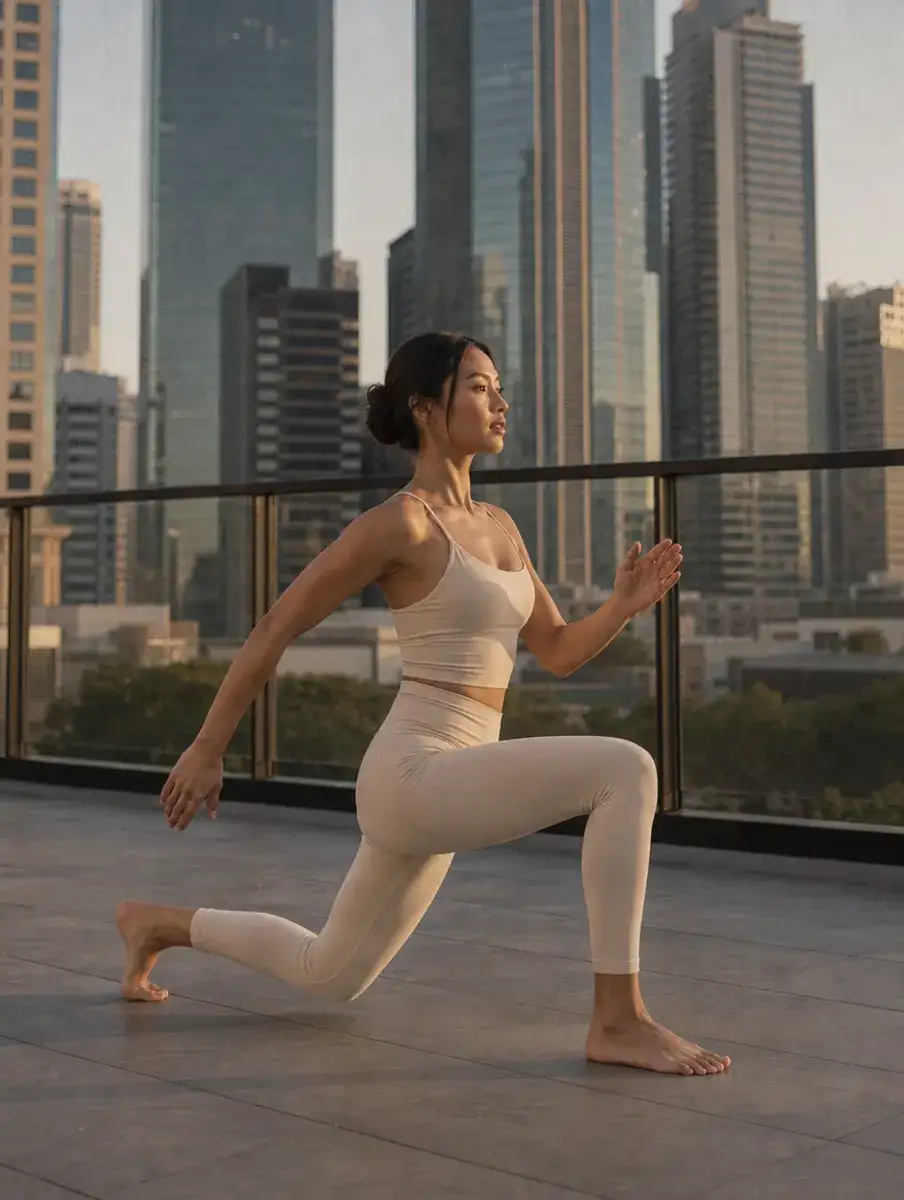
Static stretching means moving into a stretch and holding it still, usually for 15 to 60 seconds. Dynamic stretching means moving a joint through its range again and again without holding, like leg swings or walking lunges. Many people use dynamic stretching before exercise to warm up and static stretching afterwards, or on rest days, to slow down.
Static and dynamic stretching are the two most common ways to stretch, and they do different jobs. One holds still. The other keeps moving. Knowing which is which helps you put each one where it suits: dynamic stretching to get ready, static stretching to slow down. For ballistic, PNF, active and passive stretching too, see the overview of the main types of stretching.
What is static stretching?
Static stretching means moving slowly into a stretch until you feel a mild pull, then holding that position still while you breathe. A standing quad stretch, a seated forward fold and a strapped hamstring stretch are all static stretches. Holds are usually 15 to 60 seconds; slow, floor-based yoga styles hold for several minutes with props.
What is dynamic stretching?
Dynamic stretching means moving a joint through its range of motion, smoothly and repeatedly, without pausing at the end. Leg swings, arm circles, walking lunges and a slow Cat-Cow are dynamic stretches. The range usually grows a little with each repetition as the body warms up.
Static vs dynamic stretching at a glance
| Static stretching | Dynamic stretching | |
|---|---|---|
| What you do | Move into a stretch and hold it still | Move in and out of a stretch repeatedly |
| Typical length | 15 to 60 seconds per stretch | 10 to 20 repetitions, or 30 to 60 seconds |
| Common use | After exercise, rest days, winding down | Before exercise, as a warm-up |
| Feel | Calm, slow breathing, muscles softening | Warming, breath picking up a little |
| Examples | Strapped hamstring stretch, Butterfly, Child’s Pose | Leg swings, arm circles, walking lunges, Sun Salutations |
| In yoga | Yin, restorative, long holds in hatha | Vinyasa flow, Sun Salutations, Cat-Cow |
When should you use each one?
Before exercise: a few minutes of dynamic stretching after a brisk walk. It warms the muscles and moves the joints through the range the activity will ask for. The six-minute warm-up for stretching before running is a good example. For ten moves to choose from, see these dynamic stretching examples, or follow a full warm-up routine before you train.
After exercise: static stretching, once your breathing has settled. The muscles are warm, and slow holds are a calm way to finish. The cool down stretches for after a workout follow this pattern.
On rest days: longer static holds, with props, are a gentle way to spend time on tight areas. Many people find a few minutes on most days suits them better than one long session.
Try one of each
Static: strapped hamstring stretch. Lie on your back, knees bent. Loop a strap or towel around the right foot and straighten the leg towards the ceiling, knee soft, until you feel a mild stretch. Hold for eight slow breaths, about 40 seconds, breathing out as you settle. Switch legs. More versions are on the hamstring stretches page.
Dynamic: forward leg swings. Stand side-on to a wall and hold it with one hand. Swing the outside leg forward and back, small at first, then a little bigger, for ten swings. Breathe steadily and keep the torso tall. Switch legs.
How does yoga use both?
A typical class does both. It often opens with dynamic movement, such as Cat-Cow and a few rounds of a slow Sun Salutation, and then holds standing and seated poses for several breaths, which is static stretching. Many classes end with long, still shapes before rest. If flexibility is your aim, yoga for flexibility explains why steady practice matters more than depth.
There is a third method you may meet in sport and some classes, which adds a gentle muscle contraction to a static stretch. The page on PNF stretching explains how it works.
Which type suits your activity?
| Situation | Before | After |
|---|---|---|
| A run or a jog | Leg swings, walking lunges, a few strides | Calf, quad and hamstring holds |
| Basketball, badminton or football | Side shuffles, arm circles, hip circles | Hip flexor and inner thigh holds |
| Weights at the gym | Light sets of the first lift, arm circles | Chest and hip holds for the muscles worked |
| A Vinyasa class | Cat-Cow and slow Sun Salutations, which the class usually includes | The class’s final seated poses and Savasana |
| A break from a desk | Seated spine circles and shoulder rolls | A short forward fold or chest stretch if you have time |
| Winding down before bed | None needed | Gentle floor holds with slow breathing |
What does research say about static stretching before exercise?
Studies have looked at this for years. The broad picture is that long static holds just before fast, powerful efforts such as sprinting or jumping may briefly reduce power, while short holds inside a full warm-up that ends with moving drills seem to matter little for most people. Dynamic movement before exercise appears to prepare the body at least as well and does not carry that question mark. For everyday exercisers, the practical rule is simple: move first, hold later.
A ten-minute session that uses both
This works on a rest day, or as a short practice before work in a small space.
- March on the spot, one minute.
- Arm circles, ten each way.
- Leg swings, ten each leg, holding a wall.
- Cat-Cow, eight slow rounds.
- Low lunge hold, five breaths each side.
- Strapped hamstring stretch, eight breaths each side.
- Butterfly, eight breaths.
- Lie still, one minute.
The first four are dynamic and wake the body up; the last four are static and slow it down. In Manila’s heat you will warm up faster than the clock suggests, but keep the order: movement before holds.
Common mistakes
- Bouncing in a static stretch. Bouncing is ballistic stretching, not static. Hold still instead.
- Swinging too hard in a dynamic stretch. Start small and let the range grow.
- Long, deep holds right before a hard effort. Keep these for afterwards.
- Holding the breath. In both types, slow, steady breathing is the sign you are at the right level.
Make it easier or harder
Easier: keep dynamic movements small and slow, and do static stretches lying down with props.
Harder: add more repetitions or range to dynamic stretches as you warm, and hold static stretches a little longer, up to a minute, on rest days.
When should you see a doctor or physio?
Stop either type of stretching and ask a doctor or physiotherapist if you feel sharp pain, numbness or tingling, if a joint feels unstable, or if you are recovering from an injury or surgery.
Best time to do it
4 of the 8 moves are done with the breath rather than held, so this routine suits the start of the day or the few minutes before a walk, a run, a workout or a class.
How long to hold each move
Holds below are for a medium pace; at a slower pace, stay up to the longer time. Moves marked each side are done on both sides.
| Move | Hold | Slower pace |
|---|---|---|
| March on the Spot | 1 min of slow rounds | 1 min 30 s |
| Arm Circles | 30 s of slow rounds | 45 s |
| Forward Leg Swings | 30 s of slow rounds each side | 45 s |
| Cat-Cow | 45 s of slow rounds | 1 min 10 s |
| Low Lunge | 30 s each side | 45 s |
| Reclined Hand to Big Toe Pose | 45 s each side | 1 min 10 s |
| Butterfly Pose | 45 s | 1 min 10 s |
| Corpse Pose | 5 min | 10 min |
Pair it with
Other stretching routines that work the same areas, for a longer session or the next day:
- Leg stretches for the whole lower body in 12 minutes also works the hips and calves
- Inner thigh stretches also works the hips and hamstrings
- Working towards the middle splits, without forcing the hips also works the hips and hamstrings
Put it into practice with the hamstring and lower-back reach test, built on pages like this one.
Browse the stretching library.
Sources: Mayo Clinic, Fitness program: 5 steps to get started; NCCIH (US National Institutes of Health), Yoga: Effectiveness and Safety. Last reviewed 2 October 2026.
Questions
Is yoga static or dynamic stretching?
Both, depending on the style. A flowing class such as vinyasa moves with the breath, which is close to dynamic stretching. Yin and restorative classes hold still shapes for minutes, which is static stretching. Many hatha classes mix the two.
Is static stretching before exercise harmful?
For most people a few gentle holds before exercise are not harmful. Long, deep holds right before fast or powerful efforts are usually left out, which is why many coaches place static stretching after the session and use moving stretches beforehand.
Is ballistic stretching the same as dynamic stretching?
No. Dynamic stretching moves smoothly and with control through a comfortable range. Ballistic stretching bounces at the end of the range to push past it, which is generally discouraged for everyday exercise because it is harder to control.
Which type of stretching suits a beginner?
Both suit beginners when kept gentle. Start with a few minutes of easy dynamic movement to warm up, then hold two or three simple static stretches for five slow breaths each. Go by sensation, never by how far you reach.
What are examples of dynamic stretches?
Common dynamic stretches include leg swings forward and to the side, arm circles, walking lunges, hip circles, torso rotations and Cat-Cow. Each moves a joint through a comfortable range again and again, usually for eight to twelve smooth repetitions, without stopping to hold.
How long should you hold a static stretch?
Most guidance suggests about 15 to 60 seconds. In yoga terms that is roughly five to eight slow breaths, about 30 seconds, repeated two or three times. Longer holds are used in Yin yoga, but there the stretch stays gentle and props support you.
Pairs well with
Your yoga calendar
We track every yoga event, workshop and pop-up class so you don't have to.
Updated