Stretches
Calf stretches at a wall, on a step and on the floor
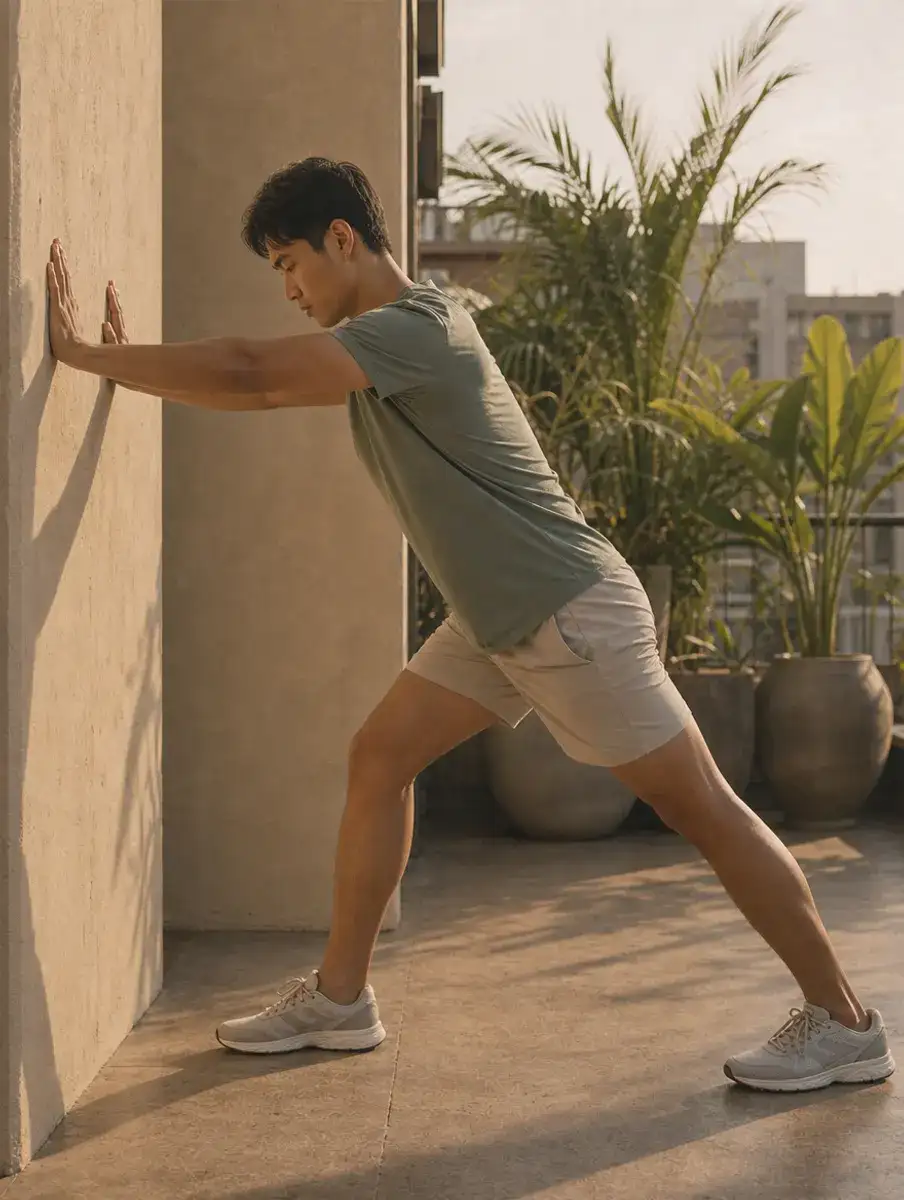
The classic calf stretch is done at a wall: hands on the wall, one foot stepped back with the heel pressed down and the back knee straight, held for five to eight slow breaths, about 30 seconds. Bend the back knee slightly for a second round to reach the lower calf muscle, then switch sides.
The calf is the back of the lower leg, from behind the knee to the heel. Two muscles do most of the work there: the gastrocnemius, the rounded muscle you can see, and the flatter soleus underneath. Both join the Achilles tendon at the heel and point the foot every time you walk, climb stairs or push off in a run.
Tight calves often show up as stiffness on the first steps of the morning, or as a strong pull in Downward Dog with the heels lifted. The six stretches below cover both muscles, standing and sitting, in about eight minutes.
When should you see a doctor before stretching your calves?
See a doctor or physiotherapist first if:
- you felt a sudden pain at the back of the calf or heel, as if you had been kicked (a possible tear);
- one calf is swollen, warm, red or tender, especially after a long flight, a long drive or bed rest (get this checked promptly, before any stretching);
- the heel or the Achilles tendon is painful and the pain is not settling;
- you have numbness or tingling in the foot.
A calf stretch should feel like a broad pull in the muscle, never a sharp pain at the heel.
How do you do a calf stretch?
Hold each stretch for five to eight slow breaths, about 30 seconds, two or three times on each side. Breathe out as you settle and keep the breath steady.
- Wall calf stretch, back knee straight. Place the hands on a wall at shoulder height and step the right foot back about a stride, both feet pointing forward. Press the right heel down and keep the right knee straight as you bend the front knee. You feel this in the upper calf.
- Wall calf stretch, back knee bent. Same set-up, but step the back foot in a little and bend both knees, keeping the right heel down. The stretch moves lower, towards the Achilles. This is the soleus.
- Step calf stretch. Stand on the bottom stair holding the rail, with the ball of the right foot on the edge. Slowly lower the right heel just below the step and hold still. Small range, no bouncing.
- Downward Dog, pedalling the heels. From hands and knees, lift the hips up and back. Bend the left knee and ease the right heel towards the floor, then switch, one breath each side for eight rounds. Finish with both heels reaching down for five breaths.
- Seated strap stretch. Sit with the legs out in front and a cushion under the seat. Loop a strap around the ball of the right foot and draw the toes gently towards you, knee soft. Eight breaths each side. Good after a long day on your feet.
- Kneeling soleus stretch. Kneel, then bring the right foot flat on the floor in front of you. Lean the weight slowly forward so the right knee travels over the toes, only as far as the heel stays down. Five breaths each side.
Why do calves get tight?
Several everyday habits keep the calves short or busy for hours:
- Walking in flat flip-flops. The toes grip to keep tsinelas on, and the calf works on every step.
- Heels or shoes with a raised heel. The calf sits shortened all day.
- Long standing. Shop work, teaching, or the queue and the ride on a crowded train.
- More running, stairs or hills than usual. New load on the calf often shows up as stiffness the next morning.
- Long sitting. Hours at a desk with the feet tucked under the chair.
Knowing the cause helps you choose: someone who stands all day may want the bent-knee stretches, while a new runner needs both versions and a little strength work.
Should you strengthen your calves as well?
Yes, especially if you run, hike or climb a lot of stairs. Calves that are strong through their whole range tend to feel less tight after a long day. Add calf raises after the stretches two or three times a week:
- Double calf raise: stand holding a wall or a chair, rise onto the balls of both feet for a count of two, lower for a count of three. Ten to fifteen reps.
- Bent-knee raise: the same with the knees softly bent, for the soleus. Ten reps.
- Single-leg raise: when both of those feel easy, one foot at a time. Eight reps each side.
Breathe out as you rise. Skip these and see a physio if the Achilles is sore.
How long before your calves feel looser?
Many people notice the morning stiffness eases within a week or two of stretching daily. Range in the ankle, such as how close the heels come to the floor in Downward Dog, usually changes more slowly, over a month or more. If heel or Achilles pain is not settling after a couple of weeks, stop guessing and get it checked.
A two-minute calf routine for a long commute
Waiting on a platform or standing at a counter is enough space for this.
- Wall or pillar stretch, back knee straight: five breaths each side.
- Same stretch, back knee bent: five breaths each side.
- Slow calf raises: ten, holding a rail.
Common mistakes
- Turning the back foot out. Point the toes forward so the stretch stays in the calf.
- Lifting the back heel. The stretch disappears; shorten the stance instead.
- Bouncing on a step. Lower slowly and hold still.
- Only stretching with a straight knee. You miss the lower calf.
Make it easier or harder
- Easier: take a shorter stance at the wall, or stay with the seated strap stretch, which takes no balance.
- Harder: at the wall, bring the hips a little closer to the wall; or place the toes of the front foot up the wall with the heel on the floor and lean in gently.
- Sensitive Achilles: skip the step and keep to the wall and strap versions, with a smaller range.
Where does the calf stretch fit in a routine?
Calves rarely tighten alone. The hamstring stretches with hold times work the next section up the back of the leg, and the leg stretches for the whole lower body join them into one routine together with the quad stretch for the front of the thigh. Runners can see where these sit after a run in yoga for runners. Below the ankle, the foot stretches for the toes, arch and sole finish the job.
Best time to do it
5 of the 7 moves are slow holds meant for the end of a session, so this routine suits the time after a walk, a workout or a class, when the body is already warm, or a quiet few minutes in the evening.
How long to hold each move
Holds below are for a medium pace; at a slower pace, stay up to the longer time. Moves marked each side are done on both sides.
| Move | Hold | Slower pace |
|---|---|---|
| Wall Calf Stretch | 30 s each side | 45 s |
| Wall Calf Stretch, Bent Knee | 30 s each side | 45 s |
| Step Calf Stretch | 25 s each side | 40 s |
| Downward-Facing Dog | 30 s | 45 s |
| Seated Strap Calf Stretch | 30 s each side | 45 s |
| Kneeling Soleus Stretch | 30 s each side | 45 s |
| Calf Raises | 30 s of slow rounds | 45 s |
Pair it with
Other stretching routines that work the same areas, for a longer session or the next day:
- Ankle stretches also works the calves and ankles
- Foot stretches also works the calves and ankles
- Stretching before running: a six minute warm-up also works the calves and ankles
Wall Calf Stretch step by step

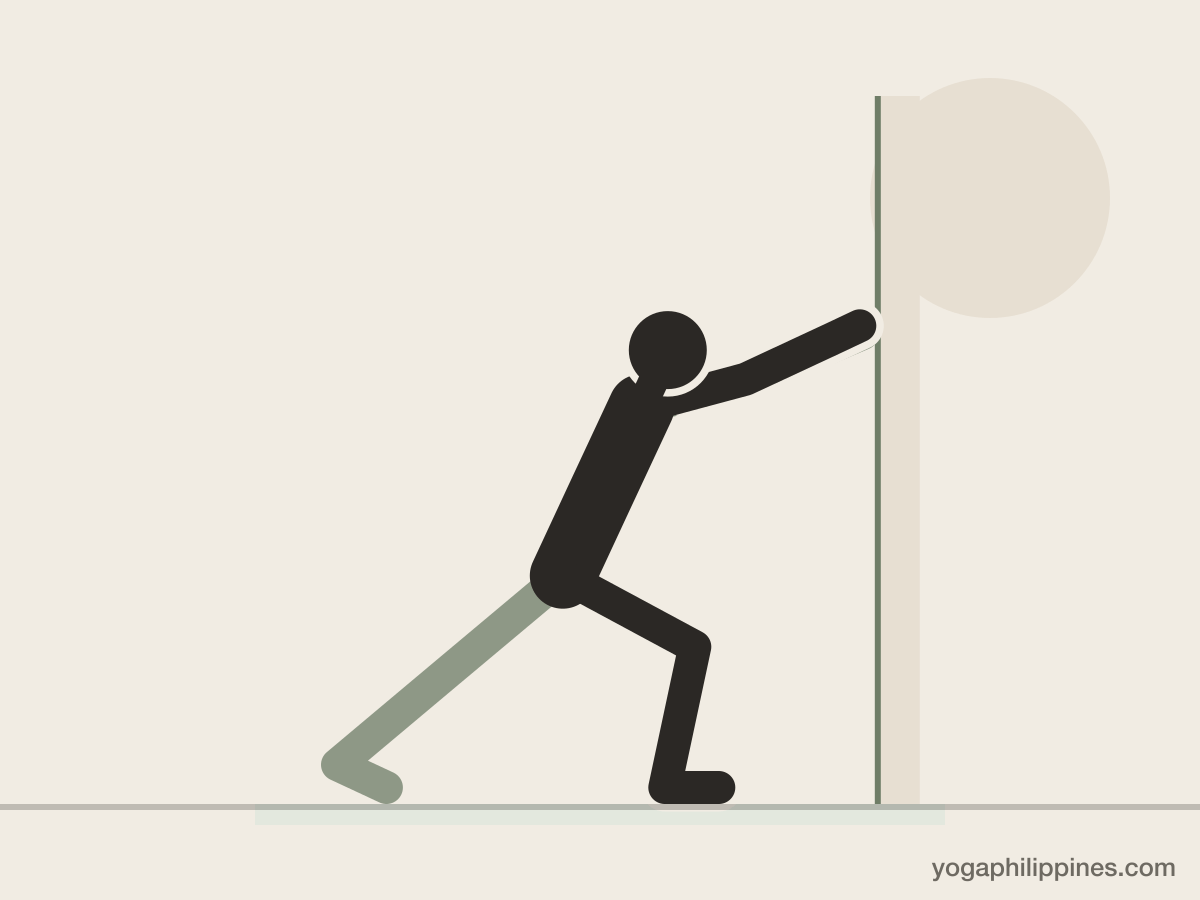
Drawings and video by YogaPhilippines.com, free to reuse under CC BY 4.0 with credit and a link: see the image licence for how to credit.
This page is one of the sources behind the pose finder.
Browse the stretching library.
Sources: Mayo Clinic, Fitness program: 5 steps to get started; NCCIH (US National Institutes of Health), Yoga: Effectiveness and Safety. Last reviewed 2 October 2026.
Questions
Why stretch the calf with the knee bent as well as straight?
The calf has two main muscles. The gastrocnemius crosses the knee, so it stretches most with the knee straight. The soleus sits underneath and only crosses the ankle, so it reaches its stretch when the knee bends. Doing both versions covers the whole calf.
Is it safe to stretch the calf off a step?
For most people, yes, if you lower slowly and hold the rail. Letting the heel drop hard or bouncing at the bottom loads the Achilles tendon sharply. Keep the drop small, and skip the step version altogether if the Achilles or heel is painful.
Do heeled shoes make the calves feel tight?
Shoes with a raised heel keep the calf in a slightly shortened position, and many people notice tight calves after a long day in them. Going barefoot at home and doing the wall stretch in the evening are simple ways to give the calves the opposite shape.
How often should you stretch your calves?
Most days, if your calves feel tight, with two or three rounds of about 30 seconds on each leg. A short stretch after walking, running or a long day in shoes is an easy habit to keep. Little and often tends to do more than one long session a week.
Should you stretch your calves before running?
Before a run, keep it moving: ankle circles, slow heel raises and a few minutes of easy jogging or brisk walking. Save the longer held wall and step stretches for after the run, when the calves are warm and you can breathe slowly into each hold.
Why stretch your calves?
The calves point the foot every time you walk, climb stairs or push off in a run, and flat flip-flops, raised heels, long standing and long sitting keep them short or busy for hours. Many people notice stiffness on the first steps of the morning. Gentle stretching keeps the ankle moving and the calves feeling easier.
Pairs well with
Your yoga calendar
We track every yoga event, workshop and pop-up class so you don't have to.
Updated