Stretches
Ankle stretches for stiff ankles and feet
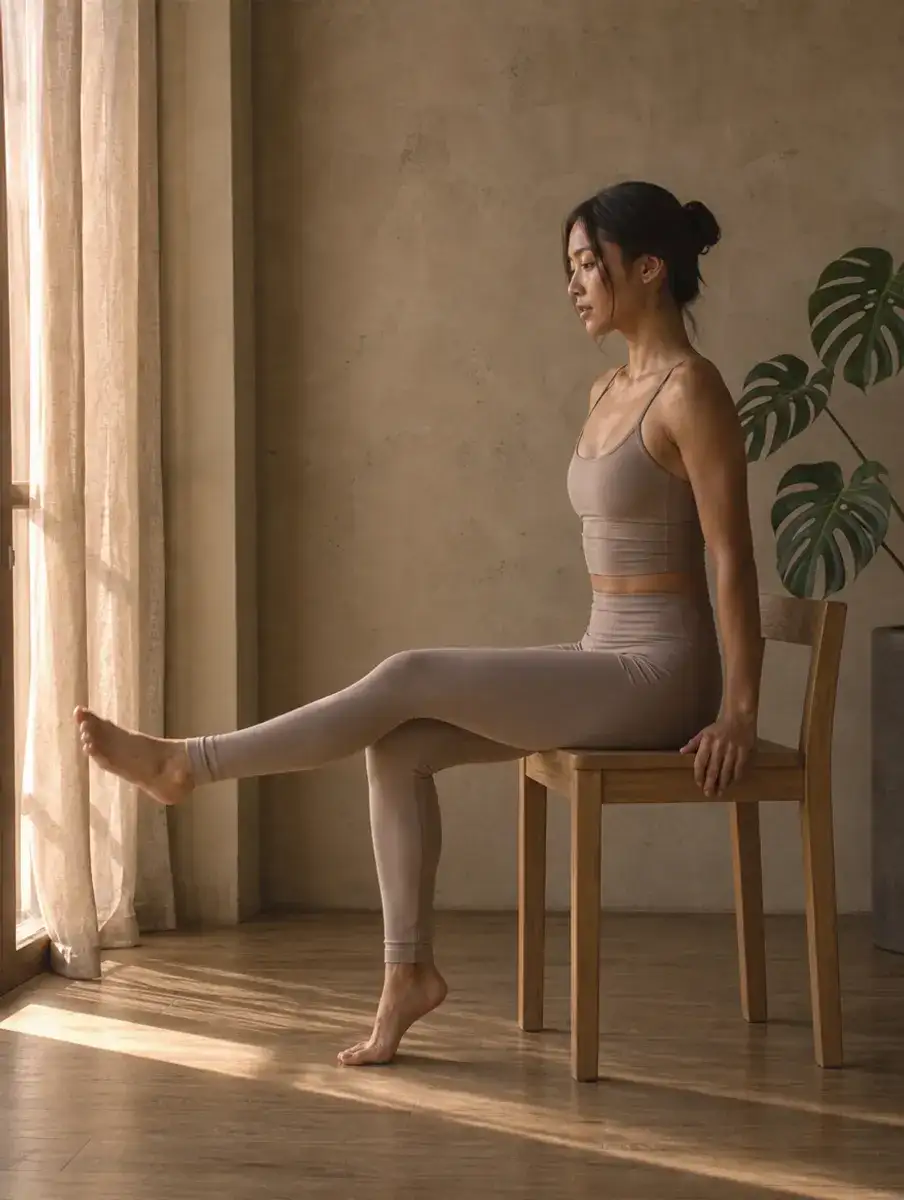
A simple ankle stretch moves the foot slowly through its range, pointing, flexing and circling, then holds a gentle calf or front-of-ankle stretch for five to eight breaths. The seven below take about six minutes. Keep every one mild, and see a doctor or physio if the ankle is swollen, unstable or painful after a twist.
The ankles take every step you make, on uneven pavements, up and down stairs and through every run. When they are stiff, you may feel it first in a squat, when the heels lift, or in the first steps out of bed. A few minutes of ankle stretching moves the joint gently through its range and eases the calves and the front of the shin that control it.
The seven stretches below take about six minutes. Most can be done sitting down.
When should you see a doctor or physio first?
Do not stretch the ankle, and see a doctor or physiotherapist, if:
- it is swollen, bruised or painful after a twist or a fall;
- you cannot put weight on it or walk a few steps;
- it gives way often or feels unstable;
- you have pain at the back of the heel that is worse in the morning and does not ease;
- you have diabetes and notice numbness, a wound or colour changes in the foot.
Stretching is not a treatment for a sprain. A recently twisted ankle needs rest and a clinician’s advice before it is stretched.
How long should you hold an ankle stretch?
The moving stretches (circles, points and flexes) are done slowly, around ten times. Held stretches are five to eight breaths, about 30 seconds, on each side. Keep the effort light and the breath slow.
The routine: seven ankle stretches
- Ankle circles. Sit on a chair or lie on your back with one foot lifted. Circle the ankle slowly, ten times each way, making the circle as big as is comfortable. Switch feet.
- Point and flex. With the leg long, point the toes away from you as you breathe out, then draw them back towards you as you breathe in. Ten slow rounds each foot.
- Alphabet. Lift one foot and trace the letters of the alphabet in the air with the big toe. It moves the ankle in every direction.
- Calf stretch at a wall. Hands on the wall, step the right foot back, heel down, toes forward, and bend the front knee. Five breaths. Then bend the back knee a little, keeping the heel down, to move the stretch lower towards the ankle. Five more breaths, then switch.
- Kneeling shin stretch. Kneel on a padded surface with the tops of the feet flat on the floor and sit back towards the heels, with a cushion between the heels and the hips. You feel the front of the ankles. Five breaths. Skip this if the knees complain.
- Supported squat. Feet wider than the hips, toes turned out, lower into a squat holding a door frame or a heavy table, heels on a folded towel if they lift. This asks the ankles to bend forward. Garland Pose on a block is the yoga version. Five breaths.
- One-leg balance. Stand near a wall, shift the weight into the right foot and lift the left heel, then the whole foot. Hold for five breaths with the standing knee soft, then switch. Tree Pose with a hand on the wall builds on this.
Common mistakes
- Rushing the circles. Fast spins skip the stiff part of the range. Go slowly.
- Letting the arch collapse in the calf stretch. Keep the back foot pointing straight ahead.
- Sitting heavily on the feet in the shin stretch. Use a cushion and come out if the ankles or knees pinch.
- Forcing the heels down in a squat. Prop them and let range come with time.
Make it easier or harder
Easier: do stretches 1 to 3 in bed or on a chair, and the calf stretch with only a small step back. Hold a wall for every standing stretch.
Harder: in the balance, close the eyes for a breath or two, near the wall. Hold the squat a little longer. Step the back foot further in the calf stretch.
Which stretches pair with the ankles?
The calves, knees and hips all work with the ankles. The gentle knee stretches for the muscles around the joint are a natural next step. If you run, the post-run routine in yoga for runners covers the calves and hips together. For the toes and arches, add the foot stretches from yoga for tired feet.
Best time to do it
5 of the 7 moves are warm-up moves, so this routine suits the start of the day or the few minutes before a walk, a run, a workout or a class.
How long to hold each move
Holds below are for a medium pace; at a slower pace, stay up to the longer time. Moves marked each side are done on both sides.
| Move | Hold | Slower pace |
|---|---|---|
| Ankle Circles | 30 s of slow rounds each side | 45 s |
| Point and Flex | 30 s of slow rounds each side | 45 s |
| Ankle Alphabet | 45 s of slow rounds each side | 1 min 10 s |
| Wall Calf Stretch | 30 s each side | 45 s |
| Kneeling Shin Stretch | 30 s | 45 s |
| Supported Squat | 30 s | 45 s |
| One-Leg Balance | 20 s each side | 30 s |
Pair it with
Other stretching routines that work the same areas, for a longer session or the next day:
- Calf stretches also works the ankles and calves
- Stretching before running: a six minute warm-up also works the ankles and calves
- Leg stretches for the whole lower body in 12 minutes also works the ankles and calves
Put it into practice with the five-part flexibility check and the mobility check in the app, built on pages like this one.
Browse all stretching routines.
Sources: Mayo Clinic, Fitness program: 5 steps to get started; NCCIH (US National Institutes of Health), Yoga: Effectiveness and Safety. Last reviewed 2 October 2026.
Questions
Why do ankles feel stiff in the morning?
After hours lying still, the ankles and calves have not moved much, so the first steps can feel stiff. Gentle circles and points while still in bed are an easy way to start. Stiffness that lasts all day, or comes with swelling or pain, is worth showing a doctor.
Do stiff ankles make squatting harder?
They often do. In a deep squat the shins tip forward over the feet, and if the ankles do not bend far, the heels lift. A folded towel under the heels is a simple workaround while you work on ankle range with the stretches on this page.
Is balancing on one leg good for the ankles?
Standing on one leg asks the small muscles of the foot and ankle to work, which many people find makes them feel steadier over time. Start near a wall, keep the standing knee soft and hold for a few breaths. Tree Pose is a classic place to practise.
Why do ankles feel tight?
Ankles often feel tight simply because they rarely move through their full range: long hours sitting, the same flat walking every day, or a night lying still. Tight calves limit how far they bend too. An old sprain can also leave an ankle stiff, so if it is swollen, unstable or painful, see a doctor or physio before stretching.
Pairs well with
Your yoga calendar
We track every yoga event, workshop and pop-up class so you don't have to.
Updated