Yoga for · reviewed by a teacher
Yoga for runners, across the training week
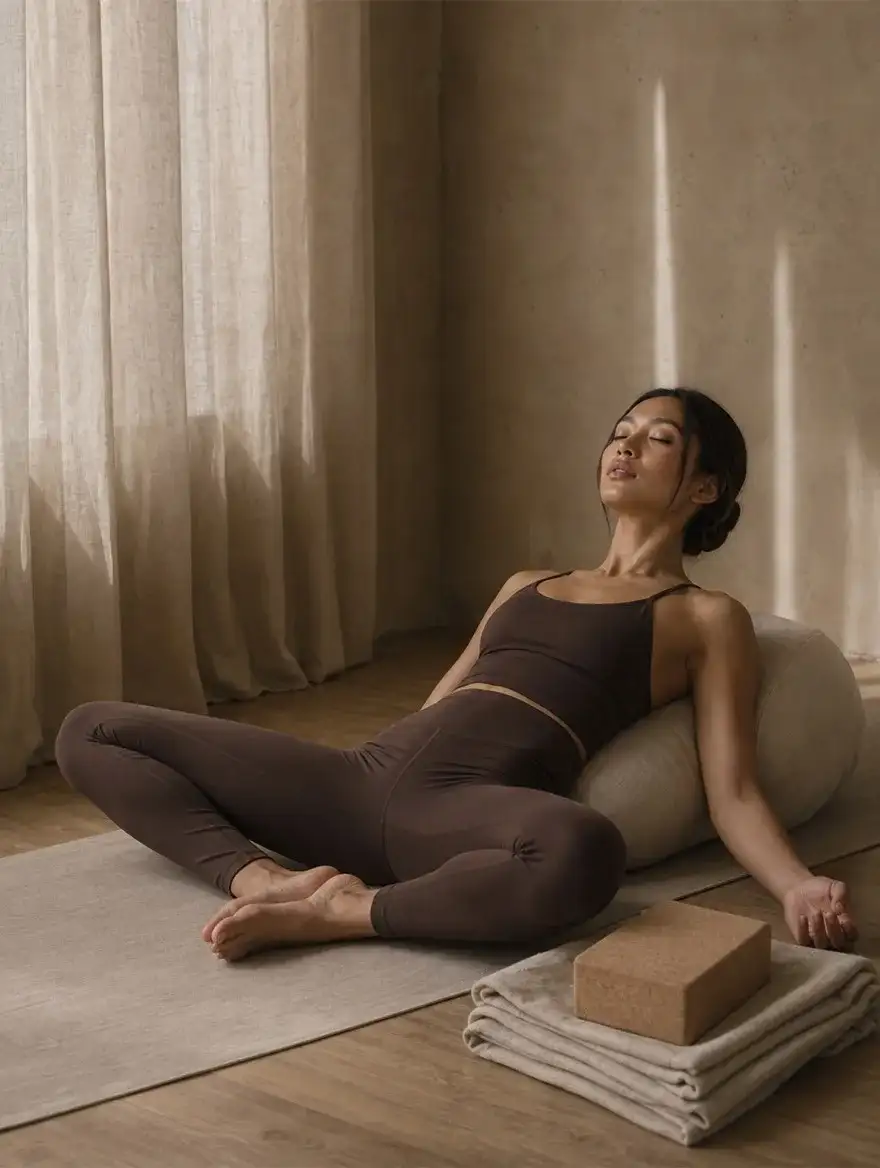
For runners, a short, slow yoga routine after a run, such as a low lunge, Downward Dog, Pigeon and a strapped hamstring stretch, gives tight hips, hamstrings and calves some easy attention while the body is warm. Longer Yin holds suit rest days, but yoga is not treatment for a running injury, which needs a physiotherapist.
Teacher's note from Joahnna Lee
“I am not a running coach, and nothing here is a training plan or a promise about pace or injuries.”
Running asks a lot of a small number of muscles, over and over, in one direction. Hips, hamstrings, quads and calves do most of the work, and they tend to let you know about it. A short, slow yoga routine after a run is one way to give them some easy attention while they are still warm.
This is not a running coach’s advice, and nothing here is a training plan or a promise about pace or injuries. It is a yoga routine for after the run and for rest days, built from the pose library on this site. On rest days, the long, quiet holds of Yin yoga for tight hips and legs are the slow counterpart to the miles.
For more lunge options, see hip flexor stretches from gentle to deep, and for the backs of the legs, hamstring stretches with hold times and a desk version. One safety line first. A running injury that hurts, swells, or does not settle within a few days needs a physiotherapist or a sports doctor, not a stretch. Stop anything on this page that causes sharp pain.
What yoga gives a runner
- Mobility. Slow stretching through the hips, hamstrings and calves, the areas many runners feel tight in.
- Balance. Standing on one leg, and lunging with control, asks the small muscles of the feet and ankles to work. Dancer Pose, a one-legged balance with a thigh stretch, does both at once.
- Breathing. Practising a slow, steady breath when a shape is uncomfortable is a useful habit for the last kilometres of a long run.
- A calmer end to the run. Five or ten quiet minutes after a hard run is a good way to come down.
What yoga does not do: it is not strength training, it is not injury treatment, and it will not replace the rest days your body needs. For some bodyweight strength on the side, the hip exercises for runners’ glutes and outer hips use bridges, lunges and balances.
After a run: three shapes
Once you have caught your breath after the cool-down walk, three shapes cover the areas a run works hardest: Downward Dog with bent knees for the calves and hamstrings, a kneeling low lunge with the back knee on a folded towel for the front of the hip, and Pigeon Pose or its reclined option for the outer hip. Hold each for about a minute a side, move slowly and breathe through the nose. After a gym session instead of a run, the eight cool down stretches for after a workout are a shorter, standing-friendly set, and if you own a roller, gentle foam roller exercises for calves and thighs can go first. For the full post-run routine, follow the 15-minute yoga sequence for after running; before you set off, use this six-minute pre-run warm-up.
Yin on rest days: long holds for hips and hamstrings
Yin holds each shape for a few minutes, with the muscles as relaxed as possible, so the stretch is slow and mild rather than strong. It is static stretching at its slowest, and the page on static vs dynamic stretching explains when each kind suits a runner. Many runners enjoy it on a rest day, when there is no hard run to save their legs for. A simple Yin half hour for a runner might hold Dragon, a reclined Pigeon, a Caterpillar forward fold and a supported Butterfly for three to five minutes each. For the fronts of the thighs, Hero Pose, sitting high on a block, is a quiet seat to finish in.
Keep Yin gentle: the aim is a mild sensation you could stay in for minutes, never a strong pull. If you are not sure whether a slow or a faster class suits you, the yoga style quiz can help you choose, and yoga for flexibility, slowly explains why steady practice matters more than depth.
Before a race, and the week after one
In the days before a race, keep yoga short and easy. This is not the week to try a new deep stretch or a long Yin class that leaves your legs feeling unfamiliar. A few minutes of the post-run shapes above, well inside your comfort, is plenty.
After a race, rest comes first. Once walking feels normal again, a slow practice lying on the floor, such as Legs Up the Wall and a supported Reclined Butterfly, is a gentle way back. Leave the deeper hip openers for a few days.
Where you run shapes the day, too. After an early loop in BGC or a run along Manila Bay in the heat, keep the practice that follows almost entirely on the floor, and drink before you stretch. If you would like a class near your route, the page on yoga in BGC is a starting point.
When to see a physiotherapist instead
See a physiotherapist or a sports doctor if you have pain that is sharp, that swells, that makes you limp, that returns every time you run, or that does not settle after a few days of rest. The same goes for pain in a bone rather than a muscle, and for knee or hip pain that catches or locks. Yoga can sit alongside their advice once they have seen you, never in place of it. Once you are cleared, the gentle knee stretches for the muscles around the joint keep everything slow and mild. If a sore back is part of the picture, gentle shapes for a stiff back covers what to leave out, and the slow floor sequence in yoga for better sleep doubles as a rest-day evening practice.
Put it into practice with the breathwork studio and the breath programs in the app, built on pages like this one.
Browse all Yoga for guides.
Sources: Mayo Clinic, Fitness program: 5 steps to get started; NCCIH (US National Institutes of Health), Yoga: Effectiveness and Safety; NHS, Exercise in pregnancy; CDC, Pregnant & Postpartum Activity: An Overview; Canadian Family Physician (Chan et al., 2014), via PubMed Central, Hot yoga and pregnancy: Fitness and hyperthermia. Last reviewed 2 October 2026.
Questions
Should runners do yoga before or after a run?
Most runners keep the slow, held stretches for after the run or for a rest day, when the muscles are warm and there is no hard effort to come. Before a run, a few minutes of easy movement, such as walking, leg swings and a couple of gentle Downward Dogs, is usually enough.
Is Yin yoga good for runners?
Many runners enjoy Yin on rest days, because its long, quiet holds give the hips and legs slow attention that a quick stretch does not. It is not a replacement for your training plan or for strength work, and it is best kept away from the hours before a hard workout.
Can yoga replace stretching after a run?
For many runners a short yoga routine simply is their stretching: the shapes on this page cover the hips, hamstrings, quads and calves. What yoga cannot replace is a proper cool-down walk, fluids after a hot Manila run, or advice from a physiotherapist when something hurts.
Which style of yoga suits runners best?
Slow styles usually suit runners best. After a run, a short, unhurried routine of a low lunge, Downward Dog, Pigeon and a strapped hamstring stretch gives the hips and legs easy attention. On rest days, Yin's long, quiet holds are a slow counterpart to the miles. Fast, strong classes are best kept away from the hours before a hard workout.
How many days a week should a runner do yoga?
There is no set number. Many runners do a short routine of five to ten minutes after most runs, while the body is warm, and a longer, slower session on a rest day. Keep it easy in race week. Yoga sits alongside your training plan and rest days, and it does not replace either of them.
Keep reading
Your yoga calendar
We track every yoga event, workshop and pop-up class so you don't have to.
Updated