Stretches
Cool down exercise routine for after a workout
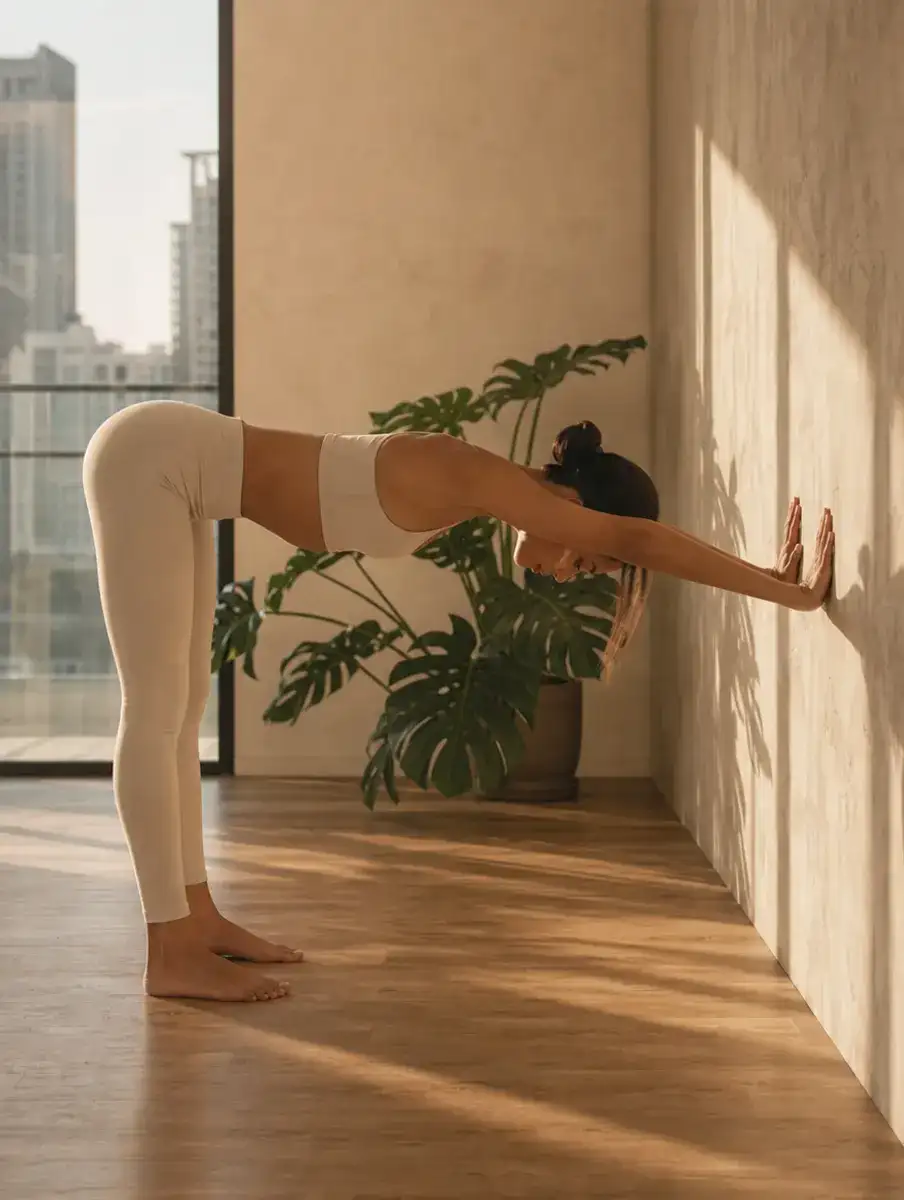
A cool down exercise is the easy activity you do straight after a workout so your breathing and heart rate can settle: a few minutes of walking, then slow, held stretches. Allow five to ten minutes in all, and hold each stretch for five to eight slow breaths, about 30 seconds, without bouncing.
A cool down is the quiet end of a workout. After a run along the bay, a gym class or a strong vinyasa practice, the body is warm, the heart is still working and the legs have done most of the effort. A few minutes of slow walking, then some easy held stretches, is a calm way to come back to normal.
These eight cool down stretches take about ten minutes. Most are done standing or lying down, and none need equipment beyond a wall and a towel.
What is a cool down exercise?
A cool down exercise is anything easy you do at the end of a session to bring the body gently back to rest. It usually runs in three stages:
- Keep moving, slowly (three to five minutes): walk, jog very gently or march on the spot until your breathing eases.
- Stretch (five minutes or so): hold slow, still stretches for the muscles you used most, such as the eight below.
- Breathe (one minute): finish lying or kneeling, with a longer out-breath than in-breath.
After a run the walking matters most; after a strong yoga class the stretches may be all you need.
When should you do cool down stretches?
Straight after the workout, once your breathing has eased. Walk for three to five minutes first, or march gently on the spot, so you are not going from hard effort to stillness in one step. In Manila heat, drink water and find shade or air conditioning before you get on the floor.
Is it safe to stretch after exercise?
For most people, yes, as long as it stays gentle. Stop, and see a doctor or physiotherapist, if:
- you felt a sudden sharp pain, a pop or a pull during the workout;
- a muscle is swelling, bruising or too painful to stretch;
- you feel dizzy, faint, sick or have chest pain (stop and get help straight away);
- pain lingers for days or returns every time you train.
A cool down stretch should feel mild and broad. Sharp, pinching or electric sensations mean come out.
How long should you hold each cool down stretch?
Five to eight slow breaths, roughly 30 seconds, on each side. One round is enough after most sessions. Breathe out as you settle into each shape, and never bounce at the end of the range.
The routine: eight cool down stretches
- Calf stretch at a wall. Stand facing a wall with your hands on it. Step the right foot back, heel down, toes pointing forward, and bend the left knee until you feel the back of the right calf. Five breaths, then switch.
- Standing quad stretch. Hold the wall with the left hand. Bend the right knee and hold the right ankle or your sock with the right hand, knees side by side. Tuck the tailbone slightly. Five breaths each side.
- Half forward fold at the wall. Hands on the wall at hip height, walk back until your body makes an L shape, knees soft. Lengthen the spine and feel the backs of the legs. Six breaths.
- Low lunge. Kneel with the back knee on a folded towel and the front foot ahead of the knee. Ease the hips forward until you feel the front of the back hip. Five breaths each side.
- Downward Dog with bent knees. From hands and knees, lift the hips up and back and pedal the heels. Downward Dog with the knees bent is kinder on tired hamstrings. Six breaths.
- Figure four lying down. Lie on your back, knees bent, and cross the right ankle over the left knee. Stay there, or draw the left thigh in. Five to eight breaths each side.
- Supine twist. Arms wide, let both knees fall to one side and turn the head the other way. The supine twist with a cushion under the knees is the gentlest version. Five breaths each side.
- Child’s Pose to finish. Sit back towards the heels, knees wide, forehead on the floor or a cushion. Rest in Child’s Pose with the arms long or by your sides for a minute of slow breathing.
Common mistakes
- Stopping dead. Going from a sprint straight to the floor can leave you light-headed. Walk first.
- Bouncing. Short, sharp pulses at the end of a stretch tend to make muscles tighten against it.
- Holding the breath. If you cannot breathe slowly, you have gone too deep.
- Chasing depth. Tired muscles are not the place to test your range. Keep each stretch at a mild level.
Make it easier or harder
Easier: do stretches 1 to 3 standing only, with a hand on a wall or railing. Skip the floor if you are in a crowded gym or outdoors.
Harder: stay a little longer in the floor stretches, up to a minute each, or add a few minutes in Legs Up the Wall. Longer holds suit a rest day better than the end of a tough session.
Which cool down suits which workout?
The eight stretches above are a full-body default. If you are short on time, pick the ones that match what you just did.
| After | Walk or ease off for | Choose these stretches |
|---|---|---|
| A run or a long walk | 5 minutes | 1, 2, 3 and 4 |
| Leg day at the gym | 3 to 5 minutes | 2, 4, 6 and 8 |
| Upper body or a push-up session | 2 to 3 minutes | 5, 7, 8 and the two extras below |
| Basketball, badminton or football | 5 minutes | 1, 2, 4 and 6 |
| A strong yoga class | Already done in Savasana | 6 and 7 if anything still feels tight |
Two extras for the upper body
- Doorway chest stretch. Stand in a doorway with the forearms on the frame, elbows at shoulder height. Step one foot through and let the chest move forward until the front of the shoulders open. Five breaths.
- Cross-body shoulder stretch. Bring the right arm across the chest and hold it above the elbow with the left hand, shoulders down. Five breaths, then switch. The tricep stretch overhead is a good third if the backs of the arms feel worked.
Does a cool down stop next-day soreness?
Not reliably. The evidence that stretching afterwards prevents next-day soreness is mixed, so it is better to see the cool down as a way to let the heart rate and breathing settle and to notice how the body feels before you move on.
Cooling down in Manila heat and humidity
In humid air sweat evaporates slowly, so you can stay hot for a while after the session ends. Keep the walking part, but do it in the shade or indoors, drink water as you walk, and wipe down or change your shirt before you lie on the floor. A cool towel on the back of the neck while you do the standing stretches is a simple comfort. If you feel dizzy, sick or unusually tired, sit down in a cool place and stop the routine.
How is a cool down different from a warm-up?
They mirror each other. A warm-up gets you moving, with active, swinging movements and no long holds; the warm-up exercises before yoga or a workout show that side. A cool down slows you down, with still, held stretches and a longer out-breath. If your sport is running, the post-run routine in yoga for runners is a longer version of this page.
Best time to do it
Of the 10 moves, 5 work as warm-up moves and 8 as slower cool-down holds (some do both), so it fits most times of day after a few minutes of walking or easy movement. You can also split it: the gentler moving parts before exercise, the longer holds after.
How long to hold each move
Holds below are for a medium pace; at a slower pace, stay up to the longer time. Moves marked each side are done on both sides.
| Move | Hold | Slower pace |
|---|---|---|
| Wall Calf Stretch | 30 s each side | 45 s |
| Standing Quad Stretch | 30 s each side | 45 s |
| Half Forward Fold at a Wall | 30 s | 45 s |
| Low Lunge | 30 s each side | 45 s |
| Downward-Facing Dog | 30 s | 45 s |
| Figure Four | 45 s each side | 1 min 10 s |
| Supine Twist | 1 min each side | 1 min 30 s |
| Child's Pose | 45 s | 1 min 10 s |
| Doorway Chest Stretch | 30 s | 45 s |
| Cross-Body Shoulder Stretch | 25 s each side | 40 s |
Pair it with
Other stretching routines that work the same areas, for a longer session or the next day:
- A 10-minute wake-up routine, in bed and on the floor also works the shoulders and hips
- Full body stretch routine also works the shoulders and hips
- Flexibility routine also works the shoulders and hips
Browse every stretch by body area.
Sources: Mayo Clinic, Fitness program: 5 steps to get started; NCCIH (US National Institutes of Health), Yoga: Effectiveness and Safety. Last reviewed 2 October 2026.
Questions
How long should a cool down exercise last?
Five to ten minutes suits most sessions: three to five minutes of easy walking, then a few minutes of held stretches. After a short or gentle session, a couple of minutes may be enough.
What is the best cool down exercise after running?
Easy walking for a few minutes is the most useful start, followed by calf, quad and hamstring stretches, since the legs did the work. Stretches 1 to 4 in the routine on this page cover that in about five minutes.
Do you need to cool down after every workout?
A few easy minutes after hard exercise is a sensible habit, mostly so your breathing and heart rate can settle before you stop moving. After a gentle walk or a slow yoga class you may not need much more than a minute or two of easy stretching.
Should cool down stretches feel easier than a warm-up?
Usually, yes. A cool down is meant to be calm. The muscles are warm, so the stretches may go a little further than they would cold, but the effort should stay low and the breath slow. If a cool down stretch feels strenuous, ease off.
Can you do cool down stretches the next day instead?
You can stretch on a rest day, and many people like to. It is a different thing from a cool down, though. The point of cooling down is the slow transition straight after effort, so keep a short walk and a few easy holds at the end of the session itself.
What are the three parts of a cool down?
A simple cool down has three parts. First, a few minutes of easy movement, such as slow walking, so the heart rate comes down gradually. Then slow, held stretches for the muscles you used. Finally, a minute or two of easy breathing, sitting or lying down, before you get on with your day.
Why can you feel dizzy if you stop exercising suddenly?
Stopping hard exercise all at once can leave some people light-headed, because the heart and breathing are still working hard while the legs stop helping blood move back up the body. Walking for a few minutes first lets things settle gradually. If dizziness is frequent, or comes with chest pain or fainting, see a doctor.
Pairs well with
Your yoga calendar
We track every yoga event, workshop and pop-up class so you don't have to.
Updated