Pose library · Anjaneyasana · reviewed by a teacher
Low Lunge (Anjaneyasana)
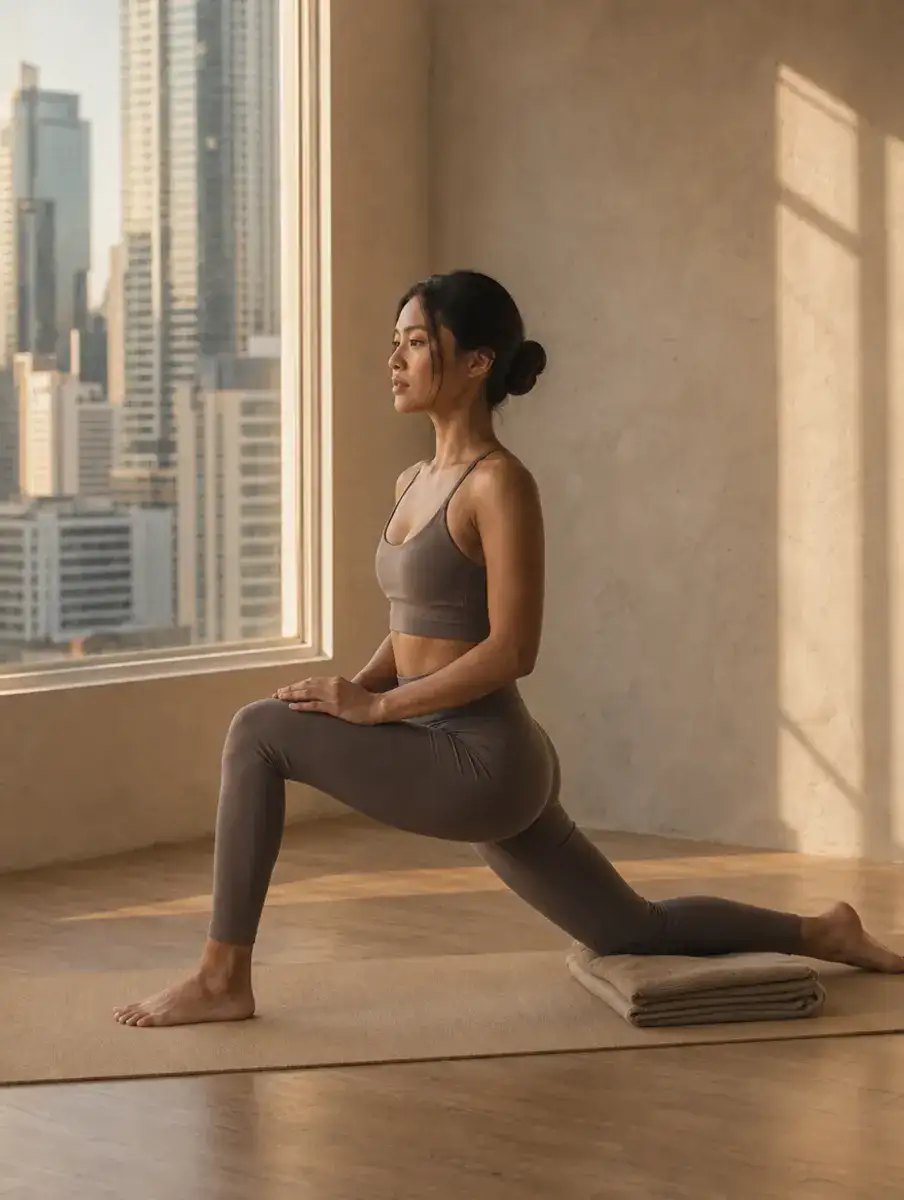
Low Lunge is a kneeling lunge: one foot forward with the knee over the ankle, the back knee resting on the floor, and the chest lifted. It stretches the front of the back hip and thigh. Anjaneya is a name for Hanuman, the monkey figure of Indian stories, and asana means posture.
Low Lunge (Anjaneyasana) is a kneeling lunge that stretches the front of the back hip and thigh. Step one foot forward with the knee over the ankle, lower the back knee onto a blanket, lift the chest over the hips and ease the hips forward for five breaths. Pad the back knee, and keep the front knee from drifting in.
Pronunciation and meaning
Anjaneyasana: ahn-jah-nay-AHS-uh-nuh. Five syllables before asana settles in at the end.
Low Lunge is a kneeling lunge: one foot forward with the knee over the ankle, the back knee resting on the floor, and the chest lifted. It stretches the front of the back hip and thigh. Anjaneya is a name for Hanuman, the monkey figure of Indian stories, and asana means posture.
How to do Low Lunge
- From Downward-Facing Dog or hands and knees, step your right foot forward between your hands.
- Lower the left knee onto a folded blanket and slide it back until the right knee sits over the right ankle.
- Rest the top of the back foot on the mat, or tuck the toes if that is kinder to the knee.
- Bring your hands to the right thigh or to blocks, and lift the chest so the shoulders sit over the hips.
- Let the hips ease forward and down until you feel the front of the left hip. Reach the arms up if that feels steady.
- Stay for five breaths, then step back and repeat on the other side.
Low Lunge step by step

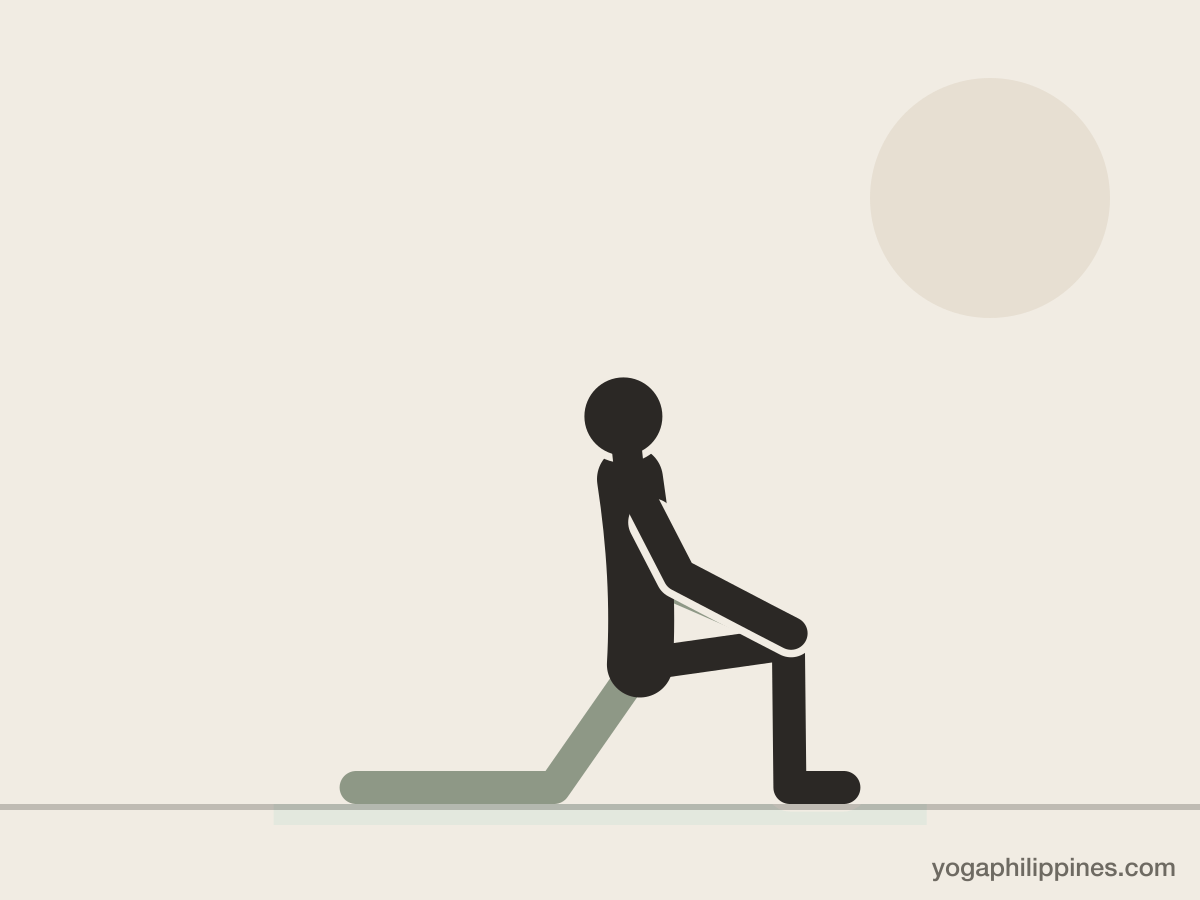
Drawings and video by YogaPhilippines.com, free to reuse under CC BY 4.0 with credit and a link: see the image licence for how to credit.
Low Lunge appears in the morning yoga sequence card and the 8-pose hip-opening sequence, both printable with holds and cues. For other poses that work the hips, open the pose finder set to the hips.
Teacher's note from Joahnna Lee
“Draw the tailbone gently down toward the back knee. The stretch at the front of the hip often doubles without moving any further.”
“Keep the front knee over the ankle, not beyond it. If it travels forward, walk the front foot further ahead.”
Make it easier
- Double the blanket under the back knee, or fold the mat over, if kneeling is uncomfortable.
- Keep the hands on blocks either side of the front foot instead of lifting the arms.
- Practise it standing as a short lunge with a hand on a chair if kneeling is not possible.
Pregnancy and after birth
Pregnancy. Adapt. Widen the feet side to side so the belly has room, keep the hands on high blocks or a chair, and keep the stretch mild because joints loosen in pregnancy. Leave it out if you feel pain at the front of the pelvis. Check with your OB or midwife before you start.
After birth. Adapt. When your doctor or midwife has cleared you, start with hands on blocks and a short hold. Ease off if you feel pain at the pubic bone or pulling along a caesarean scar.
Expecting or postpartum? See joahnnalee.com for the stage-by-stage guides.
Common mistakes
- Letting the front knee drift inward, which loads the knee from the side.
- Dumping into the lower back to lift the arms higher. Bring the arms down and lengthen the tailbone instead.
- Kneeling straight onto the kneecap without padding.
Low Lunge is one of the most useful stretches after a day of sitting. The front of the hip shortens in a chair, and this shape gives it back some length with the back knee safely on the floor.
It often sits early in yoga for beginners, between Warrior I and II and the floor work, because it teaches a front knee to stay over its ankle.
Held still for minutes with soft legs, the same lunge becomes the Yin shape called Dragon, held with soft legs. It also has a place among the standing poses gathered on one page.
Lift the back knee off the floor and press back through the heel, and the pose becomes Crescent Lunge, the high lunge, a stronger standing balance; the low lunge vs high lunge comparison sets the two side by side. Stepping the front foot outside the hand and lowering the chest gives you Lizard Pose, a deeper lunge.
Prep poses for Low Lunge
Poses that warm up the same body areas at a lower intensity, so Low Lunge feels steadier when you get there.
- Balasana (Child's Pose) gentler work for the same area, beginner
- Supported Child's Pose (Salamba Balasana) gentler work for the same area, beginner
- Reclined Butterfly (Supta Baddha Konasana) gentler work for the same area, beginner
Counter-poses for Low Lunge
Shapes that move the body the other way or let it rest straight after Low Lunge.
- Windscreen Wipers beginner
Where to go next after Low Lunge
These poses list Low Lunge as a preparation, so they are a natural next step once it feels comfortable.
- Crescent Lunge (Ashta Chandrasana) beginner plus
- Dragon Pose (Yin) beginner plus
- Lizard Pose (Utthan Pristhasana) intermediate
- Couch Stretch intermediate
Props that help in Low Lunge
- Block: brings the floor closer under the hands or sits under the hips.
- Blanket: pads the knees and the tops of the feet.
- Chair: brings the floor closer, or gives a seat or a hand rest for a gentler version.
Programs and sessions that use Low Lunge
- The 4-week beginner program 3 of its 12 sessions
- The 14-day flexibility plan 2 of its 14 sessions
- The one-month challenge 2 of its 30 sessions
- The 7-day desk reset 1 of its 7 sessions
- Sequences: short 10-minute practice, 45-minute slow practice, hip-opening practice, Moon salutation flow, early-day sequence, post-run routine and wrist-free flow
- Practice app sessions: 10-minute reset, 20-minute flow, morning wake-up and hip opener
- Generated example flows: 10-minute beginner flow and 30-minute back-friendly session, no weight on the wrists
Put it into practice with the tool for building your own sequence, the Sun Salutation round timer and the surprise flow tool, built on pages like this one.
Sources: Mayo Clinic, Fitness program: 5 steps to get started; NCCIH (US National Institutes of Health), Yoga: Effectiveness and Safety; NHS, Exercise in pregnancy; CDC, Pregnant & Postpartum Activity: An Overview; Canadian Family Physician (Chan et al., 2014), via PubMed Central, Hot yoga and pregnancy: Fitness and hyperthermia. Last reviewed 2 October 2026.
Low Lunge questions
What is the difference between Low Lunge and Dragon Pose?
They share a shape. Low Lunge is active, with the legs working and the chest lifted for a few breaths. Dragon is the Yin version: the legs stay soft, the hands rest on blocks and you hold for minutes.
Is Low Lunge good for tight hips?
It is one of the plainest stretches for the front of the hip, which shortens after long hours of sitting. Keep it mild, breathe, and come out if you feel a pinch in the hip or the knee.
What is Low Lunge called in Sanskrit?
Low Lunge is Anjaneyasana. Anjaneya is a name for Hanuman, the monkey figure of Indian stories, and asana means posture. In English it is also called a kneeling lunge, because the back knee rests on the floor. The same lunge with the back knee lifted is a different pose, Crescent Lunge or high lunge.
What are the benefits of Anjaneyasana?
Anjaneyasana, Low Lunge, stretches the front of the back hip and thigh, which many people find tight after long hours of sitting. The front leg works to hold the knee over the ankle, and lifting the chest asks the trunk to stay tall. The back knee rests on the floor, so the pose is steady and easy to adjust.
What is the difference between Anjaneyasana and Ashwa Sanchalanasana?
Both are lunges with one foot forward. Ashwa Sanchalanasana, the equestrian pose, is the lunge inside the twelve-step Sun Salutation, usually with the hands on the floor beside the front foot and the gaze forward. Anjaneyasana, Low Lunge, is held on its own, with the back knee down and the chest lifted over the hips.
Pairs well with
Updated