Pose library · Urdhva Dhanurasana · reviewed by a teacher
Wheel Pose (Urdhva Dhanurasana)
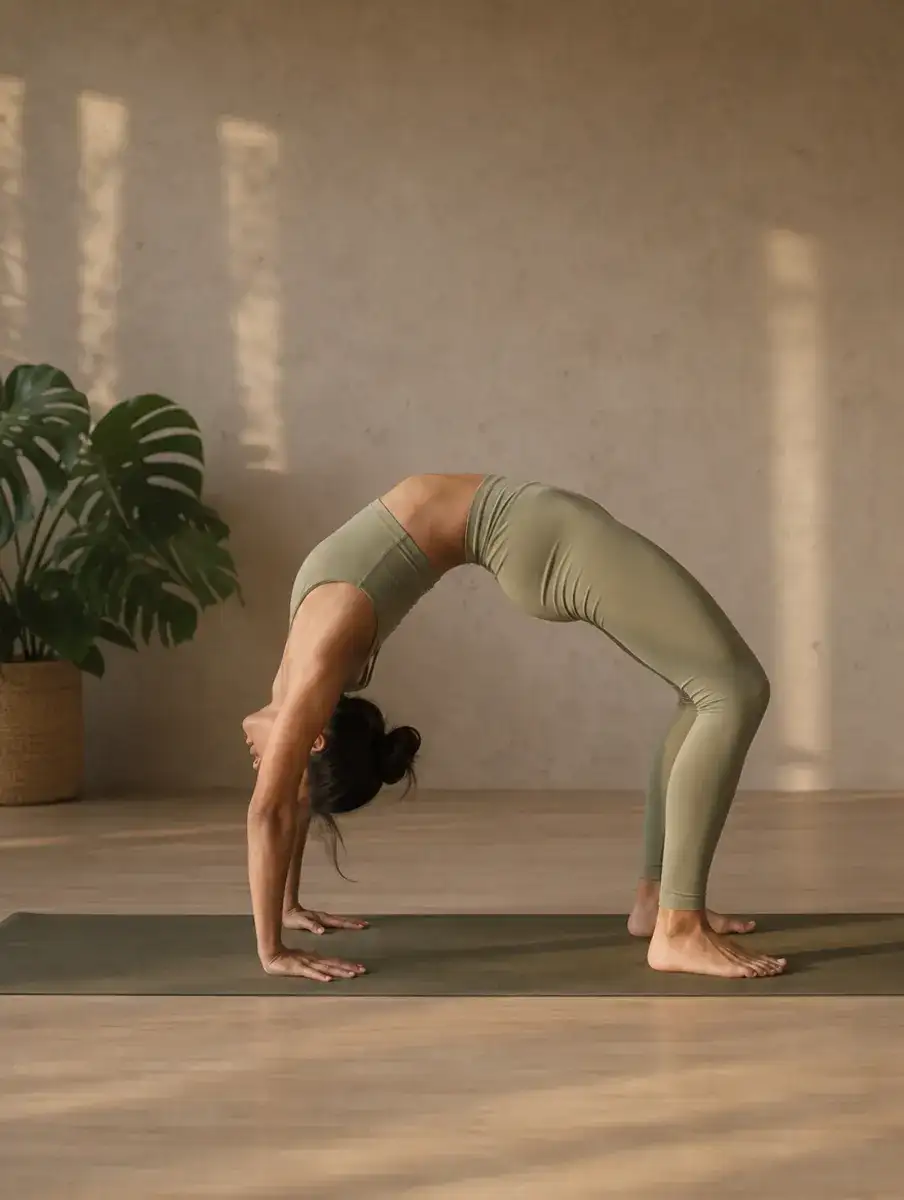
Wheel Pose is a full backbend from the floor: you lie on your back, place your hands by your ears and press up so the body forms an arch on straight arms and legs. Urdhva means upward and dhanu means bow. It is an advanced pose that needs a warm body, open shoulders and careful preparation.
Wheel Pose (Urdhva Dhanurasana) is an advanced full backbend from the floor that needs open shoulders and a warm spine. After warming up, lie with the feet near the hips and the hands by the ears, lift the hips, then press to straight arms for two or three breaths. Stay with Bridge Pose until Wheel feels safe.
Pronunciation and meaning
Urdhva Dhanurasana: OORD-vuh dun-oo-RAHS-uh-nuh. Dhanu has a soft dh, almost a d.
Wheel Pose is a full backbend from the floor: you lie on your back, place your hands by your ears and press up so the body forms an arch on straight arms and legs. Urdhva means upward and dhanu means bow. It is an advanced pose that needs a warm body, open shoulders and careful preparation.
How to do Wheel Pose
- Warm up first with Bridge Pose, Cobra and a few Sun Salutations. Never start a practice with Wheel.
- Lie on your back with the knees bent and the feet flat, hip-width apart and close to the hips.
- Bend the elbows and place the hands beside the ears, fingers pointing toward the shoulders, elbows pointing up.
- Press into the feet and lift the hips. Then press into the hands and come onto the crown of the head lightly, checking that the elbows stay in.
- Only if that feels steady, press the hands down and straighten the arms, lifting the head off the floor. Stay for two or three breaths.
- To come down, tuck the chin, bend the elbows, lower the back of the head and then the spine slowly, and rest with the knees together.
Wheel Pose step by step

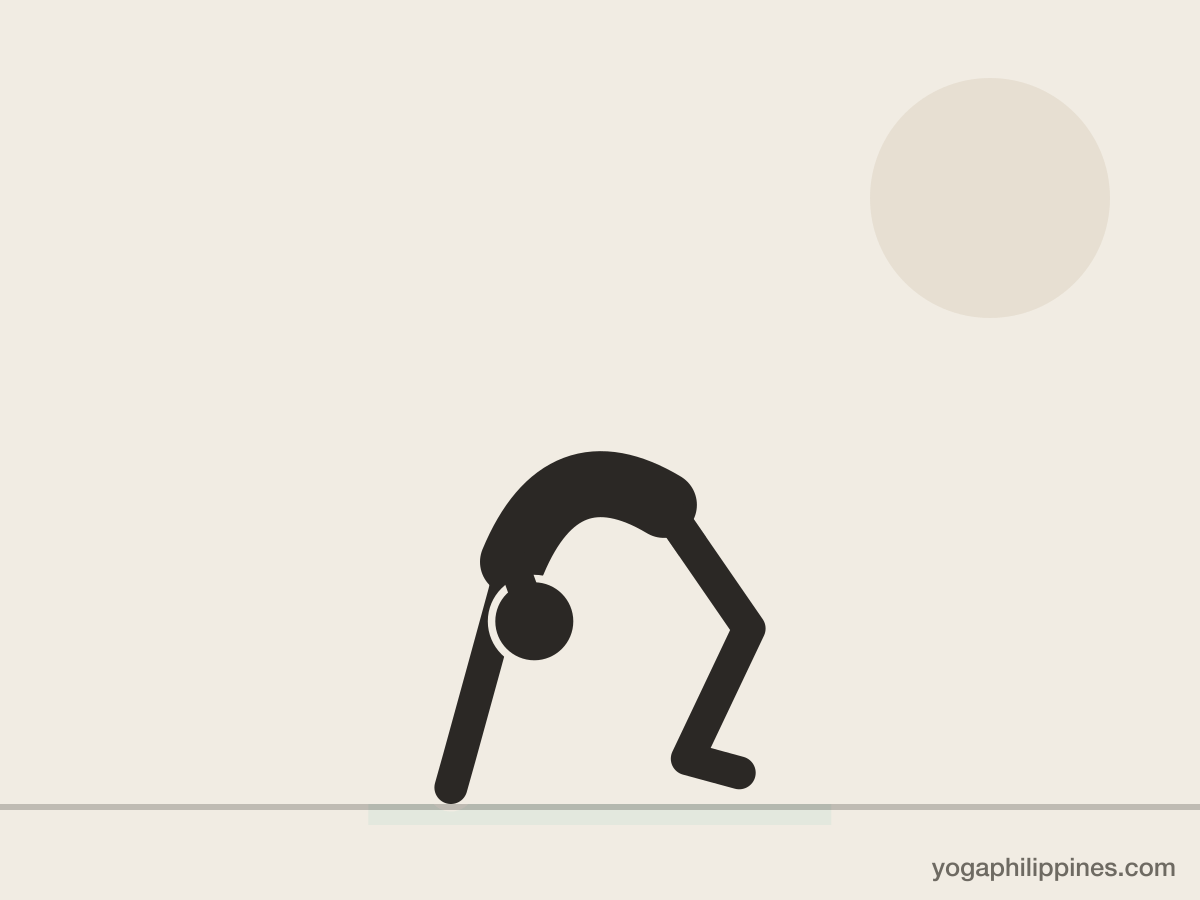
Drawings and video by YogaPhilippines.com, free to reuse under CC BY 4.0 with credit and a link: see the image licence for how to credit.
Wheel Pose appears in the Ashtanga primary series card, which is printable with holds and cues. For other poses that work the chest, open the pose finder set to the chest.
Teacher's note from Joahnna Lee
“Keep the knees and feet parallel. When the knees splay, the lower back takes over.”
“Push the floor away through the hands so the bend reaches the upper back and shoulders.”
“Stop at the crown-of-the-head stage for as long as it takes. It is a real pose, not a waiting room.”
Make it easier
- Stay in Bridge Pose, with a block under the sacrum if you like, until Wheel is safe for you.
- Place the hands on two blocks against a wall to shorten the distance to the floor.
Pregnancy and after birth
Pregnancy. Avoid. Full backbends stretch the abdomen hard and are not suitable in pregnancy. Choose a supported Bridge only if your OB or midwife is happy for you to lie on your back, and check with them before you start.
After birth. Avoid. Leave full backbends until your doctor or midwife has cleared you and the abdominal wall and pelvic floor have recovered. Rebuild with Bridge Pose and come back to Wheel slowly.
Expecting? Joahnna Lee Yoga has notes on adapting each trimester.
Common mistakes
- Pushing up cold, without warming the spine and shoulders first.
- Letting the elbows and knees splay outward.
- Collapsing straight down from the top onto the head and neck.
Wheel Pose is the full backbend most people picture when they think of a bendy yoga student. It can feel wonderful, but it is not a pose to rush, and it is never the first thing in a practice.
In Vinyasa for experienced students it comes only after a long warm-up, and many students are better served by staying in Bridge, with the hips lifted from the floor, for a good while first.
Before you try it
Wheel puts strong pressure on the wrists, shoulders and lower back, and it turns the head below the heart. Leave it out if you have a back, neck, wrist or shoulder injury, high or low blood pressure, or feel dizzy when you bend backwards, and ask your doctor first if any of these apply. Stop at any sharp pain, and come down slowly rather than collapsing.
A gentler backbend driven by the legs in the same way is Bow Pose, practised lying on the belly. The page of backbend yoga poses, from Sphinx to Wheel shows the gentler shapes to practise first.
For a backbend that adds deep hip opening, see King Pigeon Pose, the full version of Pigeon.
Wheel Pose or Bridge Pose?
Wheel starts where Bridge does, on the back with the feet planted. Bridge keeps the shoulders down and is best held easily for several breaths before trying Wheel.
| Compare | Wheel Pose | Bridge Pose |
|---|---|---|
| Position | Lying on your back | Lying on your back |
| What it works | chest, shoulders and spine | glutes, chest and spine |
| Level | Advanced | Beginner plus |
| Key difference | Hands press beside the ears and the arms straighten, lifting the head and shoulders off the mat. | Feet press and the hips lift while the shoulders, arms and head stay on the mat. |
Prep poses for Wheel Pose
Poses that warm up the same body areas at a lower intensity, so Wheel Pose feels steadier when you get there.
- Bridge Pose (Setu Bandha Sarvangasana) a direct preparation, beginner plus
- Camel Pose (Ustrasana) a direct preparation, intermediate
- Upward-Facing Dog (Urdhva Mukha Svanasana) gentler work for the same area, intermediate
- Bow Pose (Dhanurasana) gentler work for the same area, intermediate
Counter-poses for Wheel Pose
Shapes that move the body the other way or let it rest straight after Wheel Pose.
- Balasana (Child's Pose) beginner
- Knees to Chest beginner
Where to go next after Wheel Pose
These poses list Wheel Pose as a preparation, so they are a natural next step once it feels comfortable.
- Scorpion Pose (Vrschikasana) advanced plus
Easier and harder variations of Wheel Pose
Related poses from the same family that start from the same position and do a similar kind of work; Wheel Pose itself is advanced.
- Easier: Fish Pose (Matsyasana) beginner plus
Props that help in Wheel Pose
- Block: goes under the sacrum, the head or a knee for support.
- Wall: gives a steady point to lean on or press into for balance and alignment.
Programs and sessions that use Wheel Pose
- Sequences: Ashtanga first series
Sources: Mayo Clinic, Fitness program: 5 steps to get started; NCCIH (US National Institutes of Health), Yoga: Effectiveness and Safety; NHS, Exercise in pregnancy; CDC, Pregnant & Postpartum Activity: An Overview; Canadian Family Physician (Chan et al., 2014), via PubMed Central, Hot yoga and pregnancy: Fitness and hyperthermia. Last reviewed 2 October 2026.
Wheel Pose questions
Why can't I straighten my arms in Wheel Pose?
Usually the shoulders and upper back are not yet open enough, or the hands are too far from the feet. Stay at the crown-of-the-head stage and keep working on Bridge and on shoulder openers. Never force the arms straight.
What are the benefits of Urdhva Dhanurasana?
Wheel Pose is a full backbend that stretches the whole front of the body, the chest, belly, front of the shoulders and hips, while the legs, arms and back work hard to hold the arch. Many people find it energising. It is an advanced pose, so build toward it with Bridge and a long warm-up.
Is Urdhva Dhanurasana the same as Chakrasana?
Usually, yes. Chakra means wheel, and many teachers and styles use Chakrasana as another name for the same full backbend pressed up from the floor. Some traditions use Chakrasana for other shapes, so check the steps rather than the name. On this page, Wheel Pose means Urdhva Dhanurasana, upward bow posture.
Updated