Pose library · Sirsasana · reviewed by a teacher
Headstand (Sirsasana)
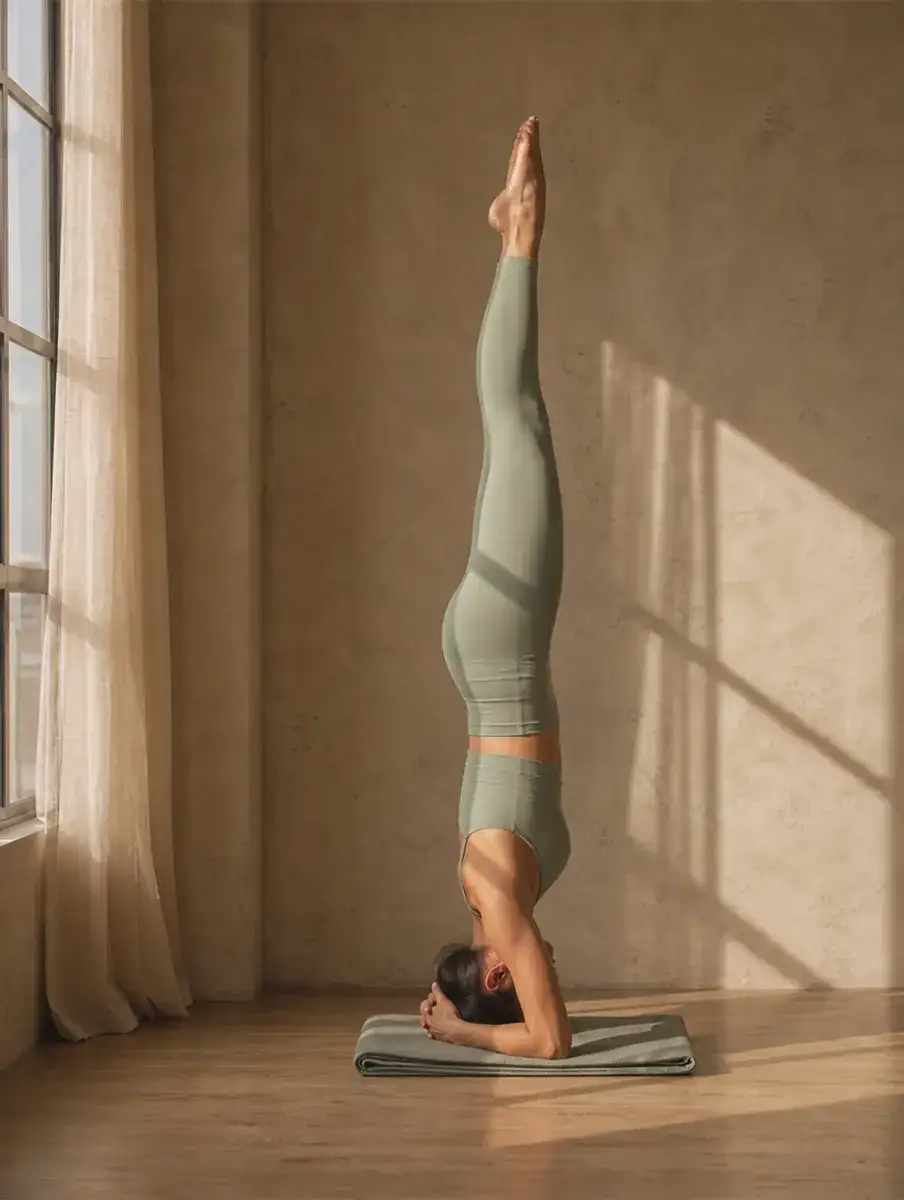
Sirsa means head and asana means posture. The body is upside down with the crown of the head on the floor, but the weight is meant to rest mainly on the forearms, not the head and neck.
Headstand (Sirsasana) is an inversion with the crown on the floor and the weight mainly on the forearms, asking for strong shoulders. Learn it with a teacher at a wall: interlace the fingers, cradle the head, lift the hips and walk the feet in. Never kick or jump up, and stop if the neck takes the weight.
Pronunciation and meaning
Sirsasana: shir-SHAHS-uh-nuh. Also written Shirshasana. The supported version is Salamba Sirsasana.
Sirsa means head and asana means posture. The body is upside down with the crown of the head on the floor, but the weight is meant to rest mainly on the forearms, not the head and neck.
How to do Headstand
- Learn this with a teacher first, beside a wall. Kneel facing the wall, set your forearms on a folded mat, elbows shoulder-width apart, and interlace your fingers with the knuckles about a hand's width from the wall.
- Place the very top of your head on the mat, with the back of the head cradled in your palms. Press the forearms down firmly so the shoulders lift away from the floor and the neck feels light.
- Tuck the toes, lift the hips and walk the feet slowly toward your face until the hips are as close to stacked over the shoulders as you can manage.
- Stay here for several breaths. If the neck takes the weight, or you cannot keep the shoulders lifted, this preparation is your practice for now.
- Only when your teacher agrees the setup is steady: draw one knee into the chest, then the other, and lift both legs slowly without jumping, using the wall as backup.
- Hold for a few breaths, lower with the same control, and rest in Child's Pose for at least a minute before you lift your head.
Headstand step by step

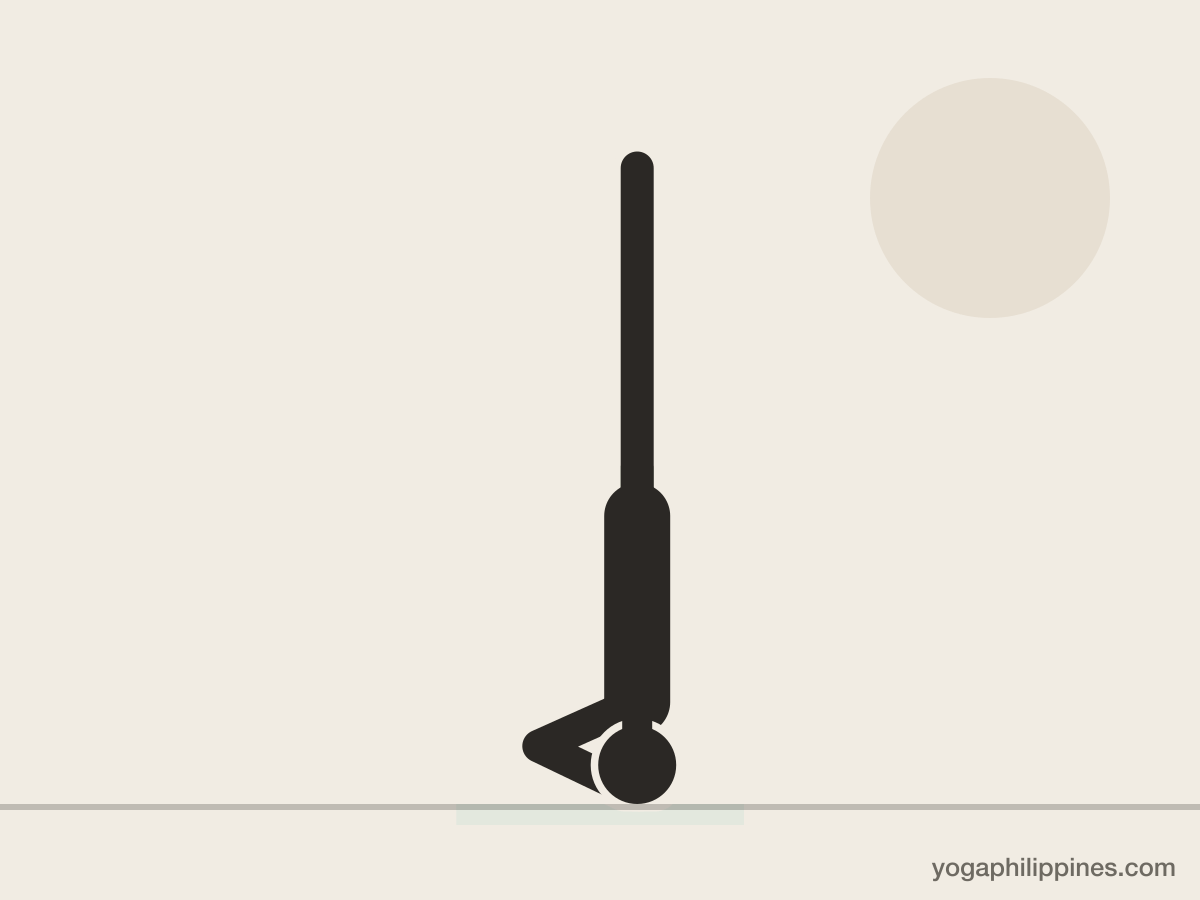
Drawings and video by YogaPhilippines.com, free to reuse under CC BY 4.0 with credit and a link: see the image licence for how to credit.
Headstand appears in the Ashtanga primary series, which is printable with holds and cues. For other poses that work the shoulders, open the pose finder set to the shoulders.
Teacher's note from Joahnna Lee
“Press the forearms into the floor as if you were trying to push it away. When I can slide a finger under the side of your head, the weight is where it should be.”
“I never want you to kick up. If the legs will not float up slowly, stay with the preparation and build strength there.”
“Come out the moment the neck hurts, the face feels full of pressure, or the breath gets strained.”
Make it easier
- Practise Dolphin Pose, on forearms with the head off the floor, to build shoulder strength before any weight goes on the head.
- Use a wall behind you so a wobble never becomes a fall, and try a headstand bench or inversion props only with a teacher's guidance.
Pregnancy and after birth
Pregnancy. Avoid. Do not learn or practise Headstand in pregnancy. Only someone with a long, steady headstand practice who has been cleared by their OB or midwife should consider it, and even then with a wall and a teacher. Choose gentler poses instead.
After birth. Avoid. Leave inversions until your doctor or midwife has cleared you and your core, pelvic floor and upper body strength have come back. Rebuild with Dolphin Pose first and go back to Headstand only with a teacher.
Expecting or postpartum? See joahnnalee.com for the stage-by-stage guides.
Common mistakes
- Kicking or jumping up. It throws the weight onto the neck and is the most common way people fall.
- Letting the shoulders sink toward the floor so the head and neck carry the load.
- Placing the head too far forward on the forehead or too far back, so the neck bends instead of staying straight.
- Trying it alone in the middle of a room before you have a wall practice and a teacher's say-so.
Headstand is an advanced posture, and the safe way to learn it is slowly, in person, with a wall behind you and a teacher watching your neck and shoulders. It is not a reason to try going up on your own.
It is a pose best learnt in Vinyasa yoga with a teacher beside you, where the preparation at the wall comes long before any lift. To find an in-person class, start with the studio directory.
The other classic inversion, Handstand, balanced on the hands alone, asks more of the wrists and less of the neck, and is learned at a wall too.
For building shoulder strength on the forearms first, Dolphin Pose, Downward Dog on the forearms is the usual preparation. Scorpion, the advanced shape that adds a backbend to a forearm balance, has its own page: Scorpion Pose, Vrschikasana.
How do you prepare for Headstand?
Headstand is the end of a long build-up, not the start. A teacher will usually ask you to be steady in each of these first, over many sessions:
- Dolphin Pose, five slow breaths, with the shoulders lifted away from the ears.
- Forearm plank, holding steady for several breaths without the hips sagging.
- Dolphin walk-ins, walking the feet toward the elbows while the head stays off the floor.
- Head down, hips up, the first four steps of the pose, with the forearms doing the work.
- Knee tucks at the wall, one knee and then both, only with a teacher beside you.
There is no set time this takes. For many people it is months of regular practice, and some decide the preparation alone is enough.
How long should you hold Headstand?
When you first lift up, a few breaths is plenty. Come down while you still feel strong, not when you are tired, and rest in Child’s Pose afterward. Longer holds are only for people with a steady, well-taught headstand and a teacher’s agreement. The breath should stay smooth the whole time.
Supported Headstand or Tripod Headstand?
| Version | Base | Who it suits |
|---|---|---|
| Supported Headstand (Salamba Sirsasana I) | Forearms on the floor, hands cradling the head | The version most teachers start with |
| Tripod Headstand (Sirsasana II) | Head and both palms in a triangle | Students with strong shoulders, under supervision |
| Headstand bench or props | Shoulders on a padded frame, head free | Only with guidance; it changes the load but is still an inversion |
On a hot day, inversions can bring on light-headedness sooner. Practise in a cool room and skip them if you feel dizzy or have not eaten or drunk enough.
Prep poses for Headstand
Poses that warm up the same body areas at a lower intensity, so Headstand feels steadier when you get there.
- Dolphin Pose (Ardha Pincha Mayurasana) a direct preparation, intermediate
- Shoulder Stand (Salamba Sarvangasana) gentler work for the same area, advanced
- Downward-Facing Dog (Adho Mukha Svanasana) gentler work for the same area, beginner plus
- Plow Pose (Halasana) gentler work for the same area, advanced
Counter-poses for Headstand
Shapes that move the body the other way or let it rest straight after Headstand.
- Balasana (Child's Pose) beginner
Props that help in Headstand
- Wall: gives a steady point to lean on or press into for balance and alignment.
- Blanket: pads the floor under the forearms, head or shoulders.
Programs and sessions that use Headstand
- Sequences: Ashtanga primary series
Sources: Mayo Clinic, Fitness program: 5 steps to get started; NCCIH (US National Institutes of Health), Yoga: Effectiveness and Safety; PLoS One (Cramer et al., 2013), via PubMed Central, Adverse Events Associated with Yoga: A Systematic Review of Published Case Reports and Case Series; PLoS One (Jasien et al., 2015), via PubMed Central, Intraocular Pressure Rise in Subjects with and without Glaucoma during Four Common Yoga Positions; NHS, Exercise in pregnancy; CDC, Pregnant & Postpartum Activity: An Overview. Last reviewed 2 October 2026.
Headstand questions
Is Headstand safe?
It can be, when you build up with a teacher, keep the weight in your forearms and practise against a wall. It is not a good idea if you have neck problems, high blood pressure, glaucoma or a recent injury, or if you are pregnant. Ask your doctor if you are unsure.
What is Headstand good for?
Headstand builds strength in the shoulders, arms and core, because the forearms have to carry the weight and keep the neck light. It also asks for balance, focus and a steady breath while upside down. Much of that work happens in the preparation, such as Dolphin Pose, so the build-up is worthwhile even before you lift.
Which is easier, Headstand or Handstand?
Many people find Headstand easier to balance, because the forearms and head make a wider base. Handstand asks more of the wrists and shoulders but puts no weight on the neck. Neither is a beginner pose. Both are learned in stages at a wall with a teacher, and the preparation for each is a full practice.
Is it good to do Headstand every day?
Only once your teacher agrees your setup is steady. For most people, the daily practice is the preparation: Dolphin Pose, forearm plank and walking the feet in with the head light. When you do lift, a few breaths is plenty. Skip it on days you feel tired, dizzy, hot or have not eaten or drunk enough.
Updated