Pose library · Vrksasana · reviewed by a teacher
Tree Pose (Vrksasana)
Vrksa means tree and asana means posture, so the name is simply tree posture. You stand on one leg, rooted through the foot, and grow tall through the crown of the head.
Tree Pose (Vrksasana) is a standing balance on one leg that asks for attention more than flexibility. Shift onto one foot, place the other sole on the inner calf or inner thigh, press foot and leg into each other and stay for five to eight breaths. Never press the foot into the side of the knee; go above or below.
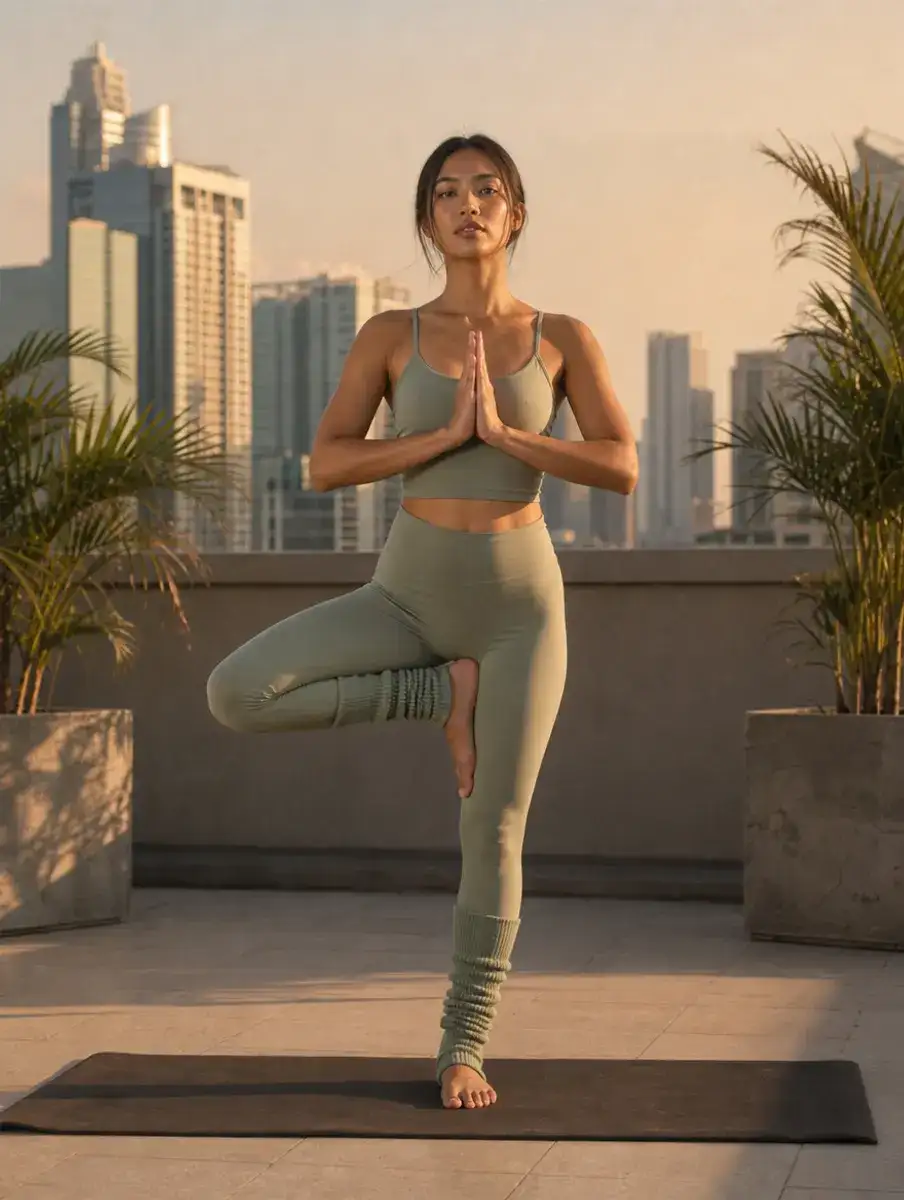
Pronunciation and meaning
Vrksasana: vrik-SHAHS-uh-nuh. The first syllable is short, and the stress falls on the second.
Vrksa means tree and asana means posture, so the name is simply tree posture. You stand on one leg, rooted through the foot, and grow tall through the crown of the head.
How to do Tree Pose
- Stand in Mountain Pose with your feet hip-width apart and your weight spread evenly across both feet.
- Shift your weight into your left foot. Press the big toe, little toe and heel down, and keep a soft bend in the knee rather than locking it.
- Lift your right foot and place the sole on your inner left calf or inner left thigh, above or below the knee but never on the joint itself.
- Press the foot and the leg into each other, and turn the right knee out to the side without letting the right hip lift.
- Bring your hands together at your chest, or reach them overhead if your shoulders are happy there. Rest your gaze on one point that does not move.
- Stay for five to eight slow breaths, then lower the foot with control and repeat on the other side.
Tree Pose step by step

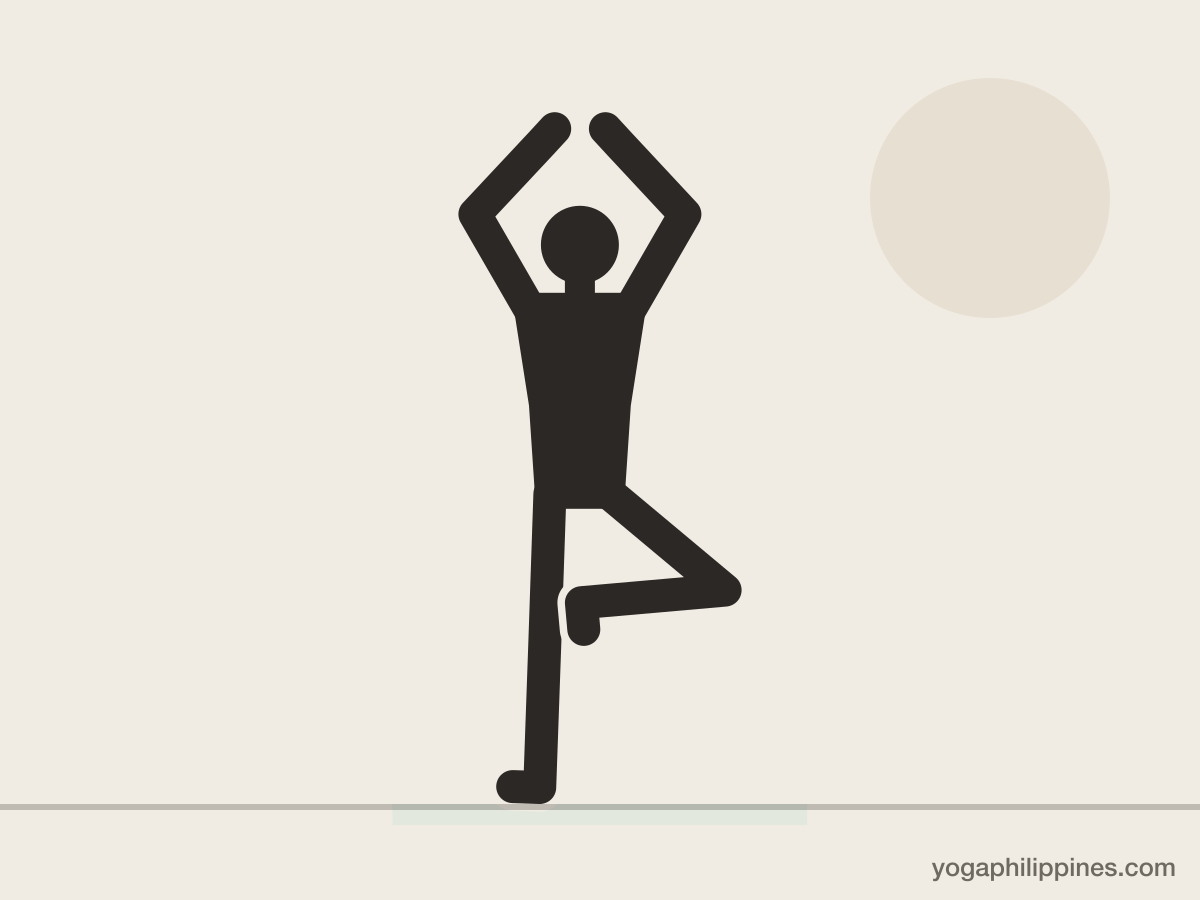
Drawings and video by YogaPhilippines.com, free to reuse under CC BY 4.0 with credit and a link: see the image licence for how to credit.
Tree Pose appears in the standing balance sequence card and the 10-minute morning yoga sequence, both printable with holds and cues. For other poses that work the ankles, open the pose finder set to the ankles.
Teacher's note from Joahnna Lee
“Grow the standing leg down into the floor as if it had roots. The more you press down, the taller you get.”
“Keep both hip bones pointing forward, like headlights. I would rather your knee turned out a little less than have your hips swing open.”
“Wobbling is part of the pose. Let the ankle make its small corrections, and keep breathing through them.”
Make it easier
- Keep the toes of the lifted foot on the floor and rest the heel against the standing ankle, like a kickstand.
- Stand with one hand on a wall or the back of a chair until the balance feels steady.
- Fix your gaze on a still point at eye level, a little way in front, rather than on a moving fan or a window.
Pregnancy and after birth
Pregnancy. Adapt. Your balance shifts as the belly grows, so practise next to a wall with a hand ready to steady you, keep the foot low on the calf, and widen your stance a little if you need to. Check with your OB or midwife before you start.
After birth. Adapt. Once your doctor or midwife has cleared you to exercise, start with the toes on the floor and a hand on the wall. Your balance and your core may take a while to feel familiar again, and that is normal.
Read Joahnna Lee's notes on yoga in pregnancy and after birth.
Common mistakes
- Pressing the foot into the side of the knee. It puts sideways pressure on a joint that is not built for it, so go above or below.
- Letting the standing hip jut out to the side. Draw it back in line so the weight sits over the middle of the foot.
- Holding the breath to stay still, which usually makes the wobble bigger.
Tree Pose is one of the first balancing shapes most people learn, and it turns up often in a Vinyasa class between the standing postures. It asks very little flexibility. What it asks for is attention, and a standing leg whose outer hip keeps the pelvis level, the muscle trained by bodyweight glute exercises such as clamshells.
When you practise Vinyasa at home, a wall nearby makes the first attempts calmer, and the lifted foot can rest at the ankle like a kickstand.
When Tree feels steady, Dancer Pose, a balance with a backbend asks the same standing foot for a little more.
A simpler balance with the knee lifted in front is Flamingo Pose, a modern standing variation. To practise with movement, Tree with moving arms is one of the balance exercises to do beside a wall.
Where can the lifted foot go?
| Placement | How it feels | Who it suits |
|---|---|---|
| Kickstand at the ankle | Toes on the floor, heel on the standing ankle | First tries, and days when balance feels off |
| Inner calf | Sole below the knee | Most beginners after a few weeks |
| Inner thigh | Sole above the knee, pressing into the thigh | Steady balance and open hips |
| Half lotus | Top of the foot in the opposite hip crease | Experienced students with comfortable knees only |
Never rest the foot directly on the side of the knee.
How can you make Tree harder?
When thirty seconds feels steady, change one thing at a time: raise the arms overhead, hold for longer, turn the gaze up towards the hands, or close the eyes near a wall. Each removes a little of the help the body uses to balance.
Which poses prepare you for Tree?
Mountain Pose teaches the even, grounded standing foot. A reclined butterfly or a reclined figure four warms the outer hip that has to turn out. Warrior II builds the standing leg strength. A short warm-up of these makes the first round of Tree noticeably calmer.
How long until your balance improves?
Balance responds to practice fairly quickly. Many people find they wobble less within a couple of weeks of practising Tree for a minute or so on each side most days. Expect good and bad days: tiredness, a late night or a big meal can all make the same pose feel harder. A simple way to track it is the hold timer in the Tree Pose camera form check, which only counts the seconds you stay upright with the hips level.
Practising barefoot in the heat
Sweaty feet slide, and a slippery standing foot makes balance harder than it needs to be. On a humid day, wipe the feet and the mat before Tree, or practise it on a dry floor. A rubber mat usually grips a damp foot better than a smooth PVC one.
Prep poses for Tree Pose
Poses that warm up the same body areas at a lower intensity, so Tree Pose feels steadier when you get there.
- Mountain Pose (Tadasana) a direct preparation, beginner
Counter-poses for Tree Pose
Shapes that move the body the other way or let it rest straight after Tree Pose.
- Windscreen Wipers beginner
Where to go next after Tree Pose
These poses list Tree Pose as a preparation, so they are a natural next step once it feels comfortable.
- Flamingo balance beginner plus
- Dancer Pose (Natarajasana) intermediate
- Eagle Pose (Garudasana) intermediate
- Warrior III (Virabhadrasana III) intermediate
Easier and harder variations of Tree Pose
Related poses from the same family that start from the same position and do a similar kind of work; Tree Pose itself is beginner.
- Harder: Half Moon Pose (Ardha Chandrasana) intermediate
Props that help in Tree Pose
- Wall: gives a steady point to lean on or press into for balance and alignment.
- Chair: brings the floor closer, or gives a seat or a hand rest for a gentler version.
Programs and sessions that use Tree Pose
- The 30-day challenge 4 of its 30 sessions
- The 4-week beginner program 1 of its 12 sessions
- Sequences: 10-minute routine, half-hour flow, longer slow session, Bikram 26 poses, morning routine and one-leg balance sequence
- Practice app sessions: 10-minute reset, 20-minute flow, 30-minute practice, morning wake-up and balance
- Generated example flows: 10-minute beginner flow and 30-minute back-friendly session, no weight on the wrists
This page is one of the sources behind the sequence builder, the one-pose-a-day tool, the pose quiz, the random yoga flow and the camera form check.
Sources: Mayo Clinic, Fitness program: 5 steps to get started; NCCIH (US National Institutes of Health), Yoga: Effectiveness and Safety; NHS, Exercise in pregnancy; CDC, Pregnant & Postpartum Activity: An Overview; Canadian Family Physician (Chan et al., 2014), via PubMed Central, Hot yoga and pregnancy: Fitness and hyperthermia. Last reviewed 2 October 2026.
Tree Pose questions
Why can't I balance in Tree Pose?
Almost everyone wobbles, especially at first and especially on one side. Tiredness, the time of day and where you look all change it. Rest your gaze on one still point, bring the foot lower, and use a wall for a while. Balance comes back with practice, not with effort.
Can I put my foot on my knee in Tree Pose?
No. Place the foot above the knee on the inner thigh, or below it on the calf. The knee is a hinge, and pushing into it from the side is the one thing to avoid in this pose.
How long should I hold Tree Pose?
Five to eight slow breaths on each side is plenty to begin with. It is better to come out calmly and go again than to hold on while the breath gets tight.
Which foot do you lift first in Tree Pose?
It does not matter, as long as you do both sides for the same length of time. Many classes start by standing on the left leg and lifting the right foot, but you can begin with whichever side feels steadier and then switch.
Where do your hands go in Tree Pose?
Start with your hands on your hips while you find your balance. Then bring the palms together at the chest, or reach the arms overhead with the palms facing each other or pressed together. Raising the arms makes the balance harder, so lower them if you start to wobble.
What is Tree Pose good for?
Tree Pose builds balance and attention more than flexibility. It works the standing foot, ankle and leg, and the outer hip muscles that keep the pelvis level, while the lifted leg opens at the hip. Many people find it a calm way to practise steady breathing and focus, and it prepares you for balances like Dancer Pose.
Updated