Pose library · Virabhadrasana I, II and III · reviewed by a teacher
Warrior Poses (Virabhadrasana I, II and III)
Virabhadra is the name of a fierce warrior figure in Indian stories, and asana means posture. The three warrior poses are strong standing shapes that build steadiness through the legs.
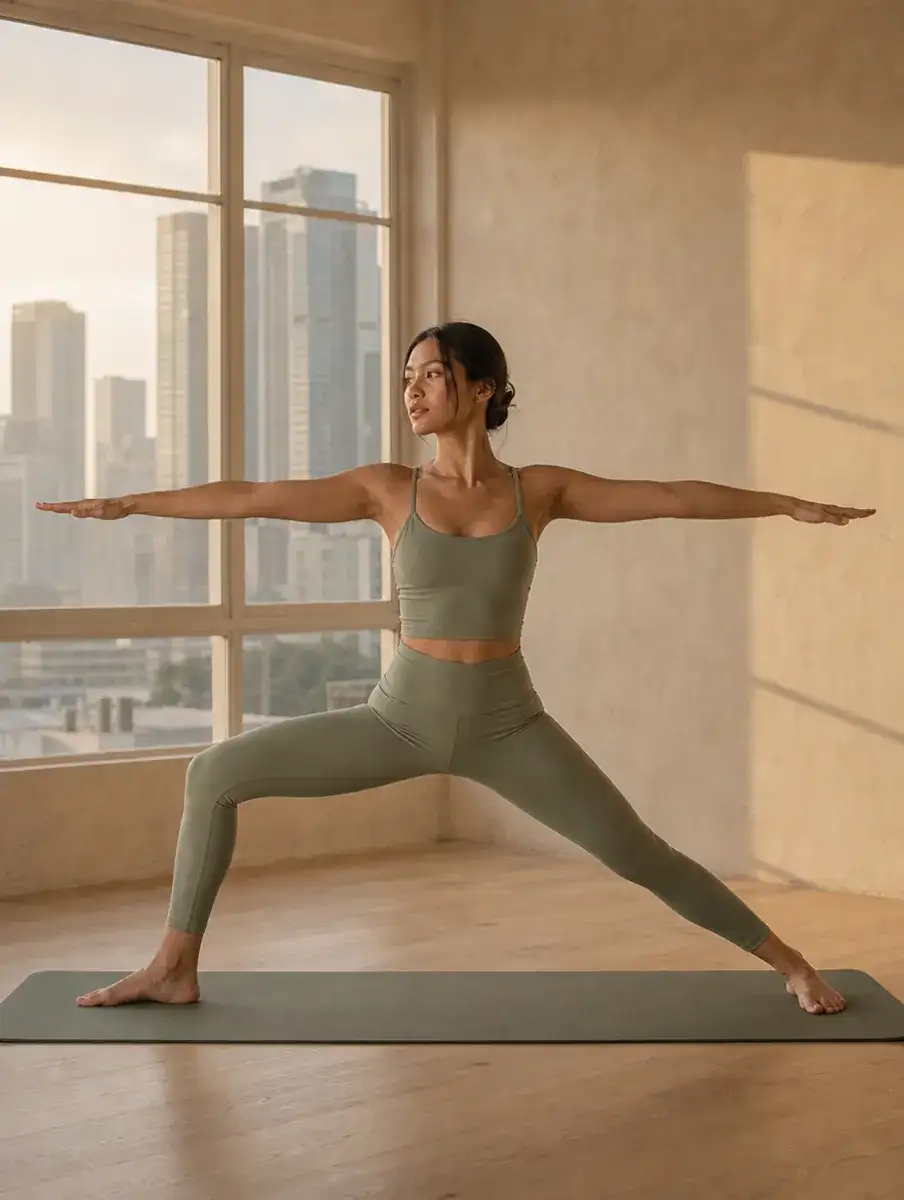
The Warrior Poses (Virabhadrasana I, II and III) are three strong standing shapes that build steadiness through the legs. Warrior I faces forward with arms up, Warrior II opens to the side with arms out, and Warrior III balances on one leg parallel to the floor. Keep the front knee over the ankle, and shorten the stance if needed.
Pronunciation and meaning
Virabhadrasana I, II and III: veer-uh-buh-DRAHS-uh-nuh. The Roman numerals are said as one, two and three.
Virabhadra is the name of a fierce warrior figure in Indian stories, and asana means posture. The three warrior poses are strong standing shapes that build steadiness through the legs.
How to do Warrior Poses
- Warrior I: from Mountain Pose, step your left foot back about a leg's length and turn it out about 45 degrees, heel down. Face your hips toward the front of the mat as much as you can.
- Warrior I: bend the right knee over the right ankle, keep the back leg straight and reach both arms up alongside your ears. Stay for five breaths.
- Warrior II: from a wide stance, turn the right foot out ninety degrees and the left foot in slightly, with the front heel in line with the back arch. Open the hips and chest to the long edge of the mat.
- Warrior II: bend the right knee over the ankle, stretch the arms out at shoulder height, and look past the right fingertips. Stay for five breaths.
- Warrior III: from a short lunge with the right foot forward, shift your weight into the right leg and hinge forward, lifting the left leg until the body and the lifted leg make one line parallel to the floor.
- Warrior III: keep both hip points facing down, reach the arms forward or rest the hands on the hips, and stay for three to five breaths. Repeat all three on the left side.
Warrior Poses step by step


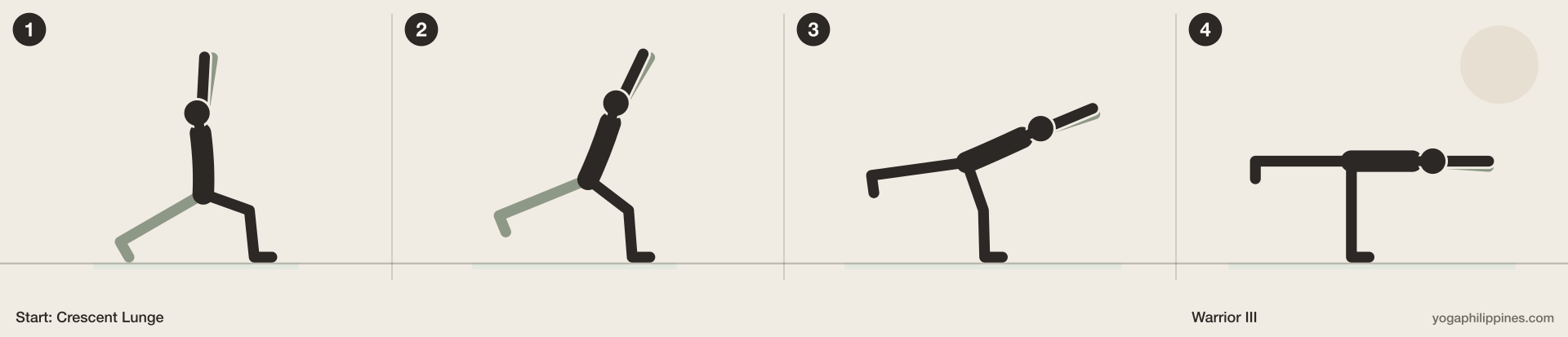
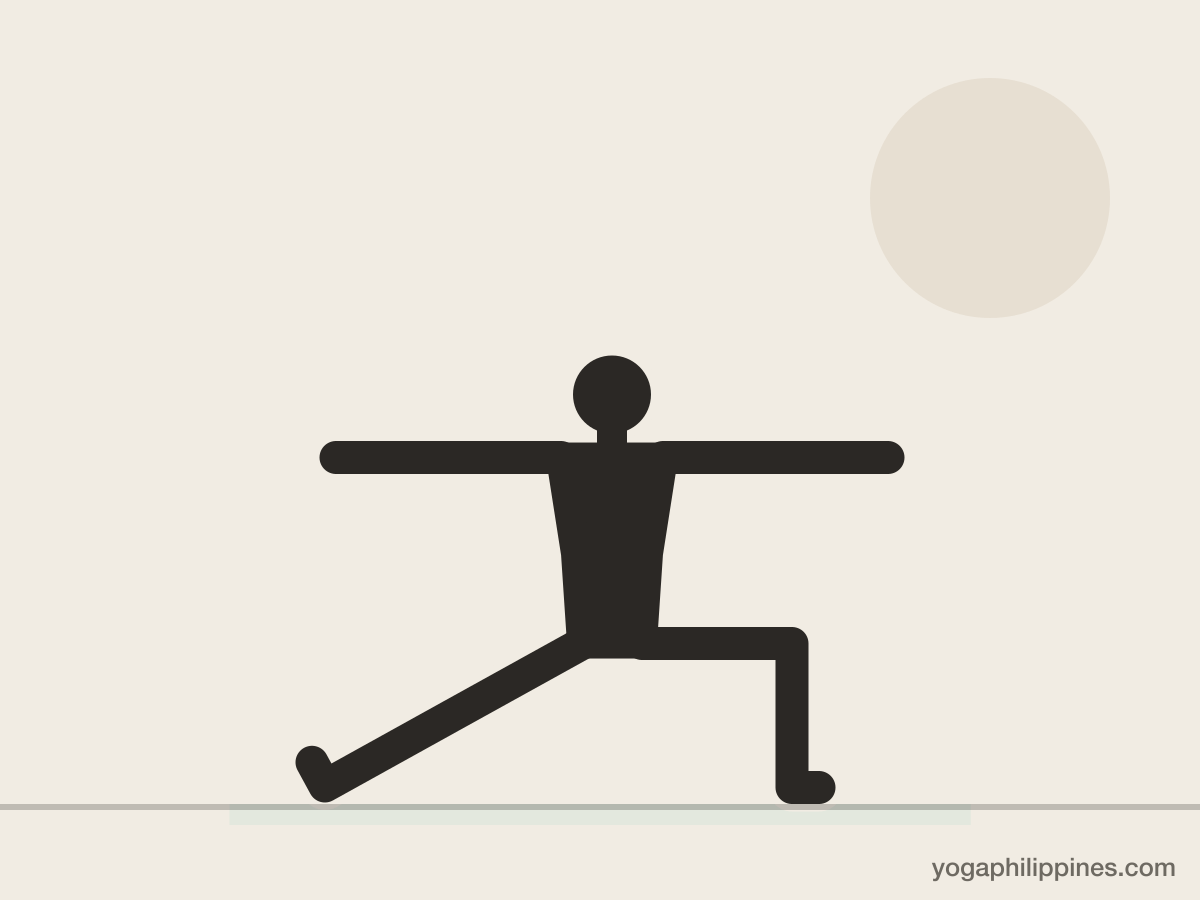
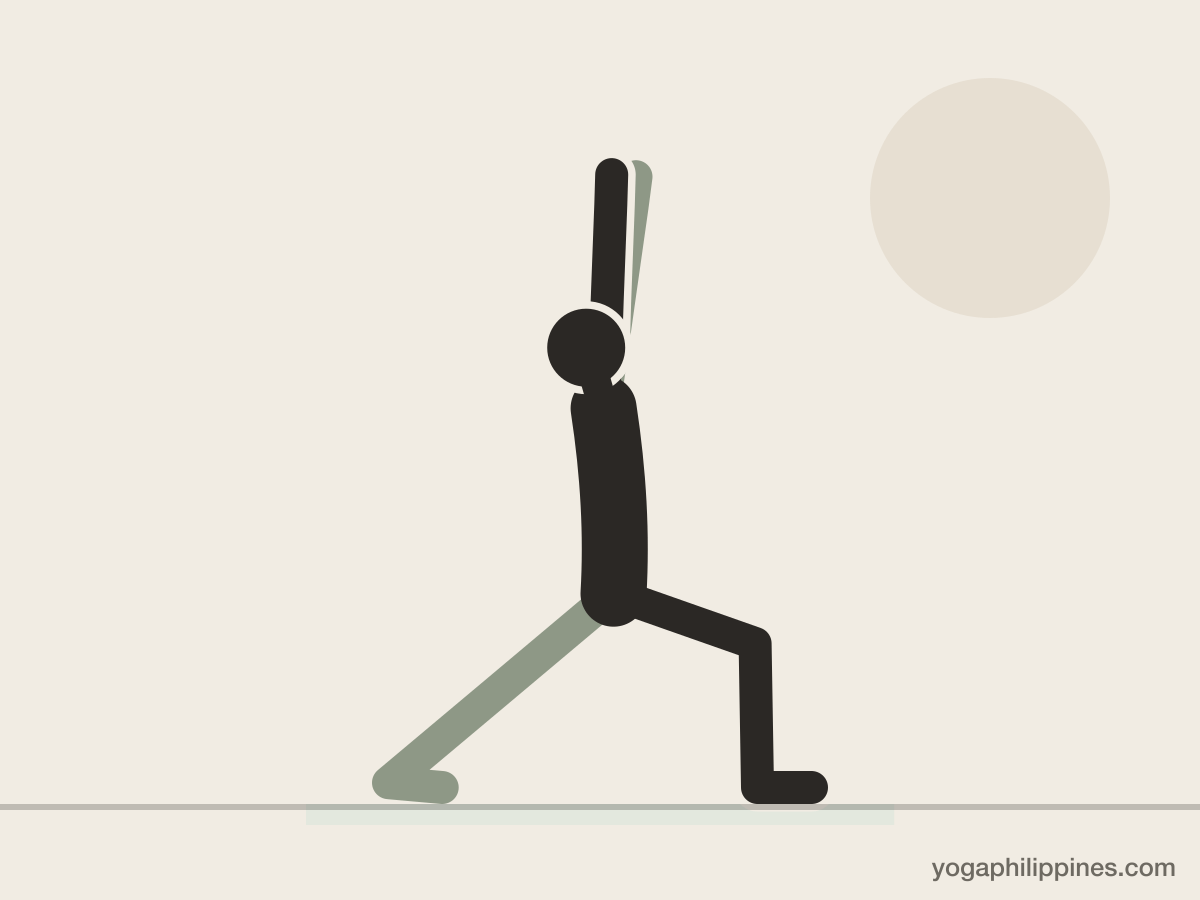
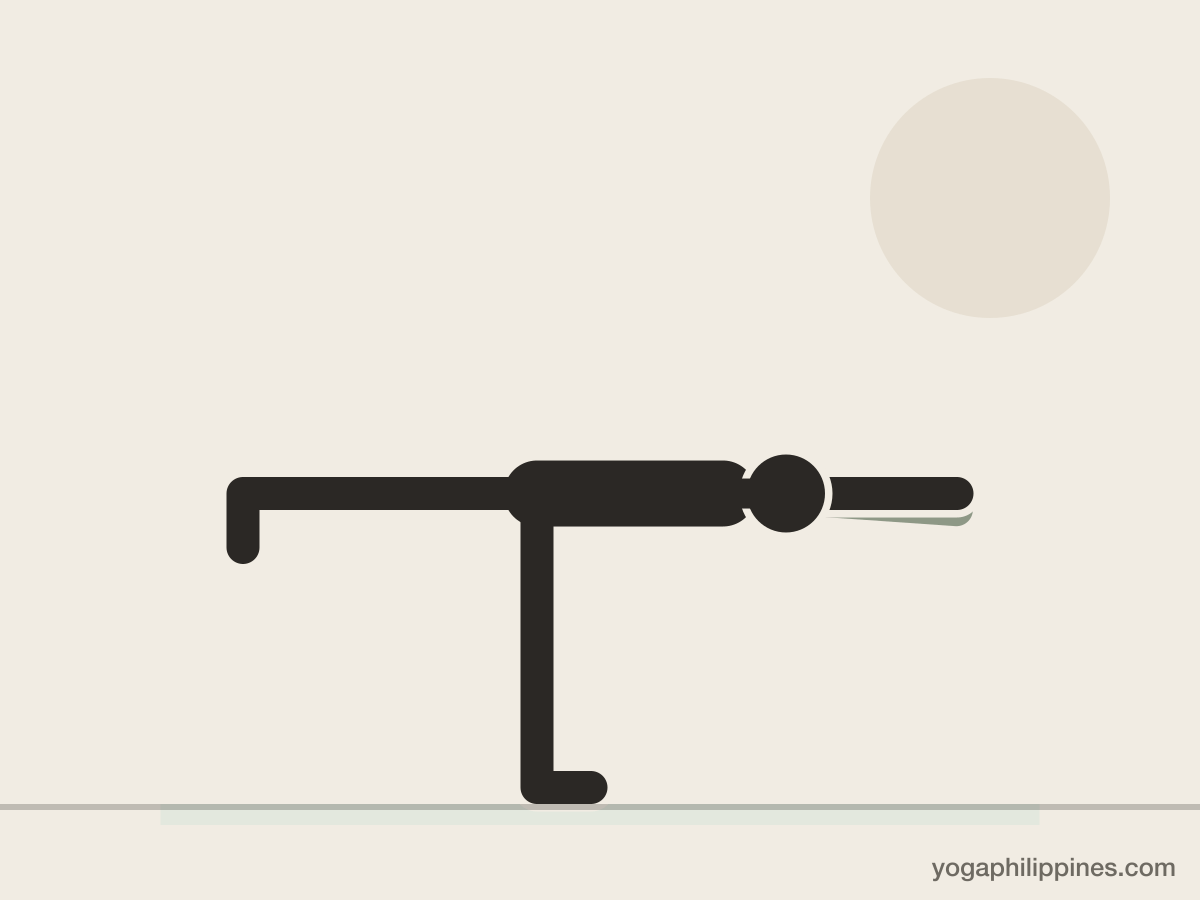
Drawings and video by YogaPhilippines.com, free to reuse under CC BY 4.0 with credit and a link: see the image licence for how to credit.
Warrior Poses appears in the Ashtanga primary series card and the Bikram 26 poses card, both printable with holds and cues. For other poses that work the quads, open the pose finder set to the quads.
Teacher's note from Joahnna Lee
“In all three, the front knee tracks over the second toe. If it drifts inward, I will ask you to widen the stance a little.”
“In Warrior II, sink the hips as though you were sitting on a low stool between the legs, and let the arms stay light.”
“In Warrior III, press the lifted heel back as strongly as you reach the arms forward, so the body stays long instead of tipping.”
Make it easier
- Warrior I: shorten the stance, or lift the back heel so the hips can face forward more comfortably.
- Warrior III: rest the hands on a wall, a chair back or two blocks, or keep the toes of the back foot on the floor.
Pregnancy and after birth
Pregnancy. Adapt. Widen the stance side to side for balance and room for the belly, keep the front knee bend moderate, and use a chair or a wall. Warrior III is safest with the hands on a wall or left out. Check with your OB or midwife first.
After birth. Adapt. After your doctor or midwife clears you, start with shorter stances and hands on the hips. In Warrior III, keep the back toes down or the hands on a chair until your balance and core feel reliable again.
Expecting? Joahnna Lee Yoga has notes on adapting each trimester.
Common mistakes
- Letting the front knee move past the ankle or cave inward, which loads the knee from the side.
- In Warrior I, forcing the hips square while the back foot rolls onto its outer edge. Shorten the stance instead.
The three warriors are the backbone of many standing sequences.
They also take up a good part of yoga for beginners, because they teach the stance that every other standing pose builds on. Tip Warrior III forward until the hands reach the floor and you arrive in Standing Split Pose, a fold on one leg.
Reverse Warrior
Reverse Warrior, or Peaceful Warrior, grows out of Warrior II. Keep the front knee bent over the ankle, slide the back hand down the back leg without leaning on it, and sweep the front arm up and back so the side of the waist lengthens. Keep the weight even between both feet and the front knee pointing over the second toe as you reach back; the bend should come from the side of the waist, not from sinking into the lower back. If the shoulder or the side of the neck feels pinched, bring the top arm lower or rest the top hand on your head. Stay three breaths, then return to Warrior II. From that stance you can tip the other way into Extended Side Angle, with the forearm on the thigh.
The wide stance for Warrior II is often found first in Star Pose, Utthita Tadasana. With the back heel lifted and the hips facing forward, the Warrior I stance becomes Crescent Lunge, the high lunge.
Humble Warrior
Humble Warrior, sometimes called Baddha Virabhadrasana or bound warrior, is a bowing fold from the Warrior I stance. With the right foot forward, interlace your hands behind your back, or hold a strap between them. Inhale to lift the chest, then exhale and fold the body forward inside the right knee, letting the right shoulder move toward the inner thigh and the hands reach back and up. Keep the front knee bent over the ankle and the back leg strong.
Stay for three to five breaths, then inhale to rise back into Warrior I and repeat on the other side. Rise slowly, because the head has been below the heart. If the shoulders are tight, hold a strap rather than interlacing the fingers, or keep the hands on the hips. Leave out the fold in pregnancy, or if you have high blood pressure or feel dizzy, and simply stay upright in Warrior I.
How do the warrior poses compare?
| Pose | Hips face | Arms | Good starting hold |
|---|---|---|---|
| Warrior I | The front of the mat | Overhead | Five breaths |
| Warrior II | The long edge of the mat | Out at shoulder height | Five breaths |
| Reverse Warrior | The long edge | Front arm up and back | Three breaths |
| Humble Warrior | Toward the front, folding inside the knee | Clasped behind the back | Three to five breaths |
| Warrior III | Down toward the floor | Forward, or hands on the hips | Three to five breaths |
The main thing that changes between Warrior I and Warrior II is the stance. For Warrior I, the feet sit closer to hip-width apart side to side, as if on two train tracks, so the hips can turn forward. For Warrior II, the front heel lines up with the back arch, so the hips can open to the side.
If you practise alone, the free camera form check for Warrior I, II and more watches the front knee, the back leg and the arms from your phone and gives one cue at a time, without recording anything.
Where does the name come from?
Virabhadra is a fierce figure from Hindu stories about Shiva. When Shiva’s wife Sati died at a sacrificial fire held by her father Daksha, Shiva in grief and anger created Virabhadra, who stormed the gathering. The poses themselves are much more recent than the story; standing sequences like these became common in twentieth-century posture yoga.
A short warrior flow for a narrow mat
This fits a standard mat in a small room and takes about five minutes. Do the whole flow on the right, then on the left.
- From Mountain Pose, step the left foot back into Warrior I. Five breaths.
- Open the hips and arms into Warrior II. Five breaths.
- Reverse Warrior. Three breaths.
- Back to Warrior II, then turn the hips forward and step the back foot in a little into a short lunge.
- Warrior III, hands on the hips or on blocks. Three breaths.
- Step back to Mountain Pose and rest for a breath before the second side.
On a sweaty mat the back foot is the first to slide in Warrior II. Press the outer edge of the back foot down firmly, wipe the mat between sides, and shorten the stance if it keeps slipping.
Warrior I or Warrior II?
Warrior I and Warrior II share the bent front knee over the ankle. The stance and the direction of the hips are what change.
| Compare | Warrior I | Warrior II |
|---|---|---|
| Position | Standing | Standing |
| What it works | quads, hips and glutes | quads, hips and glutes |
| Level | Beginner plus | Beginner plus |
| Key difference | Hips face the front of the mat, feet on two tracks about hip-width apart, arms overhead. | Hips open to the long edge, front heel in line with the back arch, arms out at shoulder height. |
Warrior II or Reverse Warrior?
Reverse Warrior starts from Warrior II with the legs unchanged. Only the arms and the side bend differ.
| Compare | Warrior II | Reverse Warrior |
|---|---|---|
| Position | Standing | Standing |
| What it works | quads, hips and glutes | hips, quads and core |
| Level | Beginner plus | Beginner plus |
| Key difference | Torso stays upright between the legs, arms reaching forward and back at shoulder height. | The front arm sweeps up and back while the front knee stays bent, lengthening the side waist. |
Prep poses for Warrior Poses
Poses that warm up the same body areas at a lower intensity, so Warrior Poses feels steadier when you get there.
- Mountain Pose (Tadasana) a direct preparation, beginner
Counter-poses for Warrior Poses
Shapes that move the body the other way or let it rest straight after Warrior Poses.
- Standing Forward Bend (Uttanasana) beginner
Where to go next after Warrior Poses
These poses list Warrior Poses as a preparation, so they are a natural next step once it feels comfortable.
- Extended Side Angle (Utthita Parsvakonasana) beginner plus
- Standing Split Pose (Urdhva Prasarita Eka Padasana) intermediate
Props that help in Warrior Poses
- Block: brings the floor closer under the lower hand, so the legs and spine can stay long.
- Wall: gives a steady point to lean on or press into for balance and alignment.
- Chair: brings the floor closer, or gives a seat or a hand rest for a gentler version.
Programs and sessions that use Warrior Poses
- The 30-day yoga challenge 4 of its 30 sessions
- The 4-week beginner program 2 of its 12 sessions
- Sequences: 30-minute home flow, 45-minute slow yoga, Ashtanga first series, beginner yoga sequence, Bikram series and flow that spares the wrists
- Practice app sessions: 20-minute flow, 30-minute practice, morning wake-up and balance
- Generated example flows: 20-minute hip flow and 30-minute back-friendly session, no weight on the wrists
This page is one of the sources behind the tool for building your own sequence, the quiz on pose names, the random flow generator and the form check.
Sources: Mayo Clinic, Fitness program: 5 steps to get started; NCCIH (US National Institutes of Health), Yoga: Effectiveness and Safety; NHS, Exercise in pregnancy; CDC, Pregnant & Postpartum Activity: An Overview; Canadian Family Physician (Chan et al., 2014), via PubMed Central, Hot yoga and pregnancy: Fitness and hyperthermia. Last reviewed 2 October 2026.
Warrior Poses questions
What is the difference between Warrior 1 and Warrior 2?
In Warrior 1 the hips and chest face the front of the mat and the arms reach up. In Warrior 2 the hips and chest open to the side, the front heel lines up with the back arch, and the arms stretch out at shoulder height.
Why do my knees hurt in Warrior poses?
Most often the front knee is moving past the ankle or rolling in. Check that it sits over the ankle and points to the second toe, and shorten the stance. If pain persists, stop and see a doctor or physiotherapist.
What are the benefits of the Warrior poses?
All the Warrior poses build strength and steadiness through the legs and teach the stance that other standing poses build on. Warrior 1 adds a long reach overhead, Warrior 2 opens the hips and chest to the side, and Warrior 3 adds a balance on one leg. Reverse and Humble Warrior, sometimes called a fourth, lengthen or fold.
Updated