Pose library · Utthita Parsvakonasana · reviewed by a teacher
Extended Side Angle (Utthita Parsvakonasana)
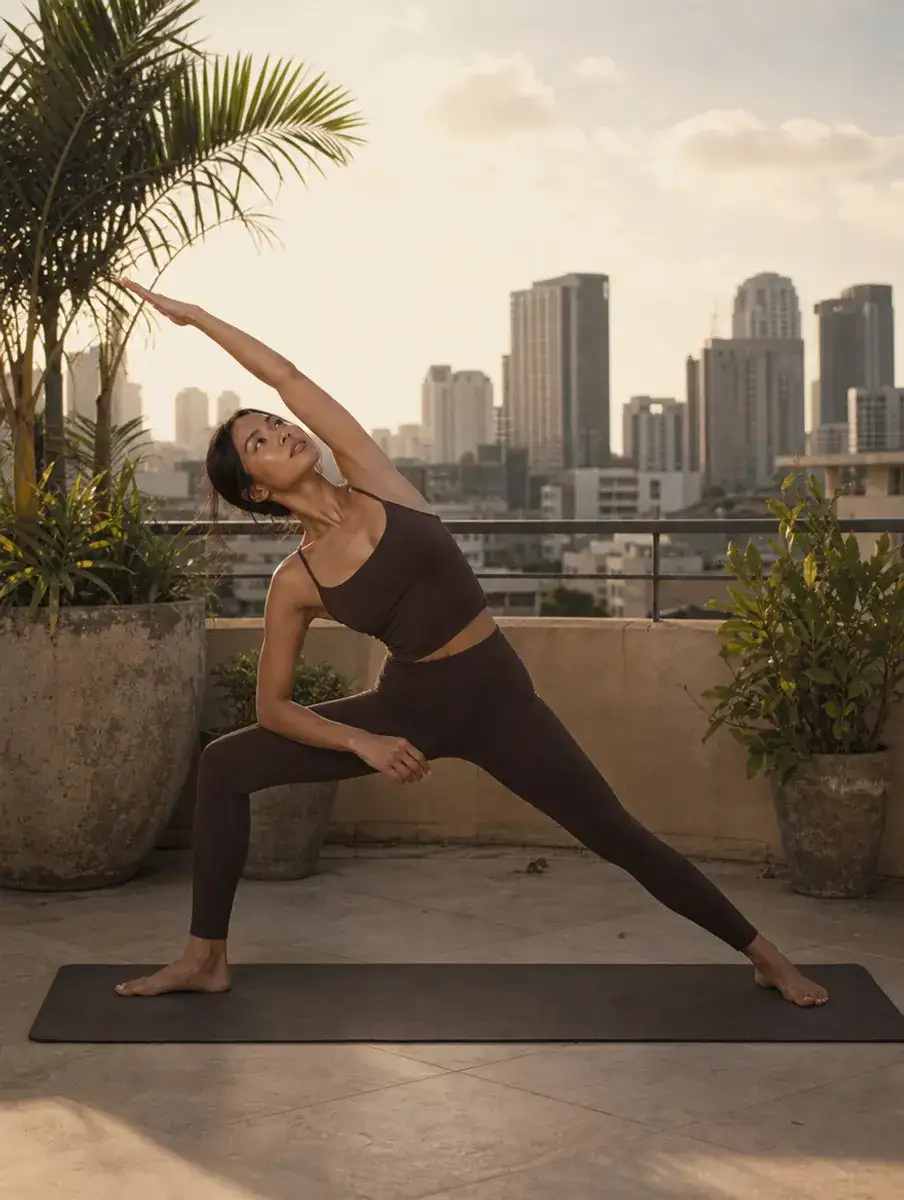
Extended Side Angle is a standing pose that grows out of Warrior II: the front knee stays bent, the front forearm rests on the thigh or a hand on a block, and the top arm reaches over the ear. Utthita means extended, parsva side and kona angle. It makes one long line from the back heel to the fingertips.
Extended Side Angle (Utthita Parsvakonasana) is a standing pose that makes one long line from the back heel to the fingertips. From Warrior II, rest the front forearm on the thigh, reach the top arm over the ear and stay five breaths. Keep the front knee from caving toward the big toe, and shorten the stance if needed.
Pronunciation and meaning
Utthita Parsvakonasana: oo-TEE-tuh parsh-vah-koh-NAHS-uh-nuh. Parsva has a soft sh sound, as in parsh.
Extended Side Angle is a standing pose that grows out of Warrior II: the front knee stays bent, the front forearm rests on the thigh or a hand on a block, and the top arm reaches over the ear. Utthita means extended, parsva side and kona angle. It makes one long line from the back heel to the fingertips.
How to do Extended Side Angle
- Start in Warrior II with the right knee bent over the right ankle and the arms out at shoulder height.
- Tip the torso over the right thigh and rest the right forearm on the thigh, or place the right hand on a block outside the right foot.
- Press the outer edge of the back foot down, so the left leg stays strong and straight.
- Reach the left arm up, then over the left ear, palm facing down, so one line runs from the back heel to the fingertips.
- Turn the chest toward the long edge of the mat and look forward or up. Stay for five breaths.
- Press into the feet to come up through Warrior II, and repeat on the other side.
Extended Side Angle step by step
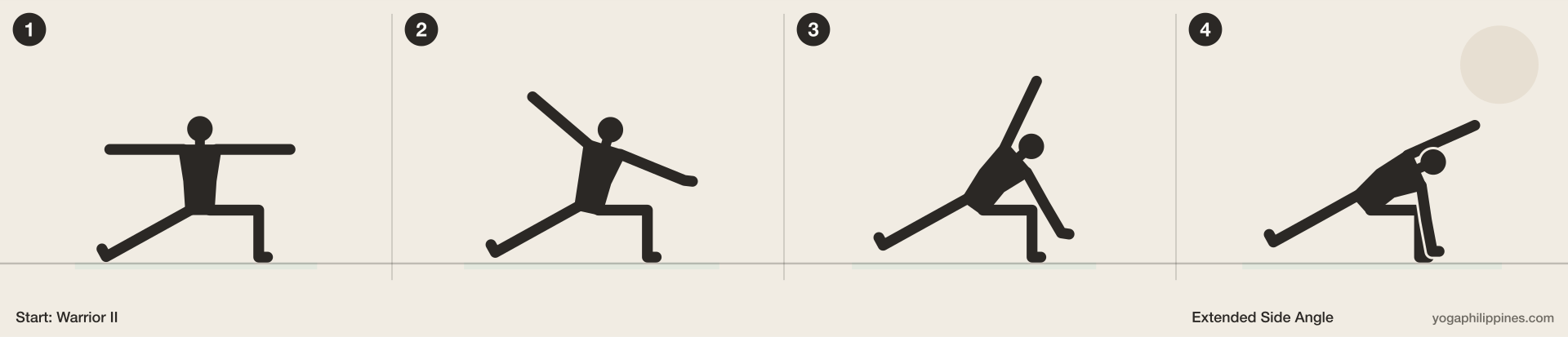
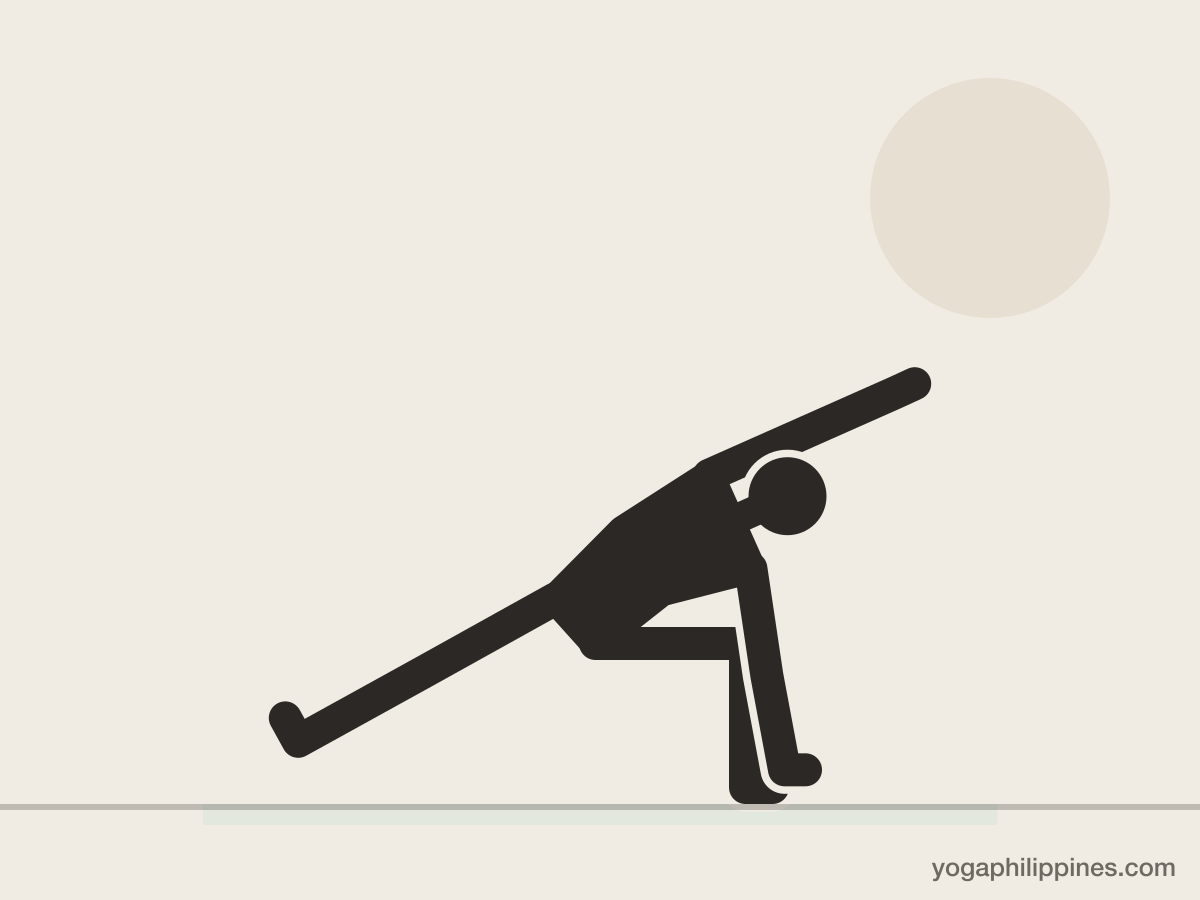
Drawings and video by YogaPhilippines.com, free to reuse under CC BY 4.0 with credit and a link: see the image licence for how to credit.
Extended Side Angle appears in the Ashtanga primary series card, which is printable with holds and cues. For other poses that work the hips, open the pose finder set to the hips.
Teacher's note from Joahnna Lee
“Keep the front knee over the ankle and pointing toward the little-toe side of the foot. It should not drift in.”
“A forearm resting lightly on the thigh beats a hand on the floor with a collapsed chest.”
“Press the back heel down as firmly as you reach the top hand. The line is only as long as both ends.”
Make it easier
- Rest the forearm on the thigh instead of reaching for the floor.
- Keep the top hand on the hip if the shoulder or neck tires.
- Shorten the stance so the front knee is happy over the ankle.
Pregnancy and after birth
Pregnancy. Adapt. Take a wider, shorter stance, rest the forearm on the thigh and keep the chest open so the belly is never squeezed. Check with your OB or midwife before you start.
After birth. Adapt. After your doctor or midwife has cleared you, start with the forearm on the thigh and short holds while the core and the legs find their strength again.
Before adapting a pose, read is yoga safe during pregnancy on joahnnalee.com.
Common mistakes
- Letting the front knee cave in toward the big toe.
- Dropping the hand to the floor and letting the chest turn toward the mat.
- Sinking the weight into the front leg until the back foot lifts at its outer edge.
Extended Side Angle is Warrior II with a side bend added. It is one of the strongest standing poses for the legs, and one of the easiest to make lighter, which makes it useful at almost any level.
It belongs in yoga for beginners, right after Warrior II and its stance, because the stance is the same and only the upper body changes. A yoga block under the lower hand keeps the chest open.
It sits among the grounded shapes on the standing poses page, between Triangle and Low Lunge.
The wide stance for this pose often starts from Star Pose, arms out at shoulder height. On the knees, a similar long side body is practised in Gate Pose, the kneeling side bend.
Prep poses for Extended Side Angle
Poses that warm up the same body areas at a lower intensity, so Extended Side Angle feels steadier when you get there.
- Warrior II (Virabhadrasana II) a direct preparation, beginner plus
- Star Pose (Utthita Tadasana) gentler work for the same area, beginner
- Tree Pose (Vrksasana) gentler work for the same area, beginner
- Garland Pose (Malasana) gentler work for the same area, beginner plus
Props that help in Extended Side Angle
- Block: brings the floor closer under the lower hand, so the legs and spine can stay long.
Programs and sessions that use Extended Side Angle
- The 30-day yoga challenge 2 of its 30 sessions
- The 14-day flexibility plan 1 of its 14 sessions
- Sequences: 30-minute home flow, Ashtanga first series and flow that spares the wrists
- Practice app sessions: 20-minute flow and 30-minute practice
Sources: Mayo Clinic, Fitness program: 5 steps to get started; NCCIH (US National Institutes of Health), Yoga: Effectiveness and Safety; NHS, Exercise in pregnancy; CDC, Pregnant & Postpartum Activity: An Overview; Canadian Family Physician (Chan et al., 2014), via PubMed Central, Hot yoga and pregnancy: Fitness and hyperthermia. Last reviewed 2 October 2026.
Extended Side Angle questions
What is the difference between Extended Side Angle and Triangle?
Both open the body to the side over a wide stance. In Triangle the front leg stays straight. In Extended Side Angle the front knee bends deeply, like Warrior II, and the forearm or hand comes lower.
Should my hand be on the floor in Extended Side Angle?
Only if it gets there without the chest collapsing. For most people the forearm on the thigh, or a hand on a block, gives a longer line and a happier lower back.
Is Extended Side Angle the same as Side Angle Pose?
Usually, yes. Many classes say Side Angle as a short name for the same pose, and utthita, extended, describes the long line from the back heel to the top fingertips. Some teachers call the forearm-on-thigh version Side Angle and the hand-by-the-foot version Extended Side Angle. The legs and the stance are the same either way.
What are the benefits of Extended Side Angle?
Extended Side Angle is one of the strongest standing poses for the legs: the front thigh holds a deep bend while the back leg stays straight and active. It also lengthens the whole side of the body from the back heel to the fingertips and opens the chest. It is easy to make lighter, so it suits almost any level.
Is Extended Side Angle good for beginners?
Yes. It uses the same stance as Warrior II and only changes the upper body, so it often comes early in a beginner class. Rest the forearm on the front thigh rather than reaching for the floor, keep the top hand on the hip if the shoulder tires, and shorten the stance so the front knee stays over the ankle.
How is Revolved Side Angle different from Extended Side Angle?
In Extended Side Angle the chest opens to the side, with the right forearm on the right thigh when the right knee bends. In Revolved Side Angle you twist the other way: the left elbow or hand crosses outside the bent right knee and the chest turns toward it. The twist makes balance and breathing harder, so learn Extended first.
Pairs well with
Updated