Pose library · Ardha Chandrasana · reviewed by a teacher
Half Moon Pose (Ardha Chandrasana)
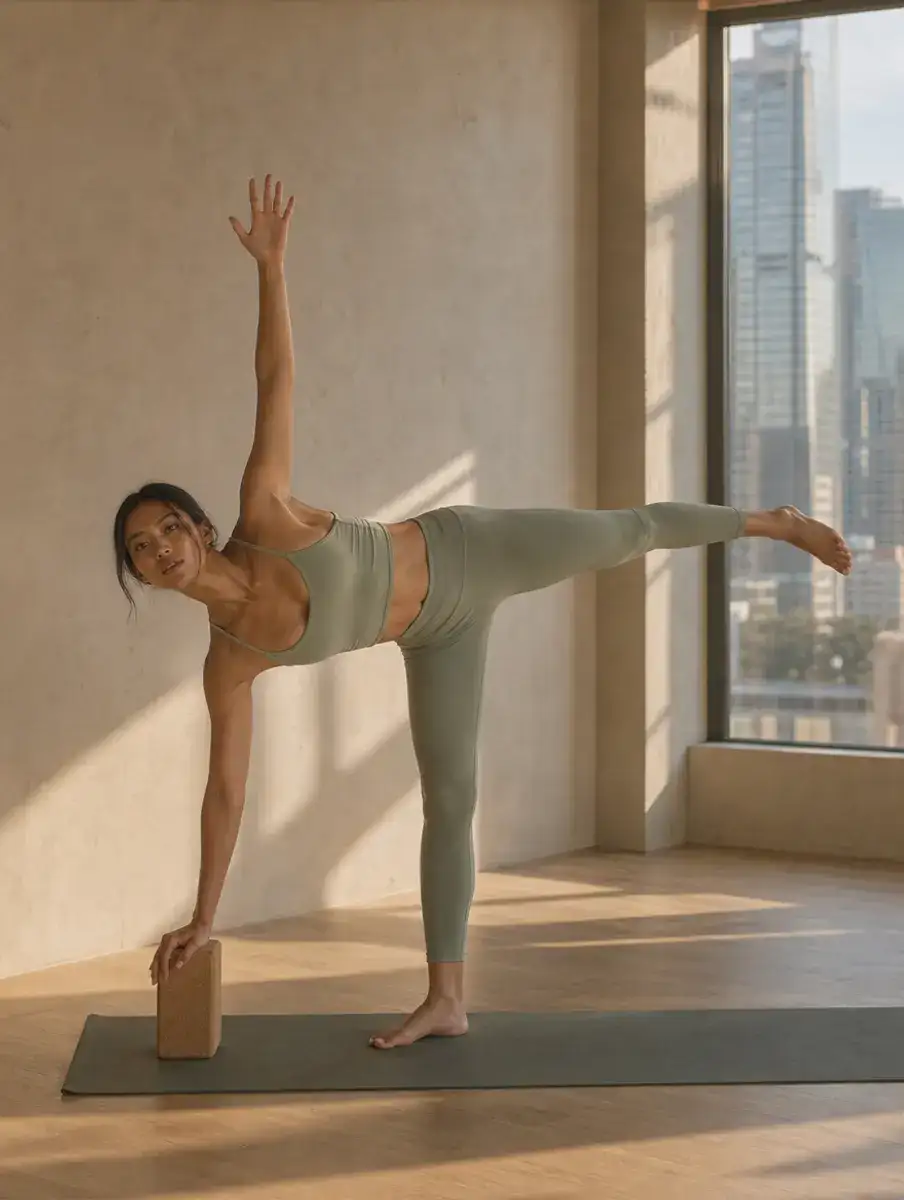
Half Moon Pose is a standing balance in which you stand on one leg with one hand on the floor or a block, the other leg lifted level with the hip and the chest turned to the side. Ardha means half and chandra means moon. It asks for steady legs, open hips and a calm gaze.
Half Moon Pose (Ardha Chandrasana) is a standing balance on one leg and one hand that asks for steady legs and open hips. From Triangle, bend the front knee, place a block ahead, lift the back leg level with the hip and stack the hips for three to five breaths. Practise with your back against a wall at first.
Pronunciation and meaning
Ardha Chandrasana: AR-duh chun-DRAHS-uh-nuh. The ch is as in chair, and chandra rhymes loosely with Sandra.
Half Moon Pose is a standing balance in which you stand on one leg with one hand on the floor or a block, the other leg lifted level with the hip and the chest turned to the side. Ardha means half and chandra means moon. It asks for steady legs, open hips and a calm gaze.
How to do Half Moon Pose
- Start in Triangle Pose with the right foot forward and a block ready beside the right foot.
- Bend the right knee and place the block, or your right fingertips, about a foot ahead of the right foot and a little to the outside.
- Shift your weight into the right foot and hand, and lift the left leg until it is level with the hip, foot flexed.
- Straighten the right leg without locking it, and stack the left hip over the right.
- Turn the chest toward the long edge of the mat and reach the left arm up, or keep the left hand on the hip.
- Stay for three to five breaths, then bend the standing knee, lower the left foot back to Triangle and repeat on the other side.
Half Moon Pose step by step
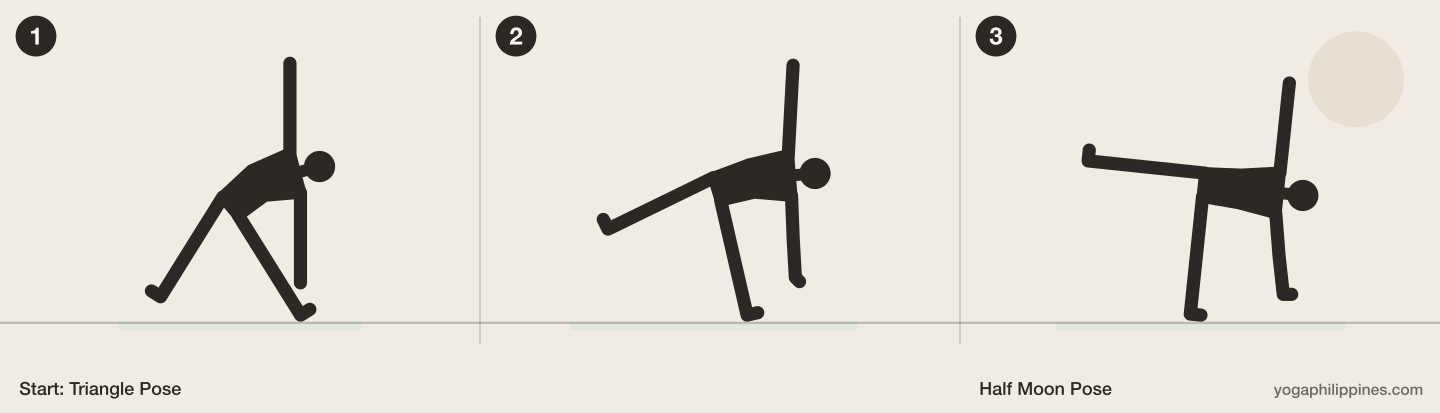
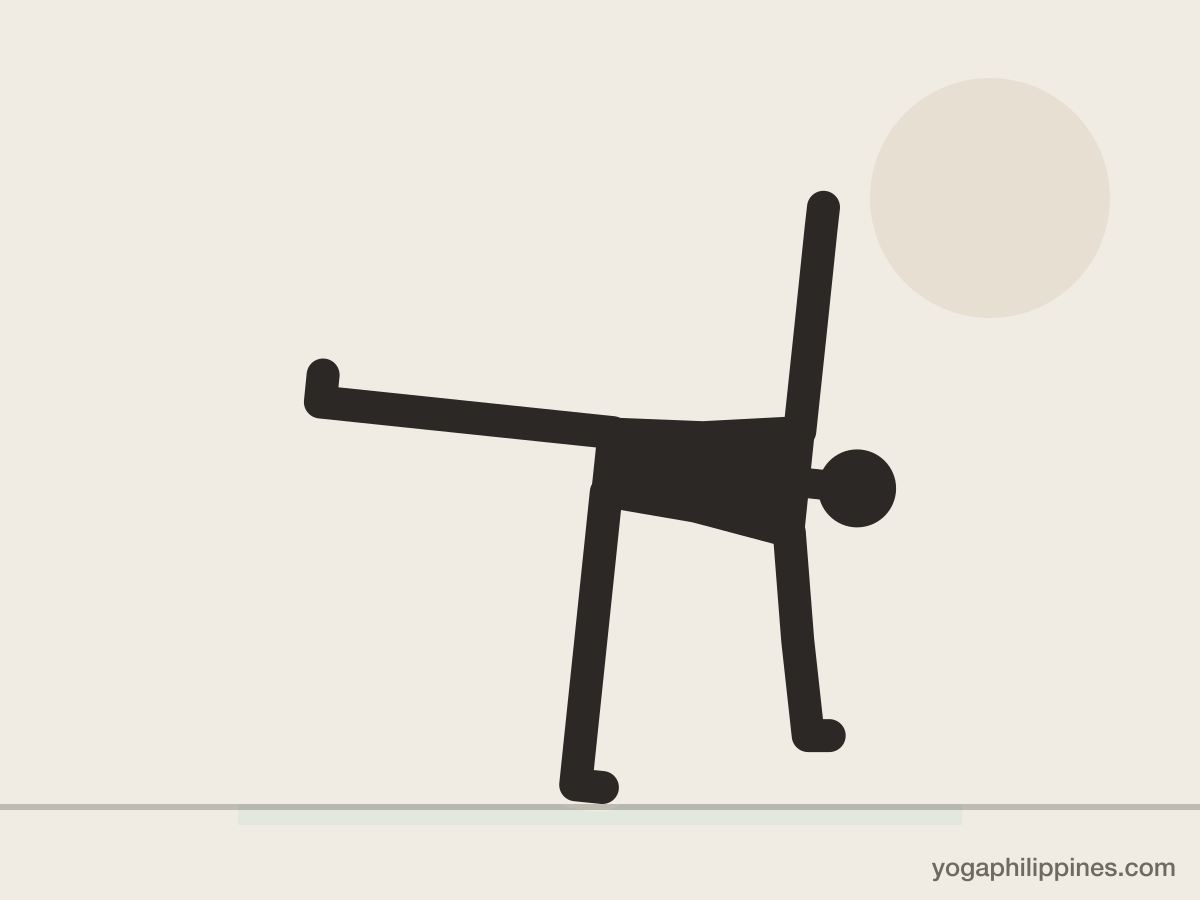
Drawings and video by YogaPhilippines.com, free to reuse under CC BY 4.0 with credit and a link: see the image licence for how to credit.
Half Moon Pose appears in the 6-pose standing balance sequence, which is printable with holds and cues. For other poses that work the hamstrings, open the pose finder set to the hamstrings.
Teacher's note from Joahnna Lee
“Press out through the heel of the lifted leg as if pushing it into a wall behind you. It steadies the whole pose.”
“Let the block take real weight. A hand that hovers makes the standing leg do everything.”
“Look at the floor first. Turn the gaze sideways or up only when the balance is easy.”
Make it easier
- Practise with your back against a wall, so the lifted hip and shoulder can rest on it.
- Use a block at its tallest height, or a chair seat, under the lower hand.
- Keep the top hand on the hip and the gaze down.
Pregnancy and after birth
Pregnancy. Adapt. Practise only with your back against a wall and a tall block or chair under the hand, and leave it out later in pregnancy if balance feels uncertain. Check with your OB or midwife before you start.
After birth. Adapt. After your doctor or midwife clears you, begin at the wall with a tall block. Balance and core strength take time to feel familiar, and the wall makes that time easier.
Prenatal and postpartum guides live on joahnnalee.com.
Common mistakes
- Letting the lifted leg drift forward of the body, so the hips fold toward the floor.
- Locking the standing knee.
- Reaching for the floor with the fingertips and dropping the chest instead of using a block.
Half Moon Pose is where a standing pose turns into a balance. It grows straight out of Triangle, Trikonasana, and most of the work is in letting the hand and the standing leg share the weight.
In Vinyasa yoga it helps to learn it with your back to a wall first, so the shape is clear before the balance is asked of you. A yoga block under the lower hand brings the floor closer. A dry, clean mat also helps the standing foot stay put, and how to clean a yoga mat covers the care for each material.
It sits with Tree, Eagle and Dancer among the standing balances on one page. Turning the hips to face the floor and folding over the standing leg gives you Standing Split Pose.
A good fold to practise before this balance is Pyramid Pose, the intense side stretch. The wide legged forward bend, Prasarita Padottanasana is a calm fold to rest in afterwards.
To build the steadiness Half Moon needs, add a few balance exercises on the days you do not practise.
Half Moon Pose or Triangle Pose?
Half Moon usually starts from Triangle: bend the front knee, place the hand ahead, and lift the back leg. Triangle keeps both feet on the floor.
| Compare | Half Moon Pose | Triangle Pose |
|---|---|---|
| Position | Standing | Standing |
| What it works | hamstrings, hips and glutes | hamstrings, hips and spine |
| Level | Intermediate | Beginner plus |
| Key difference | The back leg lifts level with the hip and the hips stack, so you balance on one foot and one hand. | Both feet stay down and the legs stay straight and firm while the torso reaches over the front leg. |
Prep poses for Half Moon Pose
Poses that warm up the same body areas at a lower intensity, so Half Moon Pose feels steadier when you get there.
- Triangle Pose (Trikonasana) a direct preparation, beginner plus
- Wide Legged Forward Bend (Prasarita Padottanasana) gentler work for the same area, beginner plus
- Standing Forward Bend (Uttanasana) gentler work for the same area, beginner
Counter-poses for Half Moon Pose
Shapes that move the body the other way or let it rest straight after Half Moon Pose.
- Mountain Pose (Tadasana) beginner
Easier and harder variations of Half Moon Pose
Related poses from the same family that start from the same position and do a similar kind of work; Half Moon Pose itself is intermediate.
- Easier: Flamingo balance beginner plus
- Easier: Tree Pose (Vrksasana) beginner
Props that help in Half Moon Pose
- Block: brings the floor closer under the lower hand, so the legs and spine can stay long.
- Wall: gives a steady point to lean on or press into for balance and alignment.
- Chair: brings the floor closer, or gives a seat or a hand rest for a gentler version.
Programs and sessions that use Half Moon Pose
- The month-long yoga challenge 1 of its 30 sessions
- Sequences: standing balance sequence
- Practice app sessions: balance
Sources: Mayo Clinic, Fitness program: 5 steps to get started; NCCIH (US National Institutes of Health), Yoga: Effectiveness and Safety; NHS, Exercise in pregnancy; CDC, Pregnant & Postpartum Activity: An Overview; Canadian Family Physician (Chan et al., 2014), via PubMed Central, Hot yoga and pregnancy: Fitness and hyperthermia. Last reviewed 2 October 2026.
Half Moon Pose questions
Why do I keep falling out of Half Moon Pose?
Usually the hand is too close to the foot, or it hovers instead of pressing down. Place it a foot ahead of the standing foot on a block and let it carry some weight. A wall behind you helps a great deal.
Is Half Moon Pose a beginner pose?
It suits beginners with a wall and a block. Learn Triangle first, since Half Moon grows out of it, then add the lift once the stance feels steady.
What is Half Moon Pose good for?
Half Moon Pose builds strength and steadiness in the standing leg while the lifted leg works to stay level with the hip. It opens the hips and the side of the body, and it trains a calm gaze, because the balance rests on one foot and one hand. It turns a standing pose into a balance.
Is Half Moon Pose a heart opener?
Not mainly. Half Moon Pose is a standing balance, with the main work in the standing leg, the lifted leg and the stacked hips. The chest turns toward the long edge of the mat and the top arm reaches up, so the front of the body opens a little, but heart openers usually mean backbends such as Camel or Bridge.
Updated