Pose library · Parsvottanasana
Pyramid Pose (Parsvottanasana)
Parsva means side, uttana means intense stretch and asana means posture, so the name is intense side stretch. With one foot forward and both legs straight, you fold over the front leg, and the legs and body make the shape of a pyramid.
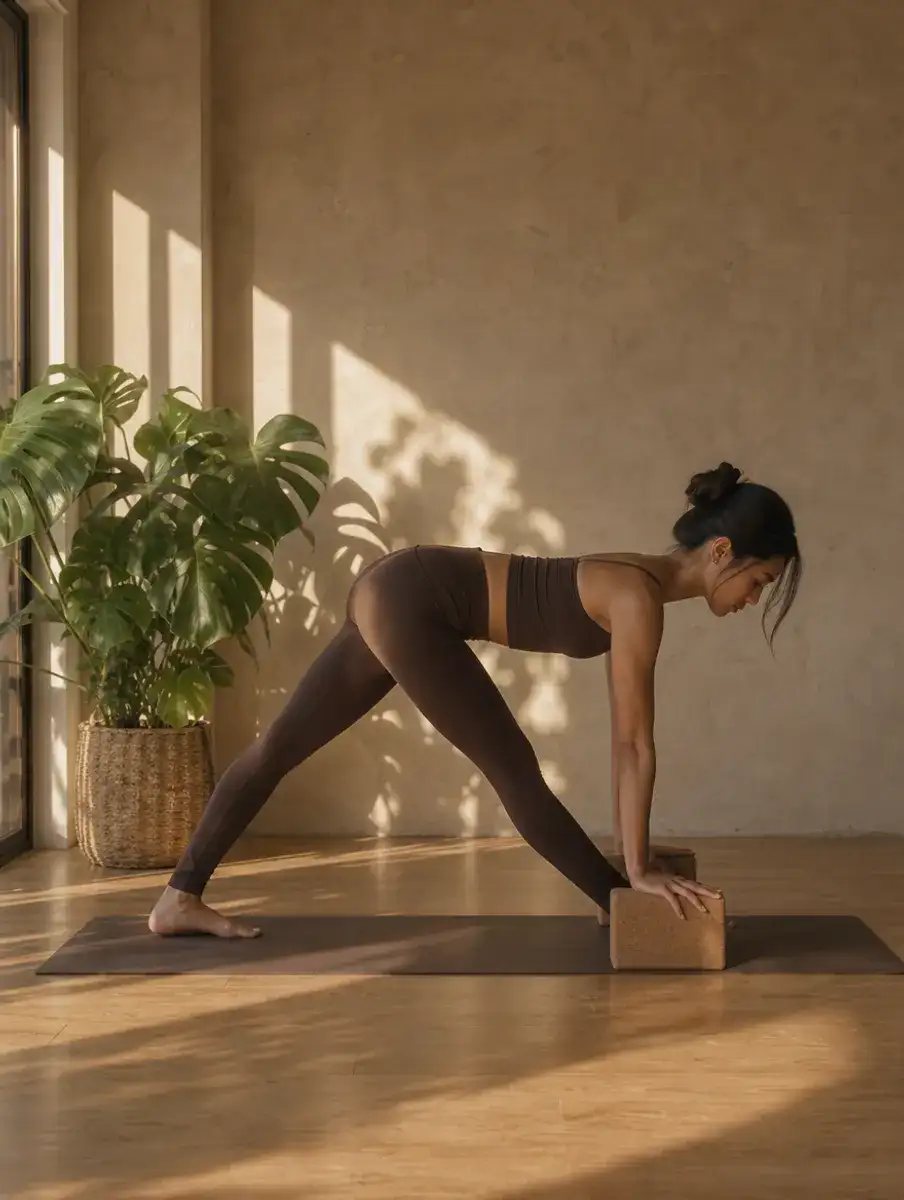
Pyramid Pose (Parsvottanasana) is a standing fold over the front leg that stretches the hamstrings. Step one foot back about three feet, keep the feet hip-width apart as if on two rails, face the hips forward and hinge with a long back for five to eight breaths. Keep a soft bend in the front knee and use blocks.
Pronunciation and meaning
Parsvottanasana: parsh-voh-tahn-AHS-uh-nuh. Parsva sounds like parsh-va, and the stress falls on AHS.
Parsva means side, uttana means intense stretch and asana means posture, so the name is intense side stretch. With one foot forward and both legs straight, you fold over the front leg, and the legs and body make the shape of a pyramid.
How to do Pyramid Pose
- From Mountain Pose, step your left foot back about three feet, shorter than a Warrior stance. Turn the left foot out about 45 degrees with the heel down.
- Keep the feet hip-width apart, as if on two rails, and turn both hip points to face the front of the mat.
- Place your hands on your hips or on blocks either side of the right foot. Inhale and lengthen the spine forward.
- Exhale and hinge from the hips over the right leg, keeping the back long. Keep a soft bend in the front knee if the hamstring pulls.
- Stay for five to eight breaths, pressing evenly through both feet. Let the head release only once the spine is long.
- Inhale, press into the feet and rise with a flat back. Step forward and repeat with the right foot back.
Pyramid Pose step by step

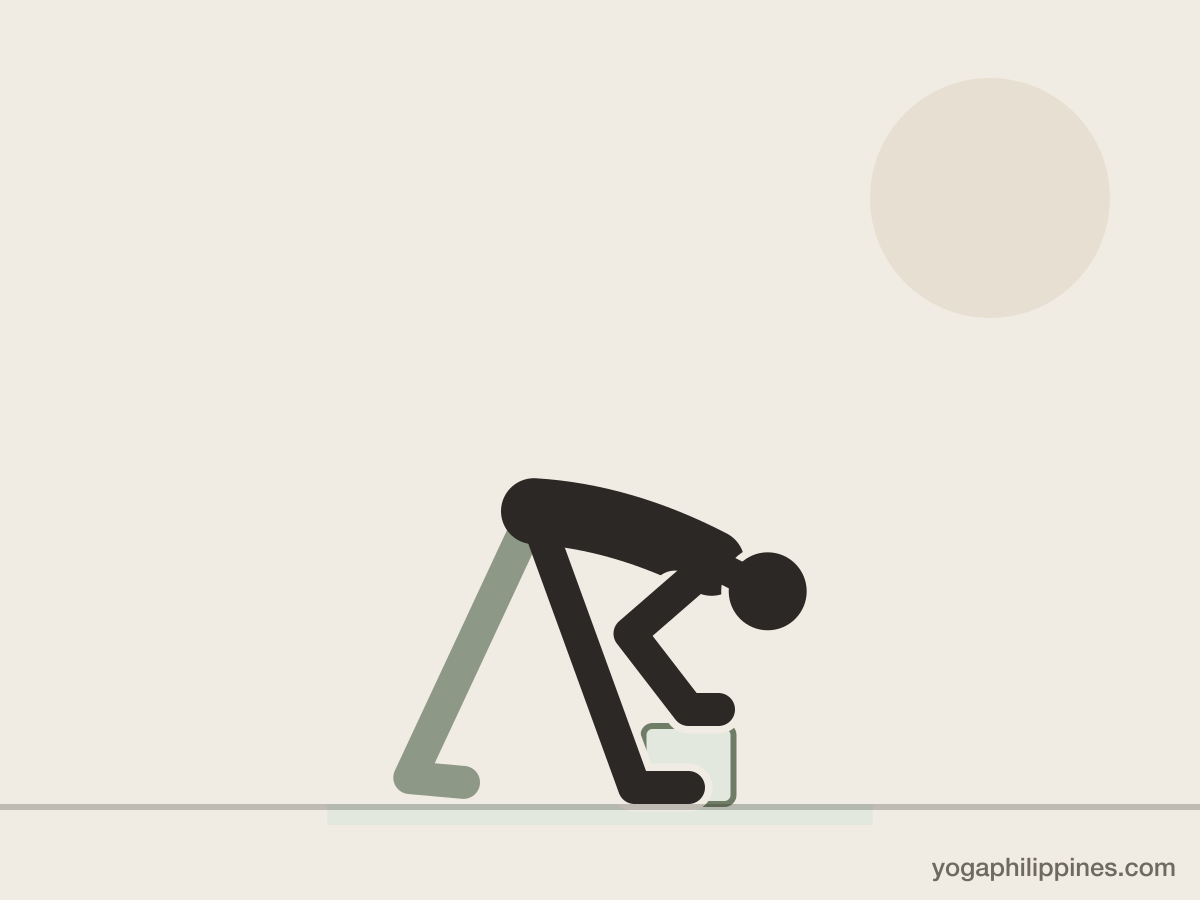
Drawings and video by YogaPhilippines.com, free to reuse under CC BY 4.0 with credit and a link: see the image licence for how to credit.
Pyramid Pose appears in the 34-pose Ashtanga primary series and the Bikram 26 poses sequence, both printable with holds and cues. For other poses that work the hamstrings, open the pose finder set to the hamstrings.
Make it easier
- Rest the hands on blocks or a chair seat instead of the floor.
- Take the feet wider apart side to side for more balance.
- Bring the hands into reverse prayer behind the back only if the shoulders are open enough; otherwise hold opposite elbows or keep the hands on blocks.
Pregnancy and after birth
Pregnancy. Adapt. Take the feet wider apart, keep the hands on blocks or a chair so the fold stays shallow, and come up slowly. Check with your OB or midwife.
After birth. Adapt. After your doctor or midwife has cleared you, use blocks and a soft front knee, and rise slowly to avoid dizziness.
Before adapting a pose, read is yoga safe during pregnancy on joahnnalee.com.
Common mistakes
- Setting the feet on one line, which makes it hard to balance and twists the hips.
- Locking or hyperextending the front knee.
- Rounding the back to bring the head down toward the knee.
Pyramid Pose is a standing forward fold over one leg. It appears in many Vinyasa and Hatha classes as a deeper hamstring stretch, often after Triangle and before balances like Half Moon.
Because the feet are close and the hips face forward, it asks for both balance and patience in the backs of the legs. Blocks make it workable for most people.
How does pyramid pose differ from other forward folds?
In a Standing Forward Bend both legs share the stretch. Pyramid focuses it on the front leg, and the square hips make it more precise. It shares the long legs of Triangle, its open-hip cousin, but the hips face forward rather than open to the side.
Who is it for?
It suits anyone who wants a careful stretch for the backs of the legs, and it is a regular in routines for runners. It is one of the twelve yoga poses for tight hamstrings, set out in practice order. The hamstring stretches routine includes a version for days off the mat.
Prep poses for Pyramid Pose
Poses that warm up the same body areas at a lower intensity, so Pyramid Pose feels steadier when you get there.
- Wide Legged Forward Bend (Prasarita Padottanasana) gentler work for the same area, beginner plus
- Standing Forward Bend (Uttanasana) gentler work for the same area, beginner
- Caterpillar Pose (Yin) gentler work for the same area, beginner
- Downward-Facing Dog (Adho Mukha Svanasana) gentler work for the same area, beginner plus
Props that help in Pyramid Pose
- Block: brings the floor closer under the lower hand, so the legs and spine can stay long.
- Chair: brings the floor closer, or gives a seat or a hand rest for a gentler version.
Programs and sessions that use Pyramid Pose
- The one-month challenge 2 of its 30 sessions
- The 14-day flexibility plan 1 of its 14 sessions
- The 4-week beginner program 1 of its 12 sessions
- Sequences: 30-minute yoga flow, primary series sequence, 26-posture sequence and Moon salutation flow
- Practice app sessions: 30-minute practice
- Generated example flows: 20-minute hip flow
Sources: Mayo Clinic, Fitness program: 5 steps to get started; NCCIH (US National Institutes of Health), Yoga: Effectiveness and Safety. Last reviewed 2 October 2026.
Pyramid Pose questions
Should the front knee be straight in pyramid pose?
Long, but not locked. A small bend protects the back of the knee and lets the fold come from the hips. Straighten it more only if the back stays long.
Why is pyramid pose hard to balance in?
Usually the feet are lined up heel to heel. Step them apart so they sit hip-width on two separate lines, and put the hands on blocks.
What does pyramid pose stretch?
Mostly the hamstrings and calf of the front leg, with some length along the back and, if the arms go behind, the front of the shoulders.
Why is Pyramid Pose so hard?
Pyramid asks for balance and hamstring length at the same time. The stance is short and the hips face forward, so the front leg takes most of the stretch while you hold steady. Step the feet hip-width apart on two rails, keep a soft bend in the front knee and rest the hands on blocks.
What is the difference between Pyramid and Triangle Pose?
Both use long, straight legs with one foot forward. In Triangle, the hips and chest open to the side and you reach down along the front leg. In Pyramid, both hip points face the front of the mat and you fold straight over the front leg, which focuses the stretch on its hamstring and asks for more balance.
Pairs well with
Updated