Pose library · Utthan Pristhasana
Lizard Pose (Utthan Pristhasana)
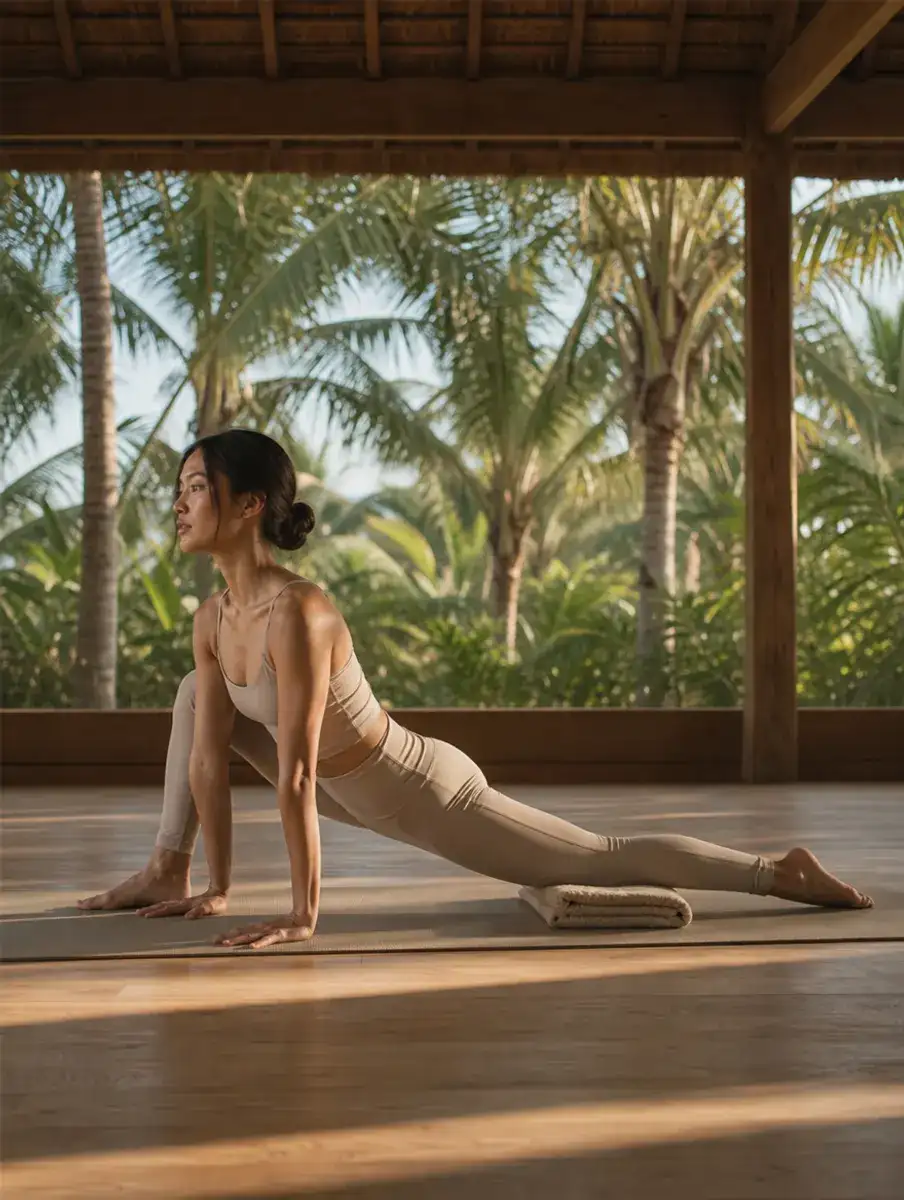
Utthan Pristhasana is usually translated as lizard posture: a low lunge with the front foot stepped outside the hands and the chest lowered toward the floor. It stretches the front of the back hip and the inner and outer front hip together.
Lizard Pose (Utthan Pristhasana) is a low lunge that stretches the front of the back hip and the front hip together. Step the front foot outside the hand, lower the back knee onto a blanket and ease the hips forward for five to ten breaths. Keep the hands on blocks if the back rounds, and pad the kneecap.
Pronunciation and meaning
Utthan Pristhasana: OOT-tahn prish-TAHS-uh-nuh. Utthan has a held double t, and Pristhasana stresses TAHS.
Utthan Pristhasana is usually translated as lizard posture: a low lunge with the front foot stepped outside the hands and the chest lowered toward the floor. It stretches the front of the back hip and the inner and outer front hip together.
How to do Lizard Pose
- From Downward-Facing Dog or hands and knees, step your right foot forward to the outside of your right hand, toes pointing forward or turned out slightly.
- Lower your left knee onto a folded blanket and slide it back until the right knee sits over or just behind the right ankle.
- Keep your hands under your shoulders, or place your forearms on a block or two. Lower only as far as the hips allow.
- Lengthen through the chest so the back stays long, and let the hips ease forward and down. Keep the right knee pointing the same way as the toes.
- Stay for five to ten breaths in an active class, or one to three minutes in a slow one, breathing into the hips.
- Press back up onto the hands, step the right foot back, and repeat with the left foot forward.
Lizard Pose step by step

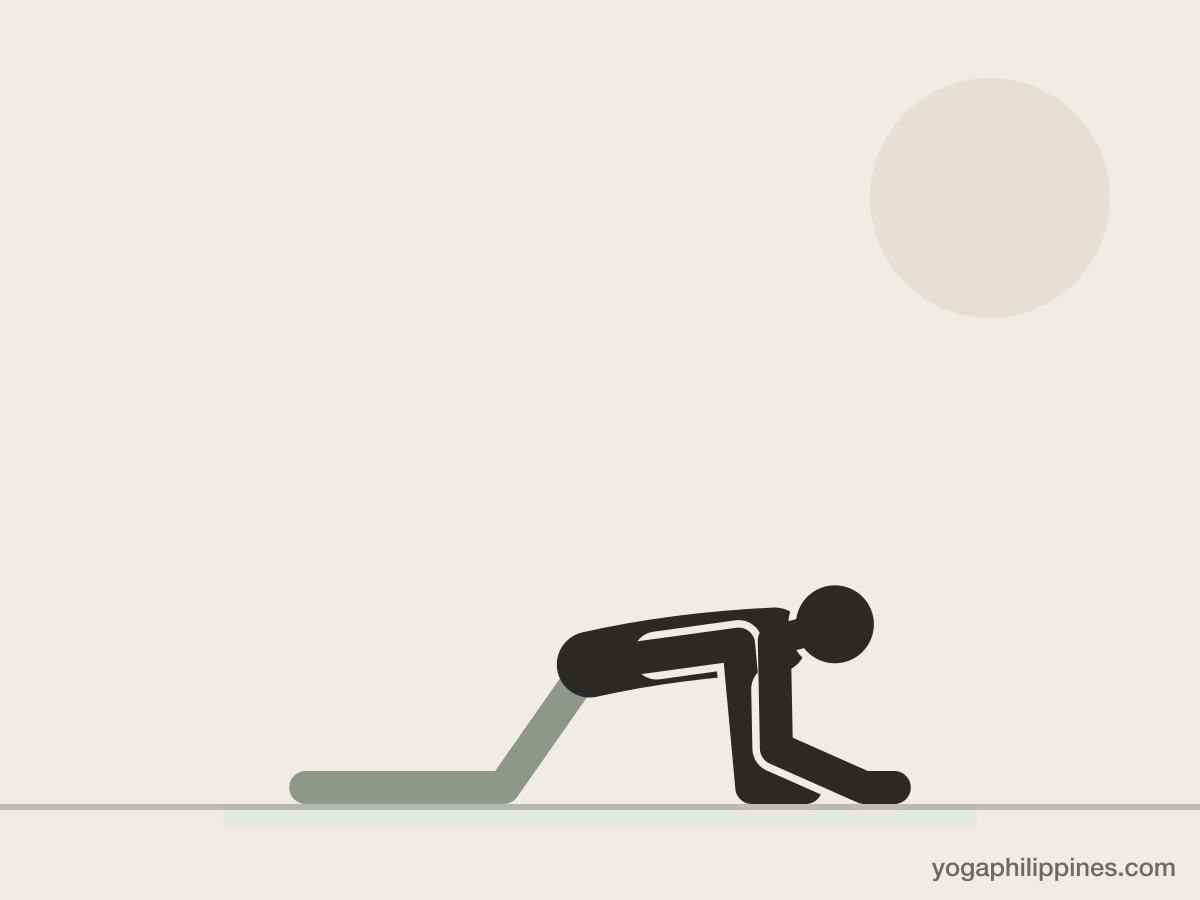
Drawings and video by YogaPhilippines.com, free to reuse under CC BY 4.0 with credit and a link: see the image licence for how to credit.
Lizard Pose appears in the hip-opening sequence, which is printable with holds and cues. For other poses that work the hips, open the pose finder set to the hips.
Make it easier
- Keep the hands on blocks instead of lowering to the forearms.
- Let the front knee roll out onto the edge of the foot for a softer stretch of the inner thigh.
- Tuck the back toes and lift the back knee for a stronger, more active version.
Pregnancy and after birth
Pregnancy. Adapt. Keep the hands on high blocks, widen the front foot to make room for the belly, and keep the stretch mild, since joints loosen in pregnancy. Check with your OB or midwife.
After birth. Adapt. Once your doctor or midwife has cleared you, start with hands on blocks and short holds. Ease off if you feel pain at the pubic bone or pulling along a caesarean scar.
Wondering about yoga safety in pregnancy? Joahnna Lee covers it trimester by trimester.
Common mistakes
- Letting the front knee drift in toward the midline or travel far past the ankle.
- Dropping to the forearms before the hips are ready, which rounds the back and strains the knee.
- Kneeling on the bare kneecap without padding.
Lizard Pose is one of the deepest lunges in a typical Vinyasa class. It usually comes after Low Lunge, once the front of the hips has warmed up, and it often leads into hip openers such as Pigeon.
Many people find it a good stretch after long hours of sitting or a run. Blocks under the hands keep it within reach for most bodies.
How is lizard pose different from a low lunge?
In Low Lunge, or Anjaneyasana, the front foot stays between the hands and the chest lifts. In Lizard the foot steps outside the hand and the chest lowers, which adds more stretch around the inner front hip. Held still in a Yin class, the shape becomes Dragon, the Yin version of this lunge.
Where does it fit in a practice?
It sits well before Pigeon Pose, the classic hip opener, and in any routine for the front of the hips. The hip flexor stretches routine and the plan for working towards the splits both use a similar lunge.
Lizard Pose or Pigeon Pose?
Lizard often comes before Pigeon in a class. Both work the hips; Lizard keeps the front foot planted in a lunge, while Pigeon folds the front leg across the mat.
| Compare | Lizard Pose | Pigeon Pose |
|---|---|---|
| Position | Kneeling | Seated |
| What it works | hips, hamstrings and quads | hips, glutes and quads |
| Level | Intermediate | Intermediate |
| Key difference | A deep lunge with the front foot outside the hand and the front knee over or behind the ankle. | The front shin lies across the mat and the hips settle toward the floor, with support under the front hip. |
Prep poses for Lizard Pose
Poses that warm up the same body areas at a lower intensity, so Lizard Pose feels steadier when you get there.
- Low Lunge (Anjaneyasana) a direct preparation, beginner
- Happy Baby Pose (Ananda Balasana) gentler work for the same area, beginner
- Balasana (Child's Pose) gentler work for the same area, beginner
- Supported Child's Pose (Salamba Balasana) gentler work for the same area, beginner
Counter-poses for Lizard Pose
Shapes that move the body the other way or let it rest straight after Lizard Pose.
- Downward-Facing Dog (Adho Mukha Svanasana) beginner plus
Props that help in Lizard Pose
- Block: brings the floor closer under the hands or sits under the hips.
- Blanket: pads the knees and the tops of the feet.
Programs and sessions that use Lizard Pose
- Sequences: hip-opening sequence
- Practice app sessions: hip opener
Sources: Mayo Clinic, Fitness program: 5 steps to get started; NCCIH (US National Institutes of Health), Yoga: Effectiveness and Safety. Last reviewed 2 October 2026.
Lizard Pose questions
Is lizard pose the same as dragon pose?
The shapes are close. In a Vinyasa class Lizard is held for a few active breaths. In a Yin class a similar shape is often called Dragon and held for minutes with the muscles relaxed.
Why does lizard pose hurt the front knee?
Usually the front foot is too far back or the knee is rolling inward. Walk the foot forward, keep the knee over the ankle, and stay higher on blocks. If the pain is sharp or stays, stop and see a doctor or physio.
How long do you hold lizard pose?
Five to ten breaths is common in an active class. In a slower practice you can stay one to three minutes on each side if the knee and hip feel comfortable.
What is Lizard Pose good for?
Lizard Pose, or Utthan Pristhasana, stretches the front of the back hip and the inner and outer front hip together. Many people find it a good stretch after long hours of sitting or a run. In a class it usually follows Low Lunge and leads into hip openers such as Pigeon.
What is Revolved Lizard Pose, or Parivrtta Utthan Pristhasana?
It is Lizard Pose with a twist. With the right foot forward and the back knee down on a blanket, keep the left hand on the floor or a block and turn the chest toward the right knee, reaching the right arm up. Turn from the ribs, keep the front knee over the ankle, then switch sides.
Updated