Pose library · Yin shape · reviewed by a teacher
Dragon Pose (Yin shape)
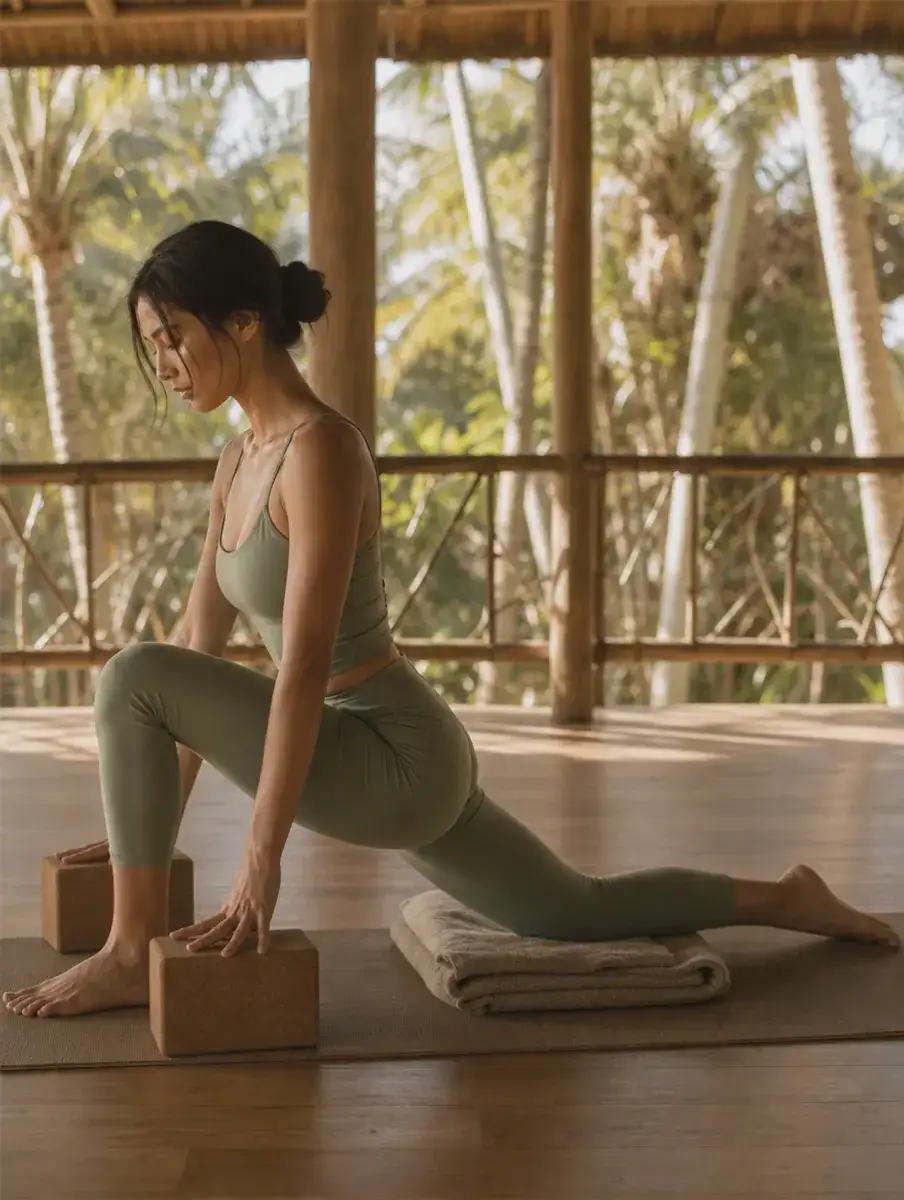
Dragon is the name Yin yoga gives to a long-held low lunge. It looks like the Low Lunge of a Vinyasa class, but you stay for minutes with the legs soft, letting the hips sink rather than holding yourself up.
Dragon Pose is the Yin yoga name for a long-held low lunge that stretches the front of the back hip. With a blanket under the back knee, step one foot forward, rest the hands on blocks and let the hips sink for two to four minutes. Come out if you feel sharp pain in the knee or groin.
Pronunciation and meaning
Yin shape: Said just as it is written in English. Dragon is a Yin yoga name and has no classical Sanskrit name of its own.
Dragon is the name Yin yoga gives to a long-held low lunge. It looks like the Low Lunge of a Vinyasa class, but you stay for minutes with the legs soft, letting the hips sink rather than holding yourself up.
How to do Dragon Pose
- Come to hands and knees with a folded blanket under your knees and a block beside each hand.
- Step your right foot forward between your hands, with the heel roughly under the right knee.
- Slide your left knee back until you feel a stretch at the front of the left hip, then untuck the back toes so the top of the foot rests on the mat.
- Rest your hands on the blocks or on the front thigh, and let your hips sink toward the floor as far as is comfortable.
- Stay for two to four minutes with the legs and belly relaxed. If the stretch grows too strong, lift the hips a little.
- To come out, bring your hands to the floor, step back to hands and knees, and pause before the second side.
Dragon Pose step by step
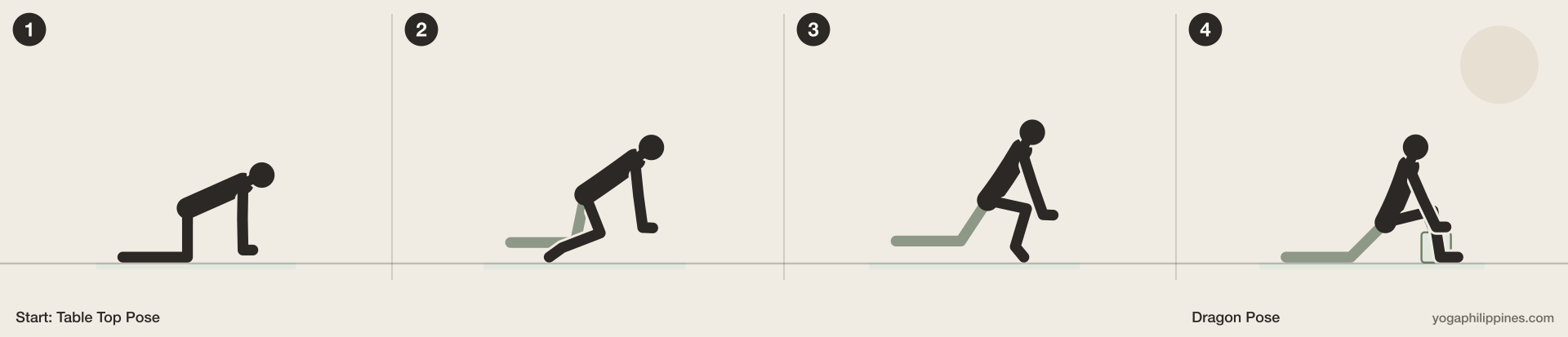
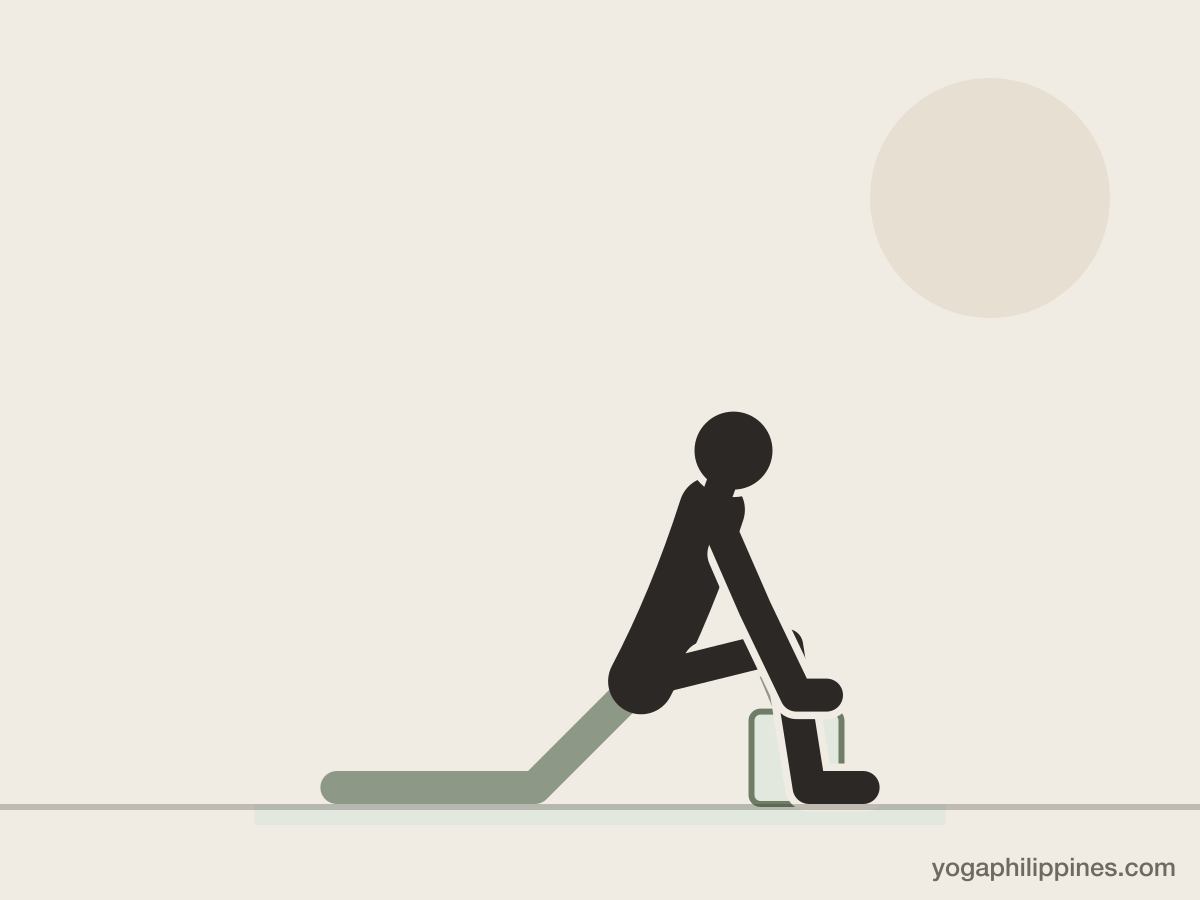
Drawings and video by YogaPhilippines.com, free to reuse under CC BY 4.0 with credit and a link: see the image licence for how to credit.
For other poses that work the hips, open the pose finder set to the hips.
Teacher's note from Joahnna Lee
“Find the first place you feel the stretch and stop there. Over a few minutes the shape changes by itself, so there is no need to go to your edge at the start.”
“Once you are in, let the thighs stop working. I want the legs soft and the weight resting down, not held up.”
“Keep the front foot flat and heavy, so the front knee stays steady over the ankle.”
Make it easier
- Double the blanket under the back knee if the kneecap is sensitive.
- If the back knee cannot take any weight, stand in a short lunge with the back heel lifted and your hands on a chair, and hold for less time.
Pregnancy and after birth
Pregnancy. Adapt. Keep the stretch mild, because the joints can feel looser in pregnancy and it is easy to go further than you mean to. Take the front foot out toward the edge of the mat so the belly has room, keep the hands on high blocks and the chest upright, and leave it out if you feel pain at the front of the pelvis. Check with your OB or midwife before you start.
After birth. Adapt. Wait until your OB or midwife has cleared you to exercise. Begin with a short hold and a higher lunge, and leave the pose out if you have pain at the pubic bone or the stretch pulls on a caesarean scar.
Prenatal and postpartum guides live on joahnnalee.com.
Common mistakes
- Letting the front knee travel far past the ankle. Walk the front foot farther forward until the shin is roughly upright.
- Gripping the thighs and belly to hold the lunge up. In a Yin hold the muscles rest; if they cannot, come higher.
- Staying through sharp or electric sensation in the knee or groin. A strong stretch is fine; pain in a joint means come out.
Dragon is one of the most familiar shapes in a Yin yoga practice. It is a patient pose: long, quiet, and more about staying than about going deeper.
In Yin yoga the hold is shaped around your hips and knees, with a blanket and blocks ready before you settle in. Outside Yin, the same lunge is the base of gentler hip flexor stretches for desk days, and it is one of the two shapes in an eight-week plan towards the splits.
In a Vinyasa class the same shape is held with working legs as Low Lunge, Anjaneyasana, for a few breaths rather than minutes.
The active cousin with the foot stepped outside the hand is Lizard Pose, Utthan Pristhasana. Another long Yin hold, for the fronts of the thighs, is Saddle Pose, a reclined kneeling backbend.
Prep poses for Dragon Pose
Poses that warm up the same body areas at a lower intensity, so Dragon Pose feels steadier when you get there.
- Low Lunge (Anjaneyasana) a direct preparation, beginner
- Balasana (Child's Pose) gentler work for the same area, beginner
- Supported Child's Pose (Salamba Balasana) gentler work for the same area, beginner
- Reclined Butterfly (Supta Baddha Konasana) gentler work for the same area, beginner
Props that help in Dragon Pose
- Block: brings the floor closer under the hands or sits under the hips.
- Blanket: pads the knees and the tops of the feet.
- Chair: brings the floor closer, or gives a seat or a hand rest for a gentler version.
Programs and sessions that use Dragon Pose
- Generated example flows: 20-minute hip flow
Sources: Mayo Clinic, Fitness program: 5 steps to get started; NCCIH (US National Institutes of Health), Yoga: Effectiveness and Safety; NHS, Exercise in pregnancy; CDC, Pregnant & Postpartum Activity: An Overview; Canadian Family Physician (Chan et al., 2014), via PubMed Central, Hot yoga and pregnancy: Fitness and hyperthermia. Last reviewed 2 October 2026.
Dragon Pose questions
How long do you hold Dragon Pose in Yin yoga?
Two to four minutes on each side is usual, and one to two minutes is plenty when you are new. Come out sooner if a knee or the groin feels sharp or unstable.
Is Dragon Pose the same as Low Lunge?
The shape is similar, but the intention is different. In Low Lunge the legs work and you usually move on after a few breaths. In Dragon the muscles stay relaxed and you hold still for minutes.
What muscles does Dragon Pose stretch?
Dragon mainly stretches the front of the back hip, the hip flexors, along with the front of the back thigh. The groin can feel it too as the hips sink. Because it is a Yin hold, the muscles stay relaxed rather than working, so it is a long, passive stretch rather than a strength pose.
Updated