Pose library · Eka Pada Rajakapotasana · reviewed by a teacher
Pigeon Pose (Eka Pada Rajakapotasana)
Eka means one, pada means foot or leg, raja means king, kapota means pigeon and asana means posture: one-legged king pigeon posture. The full classical version is a deep backbend; the forward-folded version most classes teach is usually just called Pigeon, and in Yin it is known as Sleeping Swan.
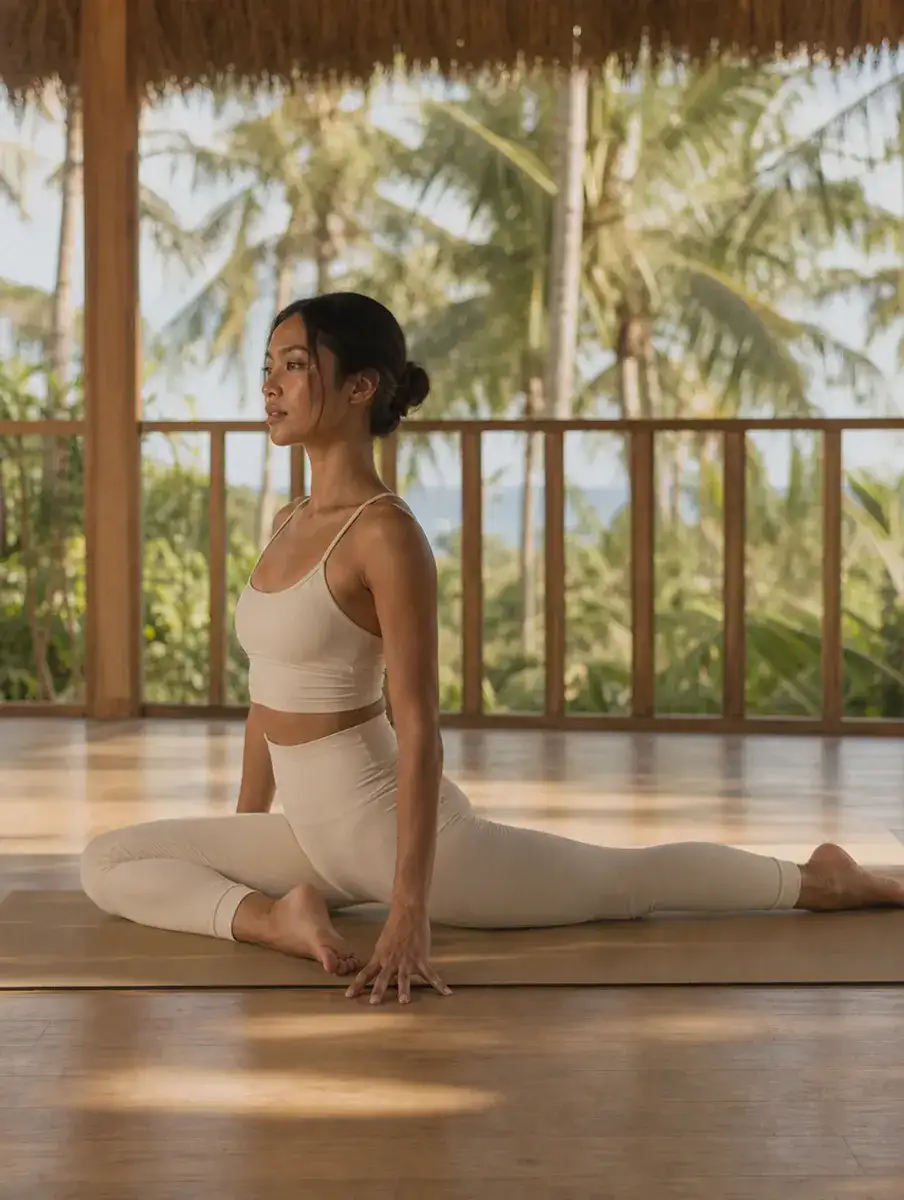
Pigeon Pose (Eka Pada Rajakapotasana) is a hip stretch with one shin forward and the other leg long behind, called Sleeping Swan in Yin. Bring one knee behind the wrist, slide the back leg straight back, level the hips and fold for five to ten breaths. Put a block or bolster under a hanging front hip.
Pronunciation and meaning
Eka Pada Rajakapotasana: AY-kuh PAH-duh RAH-juh-kah-poh-TAHS-uh-nuh. Take it in three parts: eka pada, raja, kapotasana.
Eka means one, pada means foot or leg, raja means king, kapota means pigeon and asana means posture: one-legged king pigeon posture. The full classical version is a deep backbend; the forward-folded version most classes teach is usually just called Pigeon, and in Yin it is known as Sleeping Swan.
How to do Pigeon Pose
- Start in Downward-Facing Dog or on hands and knees.
- Bring the right knee forward behind the right wrist and set the right shin down at an angle, with the right foot somewhere in front of the left hip.
- Slide the left leg straight back with the top of the foot on the mat, and check that it points directly behind you rather than out to the side.
- Level the hips by drawing the right hip back and the left hip forward. If the right hip hangs in the air, put a block or bolster under it now.
- Stay upright on your hands for a few breaths, then walk the hands forward and lower onto the forearms or a bolster if the knee feels comfortable.
- Hold for five to ten breaths, or a few minutes in Yin, then press back up, tuck the back toes and return to all fours before switching sides.
Pigeon Pose step by step

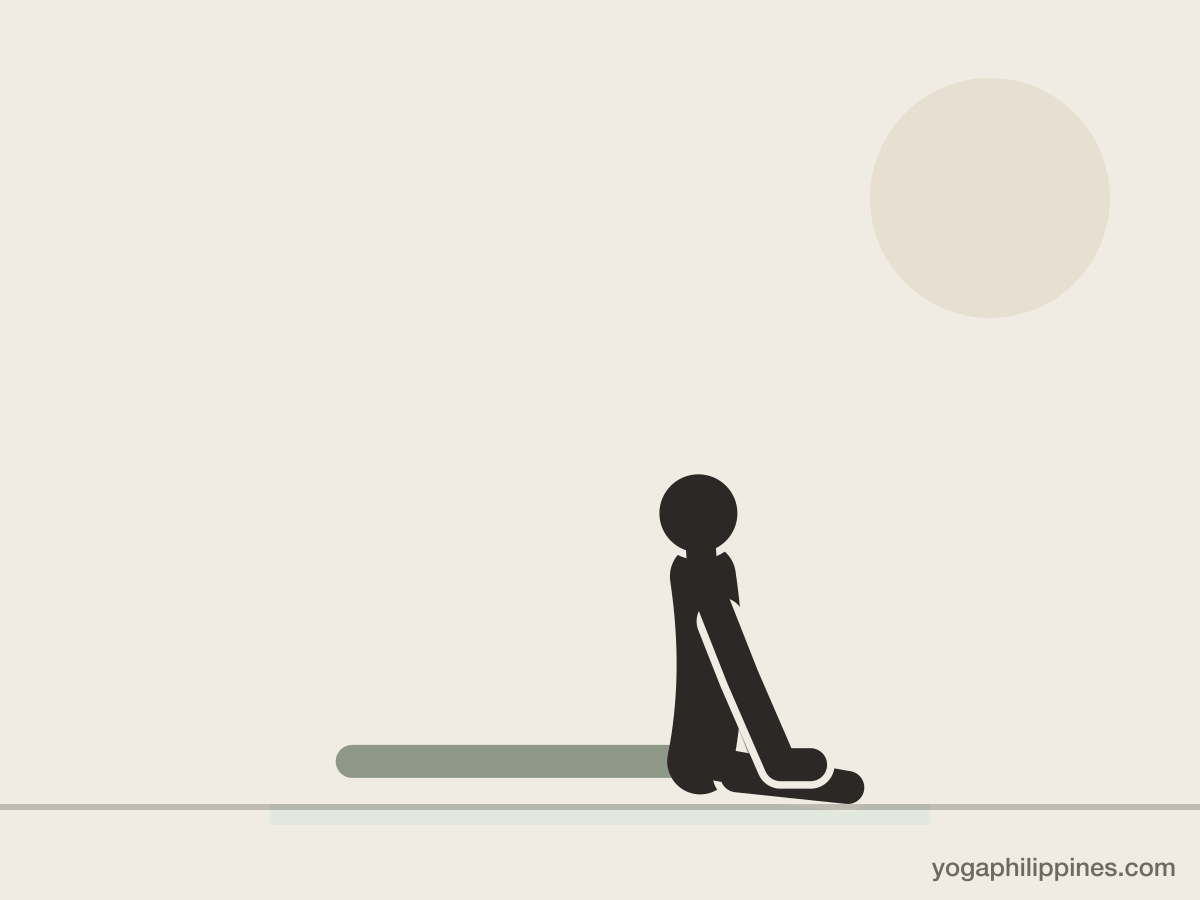
Drawings and video by YogaPhilippines.com, free to reuse under CC BY 4.0 with credit and a link: see the image licence for how to credit.
Pigeon Pose appears in the 8-pose hip-opening sequence and the 15-minute runner's recovery sequence, both printable with holds and cues. For other poses that work the hips, open the pose finder set to the hips.
Teacher's note from Joahnna Lee
“The front knee is the boss here. Any sharp feeling in or around it means we change the shape, however good the hip stretch feels.”
“Flex the front foot gently so the ankle stays in line and the knee is protected.”
“Fill the space under the front hip with support. Your body can only let go when it is not holding itself up.”
Make it easier
- Draw the front heel closer to the back hip so the shin angle is less steep and the knee is happier.
- Place a block, folded blanket or bolster under the front hip so the pelvis stays level.
- Try Figure Four on your back, with one ankle crossed over the opposite knee, if the knees do not like kneeling.
- Keep the torso upright on the hands rather than folding forward.
Pregnancy and after birth
Pregnancy. Adapt. Keep the torso upright with generous support under the front hip, or do Figure Four seated on a chair instead. Do not fold forward onto the belly, keep the stretch mild, and check with your OB or midwife before you start.
After birth. Adapt. When your doctor or midwife has cleared you to exercise, start with supported, upright Pigeon or Figure Four on your back. The pelvis can feel unfamiliar for some time after birth, so stay well inside a comfortable stretch.
For more on practising through pregnancy, see Joahnna Lee Yoga.
Common mistakes
- Letting the front hip hang in the air so the whole body tilts to one side.
- Forcing the front shin parallel to the top of the mat before the hips are ready, which twists the knee.
- Letting the back leg angle out to the side instead of pointing straight behind.
Pigeon is one of the most requested hip stretches, and one of the easiest to do badly, because it is tempting to sink into it whatever the knee is saying. Props make most of the difference.
In Yin yoga the setup comes first: a block or a folded blanket under the front hip, so the knee stays quiet while you stay. Pigeon also earns its place in a safe progression towards the front splits, because a tight outer hip twists the pelvis on the way down.
Another outer-hip stretch, gentler on some knees, is Cow Face Pose, Gomukhasana, sitting with the knees stacked.
Lifting the chest and reaching back for the back foot turns this shape into King Pigeon Pose, the full backbend version. A deep lunge that warms the same hips first is Lizard Pose, with the foot outside the hand. To balance the stretch with strength, try the bridges and clamshells in these hip exercises for strong, steady hips.
Which version of Pigeon suits you?
| Version | Shape | Good for |
|---|---|---|
| Upright Pigeon | Torso tall on the hands | First tries, and most flowing classes |
| Resting Pigeon | Folded forward onto forearms or a bolster | Longer holds once the knee is quiet |
| Figure Four on your back | Lying down, ankle crossed over the opposite knee | Sensitive knees, pregnancy, or bedtime |
| Seated Figure Four | On a chair, ankle on the opposite knee | The office, or when getting to the floor is hard |
| King Pigeon | Back foot drawn towards the head | Experienced students with a warm back and open shoulders |
What does Pigeon stretch?
In the front leg, the shape mainly reaches the outer hip and buttock, including the gluteal muscles and the smaller rotators deep beneath them. In the back leg, it lengthens the front of the hip. Folding forward adds a mild stretch along the lower back.
A short sequence to prepare for Pigeon
Pigeon feels kinder when the hips are already warm. Try this before your first round:
- Cat-Cow, eight slow rounds.
- Downward-Facing Dog, five breaths, pedalling the heels.
- Low lunge on each side, five breaths.
- Figure Four on your back, five breaths each side.
- Upright Pigeon on each side, five to eight breaths, with a block under the front hip.
If you practise at home on a thin travel mat over tile, fold a towel under the back knee and the front shin. Tile is hard and, on humid days, the knee can slide on a damp mat as you settle.
How long until Pigeon feels easier?
Most people find the pose feels less intense after a few weeks of practising it two or three times a week, mostly because they learn to support the front hip and breathe rather than brace. How far the hip actually opens varies a great deal between bodies, and some hips will never sit flat on the floor because of their bony shape. A level pelvis with support is a complete pose.
If Pigeon brings on a deep ache in the buttock, the gentler stretches for the piriformis may suit you better.
Pigeon Pose or Lizard Pose?
Lizard and Pigeon both work the hips from a front-and-back leg shape. Lizard is a lunge that often comes first; in Pigeon the front leg folds across the mat.
| Compare | Pigeon Pose | Lizard Pose |
|---|---|---|
| Position | Seated | Kneeling |
| What it works | hips, glutes and quads | hips, hamstrings and quads |
| Level | Intermediate | Intermediate |
| Key difference | The front shin lies across the mat and the hips settle toward the floor, with support under the front hip. | A deep lunge with the front foot outside the hand and the front knee over or behind the ankle. |
Prep poses for Pigeon Pose
Poses that warm up the same body areas at a lower intensity, so Pigeon Pose feels steadier when you get there.
- Figure Four a direct preparation, beginner
- Butterfly Pose (Baddha Konasana) gentler work for the same area, beginner
- Garland Pose (Malasana) gentler work for the same area, beginner plus
- Low Lunge (Anjaneyasana) gentler work for the same area, beginner
Counter-poses for Pigeon Pose
Shapes that move the body the other way or let it rest straight after Pigeon Pose.
- Downward-Facing Dog (Adho Mukha Svanasana) beginner plus
Where to go next after Pigeon Pose
These poses list Pigeon Pose as a preparation, so they are a natural next step once it feels comfortable.
- King Pigeon Pose (Eka Pada Rajakapotasana) advanced plus
Easier and harder variations of Pigeon Pose
Related poses from the same family that start from the same position and do a similar kind of work; Pigeon Pose itself is intermediate.
- Easier: Cow Face Pose (Gomukhasana) beginner plus
Props that help in Pigeon Pose
- Block: sits under the hips or supports a hand or knee that does not reach the floor.
- Blanket: lifts the hips a little so the spine can stay tall.
- Bolster: supports the body so you can stay longer with less effort.
Programs and sessions that use Pigeon Pose
- The 14-day flexibility plan 1 of its 14 sessions
- The 7-day desk reset 1 of its 7 sessions
- Sequences: 30-minute yoga flow, hip-opening practice and post-run routine
- Practice app sessions: 30-minute practice and hip opener
Put it into practice with the pose of the day, the pose name quiz and the random flow generator, built on pages like this one.
Sources: Mayo Clinic, Fitness program: 5 steps to get started; NCCIH (US National Institutes of Health), Yoga: Effectiveness and Safety; NHS, Exercise in pregnancy; CDC, Pregnant & Postpartum Activity: An Overview; Canadian Family Physician (Chan et al., 2014), via PubMed Central, Hot yoga and pregnancy: Fitness and hyperthermia; NHS, Knee pain. Last reviewed 2 October 2026.
Pigeon Pose questions
Why does pigeon pose hurt my knee?
Usually the hip cannot yet rotate as far as the shape asks, so the knee twists instead. Bring the front heel closer to you, put a block under the front hip and flex the foot. If it still hurts, switch to Figure Four on your back.
How long should I hold pigeon pose?
In a flowing class, five to ten breaths is typical. In Yin it may be three to five minutes with plenty of support. Come out sooner if the knee or lower back complains.
Why is pigeon pose so intense?
The front hip turns out a long way while the weight of your body presses down on it, so the outer hip and buttock get a strong stretch, and the back leg stretches the front of the other hip at the same time. A block or folded blanket under the front hip takes much of that weight and makes the pose kinder.
What can you do instead of pigeon pose?
Lie on your back and cross one ankle over the opposite knee for a figure four, drawing the legs towards you. You can also do a seated figure four on a chair. Both reach the same outer hip and buttock with far less load on the front knee.
What is Pigeon Pose good for?
Pigeon Pose stretches the outer hip and buttock of the front leg, including the deep rotators, and lengthens the front of the hip of the back leg. Folding forward adds a mild stretch along the lower back. Many people like it after running or long hours sitting, and it is a step toward the front splits.
Who should avoid Pigeon Pose?
Skip or change Pigeon Pose if you have a knee injury or feel any sharp pain in or around the front knee. Figure Four on your back or on a chair reaches the same outer hip with far less load. With a recent hip or lower back injury, check with your doctor or physio first.
Updated