Stretches
Glute stretches for the back of the hips
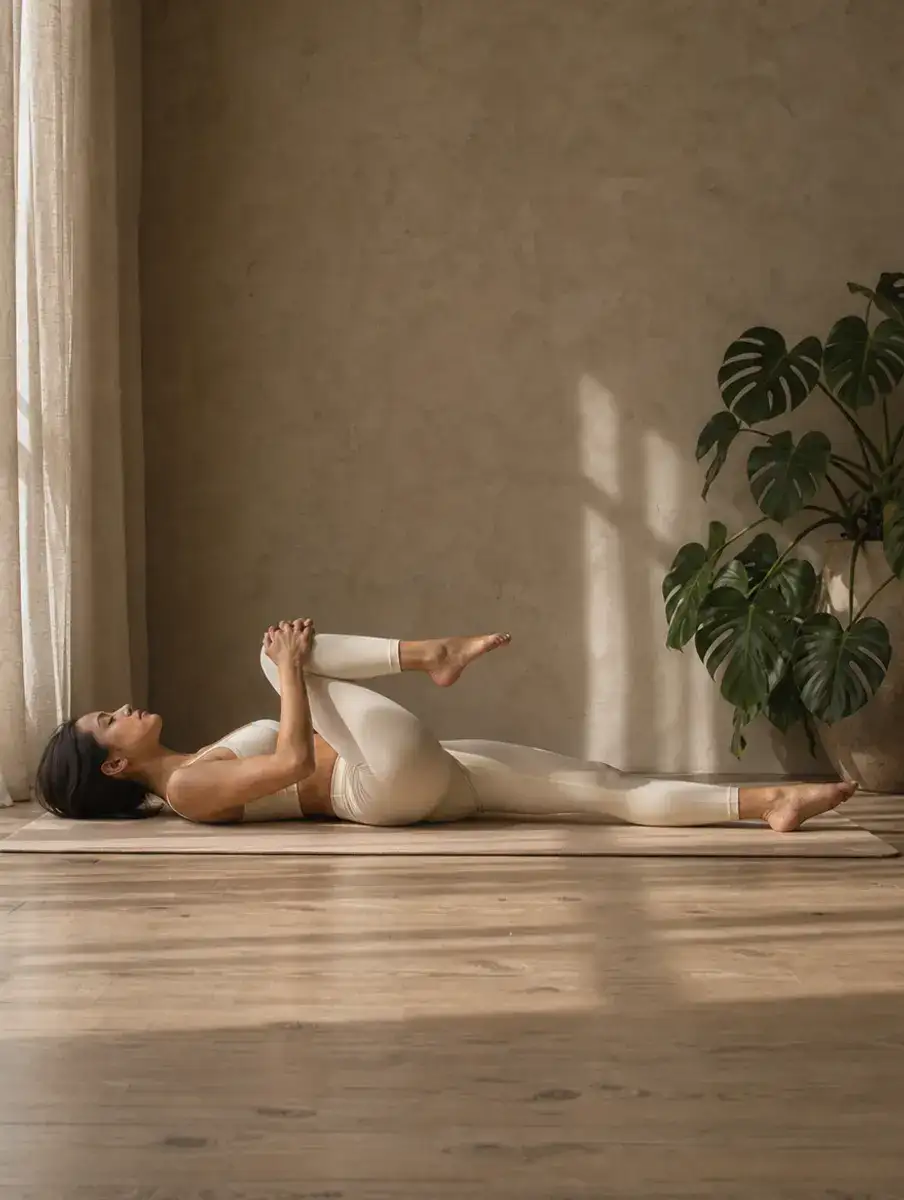
A simple glute stretch is the knee hug lying on your back: draw one knee towards the same shoulder for the large gluteus maximus, then across towards the opposite shoulder for the side of the hip. Add a figure four and a seated twist, holding each for five to eight slow breaths, about 30 seconds, on both sides.
The glutes are the muscles of the buttock. The large gluteus maximus pushes the hip back when you climb, run or stand up from a chair, while the gluteus medius and minimus on the side of the hip keep the pelvis level as you walk. Under them sit smaller muscles that turn the thigh, including the piriformis.
Hours of sitting keep the hips bent, and running, cycling and climbing stairs work the glutes hard. Many people notice tightness at the back or side of the hip as a result. The six stretches below are mostly on the floor and take about ten minutes.
When should you see a doctor or physio first?
Check with a doctor or physiotherapist before stretching if you have:
- buttock pain that travels down the leg, or comes with tingling, numbness or weakness;
- pain in the hip joint or the groin rather than in the muscle;
- pain after a fall, or pain that is not settling;
- a hip replacement or recent hip surgery (ask which positions are safe for you).
A glute stretch should feel broad and dull. A sharp pain, a pinch at the front of the hip or anything electric means come out.
How do you do a glute stretch?
Hold each for five to eight slow breaths, about 30 seconds, then switch sides. Breathe out as you settle.
- Knee to chest. Lie on your back and hug the right knee towards the right shoulder, the left leg bent or long. You feel the back of the right hip.
- Cross-body knee hug. From the same position, draw the right knee across towards the left shoulder with the left hand. The stretch moves to the side of the hip.
- Figure four. With both knees bent, cross the right ankle over the left knee, flex the right foot and draw the left thigh towards you. The piriformis stretch page has more versions and its own safety notes.
- Seated twist. Sit on a cushion with the left leg long. Cross the right foot over to the outside of the left knee, hug the knee with the left arm and turn to the right, sitting tall. The Seated Twist page shows the set-up.
- Pigeon with props. From hands and knees, bring the right knee forward behind the right wrist and slide the left leg back. Place a folded blanket under the right hip so the hips stay level and rest on the forearms. Pigeon Pose explains how to protect the front knee.
- Standing figure four at a counter. Hold a kitchen counter, cross the right ankle over the left knee and sit back slowly, as if into a chair. Five breaths. A good option after a run, when lying down is not practical.
Which part of the glutes does each stretch reach?
| Stretch | Where you usually feel it |
|---|---|
| Knee to chest | The big buttock muscle, gluteus maximus, and the lower back |
| Cross-body knee hug | Outer buttock and side of the hip |
| Figure four | Deep in the buttock, around the piriformis and smaller rotators |
| Seated twist | Outer hip, plus a twist through the back |
| Pigeon with props | Deep buttock and outer hip of the front leg |
| Standing figure four | Deep buttock, with some balance work |
If one spot always feels tightest, give that stretch an extra round.
Why do the glutes feel tight?
Common reasons include long hours sitting, a lot of running, cycling or stair climbing without recovery, and a sudden jump in leg training. Sometimes the buttock feels tight because the muscles are tired and weak rather than short, which is why stretching works best alongside strength work such as bridges and clamshells.
When is the best time to stretch the glutes?
- Before exercise: skip long holds. Do leg swings, walking lunges and a few bridges instead.
- After exercise: stretches 3, 4 and 5, about 30 seconds each side.
- After a long sit: the standing figure four at a counter, or a seated figure four on your chair.
- Before bed: stretches 1 to 3 lying down, slow breathing, lights low.
A five-minute evening routine
On a narrow strip of condo floor or even a firm bed:
- Knee to chest, five breaths each side.
- Cross-body knee hug, five breaths each side.
- Figure four, eight breaths each side.
- Both knees to chest, rocking gently side to side, five breaths.
- Rest flat with the legs long for one minute.
How long until glute stretches make a difference?
The hips often feel easier straight after a routine, especially after a long sit. A more lasting change, such as sitting cross-legged more comfortably, usually needs regular stretching a few times a week for several weeks. If a buttock ache stays the same or worsens over a month of regular stretching, or starts to travel down the leg, see a doctor or physio.
Common mistakes
- Lifting the head off the floor. Rest it on a cushion so the neck stays soft.
- Pigeon without support. If the hips tip to one side, the front knee takes the strain. Add height under the hip.
- Letting the crossed foot curl in. Flex it to protect the knee.
- Bouncing the knee. Hold still and breathe instead.
Make it easier or harder
- Easier: try the figure four seated on a chair; keep the bottom foot on the floor; loop a strap behind the thigh instead of reaching for it.
- Harder: lower the blanket in pigeon over several weeks; sit deeper in the standing figure four; stay for longer holds on a rest day.
Where do glute stretches fit?
The backs of the thighs share the work with the glutes, so the hamstring stretches with hold times make a good pair, and the hip stretches for every direction the hip moves add the front and inner hip. After a run, the leg stretches for the whole lower body include a shorter figure four, and yoga for runners shows where it fits. To strengthen the same muscles, the glute exercises with bridges and clamshells are the companion page, and the side of the hip also works in the balance exercises on one leg. The same outer hip muscles show up in the IT band stretches for the side of the thigh.
Best time to do it
6 of the 6 moves are slow holds meant for the end of a session, so this routine suits the time after a walk, a workout or a class, when the body is already warm, or a quiet few minutes in the evening. Most of the moves are calm, unhurried shapes, which many people like before bed.
How long to hold each move
Holds below are for a medium pace; at a slower pace, stay up to the longer time. Moves marked each side are done on both sides.
| Move | Hold | Slower pace |
|---|---|---|
| Single Knee to Chest | 30 s each side | 45 s |
| Cross-Body Knee Hug | 30 s each side | 45 s |
| Figure Four | 45 s each side | 1 min 10 s |
| Seated Twist | 30 s each side | 45 s |
| Pigeon Pose | 1 min each side | 1 min 30 s |
| Standing Figure Four | 30 s each side | 45 s |
Pair it with
Other stretching routines that work the same areas, for a longer session or the next day:
- Six IT band stretches for the outside of the thigh also works the glutes and hips
- Inner thigh stretches also works the glutes and hips
- Working towards the middle splits, without forcing the hips also works the glutes and hips
This page feeds the pose finder.
Browse every stretch by body area.
Sources: Mayo Clinic, Fitness program: 5 steps to get started; NCCIH (US National Institutes of Health), Yoga: Effectiveness and Safety. Last reviewed 2 October 2026.
Questions
Which muscles make up the glutes?
Three main muscles: the gluteus maximus, the large muscle that shapes the buttock and drives the hip back; the gluteus medius on the side of the hip, which keeps the pelvis level when you stand on one leg; and the smaller gluteus minimus beneath it. Deeper still sit small rotators such as the piriformis.
Should tight glutes be stretched or strengthened?
Often both. Glutes that feel tight after a day of sitting may also be underused, and many teachers balance stretches like these with strengthening shapes such as Bridge Pose and Chair Pose. A physiotherapist can tell you which your body needs more.
Is it normal to feel a glute stretch in the outer hip?
Yes. Stretches that draw the knee across the body, like the cross-body knee hug and the seated twist, reach the gluteus medius on the side of the hip, so the sensation often sits on the outside rather than in the middle of the buttock.
Can you stretch your glutes sitting in a chair?
Yes. Sit tall near the front of the chair, cross one ankle over the opposite knee and fold forward a little from the hips for a seated figure four. A seated twist, turning gently towards one side with a hand on the backrest, also reaches the buttocks. Both work well during long days at a desk.
How often should you stretch your glutes?
A few minutes on most days is a good habit, especially if you sit for long hours or run. Hold each stretch for about 30 seconds on both sides. Pair the stretches with glute strengthening a few times a week so the muscles are both supple and strong.
Pairs well with
Your yoga calendar
We track every yoga event, workshop and pop-up class so you don't have to.
Updated