Stretches
Wrist stretches for yoga and desk days
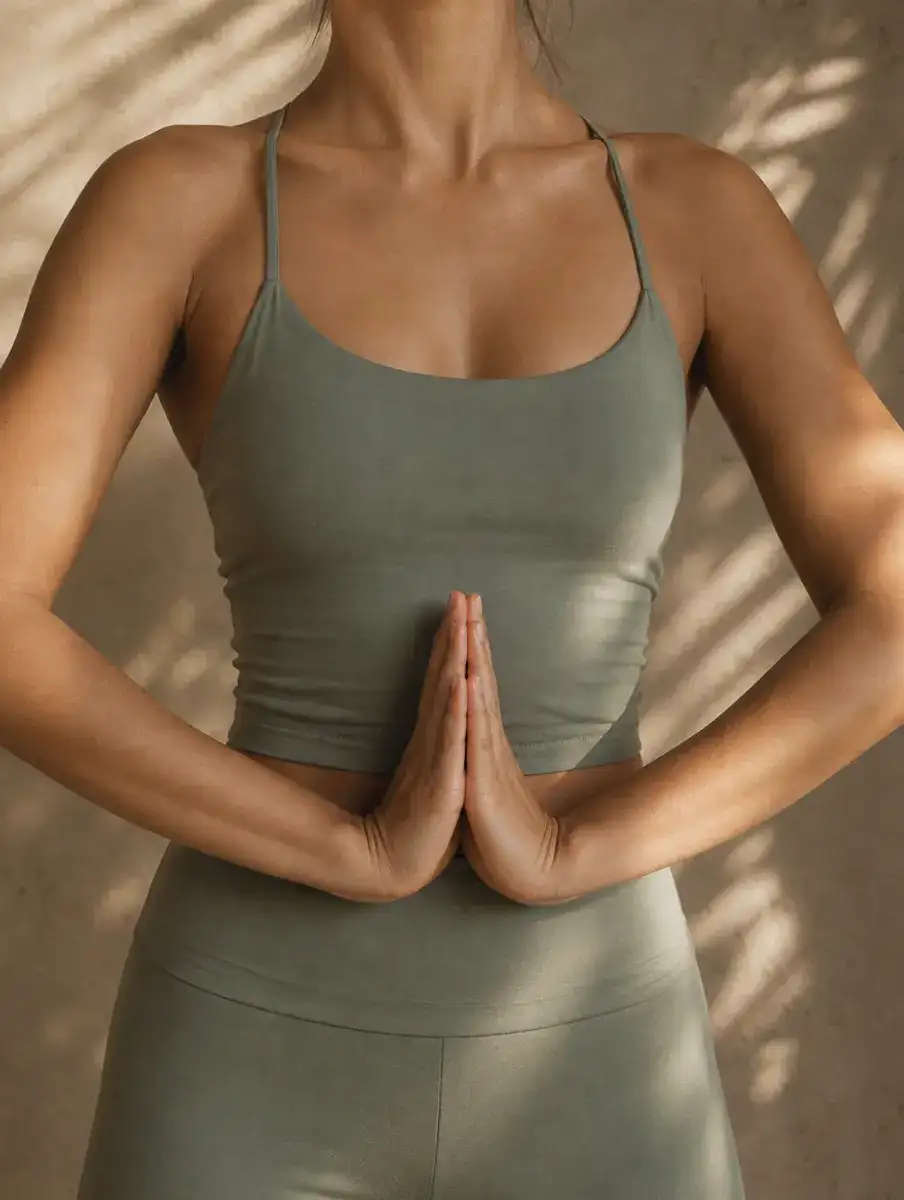
A gentle wrist stretch bends the hand back or forward until you feel a mild pull along the forearm, then holds for five slow breaths, about 20 to 30 seconds. The seven below take five minutes and suit both a yoga warm-up and a break from typing. Numbness or tingling in the fingers is a reason to see a doctor.
The wrists do a lot of quiet work. On a desk day they hover over a keyboard and a mouse for hours, bent slightly back. In a yoga class they carry body weight in Downward Dog, Plank and every Sun Salutation. A few minutes of wrist stretching, before practice and during long screen days, gives them some movement in the other directions.
The seven stretches below take about five minutes and need nothing but a table or the floor.
When should you see a doctor instead?
Stop, and see a doctor or physiotherapist, if:
- you have numbness, tingling or pins and needles in the fingers, especially at night;
- the hand feels weak, or you drop things;
- the wrist is swollen or painful after a fall onto the hand;
- pain is sharp, is getting worse or has lasted more than a couple of weeks.
These stretches are for ordinary stiffness. They are not a treatment for carpal tunnel, tendon problems or an injured wrist.
How long should you hold a wrist stretch?
Five slow breaths, about 20 to 30 seconds, then switch hands. The forearm muscles are small, so keep the pull light. If the fingers tingle during a stretch, ease off at once.
The routine: seven wrist stretches
- Wrist circles. Make loose fists and circle the wrists slowly, ten times each way. Breathe normally. This warms the joint before anything is held.
- Prayer stretch. Press the palms together in front of the chest, fingers up. Keeping the palms together, lower the hands slowly towards the waist until you feel the inner forearms. Five breaths.
- Reverse prayer. Press the backs of the hands together, fingers pointing down, and lift the hands slowly. You feel the tops of the wrists. Five breaths.
- Forearm stretch, palm out. Hold the right arm out in front, palm facing away, fingers up. With the left hand, draw the fingers gently back towards you. Five breaths, then turn the palm down and draw the back of the hand gently towards you. Switch arms.
- Kneeling wrist stretch. On hands and knees, turn the hands so the fingers point back towards the knees, palms down. Rock the hips back only slightly. Five breaths. Then turn the palms up, backs of the hands on the floor, for three breaths.
- Finger spreads. Spread the fingers wide, hold for a breath, then make a soft fist. Ten times. This wakes up the hand before weight-bearing poses.
- Shake out. Let the arms hang and shake the hands loosely for ten seconds.
How do you protect the wrists in yoga?
Spread the fingers wide and press through the whole hand, especially the knuckle of the index finger, rather than sinking into the heel of the palm. In Downward Dog with the knees bent, more weight moves back into the legs. In Plank, lower the knees. A folded edge of the mat under the heels of the hands makes the angle easier, and a slow Cat-Cow on hands and knees is a gentle way to load the wrists before a flow. On days the wrists need a full break, follow this wrist-free yoga flow, which leaves out every pose that puts weight on the hands.
What helps wrists on a desk day?
Keep the forearms roughly level with the keyboard, the wrists straight rather than bent up, and the mouse close. Get up every hour. Stretches 1 to 4 fit between calls, and the desk yoga five-minute reset adds a few more for the neck and back. Tight wrists often travel with tight shoulders, so the shoulder stretches for laptop days are a natural partner.
Should you strengthen the wrists too?
Stretching keeps the forearms supple, and a little strength helps the wrists carry body weight in Plank and Downward Dog. Three easy moves need only things you already have at home:
- Towel squeeze, 10 reps each hand. Roll a small towel, squeeze it firmly for three seconds, then release.
- Water bottle wrist curls, 10 reps each hand. Rest the forearm on a table with the hand over the edge, palm up, holding a small bottle of water. Curl the wrist up slowly and lower it slowly. Then turn the palm down and repeat.
- Rubber band finger opens, 10 reps. Put a rubber band around the fingers and thumb and open the hand against it, slowly.
Keep the effort light and stop for any pain. Then build weight-bearing slowly in practice: Tabletop, then Plank with the knees down, then full Plank for a few breaths.
A two-minute break for long shifts
For BPO, night-shift and other long screen shifts, set a reminder every hour or two and do this at the desk:
- Wrist circles, five each way.
- Prayer stretch, three breaths.
- Forearm stretch, palm out, three breaths each hand.
- Finger spreads, five times.
- Shake out the hands, then roll the shoulders back three times.
Phone use counts too. A long ride scrolling with the wrist bent and the thumb working is a good time to switch hands, rest the phone on your lap, or put it away for a stop or two.
How long before the wrists feel better?
It depends on why they feel stiff. Ordinary desk stiffness often eases soon after you start taking regular breaks and stretching, while building the strength to hold Plank comfortably usually takes weeks of steady practice. If pain, numbness or tingling continues, see a doctor rather than stretching through it.
Common mistakes
- Pulling the fingers hard. The forearm muscles are small. A light pull is enough.
- Locking the elbow. In forearm stretches, keep a soft bend.
- Skipping the warm-up before a flow. Weight on cold wrists is where many students first feel them.
Make it easier or harder
Easier: do every stretch at a table, without body weight, and hold for three breaths.
Harder: in the kneeling stretch, rock the hips back a little further, staying well inside comfort. Hold the forearm stretches for eight breaths.
Best time to do it
Of the 8 moves, 8 work as warm-up moves and 5 as slower cool-down holds (some do both), so it fits most times of day after a few minutes of walking or easy movement. You can also split it: the gentler moving parts before exercise, the longer holds after.
How long to hold each move
Holds below are for a medium pace; at a slower pace, stay up to the longer time. Moves marked each side are done on both sides.
| Move | Hold | Slower pace |
|---|---|---|
| Wrist Circles | 30 s of slow rounds | 45 s |
| Prayer Stretch | 25 s | 40 s |
| Reverse Prayer Wrist Stretch | 25 s | 40 s |
| Wrist Flexor Stretch | 20 s each side | 30 s |
| Wrist Extensor Stretch | 20 s each side | 30 s |
| Kneeling Wrist Stretch | 25 s | 40 s |
| Finger Spreads | 20 s of slow rounds | 30 s |
| Shake Out | 10 s of slow rounds | 15 s |
Put it into practice with the poses-by-body-part finder and the app's mobility routine, built on pages like this one.
Browse the stretching library.
Sources: Mayo Clinic, Fitness program: 5 steps to get started; NCCIH (US National Institutes of Health), Yoga: Effectiveness and Safety. Last reviewed 2 October 2026.
Questions
Why do wrists hurt in Downward Dog?
Often because the weight sinks into the heel of the hand while the fingers do little. Spread the fingers wide, press through the knuckles and the pads under the index finger and thumb, and bend the knees so more weight moves back towards the legs. Warming the wrists first helps many people.
Can you do wrist stretches at a desk?
Yes. The prayer stretch, the reverse prayer and the forearm stretch with the arm held out all work sitting in a chair, in work clothes. A minute every hour or so, along with getting up from the screen, is an easy habit to keep.
Is a wedge or folded mat good for sore wrists in yoga?
Many people find that a folded edge of the mat or a thin wedge under the heels of the hands makes weight-bearing poses more comfortable, because it reduces how far the wrist bends back. Coming onto the forearms, as in Dolphin or a forearm plank, is another option.
How can you build wrist strength for Plank at home?
Start with light grip and wrist curl work, such as squeezing a rolled towel and curling a small water bottle, then load the wrists gradually: Tabletop, Plank with the knees down, and short holds of full Plank. Spread the fingers wide and stop for any pain.
What makes wrists feel tight?
Most everyday wrist tightness comes from holding one position for hours: hovering over a keyboard and mouse bent slightly back, or scrolling a phone with the wrist bent and the thumb working. Weight-bearing yoga poses on cold wrists add to it. Numbness, tingling, weakness or swelling is different, and worth showing a doctor or physio.
Should you stretch a wrist that hurts?
For ordinary stiffness from a desk day, gentle stretches with a light pull are fine. Do not stretch through pain. Stop and see a doctor or physio if the wrist is swollen or painful after a fall, the pain is sharp or getting worse, or you have numbness, tingling or weakness in the hand.
Pairs well with
Your yoga calendar
We track every yoga event, workshop and pop-up class so you don't have to.
Updated