Stretches
A warm-up routine for before yoga, the gym or a run
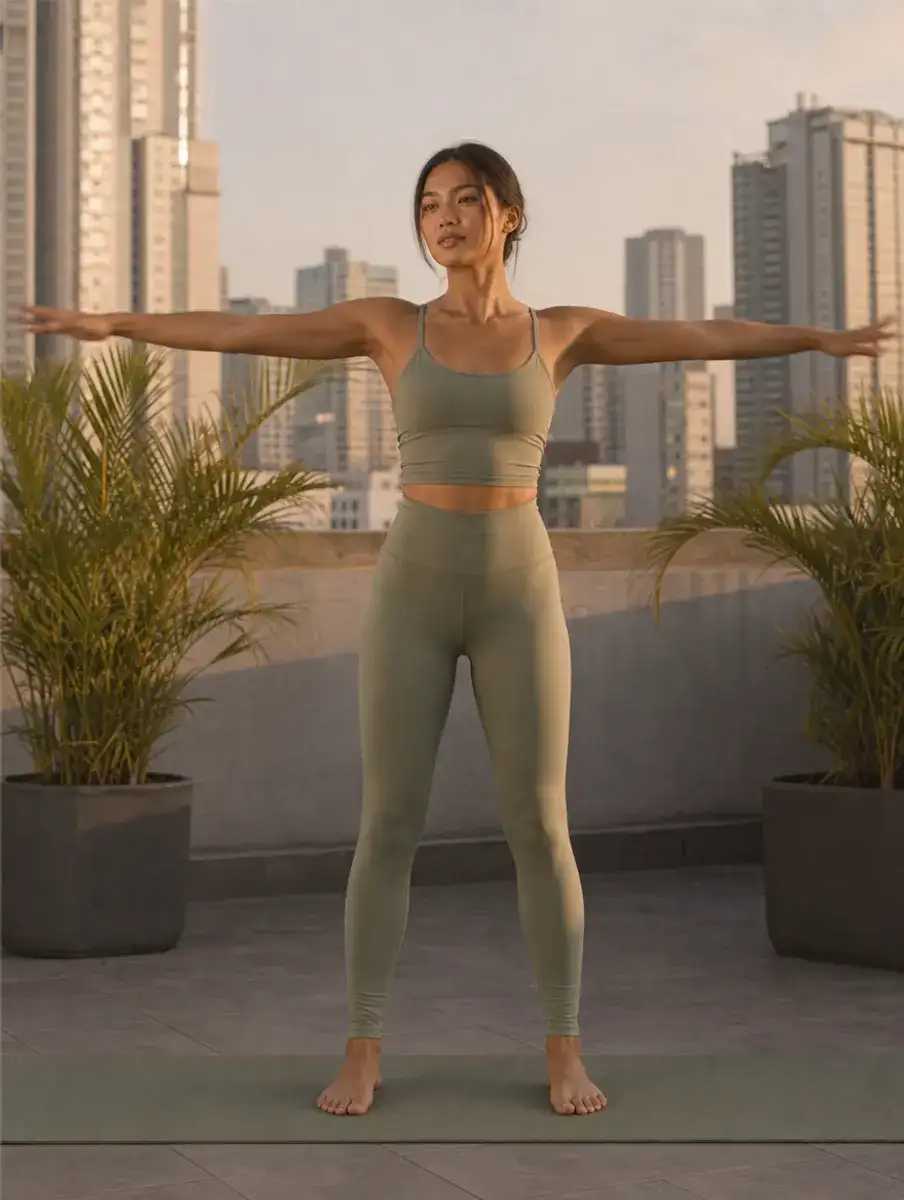
A good warm-up raises your temperature and breathing gradually and moves each joint through an easy range before harder work. Start with a few minutes of marching or brisk walking, then do joint circles, Cat-Cow, gentle lunges and leg swings. Five to eight minutes is enough before most yoga classes and workouts.
A warm-up is the bridge between sitting still and working hard. A few minutes of easy movement raise your body temperature and breathing gradually and take each joint through a comfortable range, so the first strong pose or the first heavy set does not come as a shock. These warm up exercises suit a yoga class, a gym session or a home workout.
The routine takes five to eight minutes and needs only a mat or a strip of floor.
Before you start: safety
Stop, and see a doctor or physiotherapist, if a warm-up movement causes sharp pain, if a joint is swollen or unstable, or if you are returning from an injury or surgery. Dizziness, chest pain or unusual breathlessness means stop and get help straight away. In hot weather or a heated room, drink water first, keep the warm-up lighter and take breaks.
How should a warm-up feel?
Easy, then slightly warmer. By the end you should be breathing a little faster, but still able to talk. Every movement stays inside a comfortable range; a warm-up is not the place for deep stretches or long holds. Not sure whether to hold or move? The page comparing static and dynamic stretching explains when each one fits.
The routine: eight warm up exercises
- March or brisk walk, 2 minutes. March on the spot, swinging the arms, or walk briskly around the room. Breathe steadily.
- Neck and shoulder rolls, 30 seconds. Roll the shoulders slowly back five times, then let the chin drop and roll the head gently from one shoulder to the other in a half circle, five times.
- Arm circles, 30 seconds. Small circles getting bigger, ten forward and ten back.
- Hip circles, 30 seconds. Hands on the hips, feet hip-width apart, circle the hips slowly five times each way.
- Cat-Cow, 1 minute. On hands and knees, breathe in as the belly drops and you look forward; breathe out as you round the back. Eight slow rounds. Cat-Cow, the easiest spine warm-up, has the cues.
- Leg swings, 1 minute. Holding a wall, swing one leg forward and back ten times, then side to side ten times. Switch legs.
- Bodyweight squats, 10 slow reps. Feet hip-width or a little wider, sit the hips back and down as if towards a chair, then stand. Breathe out as you rise. Keep the knees in line with the toes.
- Walking lunges or lunge steps, 10 steps. Step forward into a small lunge, then bring the feet together. Alternate legs.
How do you warm up for a yoga class?
Most classes include their own warm-up, but arriving early and moving for two minutes helps, especially after a commute. Steps 2, 3, 5 and a few gentle rounds of Sun Salutation, slowly, with the knees down cover what a class will ask for. If you practise flows with a lot of weight on the hands, add a minute of wrist circles; the wrist stretches for yoga and desk days show more.
How do you warm up for a workout or a run?
Start with steps 1 to 8, then do a lighter version of the main activity: a few easy sets before heavier lifting, or a few minutes of easy jogging before a faster run. Runners will find a focused version in stretching before running.
How do you match the warm-up to the activity?
The eight moves above are a general base. Spend the last two or three minutes on movements that look like the session ahead.
| Before | Add after the base routine | Time |
|---|---|---|
| A yoga class | Cat-Cow, two slow Sun Salutations with the knees down, wrist circles | 3 minutes |
| A run | Easy jog, then a few strides at a slightly quicker pace | 3 to 5 minutes |
| Weights | One or two light sets of your first lift | 3 to 5 minutes |
| Basketball or badminton | Side shuffles, gentle hops on the spot, arm swings | 3 minutes |
| A long walk or hike | Ankle circles and calf raises | 2 minutes |
Two extra moves worth knowing
- Inchworm. Stand, fold forward with the knees bent, walk the hands out to a high plank, then walk them back and stand. Breathe out as you walk out. Five slow reps warm the hamstrings, shoulders and core together.
- Book opener. Lie on your side with the knees bent and stacked, arms straight out in front. Lift the top arm and open it across to the other side, following it with your eyes, then close it again. Five each side for a stiff upper back after a day at a desk.
How do you know you are warmed up?
Look for three signs: you are breathing a little faster but can still speak in full sentences, the skin feels warm and perhaps lightly damp, and the movements that felt stiff in the first minute now feel smoother. If one joint still feels stiff, give it another minute of easy circles rather than a long stretch.
Warming up before a dawn practice
Many people in Metro Manila train before work to beat the traffic and the midday sun. First thing in the morning the spine and hips are usually stiffer than they feel, even on a warm day, because you have been lying still for hours. Give the joint circles and Cat-Cow an extra minute, start the squats and lunges with a smaller range, and leave the deepest stretches for later in the session. A glass of water before you start helps too.
Common mistakes
- Starting with long, deep stretches. Keep holds for the end. Warm-ups move.
- Rushing. Big, fast swings before the body is warm are where strains happen. Start small.
- Skipping it when short on time. Even two minutes of marching and circles is better than none.
- Doing too much. A warm-up should not tire you out before the session starts.
Make it easier or harder
Easier: do everything standing, holding a chair for balance, and skip the squats and lunges. Swap Cat-Cow for seated spine circles on a chair.
Harder: add a minute of easy skipping or step-ups after the march, and slow the squats down to three counts each way.
What comes after the workout?
The mirror image of this page: slow, still stretches once your breathing settles. The cool down stretches for after a workout take about ten minutes, and on a free morning the 15-minute stretching routine from head to toe covers everything in one go. Before the workout, the ten dynamic stretches from leg swings to inchworms give you more moves to swap in.
Best time to do it
10 of the 10 moves are done with the breath rather than held, so this routine suits the start of the day or the few minutes before a walk, a run, a workout or a class.
How long to hold each move
Holds below are for a medium pace; at a slower pace, stay up to the longer time. Moves marked each side are done on both sides.
| Move | Hold | Slower pace |
|---|---|---|
| March on the Spot | 1 min of slow rounds | 1 min 30 s |
| Shoulder Rolls and Shrugs | 30 s of slow rounds | 45 s |
| Arm Circles | 30 s of slow rounds | 45 s |
| Hip Circles | 30 s of slow rounds | 45 s |
| Cat-Cow | 45 s of slow rounds | 1 min 10 s |
| Forward Leg Swings | 30 s of slow rounds each side | 45 s |
| Bodyweight Squats | 40 s of slow rounds | 1 min |
| Walking Lunge with a Reach | 40 s of slow rounds | 1 min |
| Inchworm | 40 s of slow rounds | 1 min |
| Open Book | 40 s of slow rounds each side | 1 min |
Pair it with
Other stretching routines that work the same areas, for a longer session or the next day:
- Cool down exercise routine for after a workout also works the hips and shoulders
- Flexibility routine also works the hips and shoulders
- Mobility exercises for the hips, spine and shoulders also works the hips and shoulders
Browse the stretching library.
Sources: Mayo Clinic, Fitness program: 5 steps to get started; NCCIH (US National Institutes of Health), Yoga: Effectiveness and Safety; NHS, Heat exhaustion and heatstroke; Cleveland Clinic, Heat Exhaustion: Symptoms & Treatment; CDC, Heat and Chronic Conditions; CDC, Heat and Pregnancy. Last reviewed 2 October 2026.
Questions
How long should a warm-up be?
Five to ten minutes suits most people before a yoga class, a gym session or an easy run. Before something faster or heavier, a few extra minutes of the movement you are about to do, at a lighter level, is common.
Is a Sun Salutation a good warm-up?
Yes. A few slow rounds move the spine, hips, hamstrings and shoulders and raise the breath gradually, which is why many yoga classes begin with them. Start with gentle versions, knees down and Cobra instead of Upward Dog, and build up.
Do you need to warm up for a gentle yoga class?
A gentle class usually warms you up as part of the class, with slow movement at the start. If you arrive straight from a cold, air-conditioned office or a long drive, a minute or two of easy movement on the mat before class begins is still a good idea.
What is the difference between a warm-up and stretching?
A warm-up raises your body temperature and breathing and moves each joint through an easy range, mostly with continuous movement. Stretching usually means holding a position near the end of your range for a while. Before exercise, keep the moving warm-up; save the longer held stretches for afterwards or for a separate session.
What are simple warm up exercises for PE class?
The warm-ups many Philippine PE classes use work well anywhere: marching or jogging on the spot, gentle neck turns, shoulder shrugs and rolls, arm circles forward and back, side step touches and slow knee lifts. Do each for about 16 counts or 30 seconds, building from small movements to bigger ones.
Do you still need to warm up in hot weather?
Yes. In Philippine heat your body warms up faster, so the warm-up can be a little shorter and gentler, but your joints still need an easy range before harder work. Drink water before you start, choose shade or the cooler parts of the day, and stop if you feel dizzy, sick or unusually tired.
Pairs well with
Your yoga calendar
We track every yoga event, workshop and pop-up class so you don't have to.
Updated