Stretches
Mobility exercises for the hips, spine and shoulders
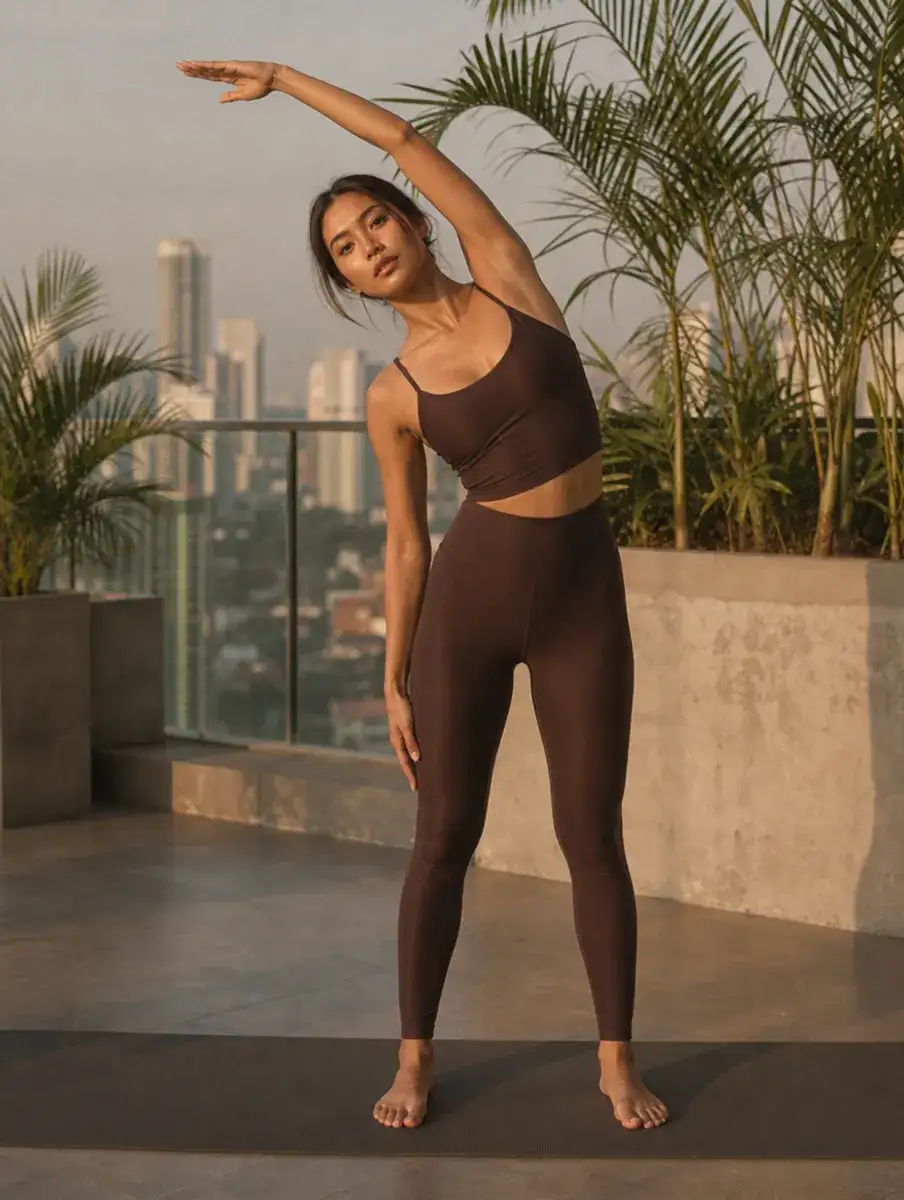
Mobility exercises move a joint slowly and with control through its full comfortable range, rather than holding a passive stretch. Think hip circles, spine waves and shoulder circles, done for five to ten slow repetitions with steady breathing. The nine below take about ten minutes and suit a warm-up, a desk break or a rest day.
Mobility exercises are slow, controlled movements that take a joint through the range it already has, and gently ask for a little more. Unlike a held stretch, the muscles stay active the whole time. That is why mobility work suits a warm-up, a break from the laptop or a rest day: it wakes the joints up without tiring you out.
The nine exercises below cover the hips, spine and shoulders, the three areas that stiffen most on long sitting days. They take about ten minutes.
Before you start: safety
See a doctor or physiotherapist first if a joint is swollen, locks, gives way or follows a recent injury or surgery. Stop any movement that causes a sharp pain, a pinch in the joint, or numbness or tingling. Mobility work should feel smooth and easy, never forced.
How should mobility exercises feel?
Slow and controlled. Move at about half your normal speed, breathe steadily and stay in the range you can control. If you have to swing or bounce to get there, the range is too big today.
The routine: nine mobility exercises
Spine
- Cat-Cow, 8 rounds. On hands and knees, breathe in as the belly drops and you look forward; breathe out as you round the back from the tailbone up. Move one segment at a time.
- Thread the needle, 5 each side. From hands and knees, slide the right arm under the left, rotating the upper back, then sweep it up towards the ceiling. Breathe out as you thread, in as you open.
- Standing side bends, 5 each side. Feet hip-width, reach one arm up and over, breathing out, then come back to centre.
Hips
- Hip circles on hands and knees, 5 each way, each leg. Lift one knee a little and draw slow, big circles with it, keeping the back still.
- Seated 90/90 switches, 6 each side. Sit with both knees bent at right angles, one in front, one to the side. Lean back on the hands and slowly swing both knees to the other side. Keep it small if the hips are stiff.
- Deep squat hold with shifts, 30 seconds. Holding a door frame, lower into a squat, heels propped if needed, and shift the weight slowly from foot to foot.
Shoulders
- Shoulder circles, 10 each way. Lift the shoulders up, draw them back, let them drop and bring them forward, as slowly as you can.
- Wall slides, 8 reps. Stand with the back against a wall, elbows bent at shoulder height, backs of the arms on the wall. Slide the arms up as far as they stay in contact, then down. Breathe out on the way up.
- Arm sweeps lying on your side, 5 each side. Lie on your left side, knees bent, arms out in front. Sweep the right arm up over the head and around behind you in a big arc, following it with the eyes, then return.
Shoulder mobility: what helps on laptop days?
Shoulder mobility is how freely the shoulders move overhead, behind you and across the body. On desk days they spend hours forward and still. Exercises 7 to 9 move them in each of those directions. Add them to the held stretches on the shoulder stretches for laptop days page, and for the habits behind rounded shoulders, read yoga for posture at a desk.
What about the ankles?
The routine above leaves out the joint that most squats, lunges and Downward-Facing Dogs depend on. Add these two if the heels lift in a squat:
- Ankle circles, 8 each way, each foot. Sit or stand holding a wall, lift one foot and draw slow circles with the toes.
- Knee to wall, 8 each side. Face a wall in a half-kneeling position with the front toes a hand’s width from it. Keeping the heel down, bend the front knee towards the wall and back. Move the foot further away as it gets easy.
Mobility, stretching or foam rolling?
| Method | What you do | Best moment |
|---|---|---|
| Mobility exercises | Move a joint actively through its range, under control | Before exercise or as a daily habit |
| Static stretching | Hold a lengthened position for several breaths | After exercise or in the evening |
| Foam rolling | Roll slowly over a muscle on a roller or ball | Either, if you find it comfortable |
They work well together. Mobility gets the joints moving; stretching and rolling help you settle afterwards.
Three short versions for different days
- Before a run or the gym (5 minutes): exercises 1, 3, 4, 6 and 7, plus ankle circles.
- Desk break (3 minutes): standing side bends, shoulder circles and wall slides.
- Before yoga (4 minutes): Cat-Cow, thread the needle, hip circles and the 90/90 switches.
How can you track progress?
Choose two simple checks and repeat them every two weeks, in the same clothes and at the same time of day:
- How low you can squat with the heels down, holding a door frame.
- How far the knee travels past the toes in the knee-to-wall test, in centimetres.
- Whether the backs of the hands reach the wall in a wall slide.
How long until mobility work makes a difference?
Joints usually feel looser within a single session, which is the main reason to do mobility before training. Changes you can measure with the checks above tend to show after several weeks of short, frequent practice. Ten minutes most days usually beats one long session a week.
Common mistakes
- Going fast. Speed hides stiff spots. Slow is the point.
- Holding the breath. Match the movement to the breath.
- Forcing the end range. Mobility builds control in the range you have. More will come gradually.
- Arching the lower back in wall slides. Keep the ribs down and the lower back close to the wall.
Make it easier or harder
Easier: do the shoulder and spine exercises seated on a chair, keep the hip circles small and skip the deep squat. If your lower back is sensitive, the lying-down stretches for a stiff lower back are a softer start. On rest days, foam roller exercises for the legs and upper back pair well with this routine.
Harder: add repetitions, slow each one to a count of five, or pause for a breath at the end of each range. For an even slower take on the spine and hips, try the somatic exercises that move at a third of normal speed. For more range to work with, pair this page with the held stretches in flexibility exercises. Before a workout, the dynamic stretches list with reps and breath uses a faster, warm-up version of the same idea.
Best time to do it
8 of the 11 moves are done with the breath rather than held, so this routine suits the start of the day or the few minutes before a walk, a run, a workout or a class.
How long to hold each move
Holds below are for a medium pace; at a slower pace, stay up to the longer time. Moves marked each side are done on both sides.
| Move | Hold | Slower pace |
|---|---|---|
| Cat-Cow | 45 s of slow rounds | 1 min 10 s |
| Thread the Needle | 30 s each side | 45 s |
| Standing Side Stretch | 20 s each side | 30 s |
| Hip Circles on Hands and Knees | 30 s of slow rounds each side | 45 s |
| Seated 90/90 Switches | 40 s of slow rounds | 1 min |
| Supported Squat | 30 s | 45 s |
| Shoulder Rolls and Shrugs | 30 s of slow rounds | 45 s |
| Wall Slides | 40 s of slow rounds | 1 min |
| Side-Lying Arm Sweeps | 40 s of slow rounds each side | 1 min |
| Ankle Circles | 30 s of slow rounds each side | 45 s |
| Knee to Wall | 30 s of slow rounds each side | 45 s |
Pair it with
Other stretching routines that work the same areas, for a longer session or the next day:
- Upper back stretches also works the upper back and shoulders
- Cool down exercise routine for after a workout also works the upper back and shoulders
- Back stretches for the whole spine, upper to lower also works the upper back and shoulders
This page feeds the at-home flexibility check and the app's mobility routine.
Browse every stretch by body area.
Sources: Mayo Clinic, Fitness program: 5 steps to get started; NCCIH (US National Institutes of Health), Yoga: Effectiveness and Safety. Last reviewed 2 October 2026.
Questions
What is the difference between mobility and flexibility?
Flexibility is how far a joint can be moved, including with help from gravity, a strap or a partner. Mobility is how far you can move it yourself, with control. Stretching builds the first, and mobility exercises ask the muscles to work through that range so you can use it.
Can you do mobility exercises every day?
Most people can, because the movements are gentle and slow. A few minutes in the morning or between work sessions is a common habit. Skip any movement that hurts, and keep the range comfortable rather than maximal.
Are shoulder mobility exercises good before yoga?
Yes. Shoulder circles, wall slides and gentle arm sweeps before class prepare the shoulders for Downward Dog, Plank and arm balances. Keep them slow and stop if anything pinches at the top of the shoulder.
How long should a mobility routine take?
Five to ten minutes is enough for most people, and even two or three minutes between tasks helps on long sitting days. The nine exercises here take about ten minutes. Frequent short sessions tend to be more useful than one long one.
Should you do mobility exercises before or after a workout?
Before is usually best, since controlled joint movements make a good warm-up. Mobility work also fits on rest days or as a break from sitting. Save long held stretches for after the workout.
What do mobility exercises do?
Mobility exercises move a joint slowly and with control through the range it already has, and gently ask for a little more. Unlike a held stretch, the muscles stay active the whole time, so the joints feel woken up without the session tiring you out. It suits a warm-up, a desk break or a rest day.
Pairs well with
Your yoga calendar
We track every yoga event, workshop and pop-up class so you don't have to.
Updated