Stretches
Back stretches for the whole spine, upper to lower
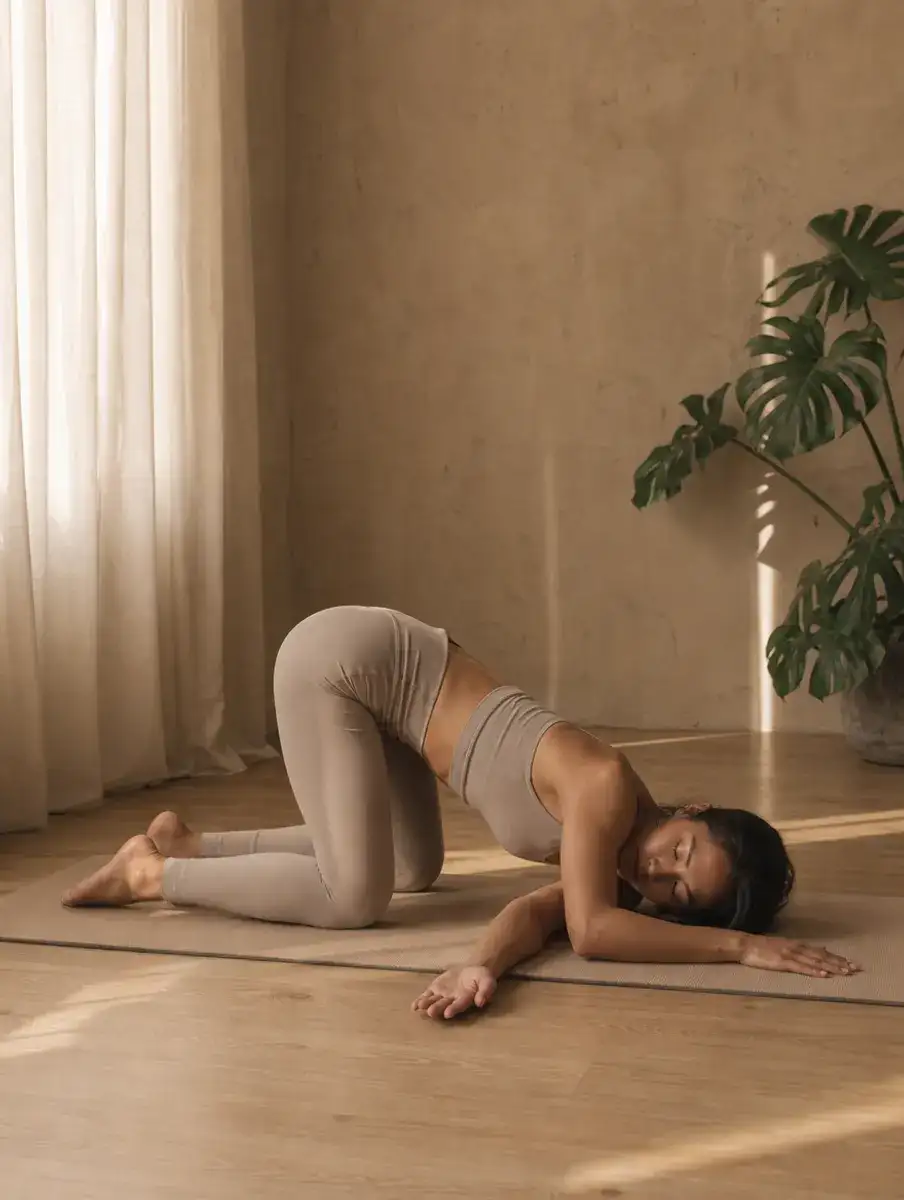
A gentle back stretch routine moves the spine in every direction it can go: rounding and arching in Cat-Cow, bending to each side, twisting both ways and folding forward into Child's Pose, then lying down with the knees hugged in. Hold each shape for five to eight easy breaths, and stop anything that sharpens pain.
The back is a long column of 24 movable vertebrae, plus the sacrum and tailbone, with layers of muscle along both sides. It is built to move: forward, back, sideways and around. Long days of sitting, driving and looking down at a phone mostly ask it to hold still, slightly rounded, which is why it often feels stiff by evening.
This routine moves the whole spine once in each direction, from the upper back down to the hips, in about ten minutes. If your lower back is the main complaint, start with the lower back stretches you can do lying down instead, which stay on the floor throughout.
When should you see a doctor or physio instead?
These stretches are for everyday stiffness. See a doctor or physiotherapist first if your back pain:
- started after a fall, an accident or a heavy lift;
- comes with pain, numbness, tingling or weakness in a leg;
- comes with numbness around the groin or buttocks, or changes in bladder or bowel control (get urgent help);
- comes with a fever or unexplained weight loss, or is worse at night and at rest;
- is getting worse rather than settling.
The page on yoga and back pain explains more about moving with care.
How do you do a back stretch routine?
Hold each shape for five to eight slow breaths unless noted. Move slowly, and breathe out as you settle into each stretch.
- Seated side stretch. Sit cross-legged or on a chair. Place the right hand beside you and reach the left arm up and over to the right. Five breaths, then switch. You feel the side of the back and ribs.
- Cat-Cow. On hands and knees, wrists under shoulders and knees under hips. Breathing in, let the belly drop and look slightly forward; breathing out, round the back and let the head hang. Eight slow rounds. Cat-Cow with the breath has more cues.
- Thread the needle. On hands and knees, slide the right arm under the left, palm up, and rest the right shoulder and the side of the head down. Five breaths, then switch.
- Child’s Pose. Big toes together, knees apart, sit the hips back towards the heels and rest the forehead on a cushion. Eight breaths. The Child’s Pose page shows supported versions.
- Sphinx. Lie on your front with the forearms on the floor and the elbows under the shoulders. Lift the chest gently and keep the lower belly heavy. Five breaths. Come out if the lower back pinches.
- Knees to chest. Lie on your back, hug both knees in and rock slowly side to side. Eight breaths.
- Reclined twist. Knees bent, feet on the floor, arms wide. Let both knees fall to the right onto a cushion. Five to eight breaths, then the other side. Rest flat for a minute to finish.
Which stretch reaches which part of the back?
| Part of the back | Direction it needs | Stretches above |
|---|---|---|
| Upper back, between the shoulder blades | Rounding and turning | 2, 3 |
| Sides of the back and ribs | Side bending | 1 |
| Middle back | Turning and gentle arching | 3, 5, 7 |
| Lower back | Gentle rounding | 4, 6 |
If one area feels much stiffer, spend an extra round there rather than adding new stretches.
Should the back move or hold before exercise?
Before a run, a game or lifting, keep the spine moving rather than holding. Two good options:
- Open book. Lie on your right side with the knees bent and stacked, arms straight in front. Breathing in, sweep the left arm up and over to open the chest towards the ceiling; breathing out, bring it back. Six slow rounds each side.
- Standing twists. Feet hip-width apart, let the arms swing loosely as you turn the upper body side to side. Twenty easy swings.
Save the longer holds for after exercise or the evening.
After a long sit in traffic
A ride home along EDSA or a long provincial bus trip can leave the back stiff in one rounded shape. When you arrive, before you sit down again:
- Stand and reach both arms up, then lean gently to each side, three breaths each.
- Place the hands on the lower back and lift the chest a little, three breaths.
- Bend the knees and fold forward, letting the arms hang, five breaths.
- Roll up slowly, then walk around for two minutes.
How long until a back routine makes a difference?
Many people find the back feels easier straight after the routine, which is useful on its own. A lasting change in how stiff the back feels in the morning usually takes a few weeks of moving it most days, together with strength work and fewer long, unbroken sits. If stiffness is getting worse despite regular, gentle practice, check in with a doctor or physio.
Common mistakes
- Forcing the twist. Let the knees fall with their own weight instead of pulling them down.
- Cranking the neck in Cat-Cow. Move the head with the spine, not ahead of it.
- Lifting too high in Sphinx. The forearms stay down; this is a mild back bend.
- Holding the breath. A held breath usually means the stretch is too strong.
Make it easier or harder
- Easier: do Cat-Cow seated on a chair with the hands on the knees; rest the chest on a bolster in Child’s Pose; skip Sphinx if back bends feel uncomfortable.
- Harder: stay longer in each shape on a rest day, or lift into a low Cobra from Sphinx, only if the lower back feels easy.
Where does this routine fit?
For the area between the shoulder blades, the upper back stretches for screen days go further, and the shoulder exercises that steady the shoulder blades add strength there. For strength along the spine itself, try the back exercises with reps and breath. If the tightness sits deep in the buttock rather than the back, try the glute stretches lying down and seated or the piriformis stretch with its safety notes. For twisting and arching through the middle of the back, see the thoracic spine stretches for mobility.
Best time to do it
Of the 9 moves, 8 work as warm-up moves and 5 as slower cool-down holds (some do both), so it fits most times of day after a few minutes of walking or easy movement. You can also split it: the gentler moving parts before exercise, the longer holds after. Most of the moves are calm, unhurried shapes, which many people like before bed.
How long to hold each move
Holds below are for a medium pace; at a slower pace, stay up to the longer time. Moves marked each side are done on both sides.
| Move | Hold | Slower pace |
|---|---|---|
| Seated Side Stretch | 25 s each side | 40 s |
| Cat-Cow | 45 s of slow rounds | 1 min 10 s |
| Thread the Needle | 30 s each side | 45 s |
| Child's Pose | 45 s | 1 min 10 s |
| Sphinx Pose | 45 s | 1 min 10 s |
| Knees to Chest | 40 s | 1 min |
| Supine Twist | 1 min each side | 1 min 30 s |
| Open Book | 40 s of slow rounds each side | 1 min |
| Standing Twists | 30 s of slow rounds | 45 s |
Pair it with
Other stretching routines that work the same areas, for a longer session or the next day:
- Full body stretch routine also works the spine and lower back
- A 10-minute wake-up routine, in bed and on the floor also works the spine and lower back
- Mobility exercises for the hips, spine and shoulders also works the spine and lower back
This page feeds the ball size calculator.
Browse all stretching routines.
Sources: Mayo Clinic, Fitness program: 5 steps to get started; NCCIH (US National Institutes of Health), Yoga: Effectiveness and Safety; NHS, Back pain; Cochrane, Yoga for chronic non-specific low back pain. Last reviewed 2 October 2026.
Questions
In which directions should a back stretch move the spine?
The spine can round forward, arch back, bend to each side and twist. A balanced routine visits all of them gently, rather than spending the whole time folding forward, which is the shape most of us already sit in.
Is it better to stretch the back lying down or standing?
Lying down is gentler for a stiff or sensitive back, because the floor supports the spine and the legs carry no weight. Standing and kneeling versions suit a back that already feels good and wants to move more.
Should you stretch the back when it is sore after lifting?
Mild stiffness the day after moving furniture or gardening often responds well to easy movement such as walking and gentle stretches. Sudden sharp pain while lifting, pain that spreads into a leg, or pain that is not settling is a reason to see a doctor or physio first.
Can you do back stretches at your desk?
Yes. Sitting tall near the front of your chair, you can reach one arm overhead for a side bend, turn gently into a seated twist with a hand on the backrest, and round and arch the spine with your hands on your knees. A minute of these every hour or so suits long working days.
Why does the back feel stiff in the morning?
After hours of lying fairly still, the spine and the muscles around it have not moved much, so the first movements of the day can feel stiff. Slow, small movements such as knee hugs and Cat-Cow usually ease that within minutes. Morning stiffness that lasts a long time or keeps getting worse needs a doctor.
How can you loosen a tight back quickly?
Keep it short and gentle. Stand and reach both arms up, then lean to each side for three breaths. Place the hands on the lower back and lift the chest a little, then bend the knees and fold forward for five breaths. Roll up slowly and walk around for two minutes.
Pairs well with
Your yoga calendar
We track every yoga event, workshop and pop-up class so you don't have to.
Updated