Stretches · reviewed by a teacher
A 15-minute stretching routine from head to toe
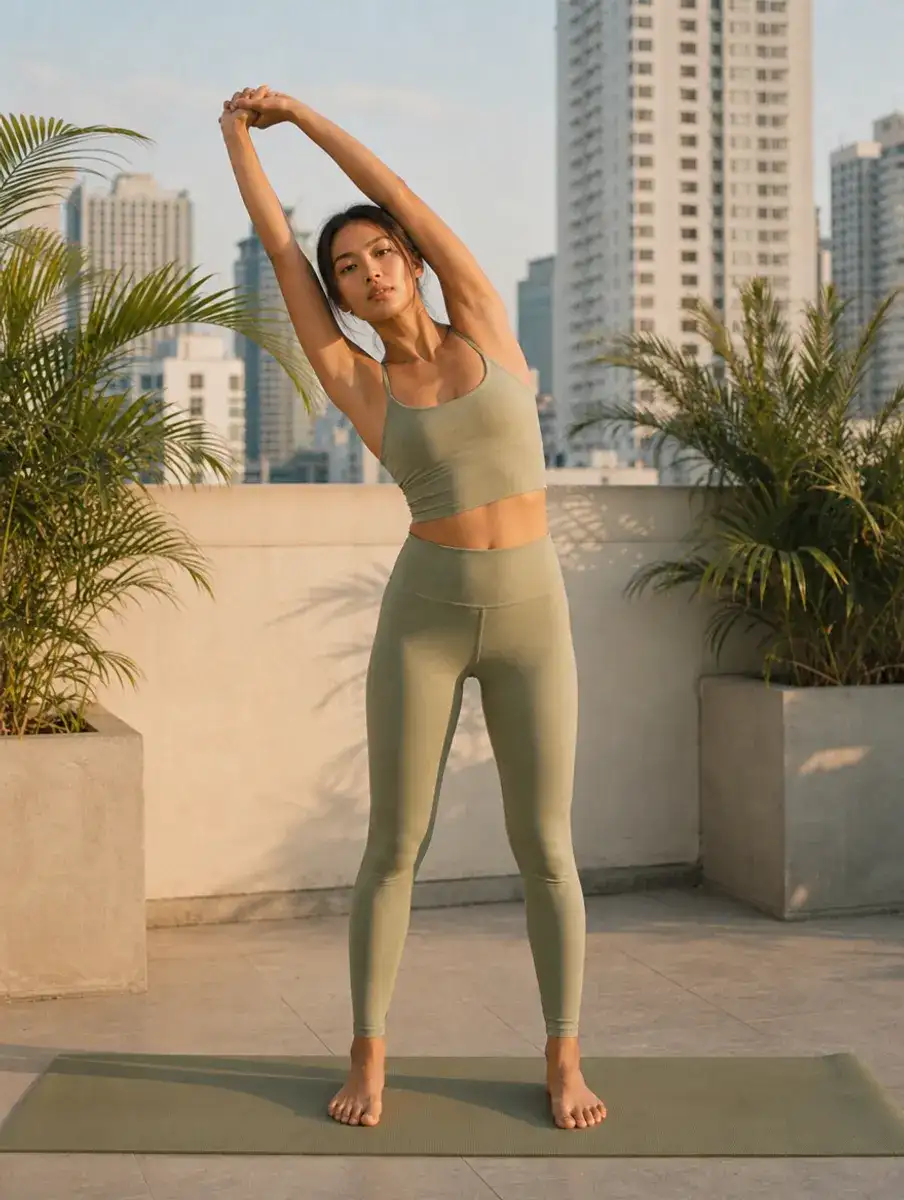
A full body stretch works from the top down: neck and shoulders first, then the spine, the sides of the body, the hips and the legs, ending with a few minutes of rest. The 15-minute routine below needs a mat or a rug, holds most shapes for five slow breaths and has an easier option at every step.
Teacher's note from Joahnna Lee
“I built this routine from the shapes I use most with beginners.”
Some days nothing in particular hurts, but everything feels a little stuck. A full body stretch is for those days: fifteen minutes that move every major joint once, from the neck down to the ankles, and finish with a short rest.
The routine uses the shapes most teachers lean on with beginners. If you have never done yoga, it is a gentle first taste, and the guide to private yoga for complete beginners explains how a teacher can watch how you move and adapt it to you. If you are heading to a group class instead, read about what happens in your first yoga class.
You need a mat or a rug, a cushion and about fifteen minutes. Wear something you can move in.
Before you start: is this safe for you?
For most people, yes. Move slowly, breathe normally and stop anything that hurts. A stretch should feel broad and mild. Sharp, pinching or tingling sensations mean come out. If you have an injury, a joint or back condition, high blood pressure that is not controlled, or you are pregnant, ask your doctor, physiotherapist or OB before you start.
How long should you hold each stretch?
Most shapes below are held for five slow breaths, about 30 seconds, on each side. The moving parts, like Cat-Cow, are done in slow rounds. Keep the breath steady through the nose if you can. If you find yourself holding your breath, ease off.
The routine: 15 minutes, head to toe
- Stand and breathe (1 minute). Stand tall in Mountain Pose, feet hip-width apart. Let the arms hang. Take five slow breaths, letting the shoulders drop on each out-breath.
- Neck (1 minute). Tilt the right ear towards the right shoulder for three breaths, then the left. Turn the head slowly to look over each shoulder.
- Shoulders and chest (1 minute). Roll the shoulders back five times. Interlace the fingers behind you, or hold a towel, and draw the hands down to widen the chest for five breaths.
- Side stretch (1 minute). Reach both arms up, hold the left wrist with the right hand and lean gently to the right. Five breaths, then the other side.
- Standing forward fold (1 minute). Bend the knees generously and fold from the hips. Hold the elbows and sway a little. Roll up slowly, head last.
- Cat-Cow (1 minute). Come to hands and knees. Breathing in, let the belly drop and look forward; breathing out, round the back. Eight slow rounds.
- Thread the needle (1 minute). Slide the right arm under the left and rest the right shoulder down. Five breaths, then the other side.
- Downward Dog (1 minute). Lift the hips up and back with the knees bent, pedalling the heels. Rest in Child’s Pose if the wrists or shoulders tire.
- Low lunge (2 minutes). Step the right foot forward, lower the left knee onto a cushion and ease the hips forward. Five breaths, then the other side.
- Seated forward fold (1 minute). Sit on a cushion with the legs out and the knees bent, and fold forward from the hips.
- Reclined twist (1 minute). Lie on your back, knees bent, and let them fall to the right with the arms wide. Five breaths each side.
- Figure four (1 minute). Still on your back, cross the right ankle over the left knee. Five breaths each side.
- Rest (2 minutes). Lie flat or with a cushion under the knees in a supported Savasana. Let the breath go. Then roll to the side and sit up slowly.
Which parts can you shorten?
On a busy day, steps 1, 3, 6, 9 and 13 make a five-minute version. On a slow evening, stay longer in the floor shapes; Reclined Butterfly with cushions under the knees is a lovely extra before the rest.
Where can you go deeper on one area?
Each part of this routine has a longer page of its own. For the top of the body, see the gentle neck routine for screen days and the stretches for shoulders after long laptop hours. For the arms and chest, try the arm stretches from shoulders to wrists, the overhead tricep stretch and its variations and the doorway chest stretches for rounded shoulders. For the spine, the upper back stretches between the shoulder blades and the back stretches from neck to tailbone expand steps 6 to 8. For the backs of the legs, the hamstring stretches with hold times go further. If you would rather move first thing, the morning routine you can start in bed is shorter and gentler. For the names and steps of each pose, the list of yoga poses for beginners links every one.
How a teacher builds on this
A teacher will often start with something very like this routine, then watch how each part moves. A stiff upper back gets more time; a pair of tight hips gets props. Over a few sessions, the routine becomes yours: the shapes that suit your body, in an order you can remember and keep doing at home.
Best time to do it
Of the 13 moves, 9 work as warm-up moves and 7 as slower cool-down holds (some do both), so it fits most times of day after a few minutes of walking or easy movement. You can also split it: the gentler moving parts before exercise, the longer holds after. Most of the moves are calm, unhurried shapes, which many people like before bed.
How long to hold each move
Holds below are for a medium pace; at a slower pace, stay up to the longer time. Moves marked each side are done on both sides.
| Move | Hold | Slower pace |
|---|---|---|
| Mountain Pose | 20 s | 30 s |
| Neck Side Bend | 25 s each side | 40 s |
| Clasped Hands Chest Opener | 25 s | 40 s |
| Standing Side Stretch | 20 s each side | 30 s |
| Standing Forward Bend | 30 s | 45 s |
| Cat-Cow | 45 s of slow rounds | 1 min 10 s |
| Thread the Needle | 30 s each side | 45 s |
| Downward-Facing Dog | 30 s | 45 s |
| Low Lunge | 30 s each side | 45 s |
| Seated Forward Bend | 45 s | 1 min 10 s |
| Supine Twist | 1 min each side | 1 min 30 s |
| Figure Four | 45 s each side | 1 min 10 s |
| Corpse Pose | 5 min | 10 min |
Pair it with
Other stretching routines that work the same areas, for a longer session or the next day:
- Back stretches for the whole spine, upper to lower also works the spine and shoulders
- A 10-minute wake-up routine, in bed and on the floor also works the spine and shoulders
- Warm-up routine also works the spine and shoulders
Browse the stretching library.
Sources: Mayo Clinic, Fitness program: 5 steps to get started; NCCIH (US National Institutes of Health), Yoga: Effectiveness and Safety; NHS, Exercise in pregnancy; CDC, Pregnant & Postpartum Activity: An Overview; Canadian Family Physician (Chan et al., 2014), via PubMed Central, Hot yoga and pregnancy: Fitness and hyperthermia. Last reviewed 2 October 2026.
Questions
Is it better to stretch before or after exercise?
Before exercise, moving stretches such as arm circles, leg swings and gentle lunges warm the body up. Slow, held stretches like the ones on this page suit the end of a workout, a rest day or the evening, when the muscles are already warm.
Can I do this routine every day?
Yes, for most people. Keep it easy, stay well short of any pain and skip the shapes that do not suit your body that day. If you have an injury, a joint condition or are pregnant, ask your doctor, physiotherapist or OB which parts are right for you.
How do you turn this into a 20-minute full body stretch?
Keep the same order and add time on the floor. Stay twice as long in the low lunge, seated forward fold, reclined twist and figure four, and add Reclined Butterfly with cushions under the knees before the rest. Finish with three or four minutes in Savasana instead of two.
Which body parts does a full body stretch cover?
A full body stretch moves every major joint once: the neck, shoulders and chest, the spine in rounding, arching, side bending and twisting, the hips, the backs and fronts of the legs and the ankles. This routine works from the top down and finishes with a few minutes of rest lying on your back.
What is a figure four stretch?
A figure four stretch works the outer hip and buttock. Lie on your back with both knees bent, cross the right ankle over the left knee so the legs make a shape like the number four, and draw the left thigh toward you if you want more. Keep the head down. Five breaths each side.
Pairs well with
Your yoga calendar
We track every yoga event, workshop and pop-up class so you don't have to.
Updated