Guides · reviewed by a teacher
Yoga poses for beginners: twelve shapes to learn first
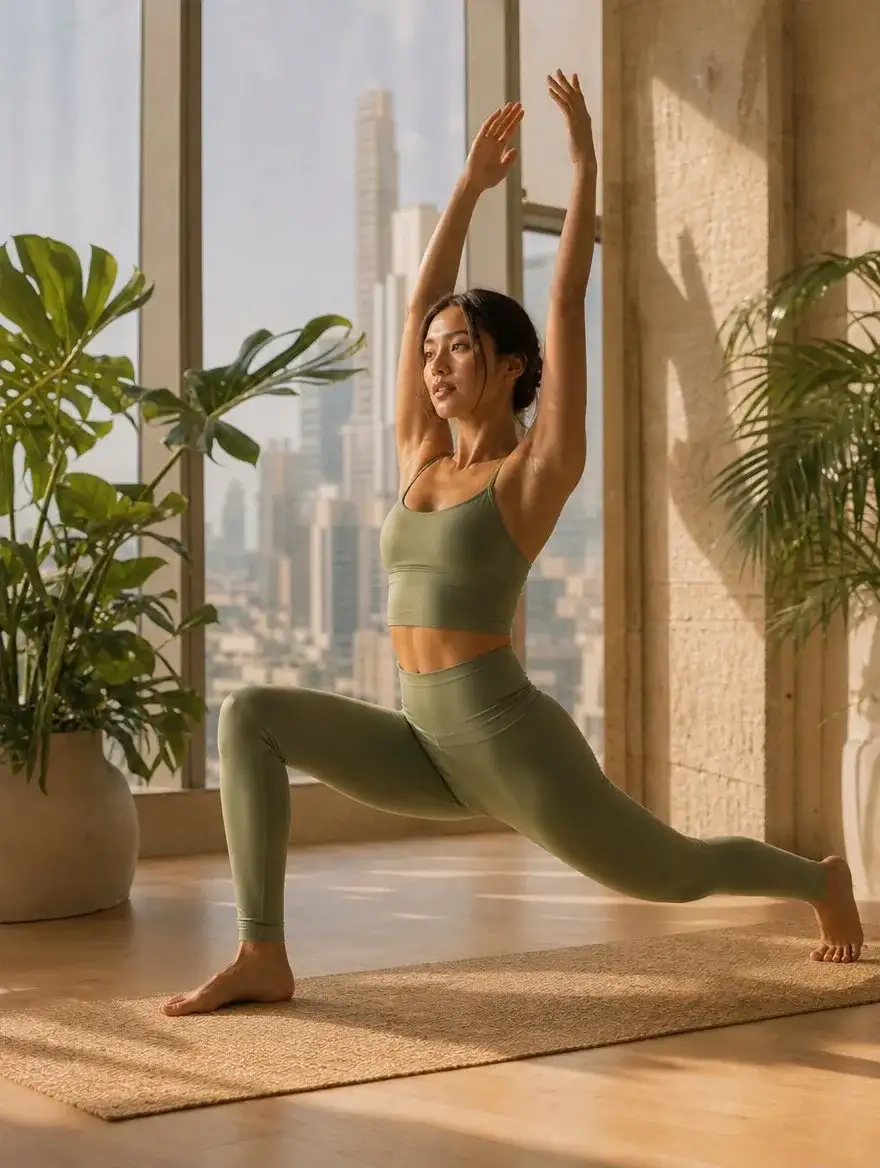
The best yoga poses for beginners are simple standing, kneeling, seated and lying shapes such as Mountain Pose, Cat-Cow, Child's Pose, Bridge and Savasana, learned in their easiest version first. Twelve of them, held for a few slow breaths each, are enough to build a short home practice you can do in about fifteen minutes.
Teacher's note from Joahnna Lee
“These twelve are the ones I would teach first.”
You do not need many poses to start yoga. You need a handful of simple shapes, learned slowly, in the version that suits your body today. These twelve make a good first set, and each links to its own page. On a tired day, the easy yoga poses for stiff bodies go gentler still.
For the bigger picture of how to begin, read how to start yoga as a complete beginner. To keep these and a dozen more on paper, print the beginner yoga poses chart, which shows 24 foundation poses as line drawings with a cue for each.
Before you start: what you need and how long to hold
A mat or a rug that does not slide, a cushion and a folded blanket are enough. Practise barefoot, a while after eating. If you are choosing a mat, see the best yoga mats in the Philippines. For sensitive knees, the guide to yoga mat size and thickness explains how much cushion to look for. For setting up a corner of your room, see yoga at home, a guide to your own practice.
Hold each shape for three to five slow breaths through the nose, then come out gently. The resting shapes can stay longer. Nothing here should cause sharp pain; if it does, stop. The guide to common yoga mistakes beginners make shows what to watch for in each pose.
If you are pregnant or recovering from surgery, the pregnancy and postpartum yoga guides are a better place to start, and the health and safety notes explain what these pages can and cannot do.
Standing poses to learn first
- Mountain Pose, Tadasana. Feet hip-width apart, weight even. Every standing shape starts here.
- Tree Pose, Vrksasana. One foot on the opposite ankle, toes on the floor, a hand on a wall. Balance without the risk of falling.
- Warrior II, from the Warrior family. Step wide, turn one foot out, bend that knee over the ankle. Keep the stance short at first.
- Triangle Pose, Trikonasana. Same stance, legs straight, reach sideways and rest the lower hand on your shin or a block.
- Chair Pose, Utkatasana. Sit back as if into a chair, only a little. It warms you up quickly.
Once those five feel familiar, two more grow out of the same wide stance: Extended Side Angle, the bent-knee cousin of the triangle shape, and Half Moon, which lifts the back leg into a balance. Every standing shape, with two lines on each, is gathered on one page, and the printable yoga poses chart with English and Sanskrit names puts forty of them on one sheet.
On hands and knees
- Cat-Cow, Marjaryasana Bitilasana. Round the back as you breathe out, soften the belly down as you breathe in. The gentlest way to move the spine.
- Downward-Facing Dog, Adho Mukha Svanasana. Lift the hips from all fours, knees bent as much as you like.
- Child’s Pose, Balasana. Sit back towards your heels, forehead down. Your place to rest at any point.
Seated and lying poses
- Easy Pose, Sukhasana. Sit cross-legged on a cushion high enough for the knees to drop below the hips. The shape for breathing.
- Butterfly Pose, Baddha Konasana. Soles of the feet together, knees falling open onto cushions. A quiet stretch for the inner thighs.
- Bridge Pose, Setu Bandha Sarvangasana. On your back, feet flat, lift the hips a little. A block under the sacrum turns it into a rest.
- Corpse Pose, Savasana. Lie flat and let everything go. It looks like nothing and is the hardest to do well.
How do you put them together?
Follow the order a class uses: seated breathing, then hands and knees, then standing, then the floor, with a few minutes of Savasana at the end. Twists such as a gentle seated twist to each side belong near the end, once the body is warm. Ready to string them together? Follow a short beginner sequence that links them.
Once it feels familiar, the Sun Salutation, Surya Namaskar, is a natural next step, and the sun salutation timer can pace your rounds. Yoga for flexibility explains how stiffness changes with practice. For how holding these shapes differs from a plain stretch routine, see yoga vs stretching. If you would rather stretch than learn a sequence, the full body stretch in thirteen steps uses several of these poses, and all the stretching routines are listed by body part. To pick poses for one area, such as the hips or shoulders, the pose finder by body area lists the matches by level and turns them into a short flow.
Which poses should a beginner leave for later?
Headstand, Sirsasana, puts weight through the neck, so learn it with a teacher, later. Crow Pose, Bakasana, asks for wrist and arm strength most beginners are still building, and the same goes for the lifted balances of acro yoga with a partner. Lotus Pose, Padmasana, can strain the knees if the hips are not open enough, and Easy Pose does the same job.
Every one of these can wait. So can Wheel Pose, a full backbend pressed up from the floor, and Handstand, which is learned in stages at a wall: worth learning one day, with a teacher beside you. The advanced yoga poses and the intermediate steps before them show the order to learn them in. The poses library lists the rest by family.
Learning the poses with a teacher
A teacher sees what you cannot: a knee drifting inward, shoulders creeping up, a held breath. A good beginners’ class finds the version of each shape that suits you and repeats it until it feels familiar. Learning to see those things in other people is the core of becoming a yoga teacher.
Your first yoga class explains what to expect on the day, and yoga studios across the Philippines lists places to start. If you would rather learn one to one, see the best private yoga teachers in Manila.
Browse every practical guide.
Sources: Mayo Clinic, Fitness program: 5 steps to get started; NCCIH (US National Institutes of Health), Yoga: Effectiveness and Safety; NHS, Exercise in pregnancy; CDC, Pregnant & Postpartum Activity: An Overview; Canadian Family Physician (Chan et al., 2014), via PubMed Central, Hot yoga and pregnancy: Fitness and hyperthermia. Last reviewed 2 October 2026.
Questions
How many yoga poses should a beginner learn first?
Fewer than you think. Five or six shapes you can do calmly will teach you more than twenty you rush through. The twelve on this page are a full first set, and there is no hurry to get through them all in one week.
How long should a beginner hold each yoga pose?
Three to five slow breaths is plenty at the start. Resting shapes such as Child's Pose and Savasana can be held for a minute or longer. If your breath gets short or you start to grip, come out sooner.
Is it okay to use props as a beginner?
Yes, and it is a good idea. A block under your hand, a cushion under your hips or a folded blanket under your knees makes a shape possible for your body today. Props are not a sign that you are doing it wrong.
Which yoga pose is the easiest to start with?
Child's Pose, for most people. You kneel, fold forward and rest, with a cushion under your chest if your hips or knees want more room. It is also the shape to return to whenever you need a break.
Keep reading
Your yoga calendar
We track every yoga event, workshop and pop-up class so you don't have to.
Updated