Gear
Yoga mat size and thickness: how to choose the right fit
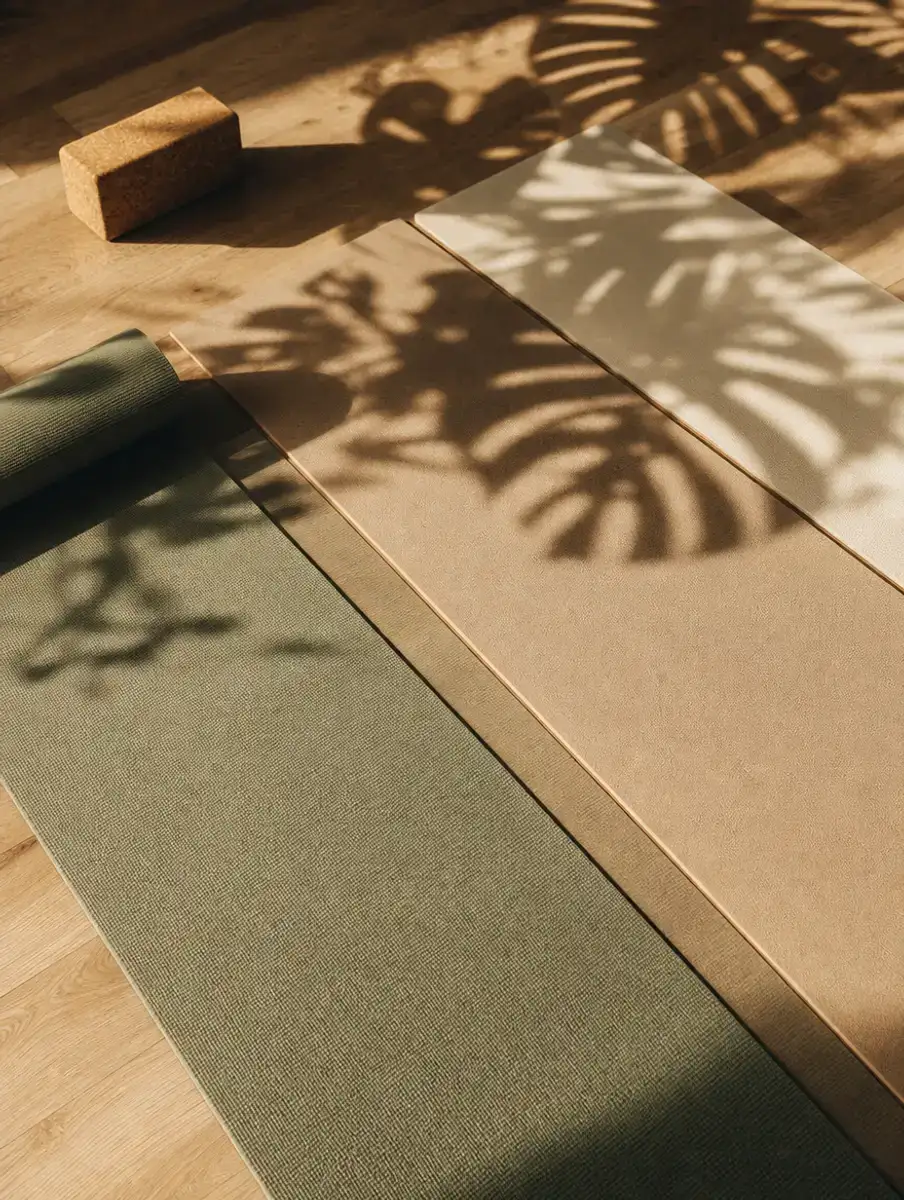
A standard yoga mat is about 172 to 185 cm long and 58 to 66 cm wide. Most people do well with a mat 4 to 6 mm thick. Choose a long mat, around 200 cm, if you are taller than about 180 cm, and a thicker 8 mm mat for gentle floor practice or sensitive knees.
Size and thickness decide how a yoga mat feels more than brand or colour. A mat that is too short pushes your hands or feet onto the floor; one that is too thick makes balances wobble. The good news is that most adults fit a standard mat, and the choice comes down to a few millimetres.
What is a standard yoga mat size?
Most mats sold in the Philippines are close to 61 cm wide and between 172 and 185 cm long, going by the sizes the stores list. Here is the general range:
| Type | Length | Width | Who it suits |
|---|---|---|---|
| Standard | about 172 to 185 cm | about 58 to 66 cm | Most adults up to about 180 cm tall |
| Long | about 200 cm or more | about 61 to 66 cm | Taller people, long stances |
| Long and wide | about 200 cm | about 75 cm | Taller or broad-shouldered people who want room to move |
Some examples as their sellers list them: Decathlon’s Kimjaly Essential mat is 172 x 58 cm, and its Light Yoga Mat XL is 200 x 75 cm. Manduka’s PRO is listed at 180 x 66 cm in its standard size, with 173 cm and 216 cm lengths also offered. The guide to the best yoga mats in the Philippines lists twelve mats with their sizes and prices.
How long should your yoga mat be?
A simple test is your height plus a little. Lie on the mat: if your head and heels both fit with some space, it is long enough for lying poses. Then test Downward Dog, which is usually the longest shape in a class. In wide-legged standing poses, such as the Warrior poses, the stance runs along the length of the mat, so a long mat gives taller people more room.
If you are around 180 cm or taller, a 200 cm mat is worth looking at. To weigh thickness against your style, knees and travel, try the mat finder questions.
How thick should a yoga mat be?
| Thickness | Feel | Good for |
|---|---|---|
| 1 to 2 mm | Thin and light, little cushion | Travel, layering over a studio mat |
| 3 to 4 mm | Firm, close to the floor | Standing poses, balances, flow classes |
| 5 to 6 mm | A balance of cushion and stability | Most people, mixed practice |
| 8 mm or more | Soft and cushioned | Gentle floor practice, sensitive knees |
Thinner mats keep your feet connected to the floor, which many people find steadier in balances like Tree Pose. Thicker mats cushion your knees and spine in floor work and kneeling poses but can feel spongy when you stand on one leg.
Thickness is not the only thing that decides comfort. A dense 4 mm rubber or PVC mat can feel more supportive than a soft 6 mm foam one. Material also affects weight: a thick mat is heavier to carry to class.
Which size and thickness should beginners choose?
A standard-length mat around 5 mm thick suits most beginners. It is forgiving on the knees and steady enough to stand on. If your knees are sensitive, add a folded blanket under them for kneeling poses rather than buying a very thick mat for everything. The yoga for beginners guide covers what else you need for a first class.
Does mat size affect how you carry and store it?
Yes. Long, thick or rubber mats roll into a bigger, heavier bundle. Check that a yoga mat bag lists a size that fits your mat’s rolled width, and keep the mat clean and dry before rolling, as covered in how to clean a yoga mat.
Put it into practice with the quiz for choosing a mat, built on pages like this one.
Browse every gear guide.
Sources: Mayo Clinic, Fitness program: 5 steps to get started; NCCIH (US National Institutes of Health), Yoga: Effectiveness and Safety; NHS, Exercise in pregnancy; CDC, Pregnant & Postpartum Activity: An Overview; Canadian Family Physician (Chan et al., 2014), via PubMed Central, Hot yoga and pregnancy: Fitness and hyperthermia. Last reviewed 2 October 2026.
Questions
Is a 10 mm yoga mat too thick?
For floor work and stretching it can feel comfortable, but for standing poses and balances many people find very thick mats unsteady, because the foot sinks and the ankle works harder. If you mostly practise standing sequences, 4 to 6 mm is easier to balance on.
How do you know if your yoga mat is long enough?
Come into Downward Dog. If your hands and feet both fit on the mat with a little room, it is long enough. If your heels or fingers hang off, or you shorten the pose to fit, try a long mat.
Can you fold a knee-friendly layer onto a thin mat instead?
Yes. Folding the end of the mat over, or placing a folded blanket or towel under the knees, gives extra padding where you need it while keeping the rest of the mat firm for standing poses.
Which is better, a 4 mm, 6 mm or 8 mm yoga mat?
It depends on how you practise. A 4 mm mat feels firm and close to the floor, which suits standing poses, balances and flow classes. A 6 mm mat balances cushion and stability for mixed practice. An 8 mm mat is soft and kind to sensitive knees in floor work, but can feel spongy when you stand on one leg.
Keep reading
Your yoga calendar
We track every yoga event, workshop and pop-up class so you don't have to.
Updated