Gear
Yoga socks and grip socks: when they help and what to look for
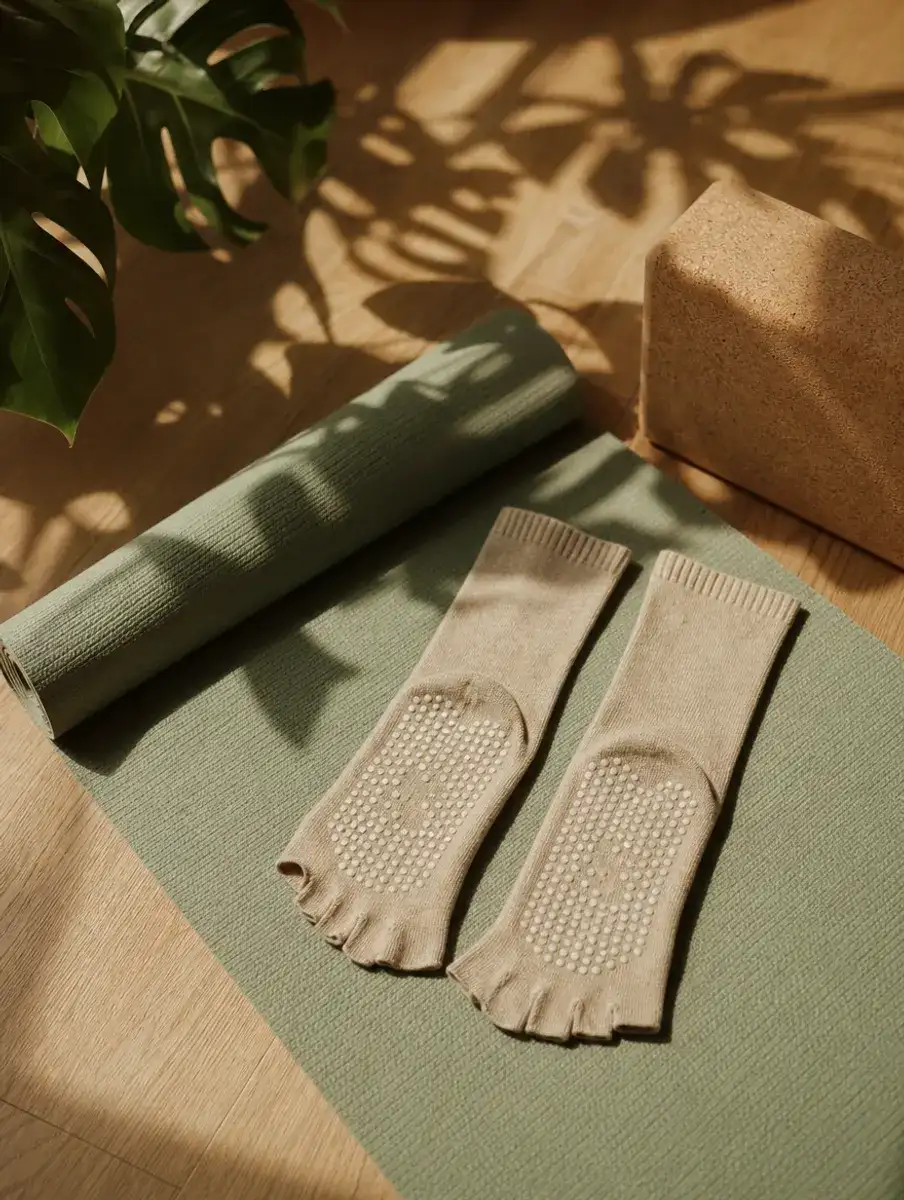
Most yoga is practised barefoot, because bare feet grip the mat and let you feel how your weight spreads. Yoga socks, usually toe socks with silicone grip dots on the sole, are an option if your feet get cold, you prefer not to go barefoot in a shared space, or your teacher allows them.
Yoga is traditionally practised barefoot. Bare feet press into the mat, spread the toes, and give you clear feedback about balance in poses like Mountain Pose and Tree Pose. Ordinary socks are slippery on a mat and best avoided.
Grip socks are different. They have rubber or silicone dots on the sole and are made so the foot does not slide. They are not needed for most classes, but there are good reasons some people like them.
Are grippy socks the same as yoga socks?
Mostly, yes. “Grippy socks” is the everyday name for any sock with rubber or silicone grip on the sole, and yoga socks are one kind. The same idea turns up outside yoga: hospitals and care homes often give patients non-slip socks so they do not slide on smooth floors, and many Pilates and barre studios ask students to wear grip socks on the equipment. For yoga, the useful differences are the toe style and how far the grip pattern reaches: a sock made for a mat has grip under the ball of the foot, the heel and often the toes, so it holds in a lunge as well as when standing.
Grippy socks made for studios cost more than ordinary socks because of the grip layer and, on toe socks, the separate toes. The pairs in the table below run from PHP 490 to PHP 1,050 as of October 2026, as each store lists them.
When do yoga socks make sense?
- Cold feet. In an air-conditioned room, or during a long lying-down rest at the end of class, some people simply feel more comfortable with something on their feet.
- Shared spaces. Some people prefer not to go barefoot in changing rooms or on shared studio mats.
- Gentle practice. In slow, floor-based classes, where you spend little time balancing, a grip sock changes little about how a pose feels.
- Personal comfort. If being barefoot in a group makes you self-conscious, socks can make the first few classes easier.
When is barefoot better?
In standing balances and flowing classes, bare feet usually grip better and let you feel the floor. If your hands and feet are already sliding, the mat is often the issue rather than your feet; the guide to the best yoga mats in the Philippines compares grip by material. Many studios also have a barefoot rule, so ask first. The yoga for beginners guide covers other first-class basics.
What should you look for in yoga socks?
Grip on the sole. Look for dots or a pattern across the ball of the foot, the heel and, on toe socks, under the toes.
Toe style. Full toe socks cover each toe; half toe styles leave the tips bare. Regular socks with grip keep the toes together.
Fit. A snug fit stops the sock twisting when you step back into a lunge. Check the size chart, since sock sizes are often given as a shoe size range.
Fabric. Cotton blends with a little elastane are common. A thin sock keeps more feel through the sole.
Which yoga socks are sold in the Philippines?
The socks below are listed by Decathlon Philippines and Certified Calm. Details are as each store states them. YogaPhilippines.com has not handled these products, and the links are plain store links.
| Socks | Store | Details (as stated) | Price as of October 2026 |
|---|---|---|---|
| Kimjaly Non-Slip Yoga Toe Socks, Black | Decathlon | Toe socks, silicone dots under foot and toes; 79% cotton, 18% polyamide, 3% elastane; sizes 35/38 and 39/42 | PHP 490 |
| ToeSox Grip Socks Full Toe Ankle | Certified Calm | Full toe grip socks | PHP 950 |
| Tavi Noir Grip Socks Full Toe Savvy | Certified Calm | Full toe grip socks | PHP 950 |
| Base33 Grip Socks Full Toe Low Rise | Certified Calm | Full toe grip socks, low rise | PHP 1,050 |
Decathlon describes its toe socks as suitable for gentle yoga and also lists them in mottled grey at PHP 490 as of October 2026. Certified Calm carries several other ToeSox, Tavi Noir and Base33 designs, with prices that vary by style.
What else goes with yoga socks?
Comfortable, stretchy clothes matter more than anything on your feet; see yoga pants and outfits. And if your feet feel cold in the final rest, a light layer over the body helps as much as socks. The guide to yoga bolsters and blankets covers what to use.
Put it into practice with the quiz for choosing a mat and the hot yoga prep checklist, built on pages like this one.
Browse all gear guides.
Sources: Mayo Clinic, Fitness program: 5 steps to get started; NCCIH (US National Institutes of Health), Yoga: Effectiveness and Safety; NHS, Exercise in pregnancy; CDC, Pregnant & Postpartum Activity: An Overview; Canadian Family Physician (Chan et al., 2014), via PubMed Central, Hot yoga and pregnancy: Fitness and hyperthermia. Last reviewed 2 October 2026.
Questions
Are toe socks or regular grip socks better for yoga?
Toe socks separate each toe, so the toes can spread on the mat much as they would barefoot. Regular grip socks are easier to put on but keep the toes together. Both rely on grip dots on the sole. Which feels better is personal.
Can you wear yoga socks in a warm, humid class?
Many studios ask students to practise barefoot, and in a warm room socks can get damp and lose grip. Check with the studio before you go, and bring a towel either way.
How do you wash grip socks?
Follow the care label. Decathlon, for example, lists a maximum washing temperature of 30 degrees Celsius on a normal cycle for its yoga toe socks.
What kind of socks should you wear to yoga?
Most yoga is done barefoot, but if you want something on your feet, choose grip socks with rubber or silicone dots on the sole, not ordinary socks, which slide on a mat. Toe socks let the toes spread. A snug fit stops them twisting, and a thin sock keeps more feel. Check that the studio allows them.
Are Pilates socks different from yoga socks?
Mostly not. Both are grip socks with dots on the sole so the foot does not slide, and many brands sell the same pair for either class. Pilates socks are often regular grip socks with the toes together, while yoga socks are more often toe socks. Choose by grip, fit and how thin the sole feels.
Keep reading
Your yoga calendar
We track every yoga event, workshop and pop-up class so you don't have to.
Updated