Guides · reviewed by a teacher
Hatha or Vinyasa: how they differ and which to choose
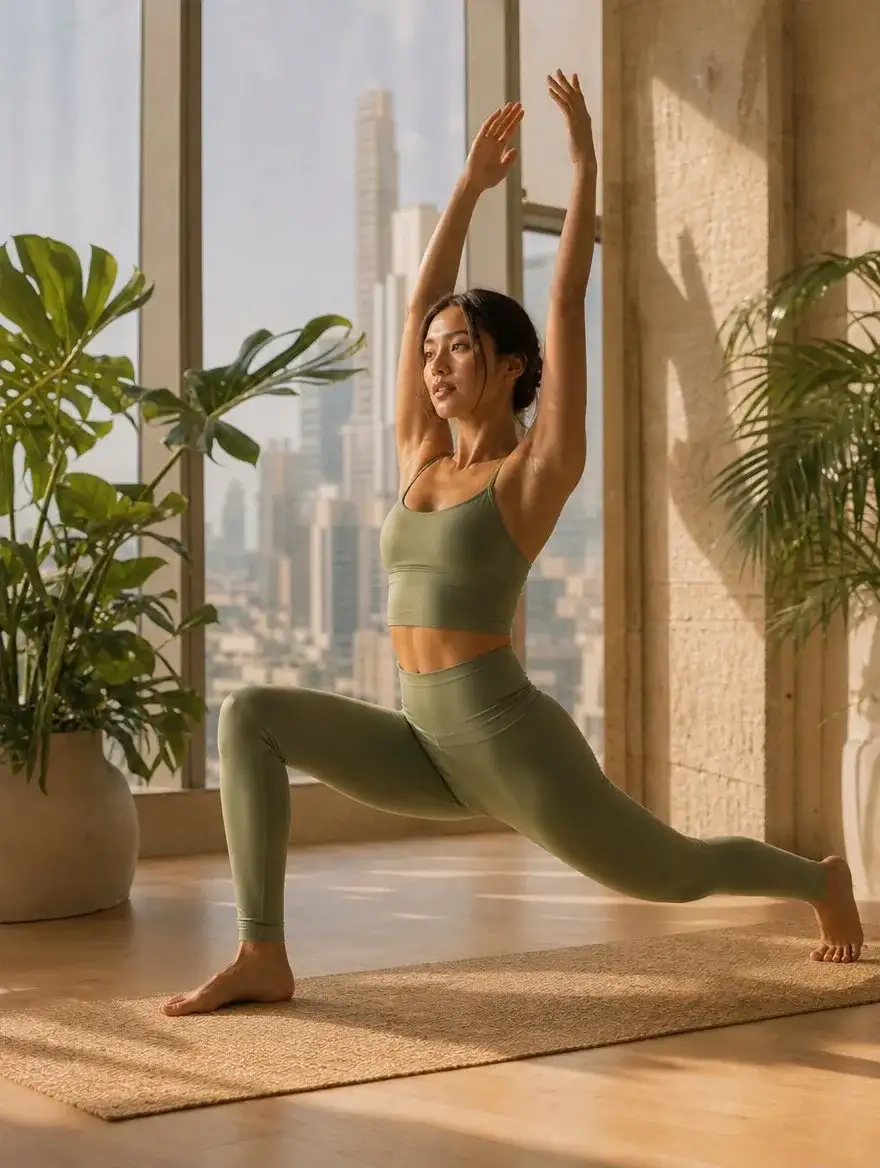
A hatha class holds each pose for several breaths, with a pause between shapes, while a vinyasa class links the poses into a continuous flow with one movement to each breath. Hatha is usually slower and easier to learn from, and vinyasa is warmer, quicker and asks for more stamina.
Teacher's note from Joahnna Lee
“I can slow a Vinyasa lesson right down so it feels closer to hatha.”
“I do not teach a class called "Hatha", but a Vinyasa lesson can start with slow, held shapes to learn the alignment, move into a gentle flow once you know them, and finish with long holds on the floor.”
Hatha and vinyasa are the two names you see most on a studio timetable. Both use the same poses. The difference is in what happens between them: whether you stop and stay, or keep moving with the breath.
Here is how the two compare, and how to choose between them.
What does “hatha” mean today, and why is vinyasa a kind of hatha?
Hatha is an old Sanskrit word for force or effort. In its original sense, hatha yoga is the whole branch of yoga that works through the body and the breath, and the page on the meaning and history of hatha yoga goes into where it came from. By that definition, nearly every posture class today is a kind of hatha, vinyasa included.
On a timetable, though, the word has narrowed. A class called “Hatha” usually means a general, moderately paced class where each pose is held for a few breaths, with a pause in between. A class called “Vinyasa” means the poses are strung into a sequence and you move from one to the next on an inhale or an exhale.
So when people ask “hatha or vinyasa?”, they are really asking: held, or flowing?
How do the pace and the holds differ?
In a hatha class you come into a pose, adjust it, and stay for three to five breaths or longer. Then you come out, perhaps rest, and set up the next one, with time to feel what the pose is doing.
In a vinyasa class the breath sets the pace. You might reach up as you breathe in, fold as you breathe out, and step back into a plank on the next breath. Along the way you might lift into Upward-Facing Dog for a breath or two or hold a strong Side Plank on one hand.
Some poses are held, but the thread between them is movement. The sequence usually has an arc: a warm-up, a stronger middle, and a slower finish on the floor.
Which is harder, and which builds more strength?
Vinyasa usually feels harder in the moment, because you keep moving and your breathing and heart rate stay up. You will probably get warm, and in a Manila condo without the aircon on, you will sweat.
Hatha is not the easy option, though. Holding Warrior II or Chair Pose for five slow breaths, or sitting low in Eagle Pose with the legs wrapped, asks a lot of your legs, and staying still in a shape can be harder for the mind than moving through it.
Both build strength. Vinyasa adds stamina; hatha adds steadiness and a closer look at each shape.
Which suits a beginner, a tired body or a stiff one?
A complete beginner often does well with hatha first. You have time to learn where your feet and hands go before anyone asks you to move quickly between shapes. Iyengar’s alignment-focused method takes that careful approach further, with longer holds and props. The twelve yoga poses to learn first are exactly the shapes a hatha class spends its time on, and your first yoga class explains what to expect on the day.
A tired body, after a long week or a bad night, is usually better served by holding than by flowing. If you want slower still, Yin and restorative yoga cover the quietest end of the range; the overview of the main types of yoga sets them side by side.
A restless or stiff body often likes vinyasa. Moving warms the muscles before they are asked to stretch, and having somewhere to put your energy can make it easier to settle at the end.
If you are pregnant, injured or managing a health condition, check with your doctor before starting either, and tell your teacher first.
Hatha and Vinyasa at a glance
| Hatha | Vinyasa | |
|---|---|---|
| Pace | Slow to moderate, with pauses | Continuous, set by the breath |
| Holds | Three to five breaths or more | Short, with some longer holds |
| Heat | Gentle | Warm; you will likely sweat |
| Effort | Steady, muscular holds | Stamina and strength together |
| Learning the shapes | Easier: time to adjust | Quicker once you know the basics |
| Suits | Beginners, tired days, detail | Restless energy, people who like to move |
Still unsure? The yoga style quiz asks a few questions and suggests a starting point. If you are choosing between two flowing styles, ashtanga vs vinyasa compares a fixed series with a changing one.
Can one practice mix both?
Yes, and many classes do. A vinyasa practice can start with slow, held shapes to learn the alignment, move into a gentle flow once you know them, and finish with long holds on the floor. A good teacher shifts the balance with how the room arrives: more holding on a heavy day, more movement on a restless one. A moon salutation, or Chandra Namaskar, is a good example of the middle ground: a flowing sequence with a few breaths in each shape. Some studios also run workshops in partner and acro yoga, where two people share the shapes.
A fixed group class has to pick one pace for everyone, while one-to-one teaching can follow you on the day. If you are weighing those two options, the comparison of private yoga and group classes sets out the trade-offs. To browse hatha and vinyasa classes near you, start with yoga studios in the Philippines.
For a different kind of comparison, see pilates vs yoga, which looks at goals, equipment and pace.
Put it into practice with the yoga style quiz, built on pages like this one.
Browse the guides section.
Sources: Mayo Clinic, Fitness program: 5 steps to get started; NCCIH (US National Institutes of Health), Yoga: Effectiveness and Safety; NHS, Exercise in pregnancy; CDC, Pregnant & Postpartum Activity: An Overview; Canadian Family Physician (Chan et al., 2014), via PubMed Central, Hot yoga and pregnancy: Fitness and hyperthermia. Last reviewed 2 October 2026.
Questions
Is vinyasa a type of hatha yoga?
In the older sense, yes. Hatha yoga is the broad family of practice done through the body and the breath, and vinyasa is one way of doing it. In a studio timetable, though, the two names mean different classes: a slower, held class and a flowing one.
Which burns more energy, hatha or vinyasa?
Vinyasa, as a rule, because you keep moving and your heart rate stays up for longer. That does not make it better. A held hatha class builds strength and steadiness in its own way, and the right choice is the one you will keep doing.
Should I try hatha before vinyasa?
It helps, if you can. Holding the shapes slowly first means you know where your feet and hands go before you are asked to move quickly between them. But plenty of people start with a gentle vinyasa and learn the shapes as they go.
What is the gentlest type of yoga?
Restorative and Yin yoga sit at the quietest end of the range, with long, supported holds on the floor and very little effort. Among timetable classes, a slow hatha or beginner class is the gentlest standing option. The overview of the main types of yoga sets them side by side.
Keep reading
Your yoga calendar
We track every yoga event, workshop and pop-up class so you don't have to.
Updated