Guides
How to become a yoga teacher in the Philippines
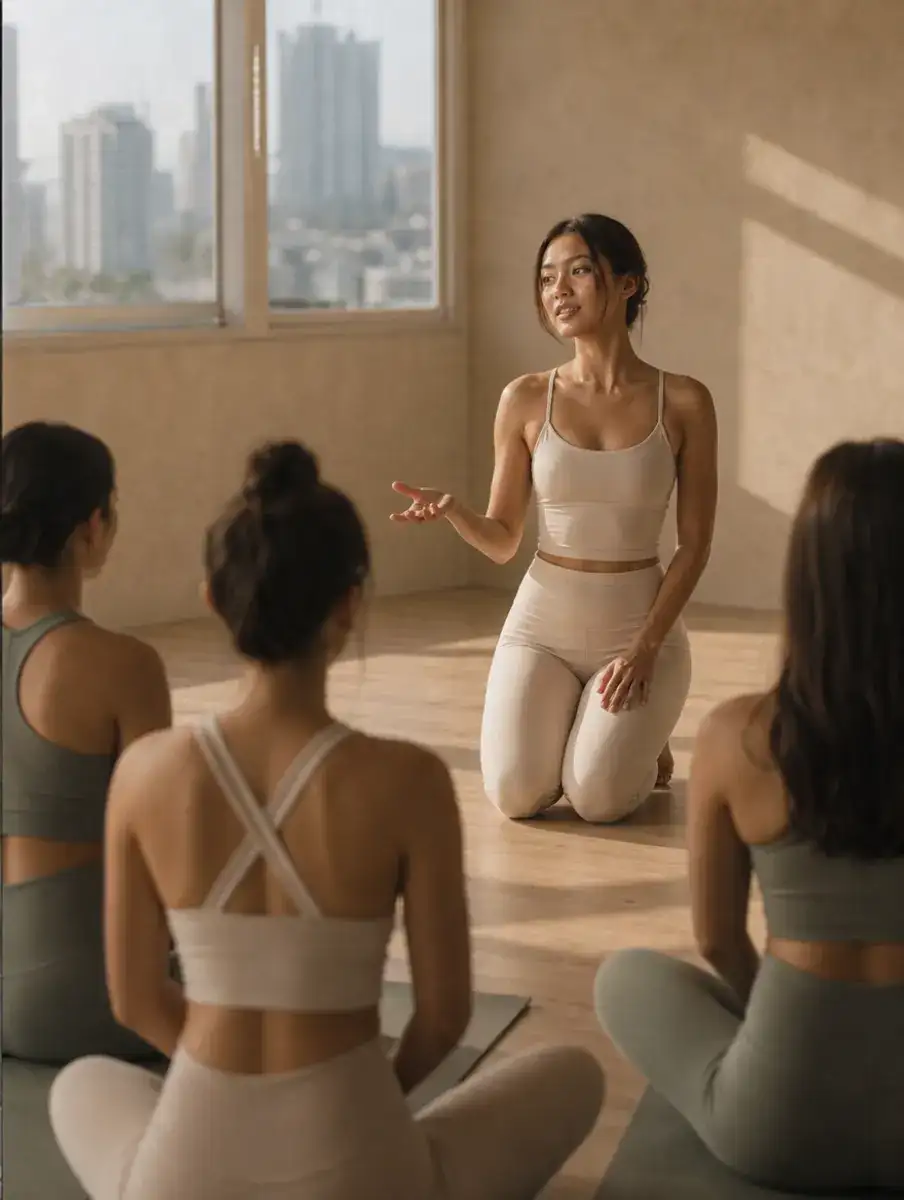
To become a yoga teacher, build a steady practice of your own, complete a teacher training (most start with 200 hours), then teach as often as you can: friends, community classes, then studio slots. Registration with Yoga Alliance is optional. Many studios ask about it, but it is a membership registry, not a licence.
Becoming a yoga teacher is less about mastering hard poses and more about guiding other people safely through simple ones. The path has a clear shape: practise, train, then teach a lot.
What are the steps to becoming a yoga teacher?
- Practise regularly first. Take classes in a few styles until you know which one you would want to teach. The overview of the main types of yoga is a good map.
- Choose a teacher training. Most people begin with a 200-hour course. Compare the style, the schedule (intensive or weekends), the lead trainers and how much supervised teaching you will do.
- Complete the course. Expect long days, reading and practice teaching in front of your group.
- Decide on registration. Look into Yoga Alliance (see below) and whether the studios near you ask for it.
- Start teaching. Teach friends, family and free community classes. Then audition for studio slots, cover classes for other teachers, or offer small group sessions.
- Keep studying. Further trainings and time as a student in other teachers’ classes are how most teachers grow.
What does a 200-hour teacher training involve?
A 200-hour training is a structured course that teaches you to teach. Content varies by school, but most cover:
- Asana and alignment: how each common pose is built, its variations, and how to offer props and easier options.
- Teaching method: sequencing a class, giving clear verbal cues, demonstrating, pacing and holding a room.
- Anatomy: the muscles, joints and movement patterns that matter most in a class, and how to keep students safe.
- Breath and meditation: basic pranayama, relaxation and seated practice.
- Philosophy: the background of the practice, usually including the Yoga Sutras of Patanjali and the eight limbs.
- Practicum: teaching your fellow trainees and receiving feedback, often ending with an assessed class.
Schools in the Philippines run these as full-time residential intensives, city courses over several weeks, or weekend formats spread over months. To compare 200-hour programmes, see yoga teacher training in the Philippines, which lists local programmes with style, intakes and accreditation exactly as each school states it. If you are thinking of training abroad instead, this guide to yoga teacher training in Bali covers that option.
How does Yoga Alliance registration work?
Yoga Alliance is a membership organisation based in the United States that keeps a public directory of schools and teachers. Two separate things are often confused:
- A school can be registered. A school that meets Yoga Alliance’s curriculum standards can list its training with them as a registered school. That is a status of the school’s course.
- A teacher registers separately. Finishing a course at a registered school does not register you automatically. A graduate can then choose to apply to Yoga Alliance as a teacher, which involves an application and an annual membership fee.
Registration is optional. It is not a government licence, and Yoga Alliance does not test teachers. Some studios, gyms and retreat centres ask for it; others care more about how you teach in an audition. If registration matters to you, check the school’s status in the Yoga Alliance directory yourself before you pay, because a status can lapse.
How do you get your first teaching work?
Teach as much as you can, as early as you can. A yoga instructor gets better mainly by teaching real rooms of real people.
- Offer free or donation classes to friends, a barangay group, a church hall or your office.
- Ask your training school and your home studio about cover lists for when regular teachers are away.
- Prepare a short audition class with simple, clear cueing. Studios usually value calm, safe teaching over impressive poses. A free yoga class planner times a class to 45, 60, 75 or 90 minutes, suggests prep and counter-poses for a peak pose and prints class cards to teach from.
What should you check before you enrol?
- Who the lead trainers are, and how long they have taught.
- How many hours you will spend actually teaching during the course.
- The schedule, the total cost in writing, and the refund policy.
- Any registration or accreditation the school claims, with a link you can verify.
Many people take a 200-hour course simply to deepen their own practice, and that is a good reason too. A friendly starting point is the guide for complete beginners, and yoga studios across the Philippines lists places to keep practising while you decide.
This page feeds the YTT comparer.
Browse every practical guide.
Sources: Mayo Clinic, Fitness program: 5 steps to get started; NCCIH (US National Institutes of Health), Yoga: Effectiveness and Safety; NHS, Exercise in pregnancy; CDC, Pregnant & Postpartum Activity: An Overview; Canadian Family Physician (Chan et al., 2014), via PubMed Central, Hot yoga and pregnancy: Fitness and hyperthermia. Last reviewed 2 October 2026.
Questions
How long does it take to become a yoga instructor?
The 200-hour training itself runs from about a month for a full-time intensive to several months for a weekend format. Most teachers had practised regularly for some time before enrolling, and confidence in front of a room usually comes from teaching often in the months after the course.
Do you need to be flexible to train as a yoga teacher?
No. Teacher training is about learning to teach: sequencing, cueing, adjusting for different bodies and keeping a room safe. A teacher who had to work for a pose often explains it better than someone for whom it always came easily.
Is a 200-hour training enough to start teaching?
It is the usual starting point, and many studios hire teachers with a 200-hour training. Specialised classes such as prenatal, kids or yin often call for further study, and most teachers keep learning through workshops and longer trainings.
Does a yoga teacher have to register with Yoga Alliance?
No. Yoga Alliance is a membership organisation, not a government body. Some studios and retreat centres ask for it when hiring and others do not. Ask the places you want to teach at what they look for before you decide.
What qualifications do you need to be a yoga instructor?
You do not need a university degree to teach yoga. Most studios look for a completed teacher training, usually a 200-hour course, plus a steady practice of your own and a calm, safe audition class. Some ask about Yoga Alliance registration, which is an optional membership registry rather than a qualification.
Keep reading
Your yoga calendar
We track every yoga event, workshop and pop-up class so you don't have to.
Updated